
Custom molded parts · Made to your design
Custom Injection-Molded Plastic Gears
Bring the gear pair, operating duty and mounting interfaces into the quotation—not just the outside diameter.
Discuss custom polymer gear parts for your equipment or mechanism. The review starts with a controlled tooth definition, the mating gear and the required operating conditions. Material, tooling and acceptance are confirmed for the actual part; no universal torque, noise or life rating is implied.
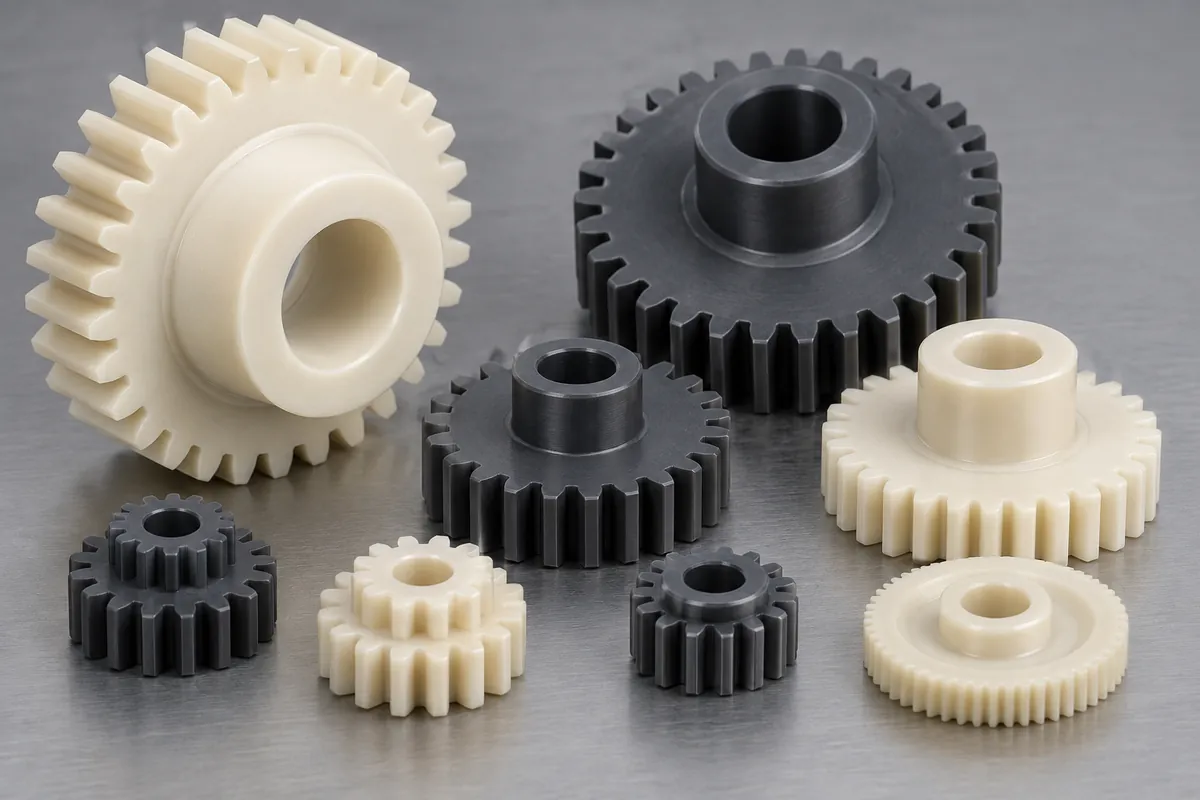
Product details
A closer look at teeth, hub and mounting features
Spur-gear design examples show the interfaces that connect tooth geometry to molding and assembly decisions.
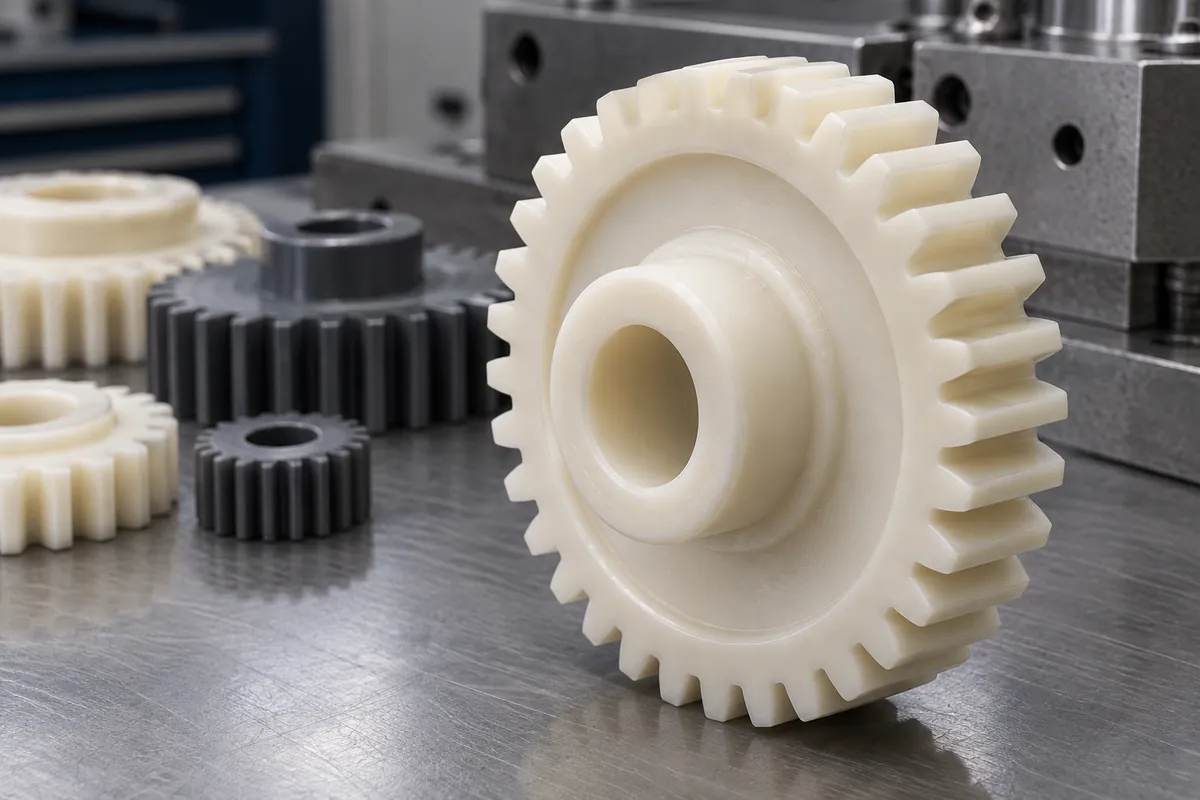
Tooth and rim detail
Define the tooth system and inspect the relevant surfaces against the approved drawing.
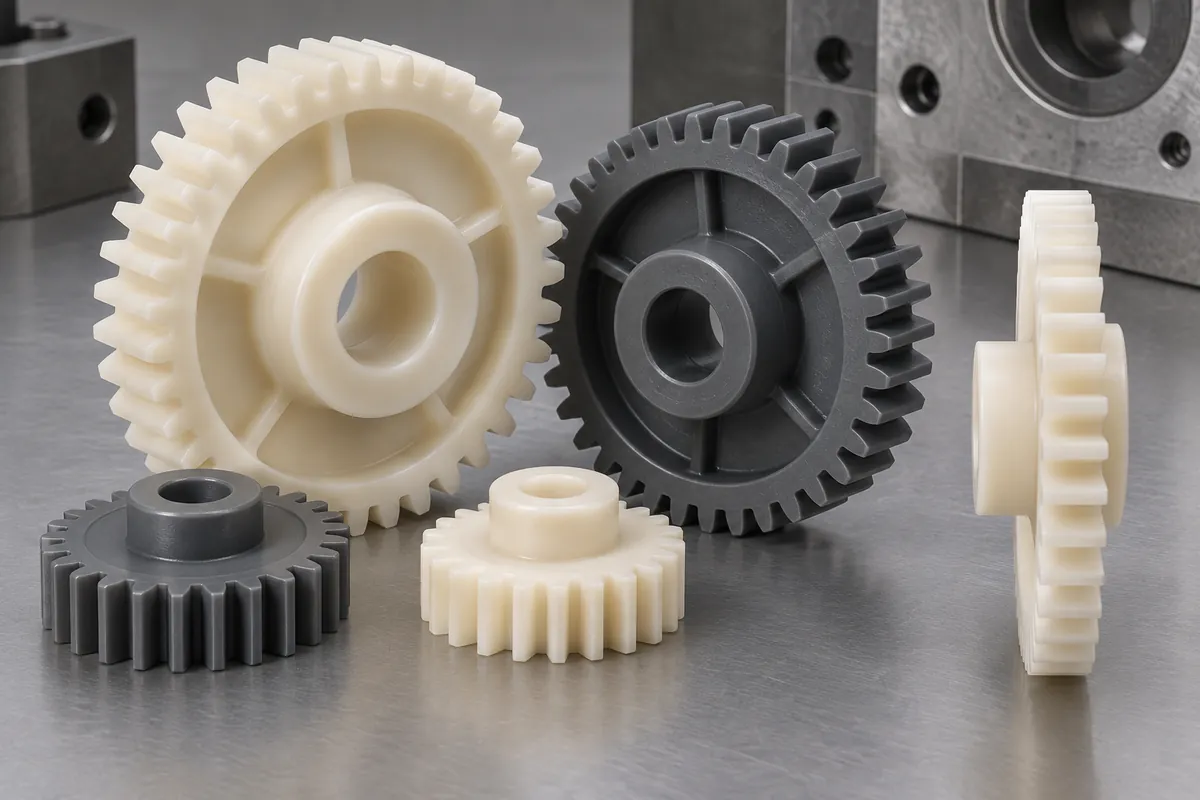
Hub-to-web transition
Review thickness transitions alongside the mounting and load-transfer function.
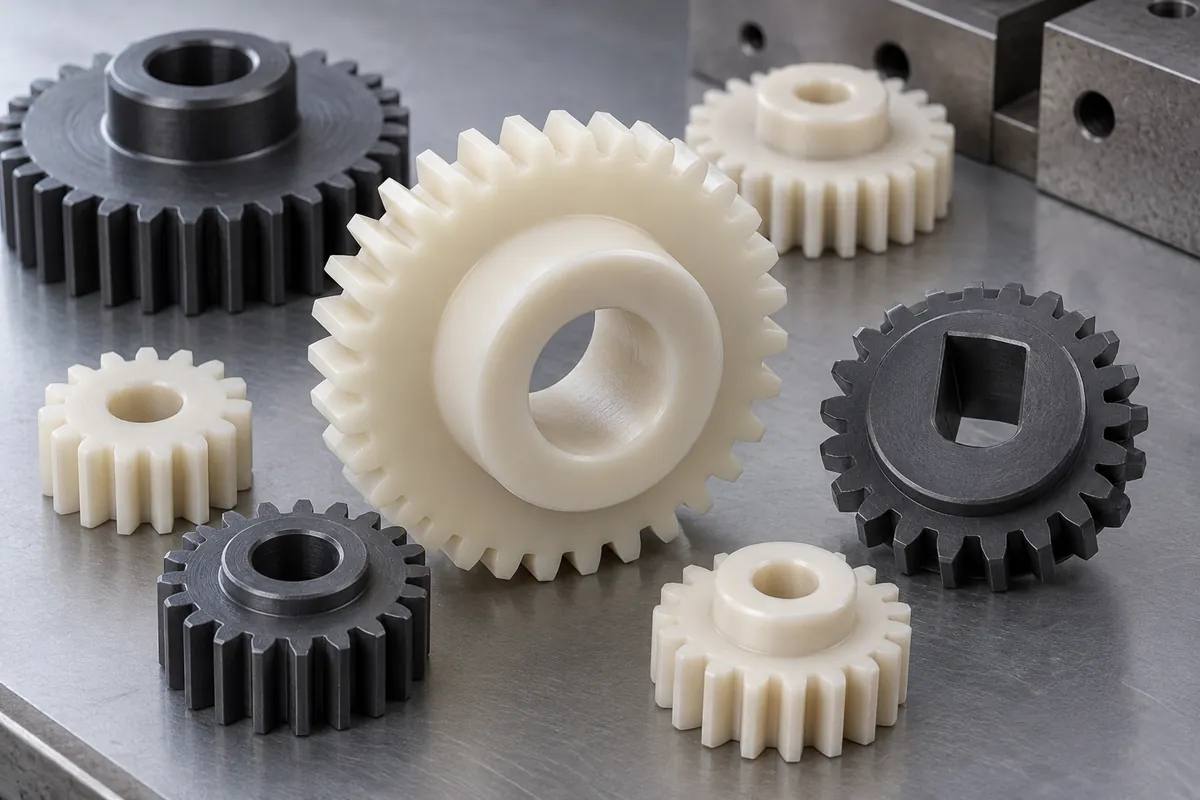
Bore interfaces
Identify shaft location, axial restraint and the datum relationship to the teeth.
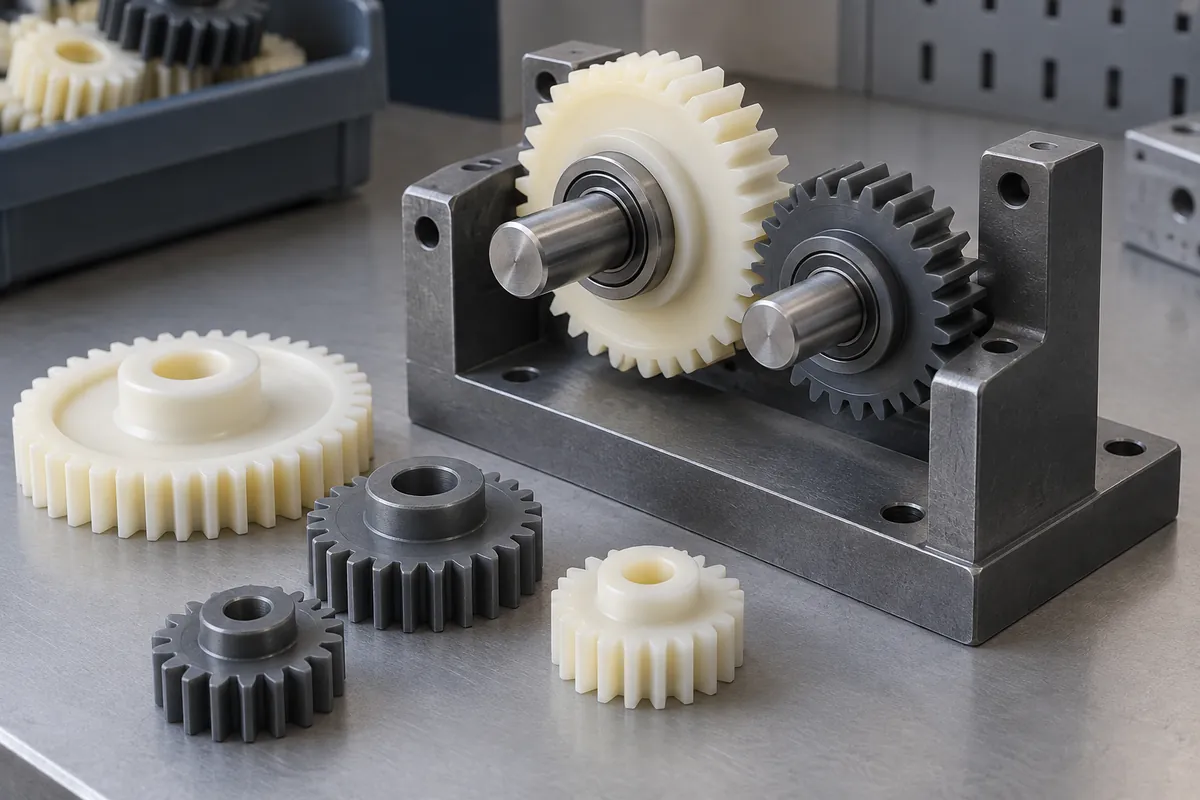
Mating pair
The counterpart and center distance are part of the assembly review.
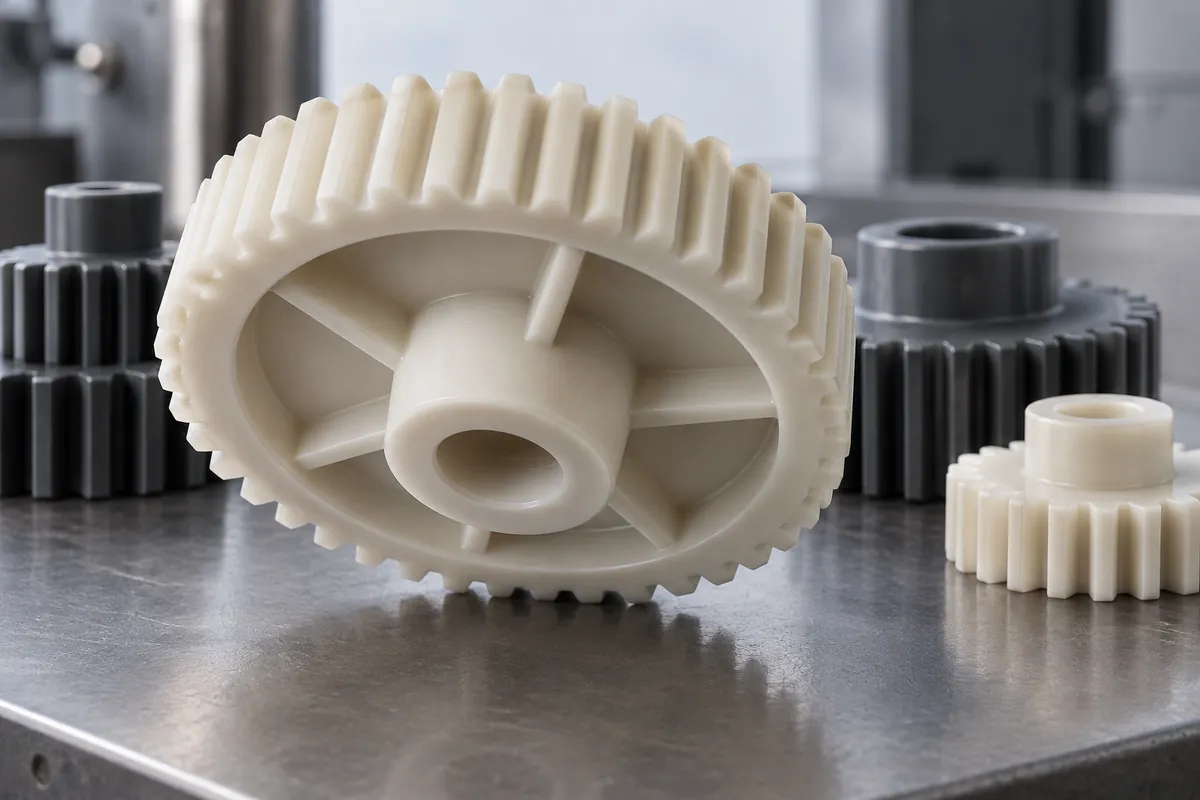
Underside geometry
Review the second face, ejection and the permitted gate witness—not only the visible teeth.
Illustrative configurations. Final specifications follow your approved drawings.
Application fit
Custom gear parts for a defined mechanism
The examples focus on molded spur gears. Other gear forms or integrated features require their own feasibility review. A visually similar replacement is not an approved match for an unknown drive.
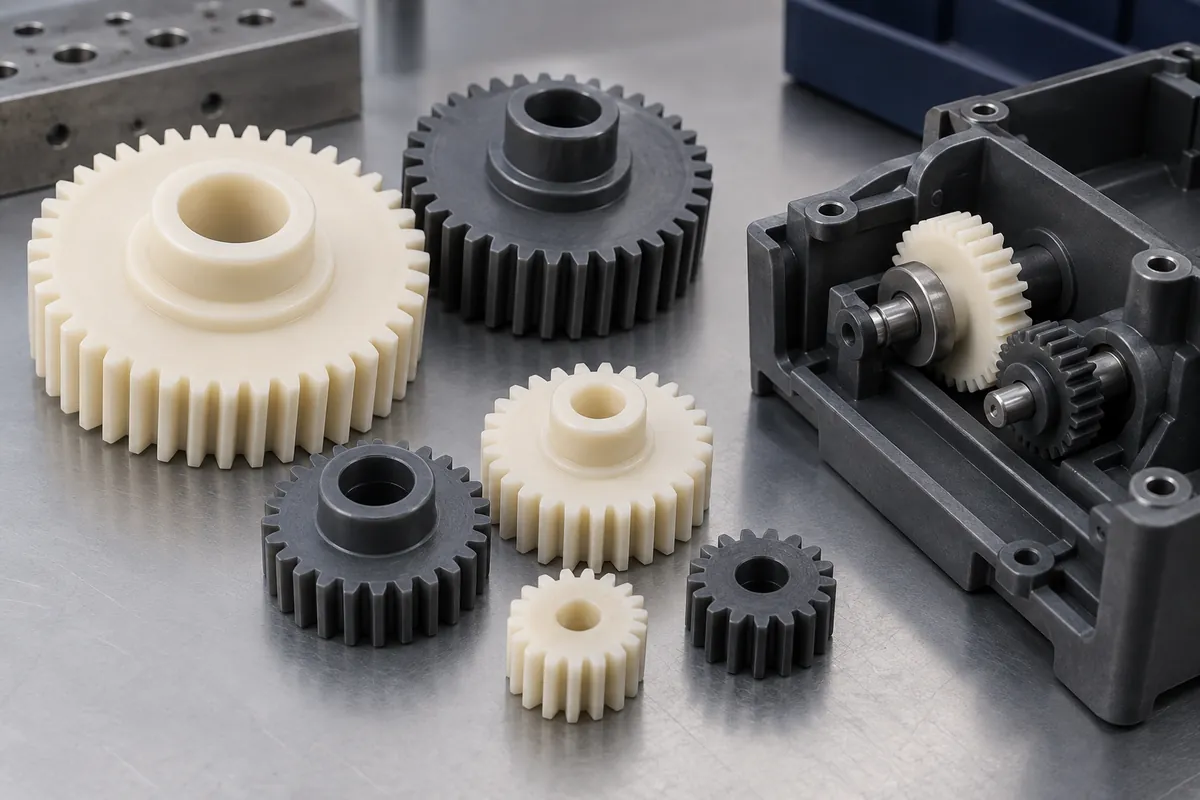
Spur gears and pinions
Drawing-defined tooth geometry for customer-designed mechanisms. Supply both mating members or their controlled specifications for review.
Hub and bore variations
Round or shaped bores, axial locating features and other mounting details considered with the shaft interface and tooling proposal.
Integrated molded features
Gear parts combined with customer-defined ribs, locating features or other geometry where the molding and inspection scope is agreed.
Quote-ready inputs
What to send for a meaningful quotation
Use the same drawing and requirements for every proposal. Mark open decisions explicitly so that a low price does not conceal a different deliverable.
| Area | Please provide | Review before release |
|---|---|---|
| Tooth definition | Drawing, model, tooth count, module or diametral pitch, pressure angle and modifications. | Resolve units, governing revision and any missing geometry before tooling. |
| Mating assembly | Counterpart gear, shaft, housing, support and center-distance requirements. | Review the assembled relationship, not one isolated wheel. |
| Duty and exposure | Speed, load history, reversals, environment and lubrication. | Separate material screening from operating qualification. |
| Material | Exact grade if chosen or a requirement-based candidate brief. | Review POM, nylon or other candidates under the actual conditions. |
| Inspection | Drawing-defined tooth and mounting requirements; sample condition. | Agree methods, fixtures, combined checks and report scope. |
| Production | Trial, initial and repeat quantities; packing; timing; tooling ownership. | Confirm development steps and any separately quoted secondary operations. |
From drawing to approval
Connect the drawing to a controlled approval route
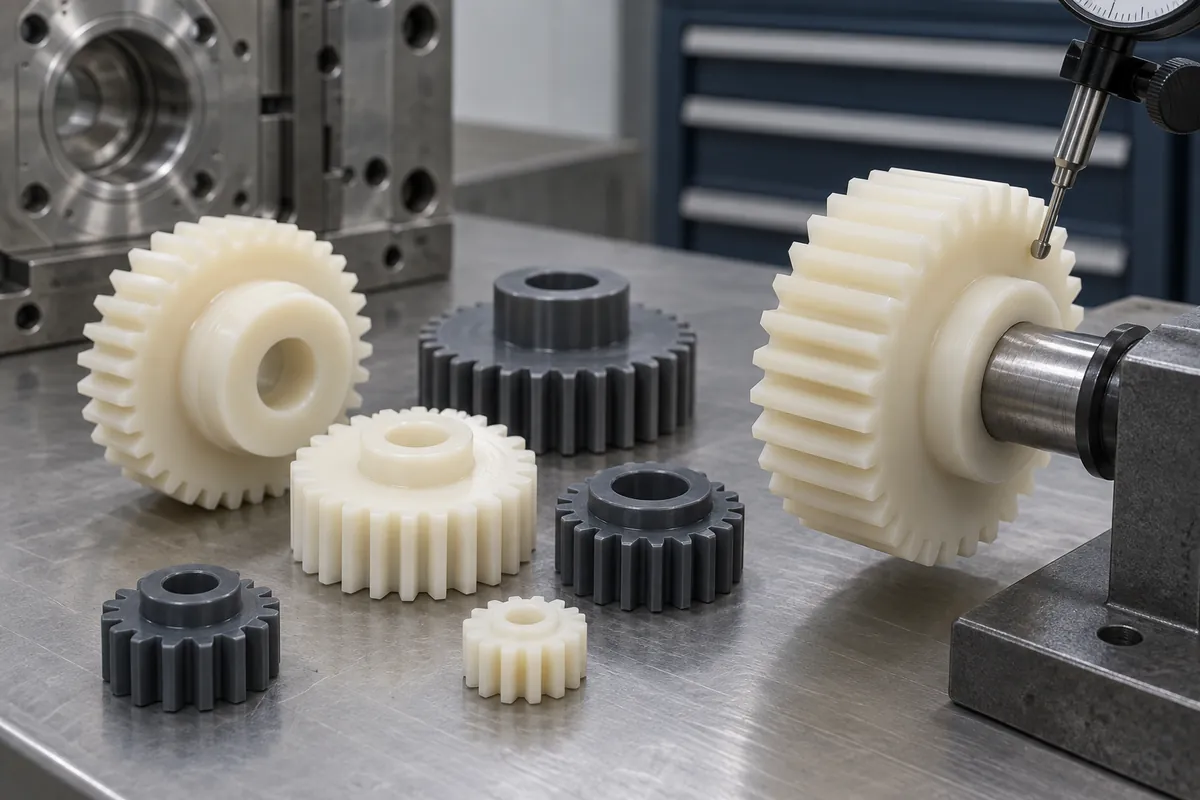
Define the pair
Confirm tooth geometry, counterpart, mounting and operating requirements. Keep reverse-engineered assumptions provisional until approved.
Review the molding route
Assess candidate grade, gate, hub/web geometry, cooling and ejection with the required functional surfaces.
Inspect trial parts
Use identified samples for drawing and agreed combined checks. Preserve cavity and conditioning records.
Close operating evidence
Complete the agreed drive-level evaluation with its responsible owner before making load, life or noise claims.
Practical engineering and buying guides
Six decisions to make before production
- Custom Injection-Molded Plastic Gears: What an RFQ NeedsPrepare a custom plastic gear RFQ with tooth geometry, mating gears, duty, resin, bore interfaces, tooling scope and a defined inspection plan.
- POM vs Nylon for Injection-Molded Gears: Selection QuestionsCompare POM and nylon gears using exact grades, moisture condition, mating material, duty and molding requirements—not a universal best-material claim.
- Plastic Gear Backlash: Review Center Distance and ConditionReview plastic gear backlash with the mating pair, center distance, housing tolerances, temperature and conditioning. Define the measurement before approval.
- Molded Plastic Gears: Gate, Hub and Warpage ReviewReview gate location, hub-to-web transitions, tooth surfaces and warpage for molded plastic gears before tooling. Separate flow predictions from part evidence.
- Injection-Molded Gear Inspection: From Bore to Tooth SystemBuild a molded plastic gear inspection plan covering bore, datums, tooth geometry, composite checks, cavity records and the required sample condition.
- Plastic Gear Wear and Noise: Plan a Useful Validation TestPlan plastic gear wear and noise evaluation around the actual duty, mating pair, support, environment and failure criteria. Avoid unsupported lifetime claims.
Before you request a quote
Can you quote from a broken replacement gear?
A sample can start the discussion, but a controlled tooth definition, counterpart and operating requirements are needed. Worn geometry must not be copied as if it were the original design.
Is POM always better than nylon for gears?
No. Compare exact grades, conditioning, counterpart, duty and the full assembly. The best candidate depends on the application and relevant evidence.
Do these gears have a standard torque or life rating?
No. No generic rating is assigned. The drive designer and agreed test provider must evaluate the actual configuration and requirements.
Is injection molding right for every order quantity?
No. Tooling investment, design stability, required features and actual demand need a project-specific comparison. This page sets no universal minimum order.
Your next step
Discuss the part with its intended function.
Share the gear and counterpart drawings, shaft arrangement, duty, candidate grade, quantities and inspection requirements. We will review a custom injection-molding scope without substituting a generic material claim for a drive-system approval.
Explore our injection molding service or review other custom molded applications.