
Custom molded parts · Made to your design
Custom LSR Silicone Duckbill Valves
Define the flexible lips, housing and fluid conditions as one application.
FECISION reviews custom molded silicone one-way valve components for a specified fluid circuit. Send the valve and housing drawings, operating conditions and acceptance requirements to scope LSR tooling, molding, finishing and inspection. These are made-to-design components, not stock pipeline valves or prequalified medical devices.
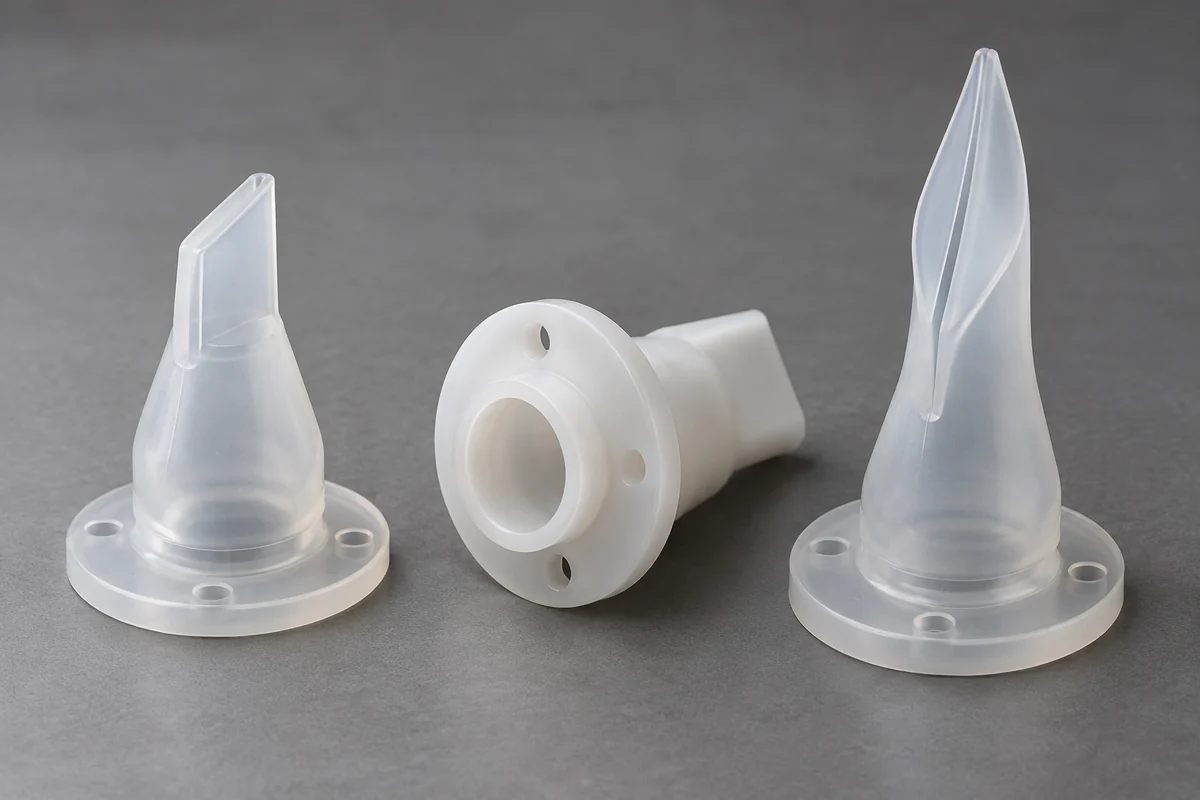
Product details
Lip geometry, mounting interfaces and finished construction
Product design illustrations show possible configurations. Dimensions, material and pressure-flow performance must be defined and verified for the actual application.
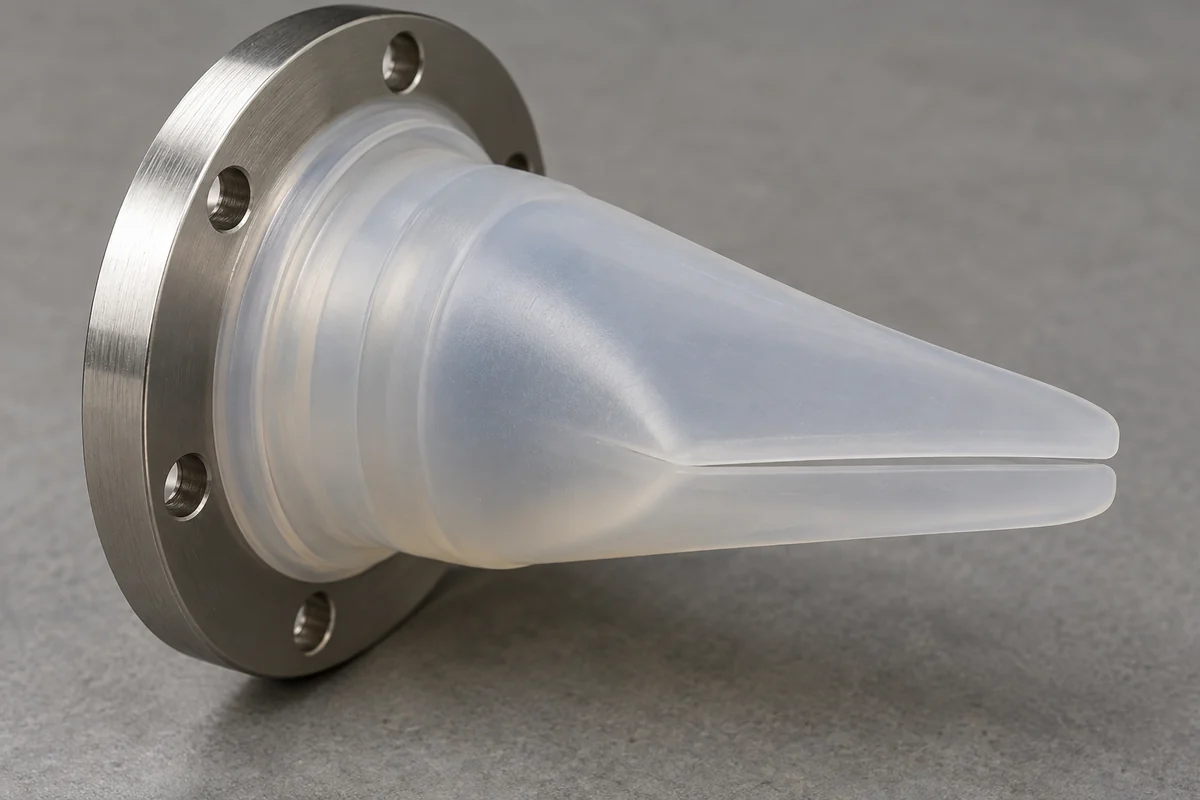
Paired flexible lips
Specify the functional lip region and its clearance within the assembled housing.
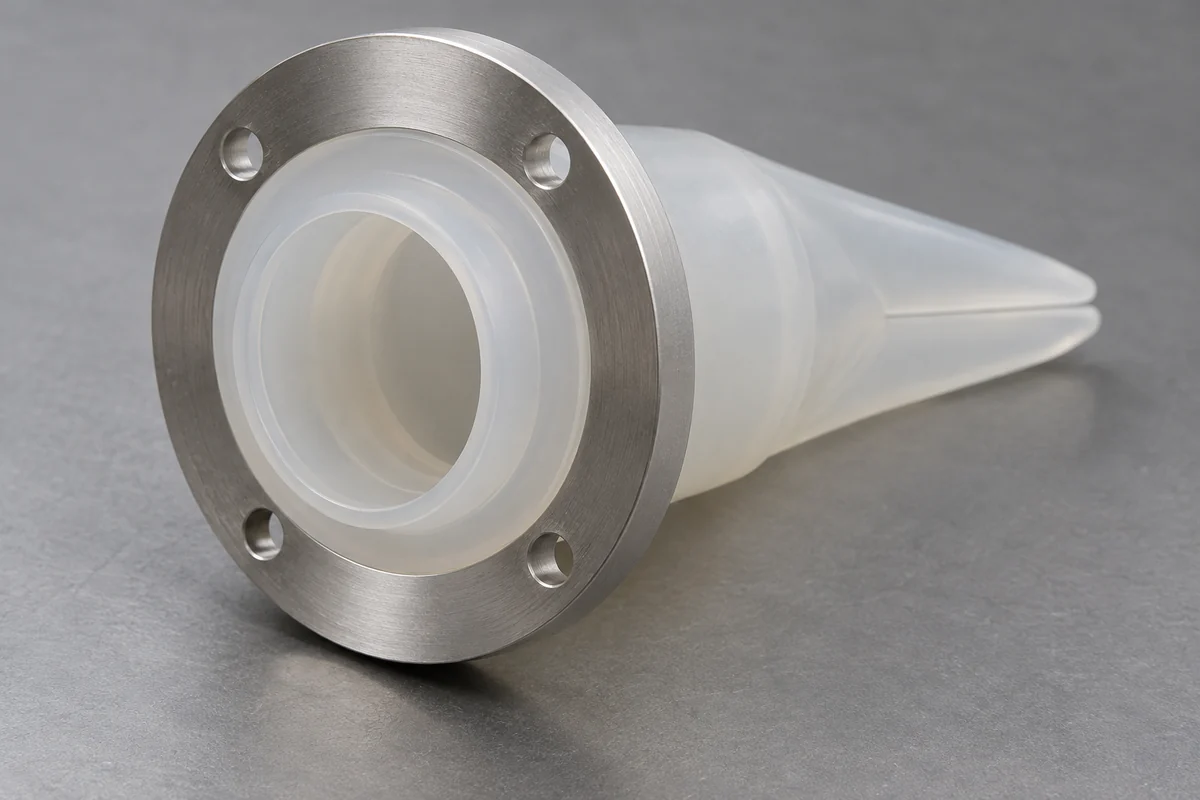
Flange and inlet
Locate and retain the component without uncontrolled deformation of the flexible body.
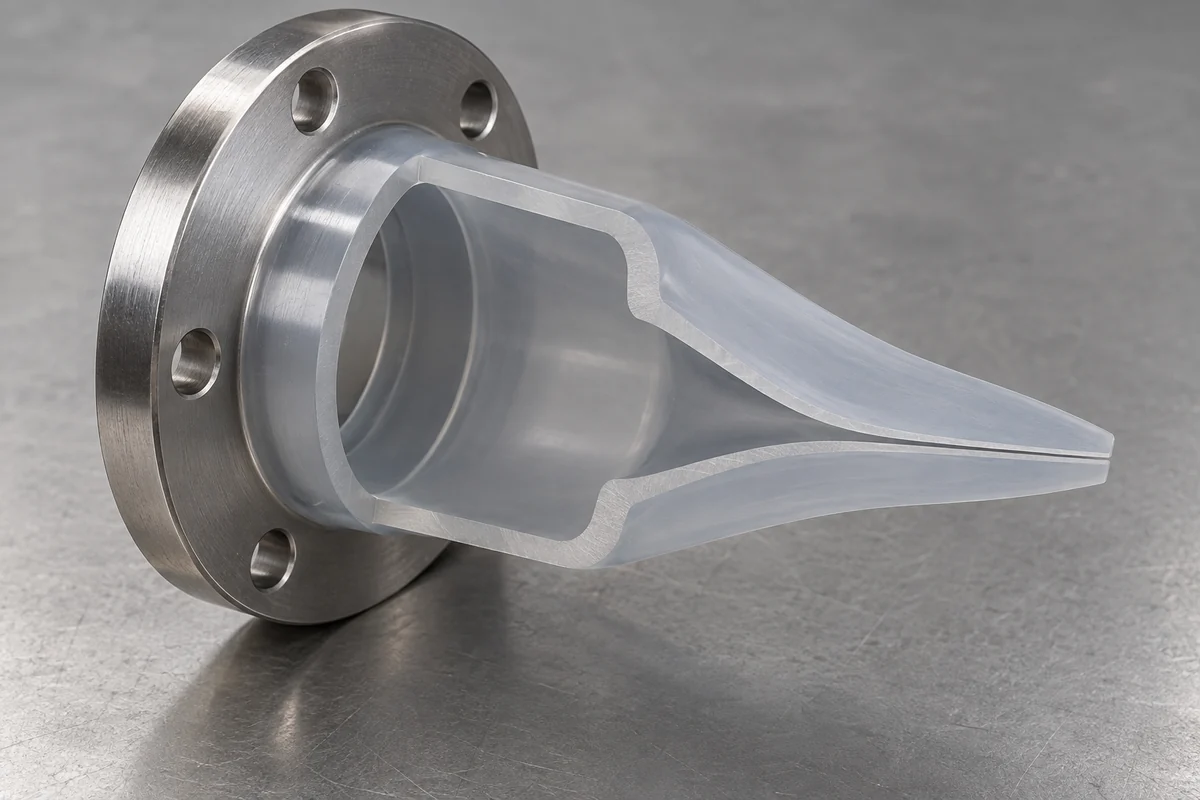
Wall transition
Review the transitions that affect tooling, demolding and dimensional inspection.
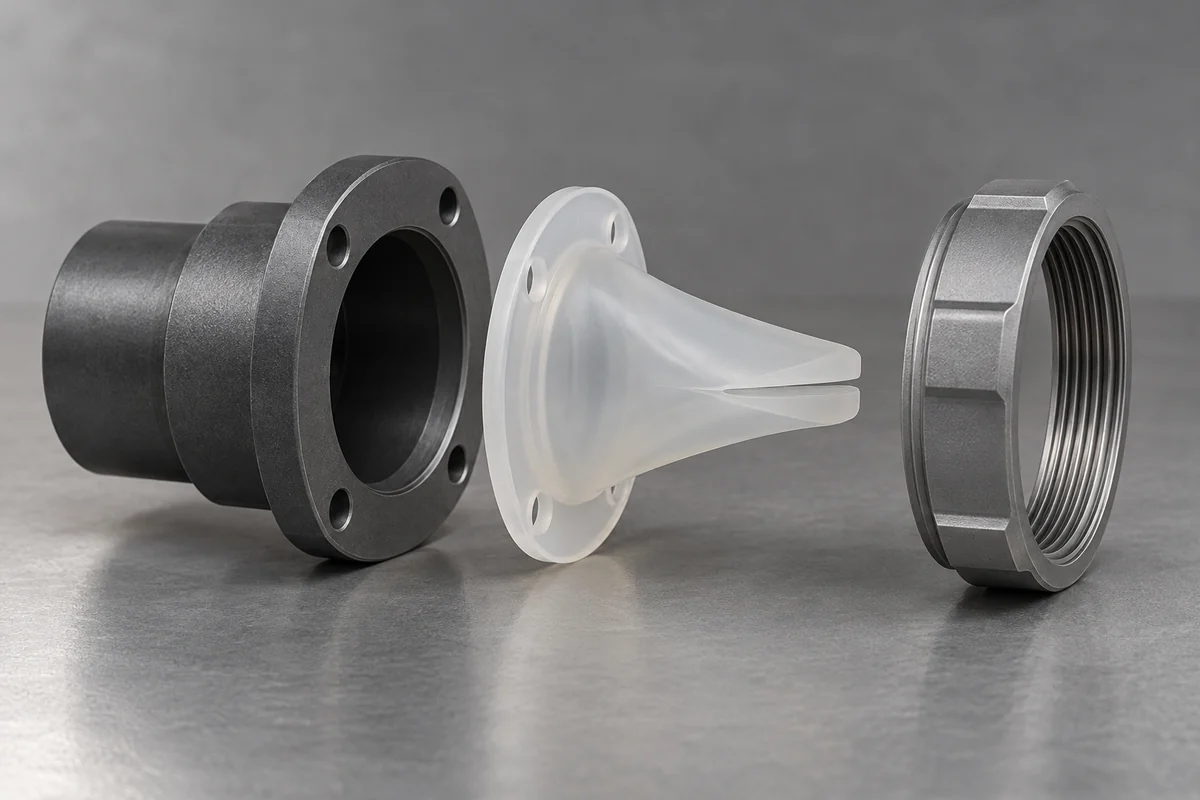
Housing integration
Provide mating-part revisions and identify which components are included in supply.
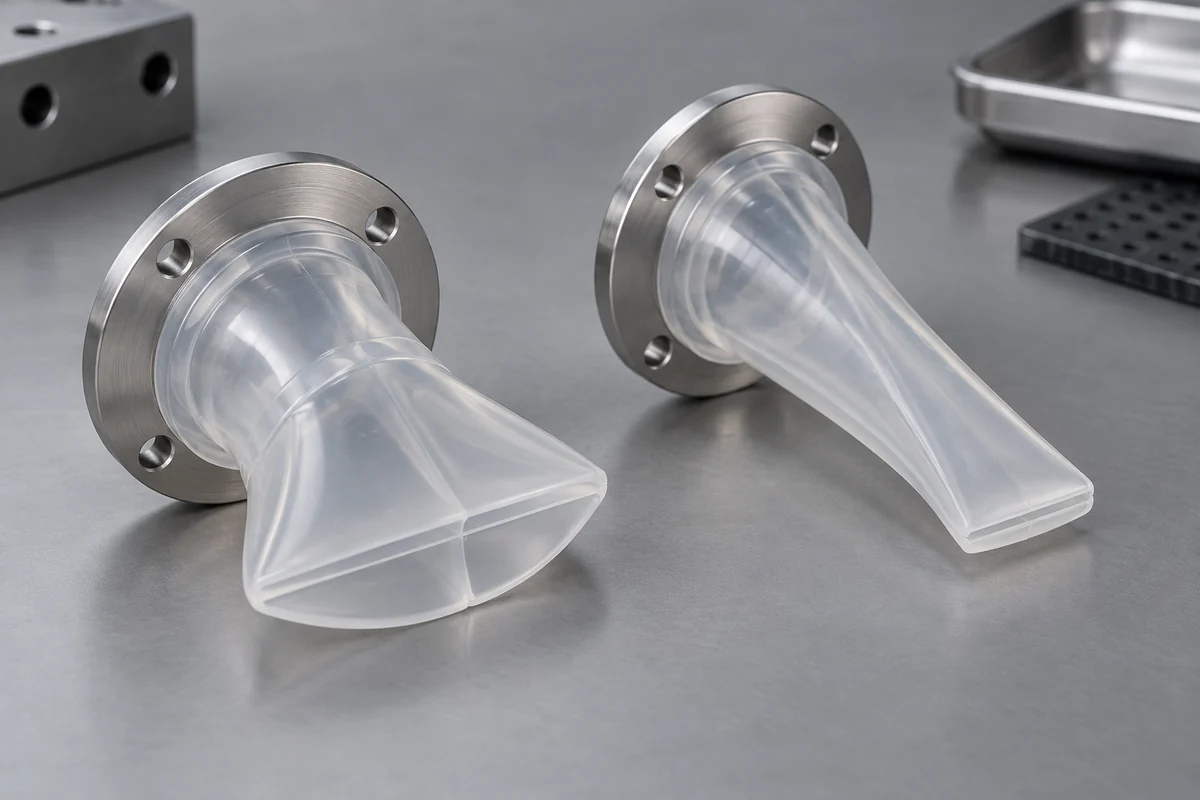
Bill proportions
Different shapes require their own flow and reverse-sealing evaluation; appearance is not a rating.
Illustrative configurations. Final specifications follow your approved drawings.
Application fit
Small elastomeric check components for custom equipment
Evaluate available standard parts first. A dedicated molded design may be appropriate when the required housing interface, envelope or documented supply configuration differs.
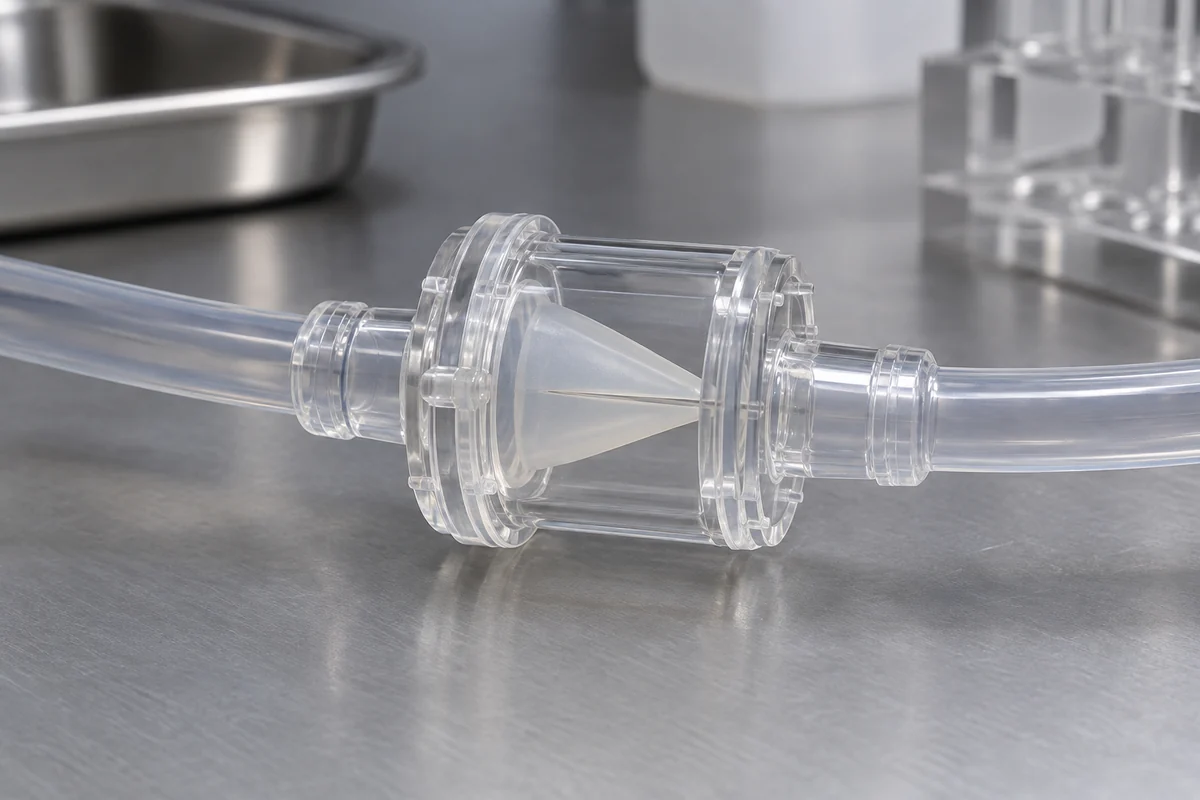
Liquid-transfer components
A customer-defined one-way element reviewed with its liquid, operating pressure difference and required flow.
Compact housing assemblies
Flanged or retained valve components developed around a controlled mating housing and installation method.
Development and pilot programs
Tooling and traceable trial parts linked to defined geometry, opening and reverse-leakage checks.
Quote-ready inputs
What to send for a meaningful quotation
Use the same drawing and requirements for every proposal. Mark open decisions explicitly so that a low price does not conceal a different deliverable.
| Area | Please provide | Review before release |
|---|---|---|
| Valve and housing | CAD, drawing revisions, mounting interface, free space and delivered assembly scope. | Identify flange sealing and lip clearance separately. |
| Fluid and operation | Fluid identity, temperature, pressure difference, duty and storage or cleaning conditions. | Keep normal service, proof testing and fault conditions distinct. |
| Functional acceptance | Opening criterion, flow at specified differential pressure, reverse pressure, hold time and leakage limit. | Agree fixtures, measurement methods and sample populations. |
| Material and finishing | Approved LSR grade or selection requirements, post-cure, slit, cleaning and any coating. | Evaluate the delivered finished state rather than only a base material. |
| Quantity and documentation | Trial and production demand, traceability, reports, packaging and change notification. | Separate prototype results, pilot acceptance and production release. |
From drawing to approval
Link molding and finishing to the required valve behavior
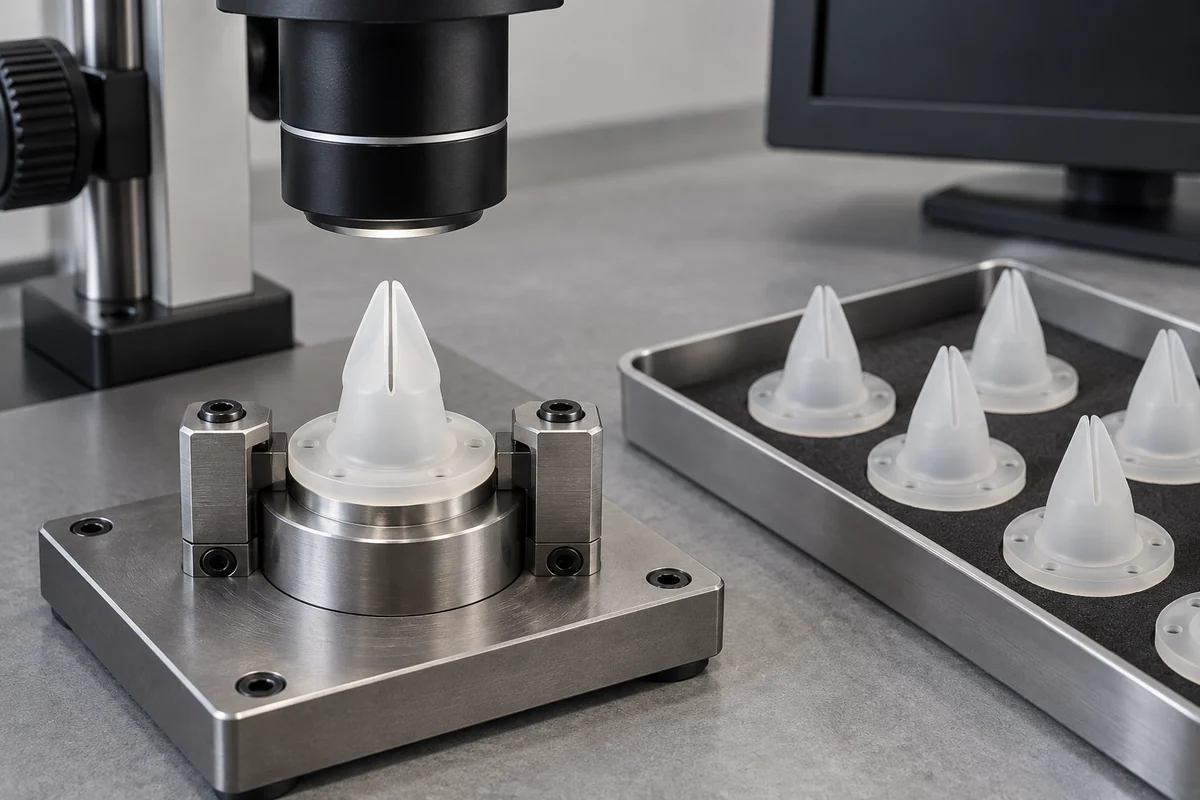
Review the assembled requirement
Confirm the valve, housing, fluid conditions and responsibility for system qualification.
Define tooling and finishing
Review lips, wall transitions, parting interfaces, opening formation and any subsequent treatment.
Inspect and test traceable samples
Connect cavity and batch identification with dimensions, opening pressure, flow and reverse-sealing methods.
Release the documented configuration
Record approvals, remaining validation and controls for material, tool and finishing changes.
Practical engineering and buying guides
Decisions to make before production
- Custom Silicone Duckbill Valves: What to Include in an RFQSpecify a custom silicone duckbill valve with housing geometry, fluid conditions, opening pressure, backflow testing and defined finishing requirements.
- Duckbill Valve Cracking Pressure: Specify the Test ConditionsDefine duckbill valve cracking pressure separately from operating flow and resealing. Review pressure taps, wetting, ramp method and finished-part condition.
- Duckbill Valve Backflow Tests: Separate Part and Fixture LeaksPlan a duckbill valve reverse-leakage test with defined fluid, pressure, hold time, detection limit and fixture checks. Keep sample counts and claims aligned.
- Duckbill vs Umbrella Valves: Compare the Housing and Flow PathCompare duckbill and umbrella check valves by sealing interface, housing space, mounting, opening behavior and validation before choosing custom tooling.
- LSR Duckbill Valve Lips and Slits: A Manufacturing ReviewReview LSR duckbill lip geometry, molding, post-slitting and surface finishing as one controlled process. Define inspection without assuming functional results.
- Silicone Duckbill Materials: Post-Cure and Evidence ReviewChoose silicone valve materials with grade-specific information, controlled post-curing and finished-part tests. Separate material data from device approval.
Before you request a quote
Do you supply standard replacement valves?
This page describes custom molded components made to an approved drawing and manufacturing scope. Provide a catalog reference if it helps explain the function, but do not assume interchangeability or an existing stocked equivalent.
Can you guarantee an opening pressure from the drawing alone?
No. A target must be paired with a test method and verified on relevant finished samples. Housing fit, material and finishing are part of that evaluation.
Is the slit molded or cut afterward?
Both possibilities can be reviewed. The chosen route depends on the geometry, tooling and functional evidence. Any secondary slitting operation needs a defined fixture and inspection scope.
Does silicone material documentation approve the finished device?
No. The responsible device team must assess the evidence for the actual material, processing, contact and finished configuration. Component test results are not blanket device approval.
What should a reverse-leakage requirement contain?
Specify fluid, temperature, reverse pressure, stabilization and hold duration, detection method, acceptance limit and sample coverage. Keep the fixture and mounting condition controlled.
Your next step
Discuss the part with its intended function.
Send the valve and housing drawings, intended fluid and test requirements. We can review a defined custom LSR component scope, including tooling, finishing, traceable samples and agreed inspection.
Explore our injection molding service or review other custom molded applications.