
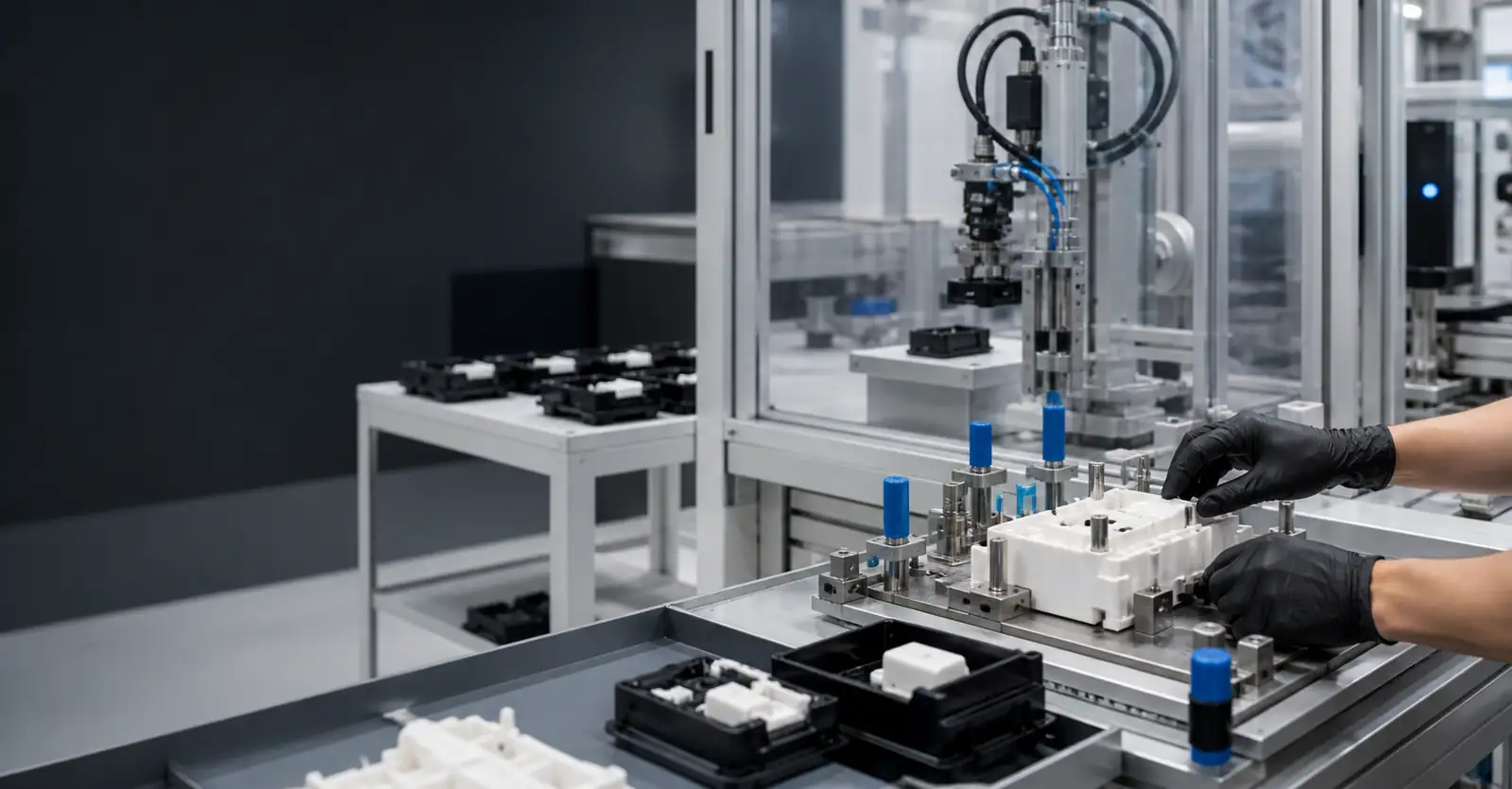
Production volume is usually the deciding factor. Manual assembly lines, built around part-specific fixtures, have low setup cost and stay flexible if a design changes partway through a program. Automated equipment costs significantly more to design and build, but drives down per-unit cost as volume climbs.
Assembly Services
Assembly services at Fecision cover mechanical assembly of molded components — a manual line built around part-specific fixtures, or automated assembly equipment, chosen based on the product's form and assembly requirements. The right approach depends on volume, complexity, and how often the design is likely to change.
ManualPart-Specific FixturesAutomatedProduction EquipmentDFMMethod ConfirmationQualityIn-Line Inspection
What Assembly Services Cover
Assembly turns individually molded components into a finished, multi-part product — fitting, aligning, and securing parts together after they come off the molding line. The right setup depends entirely on what's being assembled: a simple two-part snap-together housing needs a very different approach than a multi-component assembly with several orientation-sensitive parts.
| Attribute | Specification |
|---|---|
| Assembly types | Manual assembly lines with part-specific jigs and fixtures; automated assembly equipment |
| Evaluation basis | Product geometry, component count, orientation sensitivity, target volume |
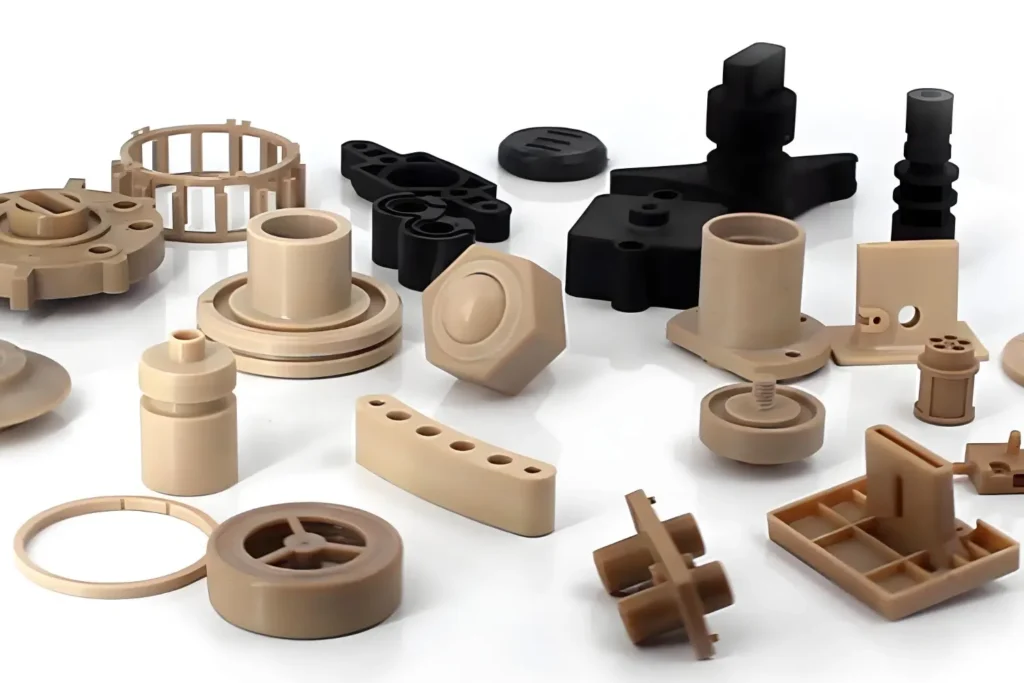
| Suitable parts | Multi-component molded assemblies requiring mechanical fit, alignment, or fastening |
| Notes | Assembly method gets confirmed during DFM, alongside part and fixture design |
Manual vs. Automated Assembly
Design complexity and change frequency matter too. A product still likely to see design revisions is often better served by a manual line, since re-fixturing a jig is far less disruptive than reprogramming and re-tooling automated equipment. A locked, stable design at real volume is where automation earns its cost.
Why Assembly Alongside Molding Matters
Keeping assembly with the same vendor that molds the components removes a handoff — parts don't ship to a separate assembly house, get re-inspected on arrival, and wait in a second queue before the finished product ships. That handoff is where schedule risk and miscommunication about tolerances or fit typically creep in.
Running assembly on the same site as molding also means a fit or fixture problem discovered during assembly gets traced back to the molded part immediately, by the same team that can adjust the mold or process to fix it — not flagged to a different company that has to escalate it back.
Designing a Part for Assembly
A few design habits make assembly more reliable, whether it runs on a manual line or automated equipment:
Build in clear alignment features — locating pins, asymmetric mating surfaces, or keyed geometry — so parts can only go together correctly, reducing the chance of a misassembled unit reaching inspection.
Account for tolerance stack-up across the full assembly, not just each part individually; small dimensional variations compound quickly once several components fit together.
Plan assembly sequence during part design, not after — a component that has to be installed last but is blocked by another feature means redesigning the part, not just the process.
Where possible, design for one clear orientation per part; components that can be installed multiple ways invite assembly errors, especially on a manual line.
Frequently Asked Questions
Can assembly be added to an existing molding program, or does it need to be planned from the start?
It's more effective when planned during DFM, alongside part and fixture design, since alignment features and tolerance stack-up are easier to build in from the start than to retrofit. It's still possible to add assembly to an existing program, but options may be more limited.
Is automated assembly always better than manual for high-volume parts?
Not automatically — it depends on whether the design is stable. High volume with a locked design is where automation pays off; high volume with a design still likely to change can make a manual line the more practical choice until things settle.
How is assembly quality checked?
Inspection scope is scaled to the assembly's complexity — simpler assemblies may be checked on a sampling basis, while more complex or orientation-sensitive assemblies get a more thorough or full inspection plan, confirmed during DFM.
What information is needed to scope an assembly requirement?
Part geometry and drawings for every component in the assembly, target production volume, and how likely the design is to change during the program. That's enough to recommend a manual or automated approach and confirm fixture requirements.
Assembly Services for Molded Parts
Mechanical assembly for injection molded parts — manual lines with custom fixtures or automated equipment, matched to volume and complexity.