info@fecision.com

Precision Mold Components Manufacturer

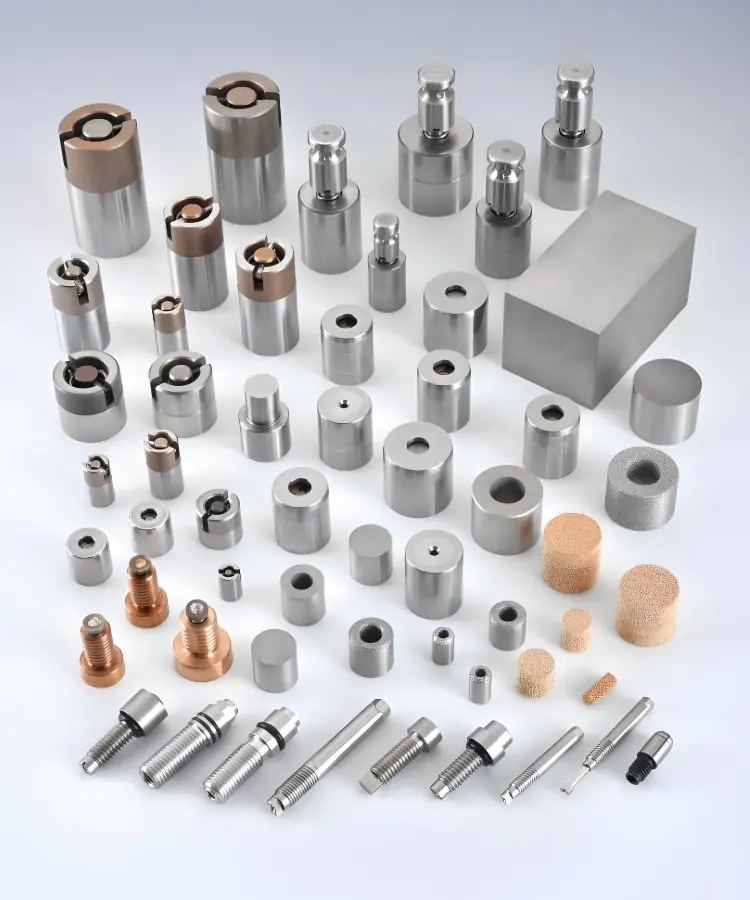
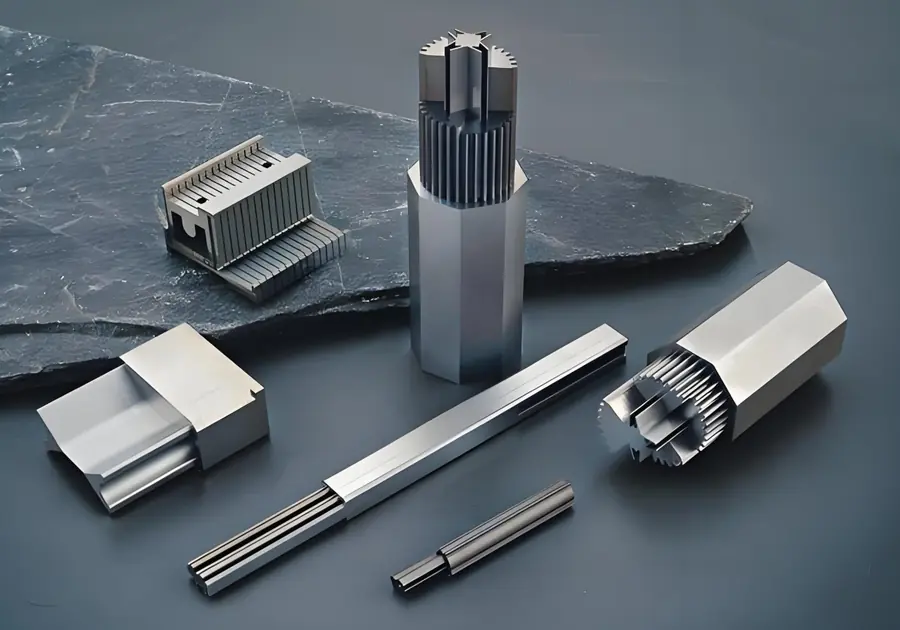
We produce various mold parts such as core pins, cavity inserts, ejector pins and blades, lifters, sliders in H13, S136, NAK80, SKD61, and tungsten carbide.

  • High-wear mold parts machined to ±0.005 mm tolerances.
  • Delivered with surface finishes down to Ra 0.4 µm and optional PVD/DLC coatings for extended cycle life.
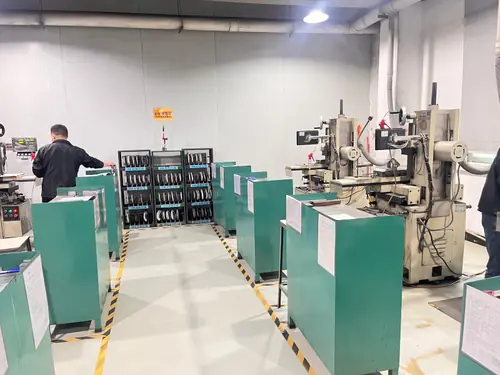
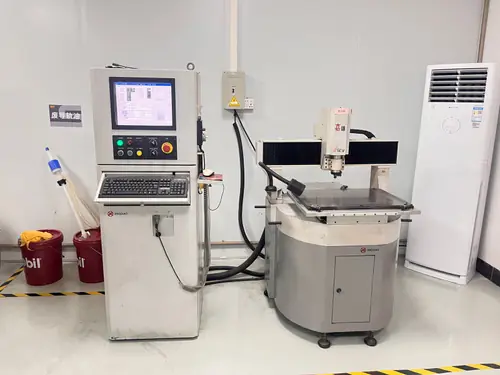
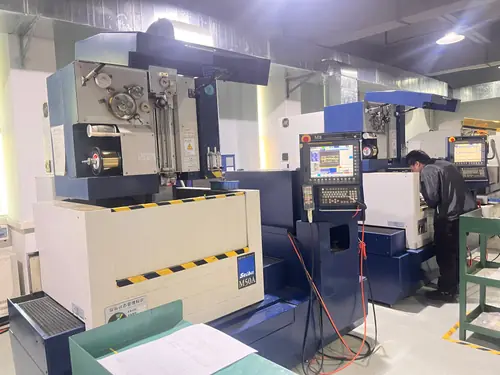
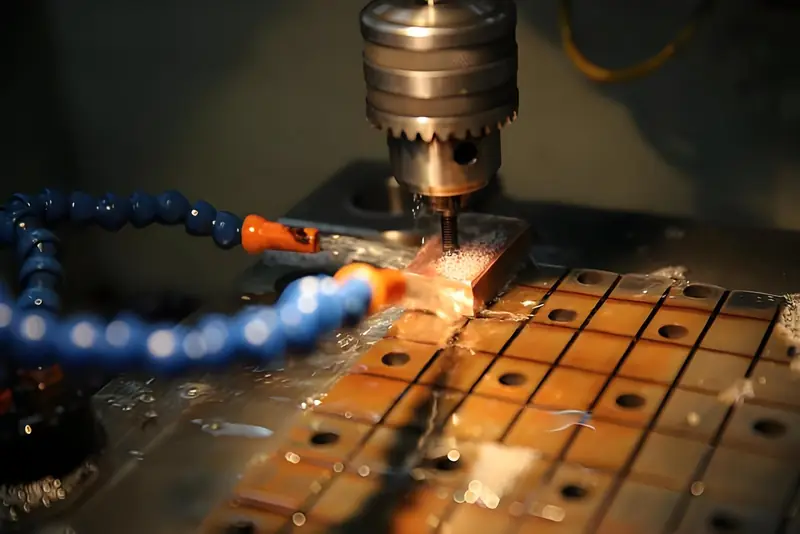
  • CNC, wire-EDM, and precision grinding process applied.
Request Quote
ISO 9001:2015 Certified Processes
ISO 13485: 2016 Medical Device
AS9100 Quality Management
Faster Lead Time for Production Needs
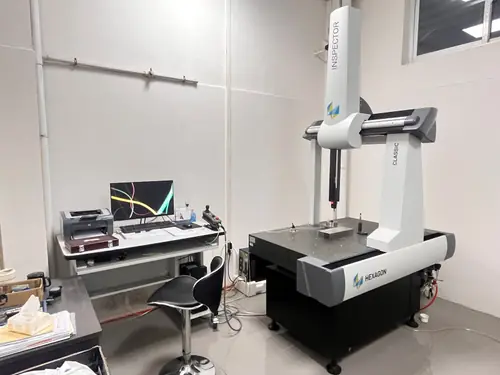
In-Process Inspection with CMM
Custom injection mold parts

Precision Engineered Components

Custom Injection Mold Parts Tailored to Your Specifications

Injection mold components form the cavity, core, runner, cooling, ejection, alignment, and motion systems that control molded-part geometry and repeatability. These components must maintain dimensional accuracy under injection pressure, molding temperature, and repeated production cycles.

From simple single-cavity tools to complex multi-cavity injection molds with slides, lifters, inserts, and conformal cooling, component quality directly affects filling balance, cooling, release, surface finish, maintenance, and tool life.

Key Characteristics of High-Quality Mold Components

Exceptional dimensional accuracy and stability

Superior surface finish for high-quality part

High wear resistance for extended service life

Optimal thermal conductivity for efficient cooling

Precision alignment features for consistent part quality

List of Mold Components

There are different types pf mold components that can be classified into different categories.

ClassificationFunctionParts
Molding ComponentsMolding Components

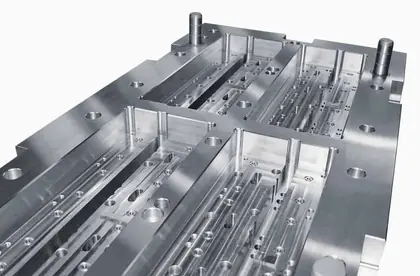
Core components directly involved in product formation, responsible for shaping the final product

Cavity, Core, Core Pin, Core Pin Retainers, Cavity Interlocks, Inserts, Sliders, Lifters, Thread Ring
Runner System ComponentsRunner System Components

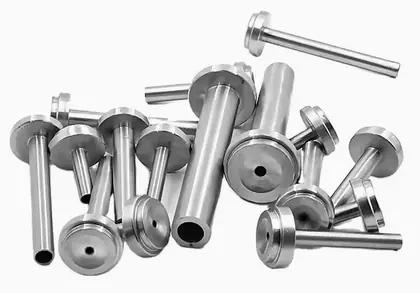
Responsible for transporting molten material from the injection molding machine nozzle to the mold cavity

Hot Runner, Sub-runner, Runner Plate, Sprue Bushing, Gates, Nozzles, Mainfold, Runner Shut-off Insert
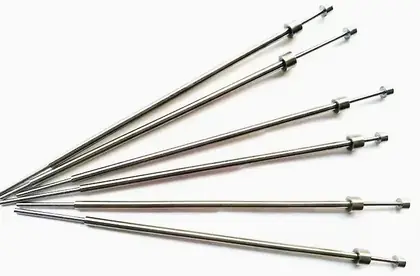
Ejection System ComponentsEjection System Components

Used to eject the product from the mold

Ejector Pins, Ejector Sleeves, Ejector Blades, Ejector Plates, Ejector Rod, Return Pin, Ejector Block, Ejector Spring, Stripper Plate, Pulerl Pin, Wear Plate
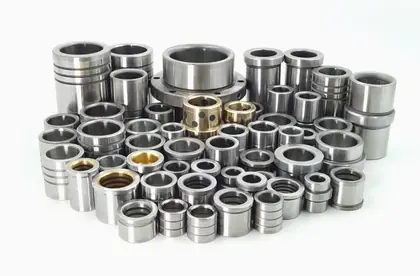
Guiding & Locating ComponentsGuiding & Locating Components

Ensure accurate alignment and smooth operation of the mold

Guide Pins, Guide Pillars, Guide Bushings, Side Guide Block, Guide Rail, Guide Slider, Locating Pins, Locating Rings, Locating Blocks, Alignment Locks, Slide Retainers, Ejector Guide Pins, Return Spring, Stop Pins, Stop Block, Stop Discs, Mating Blocks, Angle Pins, Leader Pin, Dowels
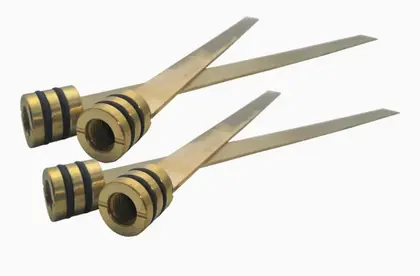
Cooling System ComponentsCooling System Components

Used to adjust mold temperature, ensure product quality and shorten molding cycle

Cooling Pin, Cooling Tubes, Baffles, Cascades, Cooling Nipples, Waterline Elbow, Fittings, Connector Plug, O-ring/Seal, Cooling Inserts, Pipe Plugs
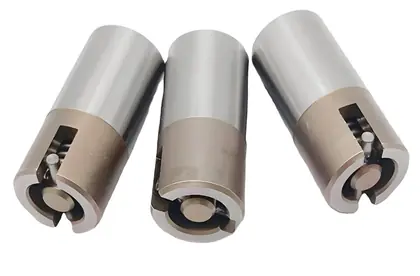
Venting System ComponentsVenting System Components

Evacuate air and gases from the mold to prevent air entrapment defects

Vent Plug, Venting Bushing, Venting Ejector Pins, Venting Blocks, Vent Grooves, Air Vent Valves, Air Poppets, Porous Inserts, Porous Metal/Steel
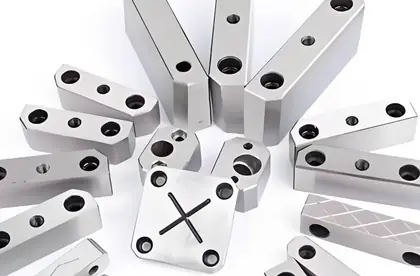
Structural & Support ComponentsStructural & Support Components

Provide support and connection to ensure mold stability

Mold Base, Mold Plate, Mold Pad, Support Pillars/Columns, Fasteners, Bolts & Nuts, Mold Plate Screw, Limit Blocks, Limit Pins, Spacer Blocks

Ready to Start Your Mold Component Project?

Contact us to discuss your requirements and get a personalized quote.

Our professional team of mold part experts is ready to help with your project.

Request Quote

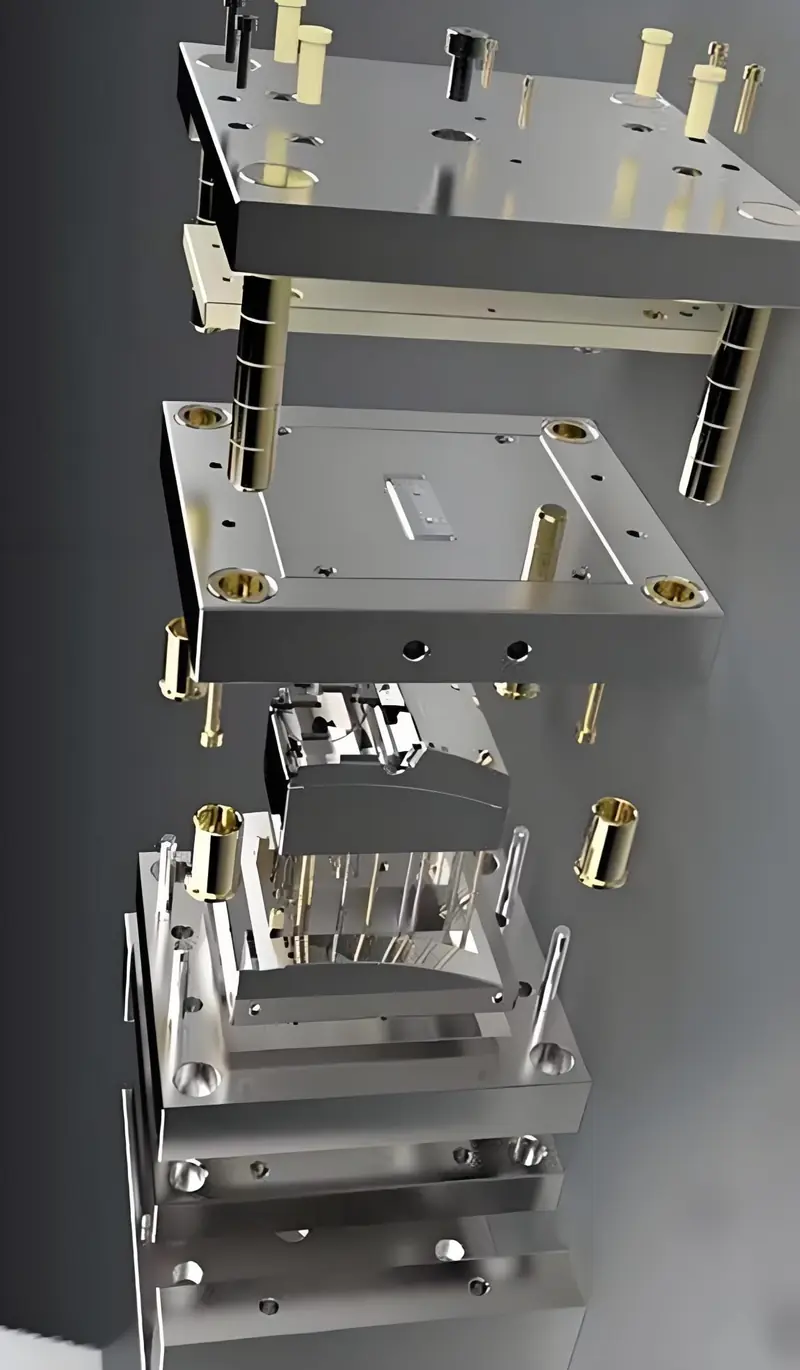
Parts and Components of an Injection Mold

The building blocks of injection molds, each component playing a critical role in the production of high-quality plastic parts.

Parts and components of an injection mold

Core Components of an Injection Mold

These fundamental components form the basic structure of every injection mold, responsible for shaping the plastic material and controlling the molding process. They are designed for durability, precision, and consistent performance.

Cavity and Core

The negative and positive components that form the shape of the final part. The cavity is the female part, while the core is the male part that creates internal features.

Sprue Bushing

Connects the injection molding machine’s nozzle to the mold, providing a passage for molten plastic to enter the mold system.

Runners and Gates

Channels that distribute molten plastic from the sprue to the cavity. Gates control the flow rate and pressure of plastic entering the cavity.

Ejector System

Includes ejector pins, sleeves, and plates that remove the finished part from the mold cavity after it has solidified.

Cooling System

Channels within the mold that circulate coolant to control mold temperature, ensuring proper solidification and cycle time optimization.

Guides and Locators

Ensure precise alignment between mold halves during closing, maintaining dimensional accuracy and preventing damage to mold surfaces.

Advanced Injection Mold Components for Complex Designs

For complex part geometries and specialized molding requirements, advanced components provide solutions for undercuts, thread formation,
multi-material molding, and other challenging design features.

Discuss Your Designs

Slider and Lifters

Mechanisms that create undercuts and complex geometries by moving perpendicular to the mold opening direction, retracting before part ejection.

Threaded Inserts and Cores

Rotating components that form internal or external threads in the molded part, often synchronized with the mold opening/closing cycle.

Hot Runner Systems

Maintains molten plastic in the runner system, eliminating runner waste and enabling faster cycle times and more consistent filling.

Valve Gates

Mechanically controlled gates that precisely regulate the flow of molten plastic into the cavity, improving part quality in multi-cavity molds.

Insert Molding Components

Specialized fixtures and positioning systems for accurately placing metal or plastic inserts within the mold cavity during the molding process.

Gas Assist Components

Systems that inject gas into thick sections of the molded part, reducing cycle time, minimizing warpage, and improving surface finish.

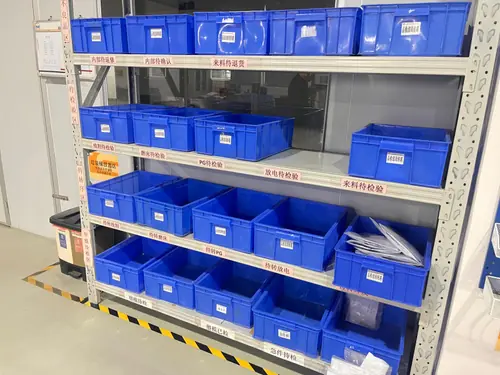
Fecision Mold Component Tooling Network

In response to different service types and diverse business needs, we have deployed suppliers with different manufacturing capabilities.

Common Materials for Injection Mold Components

Selection of appropriate materials is critical for mold performance, with different alloys offering unique properties to meet specific application requirements.

Tool Steels

The most common materials for mold components, offering excellent combination of hardness, toughness, and wear resistance.

  • AISI P20 (Pre-hardened)
  • AISI H13 (Heat resistant)
  • AISI S7 (Shock resistant)
  • AISI D2 (High wear resistance)
Best for: General purpose molds, high-volume production, abrasive materials

Stainless Steels

Offer superior corrosion resistance and polishability, ideal for molds requiring high surface finish or used with corrosive materials.

  • 420 Stainless Steel
  • 440C Stainless Steel
  • 1.2083 (Medical grade)
  • 1.2316 (Corrosion resistant)
Best for: Medical molds, food-grade applications, corrosive environments

Special Alloys

Advanced materials for specialized applications requiring extreme temperature resistance, conductivity, or other unique properties.

  • Beryllium Copper
  • Aluminum Bronze
  • Titanium Alloys
  • Nickel-Based Superalloys
Best for: Medical molds, food-grade applications, corrosive environments

Material Properties Comparison

MaterialHardness (HRC)Wear ResistanceCorrosion ResistanceThermal ConductivityPolishability
P20 Tool Steel28-32MediumLowMediumGood
H13 Tool Steel42-48HighLowMediumGood
420 Stainless Steel48-52HighGoodMediumExcellent
1.2316 Stainless Steel30-34MediumExcellentMediumExcellent
Beryllium Copper30-40MediumGoodExcellentGood
D2 Tool Steel58-62Very HighLowLowFair

Technical Specs for Mold Components

At Fecision, we design and create precise custom mold components from high-quality materials.
Our processes ensure unmatched consistency and repeatability at fast lead times and affordable pricing.

CategoryParameterTypical Value/Standard
Material PropertiesHardened steel grade (e.g., H13, S136)AISI H13 (HRC 48-52)
Material PropertiesThermal conductivity (tool steels)24-30 W/m·K
Dimensional AccuracyLinear tolerance (core/cavity)±0.01 mm
Dimensional AccuracyCoaxiality (ejector pins)≤0.005 mm
Surface TreatmentSurface roughness (polished cavities)Ra ≤0.2 μm
Surface TreatmentNitriding hardnessHV 800-1000 (DIN 50190)
Machining ParametersCNC positioning accuracy±0.005 mm (5-axis)
Machining ParametersWire-cut precision (LS-WEDM)±0.003 mm
Quality Control3D measurement accuracy (CMM)±0.002 mm
Quality ControlMold base standardHASCO/DME

Processing Technology of Injection Mold Parts

Advanced manufacturing processes that enable the production of high-precision mold components with complex geometries and superior surface finishes.

Precision CNC Machining

Precision CNC Machining

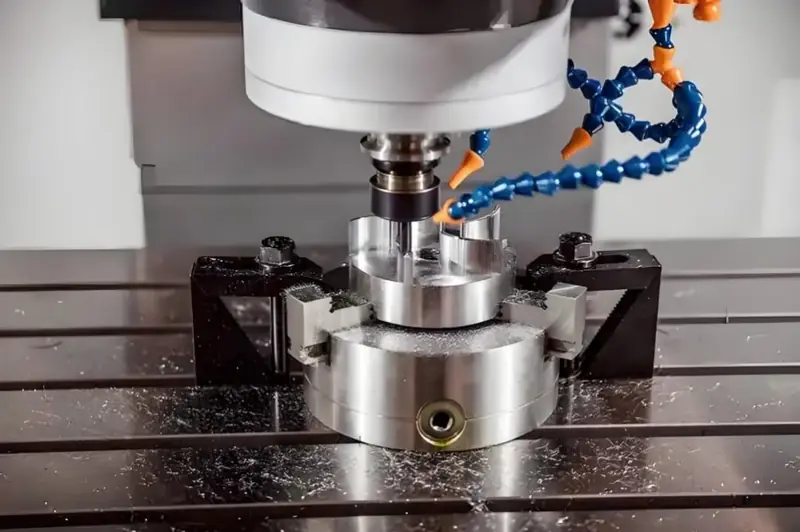
Computer-controlled machining processes that create complex mold components with exceptional accuracy and repeatability. Multi-axis machining centers enable the production of intricate geometries in a single setup.

CNC Milling3-5 axis capabilities for complex 3D featuresCNC TurningPrecision turning for cylindrical componentsTolerance CapabilityUp to ±0.0001" (0.0025mm)Surface FinishDown to 4 RMS
Electrical Discharge Machining

Electrical Discharge Machining (EDM)

Non-contact machining process that uses electrical discharges to shape hard materials with extreme precision, ideal for complex cavities, thin walls, and intricate details that are difficult to machine with traditional methods.

Sinker EDMFor complex 3D cavities and shapesWire EDMFor precision cutting and contoursTolerance CapabilityUp to ±0.00005" (0.0013mm)Surface FinishDown to 8 RMS

Grinding & Polishing

Precision abrasive processes that achieve tight tolerances and superior surface finishes critical for mold performance and part quality.

  • Surface grinding for flatness
  • Cylindrical grinding for roundness
  • Jig grinding for precision holes
  • Progressive polishing for mirror finishes

Heat Treatment

Controlled heating and cooling processes that optimize the mechanical properties of mold materials for enhanced performance and longevity.

  • Hardening and tempering
  • Nitriding for surface hardness
  • Carburizing for wear resistance
  • Stress relieving

Surface Treatments

Specialized processes that modify the surface properties of mold parts to improve wear resistance, release properties, and corrosion resistance.

  • PVD and CVD coatings
  • Chromium plating
  • Texturing for part aesthetics
  • Release agents and coatings

Mold Parts Manufacturing Process

1

Design & Engineering

CAD modeling and DFM analysis to optimize component design for manufacturability, performance, and cost-effectiveness.

2

Material Selection

Choosing the optimal material based on application requirements, considering factors like hardness, wear resistance, and corrosion resistance.

3

Precision Machining

Advanced CNC machining and EDM processes to create components with exceptional accuracy and surface finish.

4

Heat Treatment

Controlled heat treatment processes to optimize material properties for the specific application requirements.

5

Finishing & Coating

Precision grinding, polishing, and specialized coatings to achieve final dimensions, surface finish, and performance characteristics.

6

Quality Inspection

Comprehensive inspection using advanced metrology equipment to verify dimensions, surface finish, and material properties.

Why Fecision for Mold Components?

Mold components manufacturing

Precision and Accuracy

Using state-of-the-art CNC machining, EDM, and other advanced mold-making techniques, Fecision ensures injection mold components meet tight tolerances and quality standards.

Customization

Our team works closely with customers to engineer each component around the target injection mold, resin, cavity layout, production volume, and maintenance plan.

Mold Trial Readiness

Components are fitted, inspected, and validated as part of the injection mold assembly before trial molding and production approval.

End-to-End Injection Mold Support

From DFM and mold design through component manufacturing, assembly, trial molding, and maintenance support, Fecision controls the injection mold workflow.

Mold Components Manufacturing Workflow

Manufacturability Evaluation

The initial step involves assessing the manufacturablity of the mold component. If it's deemed feasible, we proceed with production immediately. If not, we will provide a detailed DFM (Design for Manufacturability) report to the customer. If necessary, mold flow analysis is performed to simulate the flow of molten material within the mold.

Material Selection

Next, choose the right material for each injection mold component. Common choices include hardened tool steels, pre-hardened mold steels, stainless mold steels, aluminum, and copper alloys, selected around resin, wear, corrosion, polish, cooling, and tool-life requirements.

Mold Components Manufacturing

Once the design and materials are finalized, the mold component undergoes CNC machining. If required, the mold component may undergo heat treatment, depending on the material and intended application. For certain components, surface hardening methods such as nitriding or carburizing are applied to increase wear resistance.

Shipping

For molds with multiple components, such as multi-cavity molds or molds with inserts, the individual components are carefully assembled into the final mold system. Once our engineers confirm the product meets all requirements, it will be shipped. We maintain ongoing communication to ensure the customer is fully satisfied with the product they receive.

Let's Start!

Together, we can make something remarkable!

Let us turn your vision into reality. Provide us with your project details, and we'll create a customized proposal designed specifically for you.

Get A Quote

Mold Components FAQs

Can you provide mold components for both plastic and metal injection molding?+

Yes, mold components can be designed and manufactured for both plastic injection molding and metal injection molding (MIM). The components are tailored for each process, with specific attention to factors like material compatibility, thermal conductivity, and part geometry.

What are the key factors that affect the design of mold components?+

The design of mold components is mainly influenced by part geometry and complexity, the material used, production volume and tolerance and accuracy.

What is the lead time for manufacturing mold components?+

The lead time for manufacturing mold components can vary based on factors such as complexity of the mold design, the materials used, required machining and finishing processes and production volume typically. It takes anywhere from a few days for simpler components to several weeks for more complex ones.

What is the lifespan of mold components?+

The lifespan of mold components largely depends on factors like the material used, the complexity of the part being molded, and the production volume. Mold components made from hardened steel for high-volume production can last hundreds of thousands to millions of cycles. Components in molds for lower-volume runs or non-abrasive materials may wear out more quickly.

Do you offer custom mold components manufacturing?+

Yes, Fecision offers custom manufacturing based on client specifications. Customization can include specialized shapes, unique sizes, and modifications to meet specific performance requirements or design challenges.

How do you ensure the quality of mold coomponents?+

At Fecision, quality control is achieved through a combination of methods, including dimensional inspection using tools like CMM (Coordinate Measuring Machines), material testing to ensure the mold components meet the required hardness and durability, functional testing of components like ejector pins and cooling channels to ensure they perform as expected, and surface finish inspections for proper polishing and finishing standards.

How do you ensure the mold components are compatible with the final mold assembly?+

Mold components are designed and manufactured to be compatible with the final mold assembly through tight tolerances, precise alignment, and regular communication with the assembly team. During the manufacturing process, components undergo testing and inspection to ensure they fit and function correctly in the mold assembly.

What types of mold components require surface finishing?+

Mold components such as cores, cavities, ejector pins, and guide pins typically require surface finishing. This can involve processes like polishing, grinding, or coating to improve surface quality, reduce friction, and enhance durability, especially in high-volume applications.

How do you ensure mold components are durable and long-lasting?+

To ensure durability and longevity, we use high-quality materials like hardened steel, stainless steel, or specialty alloys. We also apply heat treatments like quenching, tempering, or nitriding to enhance wear resistance and strength. Regular quality control checks during the manufacturing process ensure all components meet stringent durability standards.

Can you manufacture custom mold components for complex parts?+

Yes, Fecision specializes in the manufacturing of custom mold components for complex parts. With advanced technologies like CNC machining, EDM, and mold flow analysis, we can create highly detailed and precise components that meet the specific needs of your product.

Request A Quote

Tell Us About Your Project

Fields marked with are required.

By submitting this form, you agree that Fecision may use the supplied information to respond to your inquiry.