info@fecision.com

Mold Making Materials

Mold making materials at Fecision are matched to function, not defaulted to a single steel grade. Material choice is locked in alongside the mold design, not bolted on afterward. Steel grade, hardness target, and coating plan get decided at the DFM stage, before a single cavity is cut.

Explore Mold Steels
Precision steel mold components
50,000+cycles with coated inserts

Tool Steel for Mold Components

Mold Making Materials: Tool Steel for Mold Components

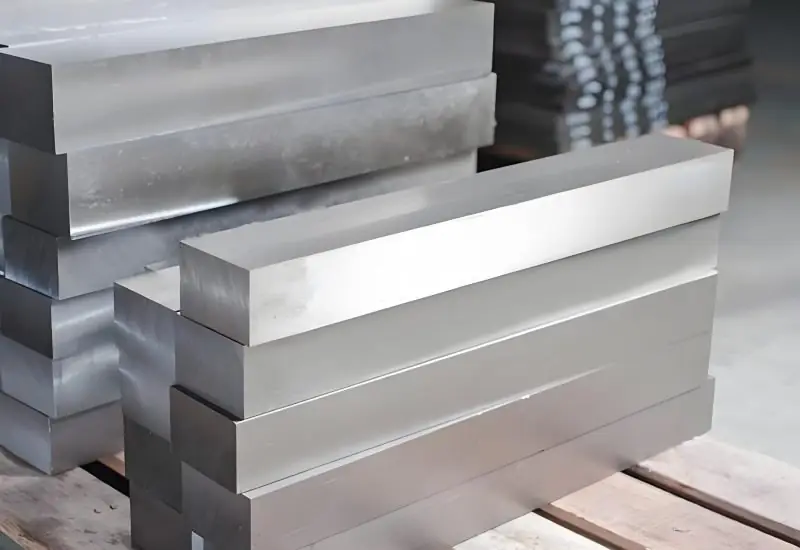
The selection of mold steel is one of the most critical decisions in injection mold tooling. The steel grade directly influences tool life, part quality, production efficiency, maintenance frequency, and overall tooling cost. An incorrect choice can result in premature wear, dimensional drift, surface finish degradation, or catastrophic tool failure.

Wear ResistanceCorrosion ResistancePolishabilityToughness

Selection by operating niche

Different Types of Mold Steels

Every steel choice represents a trade-off between upfront cost and long-term production stability. The primary selection drivers are: Wear Resistance, Corrosion Resistance, Polishability, and Toughness. No single grade is universally superior; each occupies a distinct operational niche.

Pre-Hardened Mold Steels

Pre-Hardened Mold Steels

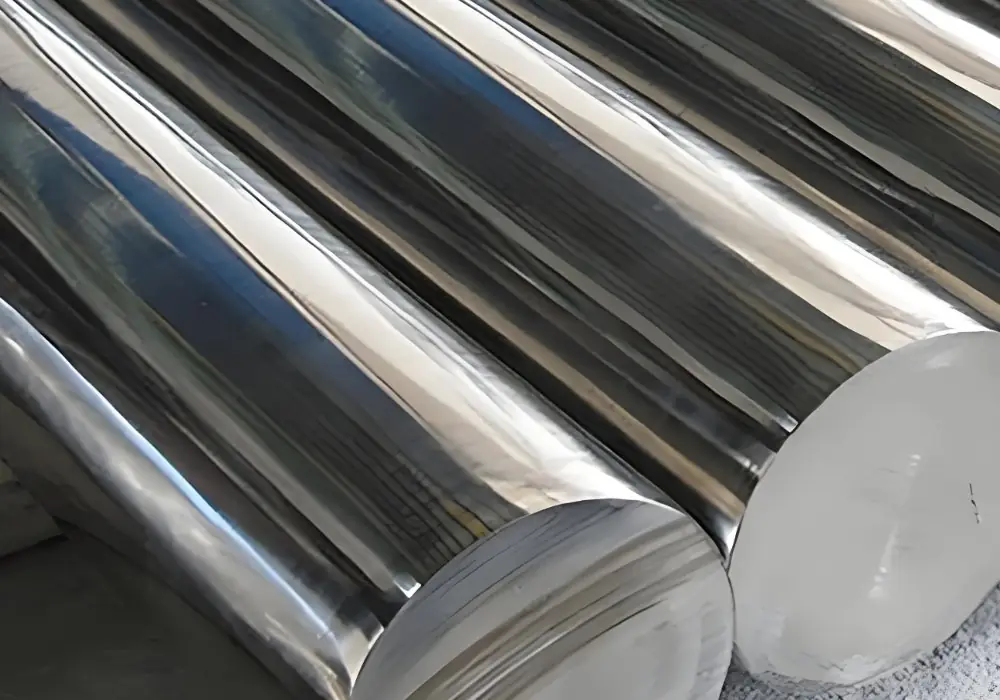
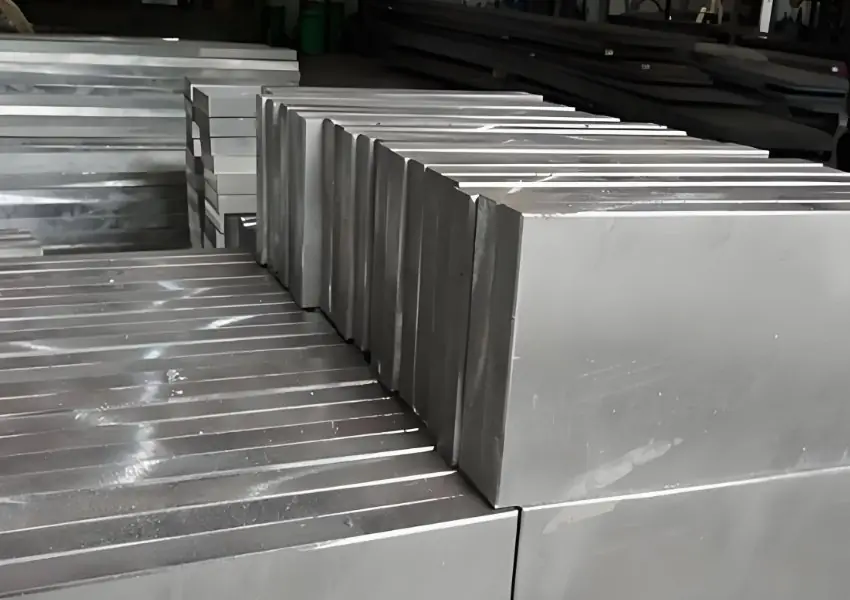
Pre-hardened mold steels are delivered in a heat-treated condition, typically at 28-43 HRC. They require no post-machining heat treatment, which significantly reduces lead time, eliminates distortion risk from hardening, and lowers overall tooling cost. These grades are the workhorses of general-purpose injection molding.

P20 (1.2311 / 3Cr2Mo)

  • Classification: chromium-molybdenum plastic mold steel
  • Features: 28-32 HRC, good toughness, low corrosion resistance, excellent machinability
  • Equivalent Grades: DIN 1.2311, AISI P20, JIS PDS-3, GB 3Cr2Mo
  • Applicable Mold Types: General-purpose injection molds, prototype tooling, bridge tooling, medium complexity molds, mold bases
  • Tool Life: 100,000 - 500,000 shots (unfilled resins)
  • Compatible Resins: ABS, PP, PE, PS, PC/ABS (unfilled commodity resins)
  • Surface Finish: SPI B2-B1 (standard texture, semi-gloss); not suitable for mirror polish
  • Cost: ★☆☆☆☆ / Most economical mold steel
  • Key Limitation: Not suitable for glass-filled resins, PVC, or high-temperature materials; rapid gate wear with abrasive compounds
718H (1.2738 / P20+Ni)

  • Classification: nickel-modified plastic mold steel
  • Features: 33-38 HRC (some offers 38-42 HRC), excellent toughness, through-hardening, good machinability
  • Equivalent Grades: DIN 1.2738, ASSAB 718, GB 3Cr2NiMo
  • Applicable Mold Types: Large cross-section molds, high-volume production molds, precision plastic molds
  • Tool Life: 500,000 - 1000,000 shots (unfilled resins)
  • Compatible Resins: ABS, PP, PA, PC/ABS, general engineering resins (unfilled)
  • Surface Finish: SPI B1-A3 (standard to semi-gloss)
  • Cost: ★★☆☆☆
  • Key Limitation: Not recommended for glass-filled resins or highly abrasive materials without H13 inserts

NAK80

  • Classification: precipitation-hardening plastic mold steel
  • Features: 37-43 HRC, good toughness, medium-high wear resistance, good machinability
  • Equivalent Grades: Daiso NAK80, modified 1.2738
  • Applicable Mold Types: High-gloss product molds, devices requiring mirror finish
  • Tool Life: 1000,000+ shots (with proper maintenance)
  • Compatible Resins: PMMA, clear PC, ABS, PP, PS, general-purpose resins
  • Surface Finish: SPI A1-A2 (mirror polish, Ra ≤ 0.025 μm); excellent optical-grade finish capability
  • Cost: ★★★☆☆
  • Key Limitation: Not suitable for glass-filled or highly abrasive resins

S136H

  • Classification: martensitic stainless mold steel
  • Features: 37-43 HRC, medium wear resistance, good corrosion resistance, good machinability
  • Equivalent Grades: ASSAB S136H, DIN 1.2083H, AISI 420H-modified
  • Applicable Mold Types: Medium-precision molds, corrosive environment molds, food-contact tooling
  • Tool Life: 500,000 - 800,000 shots
  • Compatible Resins: PC, PMMA, PVC (short runs), ABS, medical-grade resins
  • Surface Finish: SPI A2-A3 (high gloss); polishable to ~12,000 grit
  • Cost: ★★★☆☆
  • Key Limitation: Lower polish ceiling than fully heat-treated S136

Grade changes by component

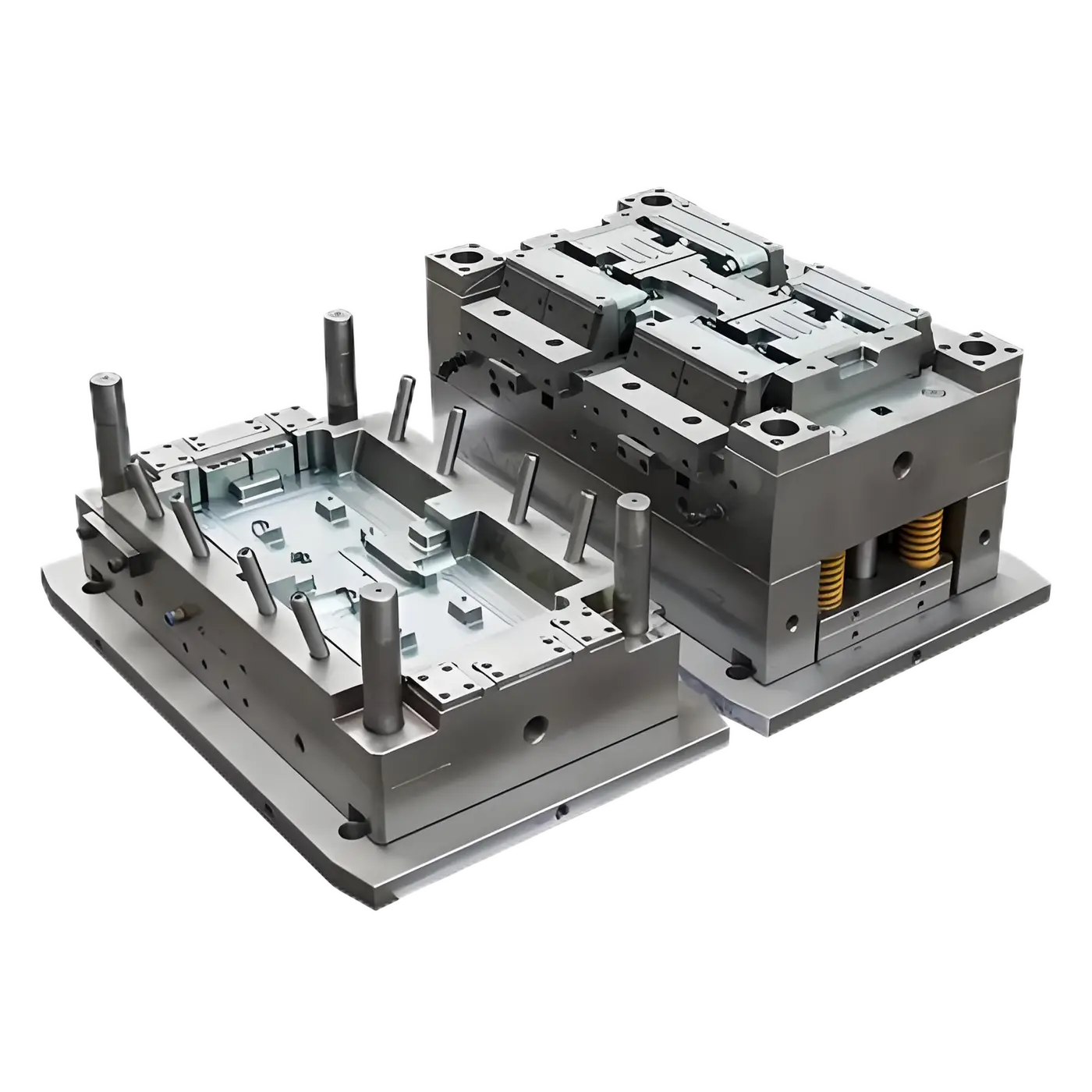
Mold Steel by Component

Different parts of a mold see different loads, so the steel grade changes by component rather than running one grade throughout the tool.

Open injection mold showing cavity, core, inserts and mold base
01

Mold base

S50C

Structural frame and load-bearing plates
02

Cavity

SKD61 or S136

Wear-facing surface that defines part geometry
03

Core

S136

Wear-facing surface opposite the cavity
04

High-wear inserts

Cr12MoV

Wear-critical zones, typically paired with DLC coating
05

Rapid tooling (validation)

Aluminum 7075 / P20 / NAK80

Short-run tooling for 100-5,000 piece validation

Long-life mold protection

Surface Treatment: Turning Tool Steel Into a Long-Life Mold

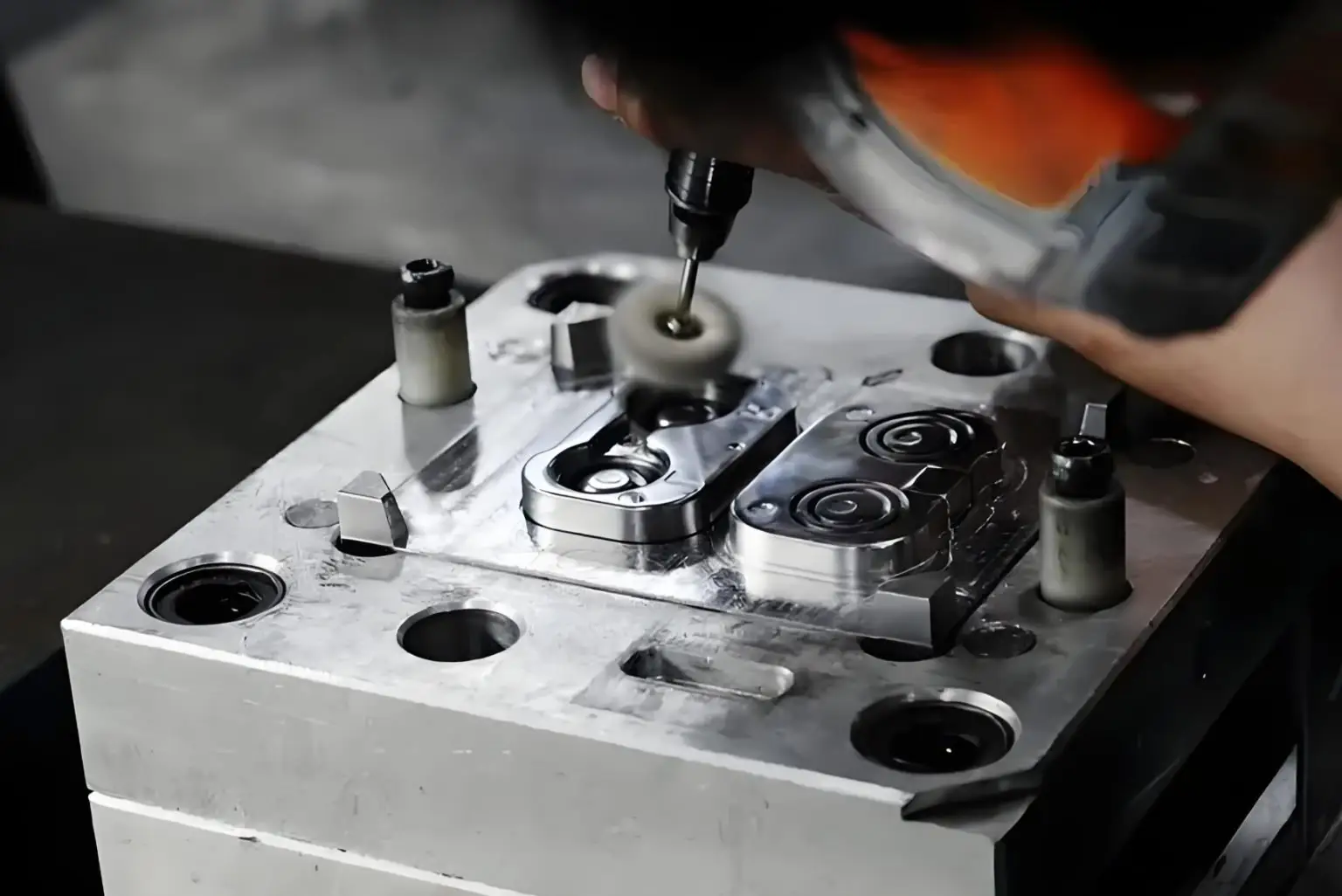
Steel selection is half the equation. Surface treatment is the other half, and it's where most of the cycle-life gain actually comes from. Fecision's standard path takes a mold from quench-and-temper up through a DLC coating, with nitriding and hard chrome plating available where a project calls for a different wear or corrosion profile.

Mold surface polishing and treatment
Base hardness (post quench-temper)HRC 58-62
Coating typeDLC (diamond-like carbon)
Coating hardness≥2200 HV
Coating thickness6-8 μm
Friction coefficient (post-coating)0.1-0.2
Working surface roughnessRa≤0.2 μm
Chemical nickel (connector inserts)5-10 μm
Gold plating (connector inserts)1-30 μm, as required

Process sequence: quench and temper the base steel to HRC 58-62, ultrasonic clean to remove oil and debris, polish the working surface to Ra≤0.2 μm, activate the surface with a plasma treatment, deposit the DLC layer by PVD or CVD, then verify thickness, Vickers hardness, and adhesion with a cross-hatch test before the mold goes back into production.

Choose by wear, geometry and volume

Get a Material and Coating Recommendation

Choosing mold making materials is really a wear-versus-cost decision made early: S50C carries the structural load, SKD61 or S136 hold the working geometry, and Cr12MoV plus DLC coating goes wherever a mold sees the most cycles. Every material decision happens at the DFM stage, whether the mold is headed for in-house production, standalone sale, or a rapid-tooling validation run first.

Precision behind the grade

Machining Capability Behind the Material Choice

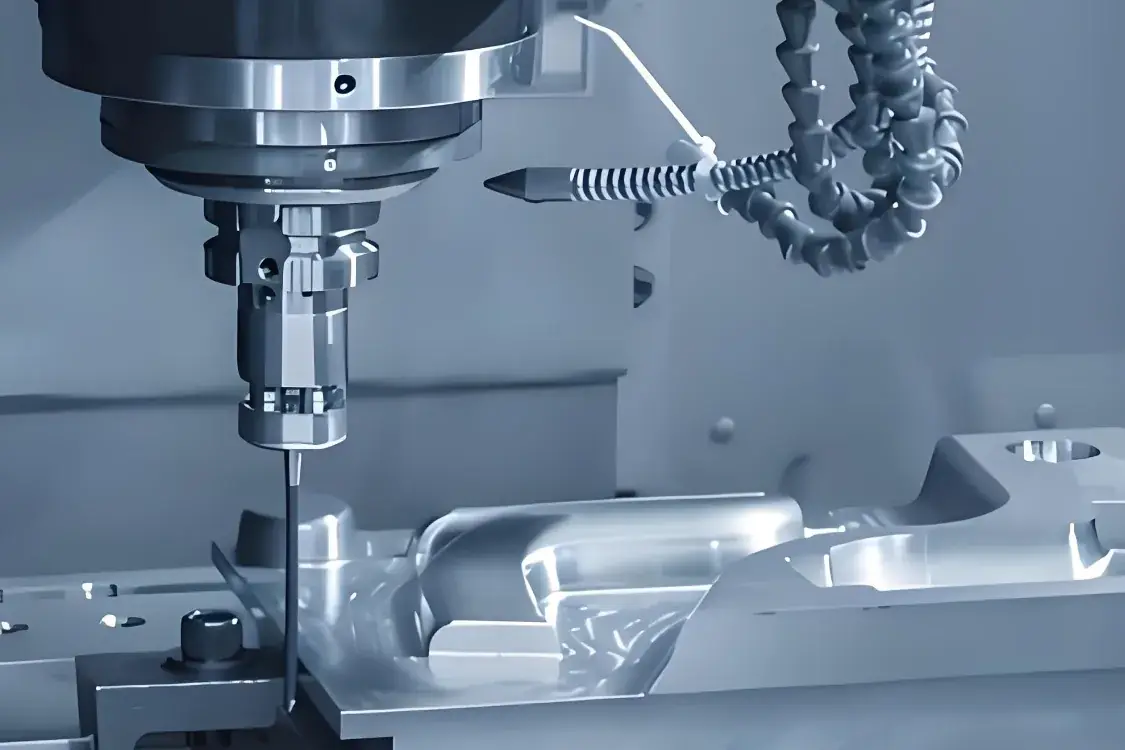
Cutting and finishing these steels to the tolerances a production mold needs takes dedicated equipment, not general-purpose machining.

CNC machining centers±0.01 mm
EDM (spark erosion)±0.01 mm
Wire EDM, slow-speed±0.002 mm
Wire EDM, fast-speed
Mills / grinders
Coating thickness gauge±0.1 μm
Vickers hardness testerHV0.1–HV100

Match investment to validation stage

Production Mold Steel vs. Rapid Tooling Material

Rapid Tooling

Aluminum 7075

Rapid tooling, aluminum 7075: 7-10 day build, suited to early process and material validation before cutting a production mold.

Rapid Tooling

P20 / NAK80 / S136

Rapid tooling, pre-hardened steel (P20 / NAK80 / S136): 12-15 day build, closer to production fidelity for a 100-5,000 piece validation run.

Mold material questions

Frequently Asked Questions

What steel goes into the mold base versus the cavity?

The mold base uses S50C, a structural steel suited to the frame and load-bearing plates. The cavity and core use SKD61 or S136, hardened tool steels that hold tight geometry under repeated injection pressure.

How much longer does a DLC-coated mold last than an untreated one?

Quench-and-temper alone typically holds up to about 15,000 cycles. Adding a DLC coating — ≥2200 HV hardness, 6-8 μm thick — extended that to 50,000+ cycles on a documented Cr12MoV insert project.

Can the mold be purchased without the molding service?

Yes. Standalone mold sales include full DFM support, design drawings, and trial-run guidance, so the mold can run in-house or at your own factory. Fecision also offers mold-plus-molding as a bundled service — the material and design specs stay the same either way.

What surface finish can the mold cavity hold?

Working surfaces polish to Ra≤0.2 μm before plasma activation and DLC deposition. That finish is tight enough to keep surface defects from transferring onto molded parts, particularly on cosmetic or sealing surfaces where flash and drag marks are not acceptable.

Build the Material Plan Before the Mold

Review steel grade, hardness target, surface treatment and production volume with our tooling team.

Request a Quote

Request A Quote

Tell Us About Your Project

Fields marked with are required.

By submitting this form, you agree that Fecision may use the supplied information to respond to your inquiry.