
Custom molded parts · Made to your design
Custom Injection-Molded Living-Hinge Parts
Design the flexible web together with the lid, frame, latch and intended movement.
Request custom molded living-hinge components for a defined access or closure function. We review the exact resin, local transitions and molding configuration with the required motion and sample-evaluation plan.
Product details
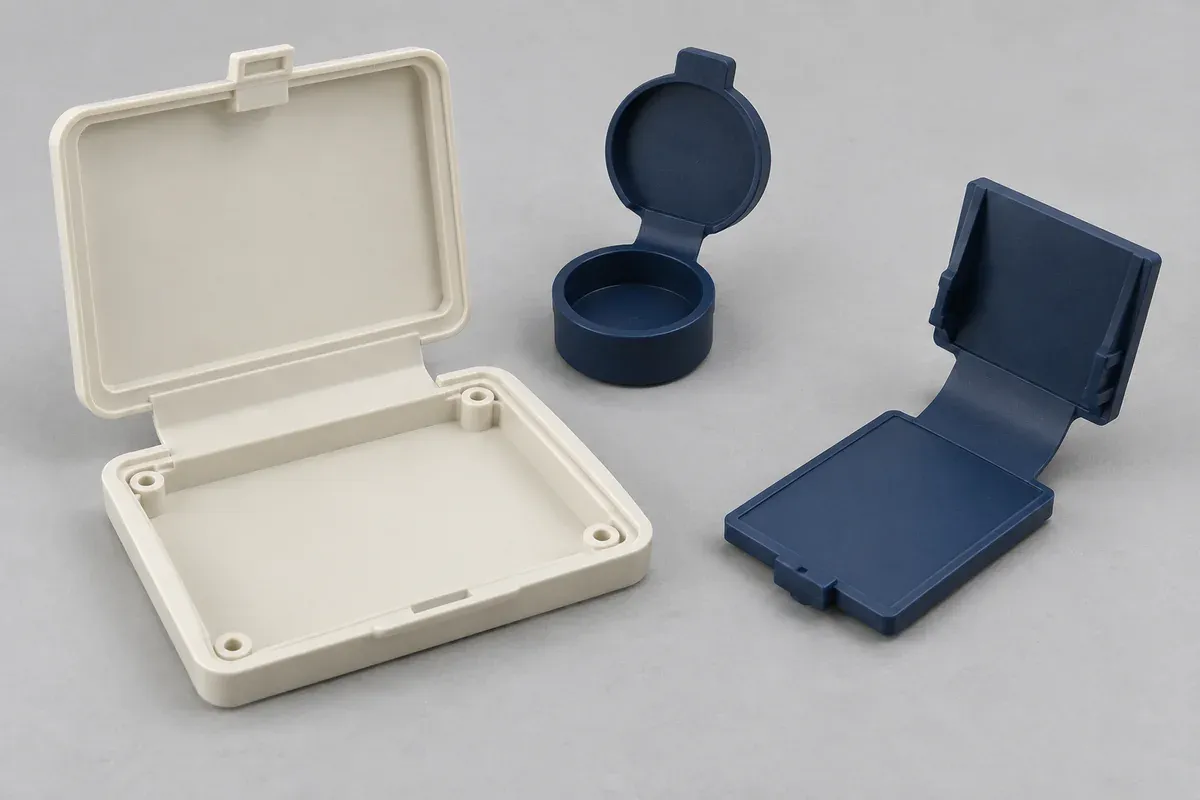
See the integral flexure and connected-part details
The examples show a thin continuous plastic web, not a separate pin hinge. Dimensions and durability remain project-specific.
Open cover
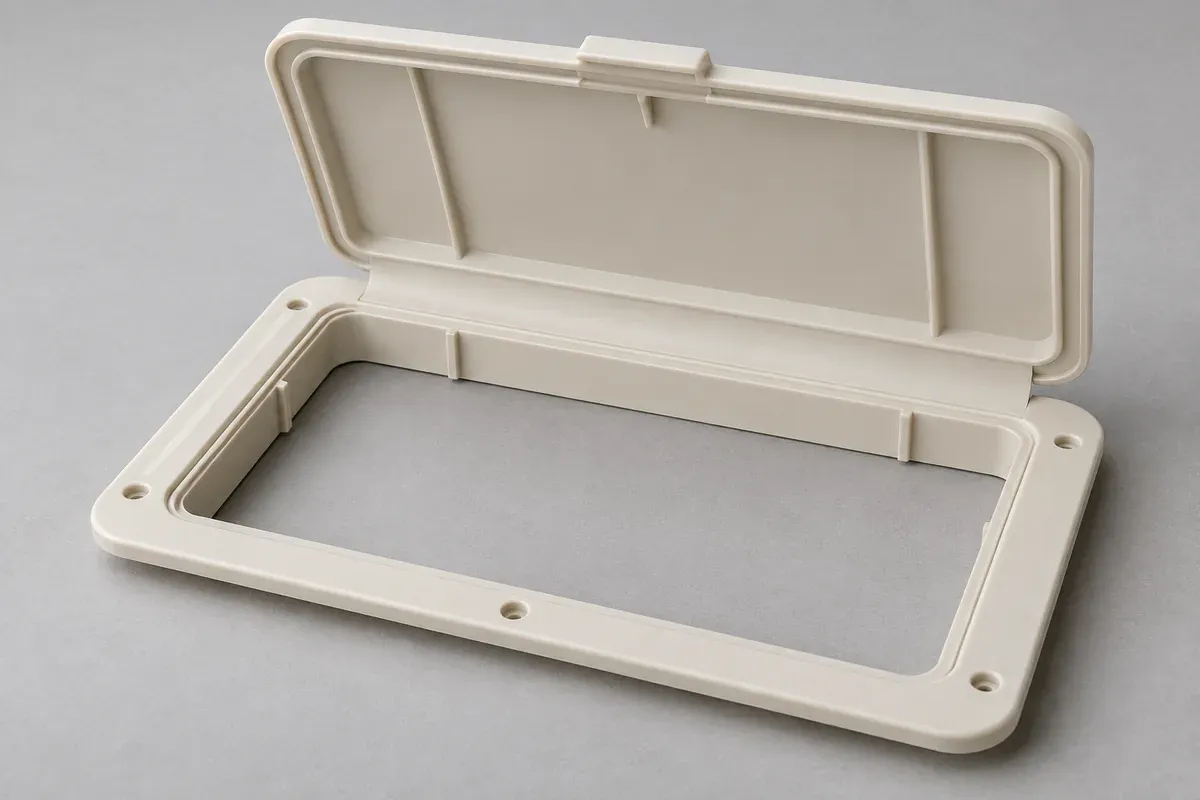
Define the required access and the positions the assembly must reach.
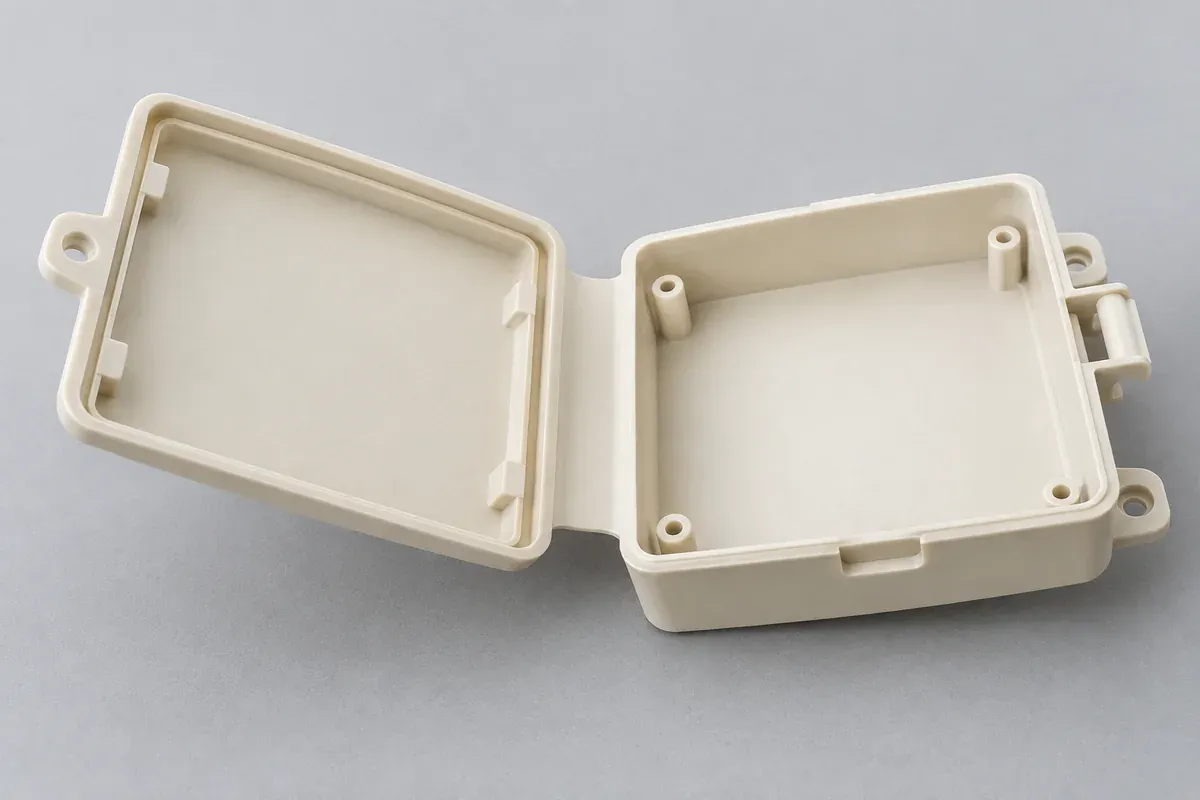
Web transition
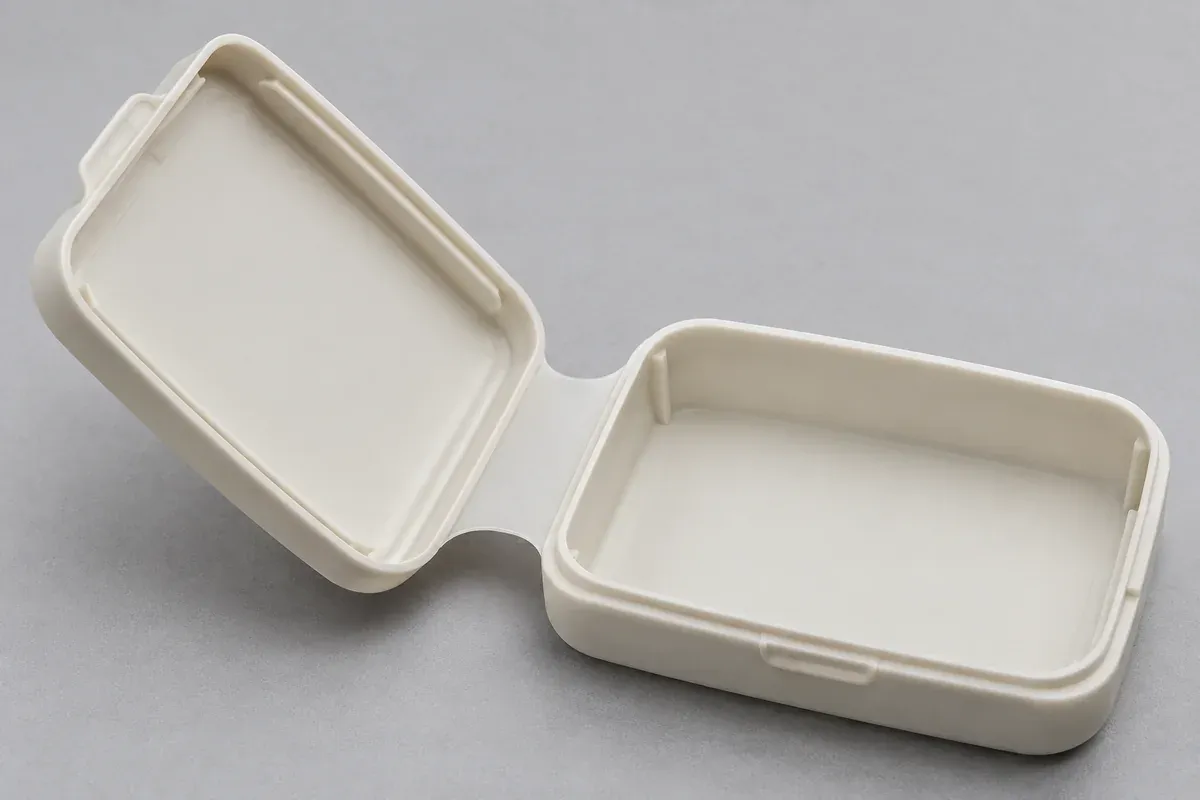
Review local section and transitions with the exact resin and molding plan.
Folded position
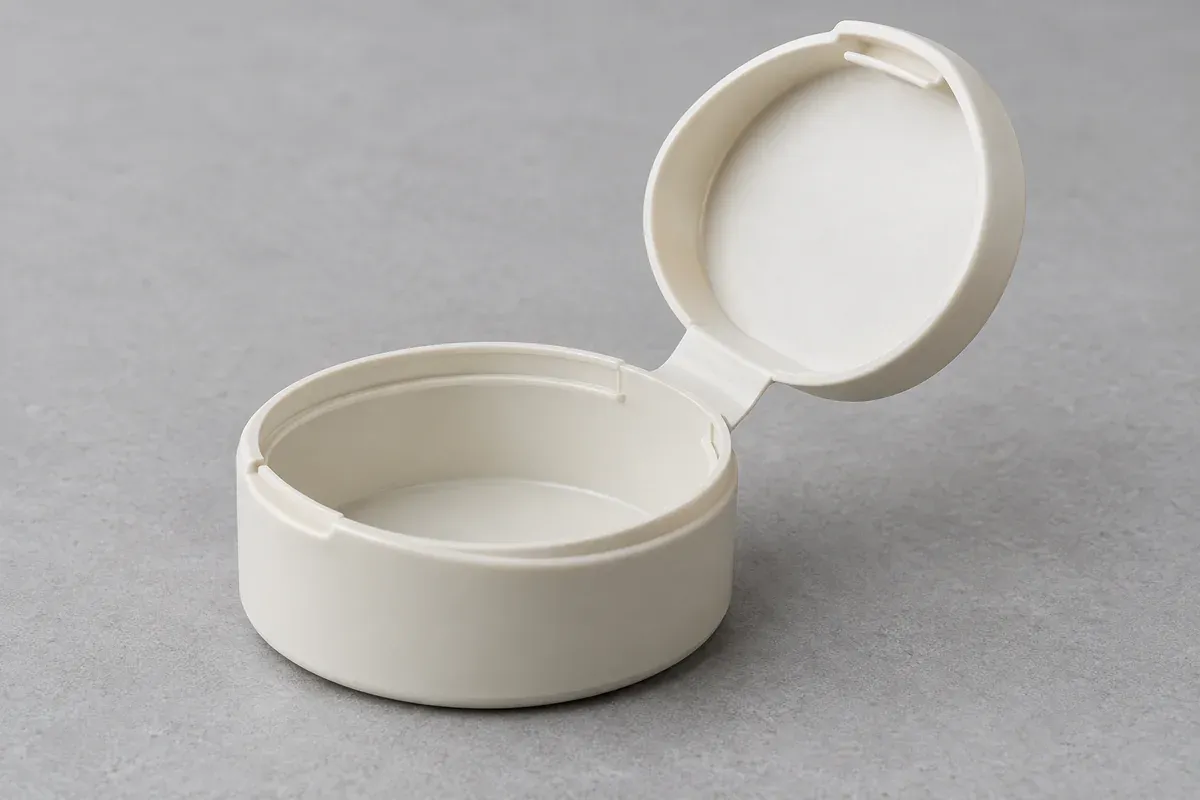
Evaluate motion and interference in representative molded samples.
Frame and latch
Stops and latches may need to carry loads that should not be assigned to the web.
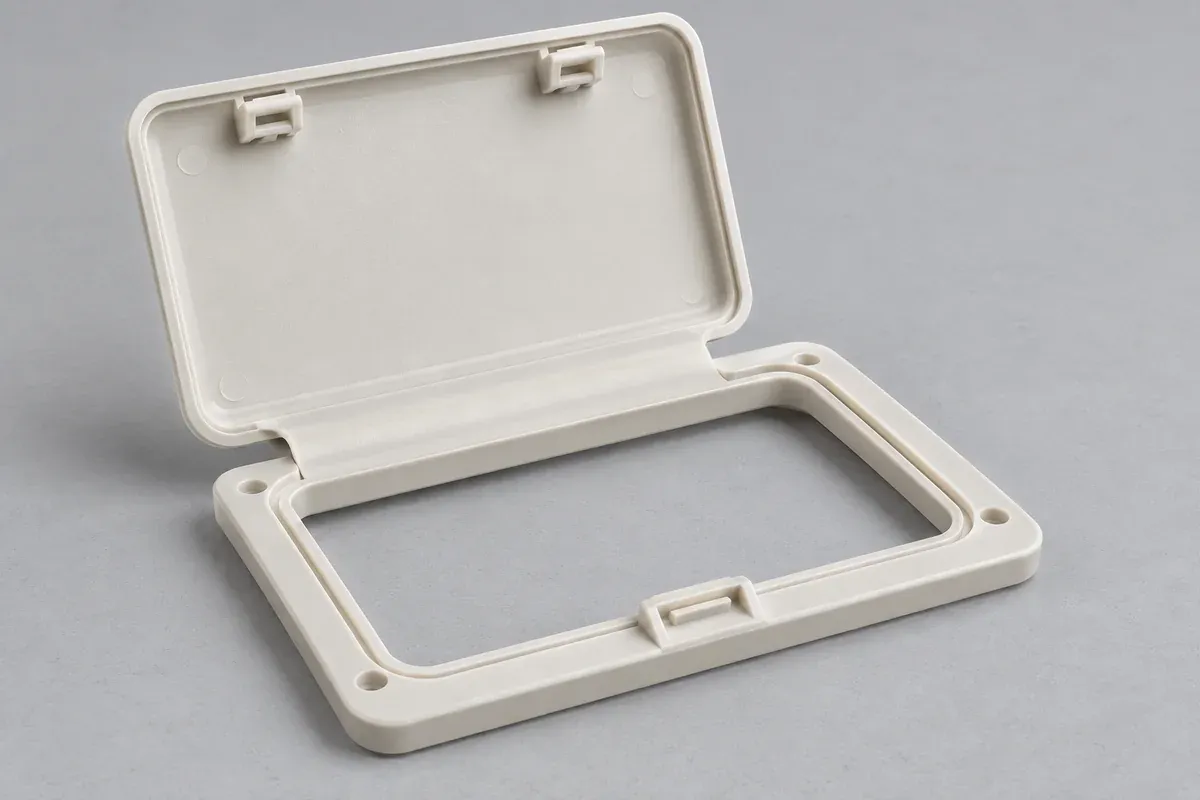
Closure interfaces
Specify seating and retention separately from hinge movement.
Illustrative configurations. Final specifications follow your approved drawings.
Application fit
Integral plastic hinges for custom access and closure parts
Use the complete movement requirement to decide whether an integral flexure is appropriate.
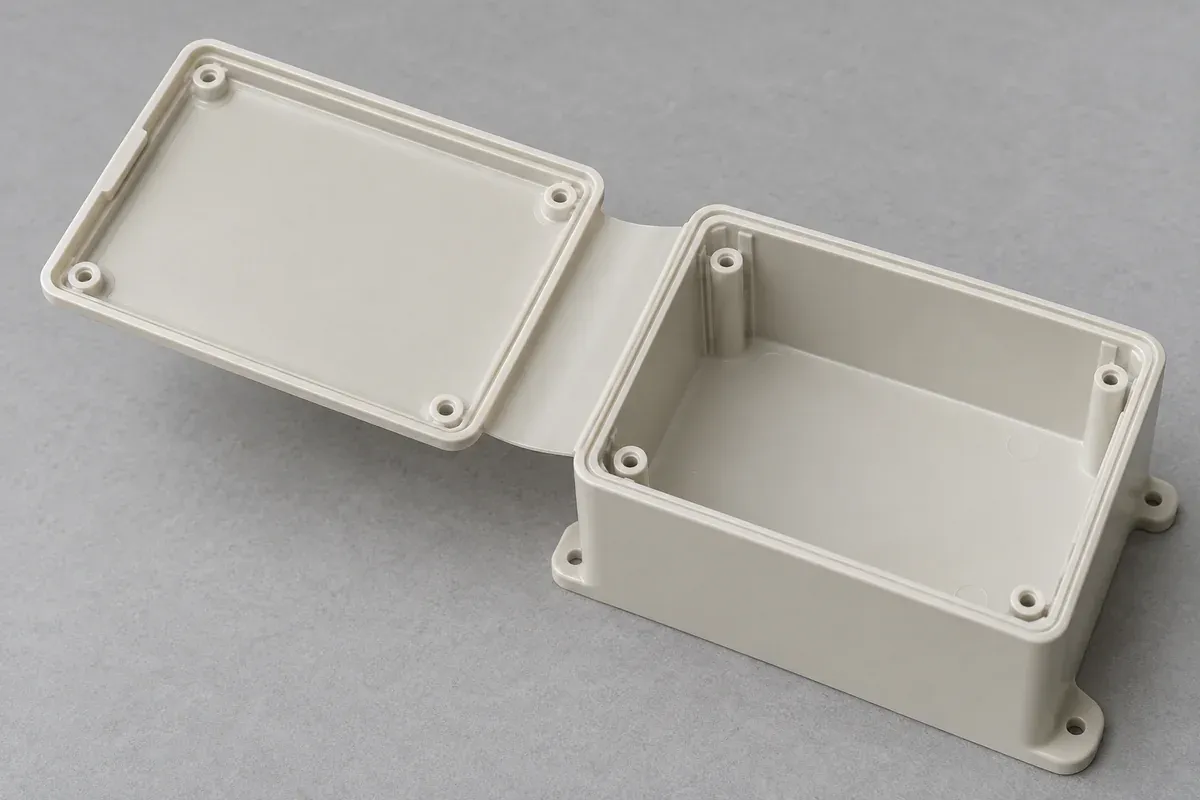
Access flaps
Small service or protective covers with an agreed opening range and surrounding clearance.
Attached lids
One-piece lid and body configurations that keep the cover connected without a separate hinge pin.
Integral flexible links
Custom flexure connections whose local web and connected panels are reviewed as one molded part.
Quote-ready inputs
What to send for a meaningful quotation
Use the same drawing and requirements for every proposal. Mark open decisions explicitly so that a low price does not conceal a different deliverable.
| Area | Please provide | Review before release |
|---|---|---|
| Movement | Open and closed positions, travel, access and overtravel requirements. | Define stops, latch duties and the loads assigned to the web. |
| Material | Exact grade, connected-panel needs and exposure. | Review flexure, stiffness, appearance and process together. |
| Geometry | Web, transitions, hinge span and fixed interfaces. | Separate approved dimensions from development options. |
| Tooling | Proposed gate, flow path, release and first-fold handling. | Assess the local web as part of the complete mold configuration. |
| Validation | Sample state, motion, load, rate and failure criteria. | Use representative molded samples for process-dependent decisions. |
| Supply | CAD revision, trial stage, quantities and packing. | Keep development samples and production approval distinct. |
From drawing to approval
Evaluate geometry, process and motion as one configuration
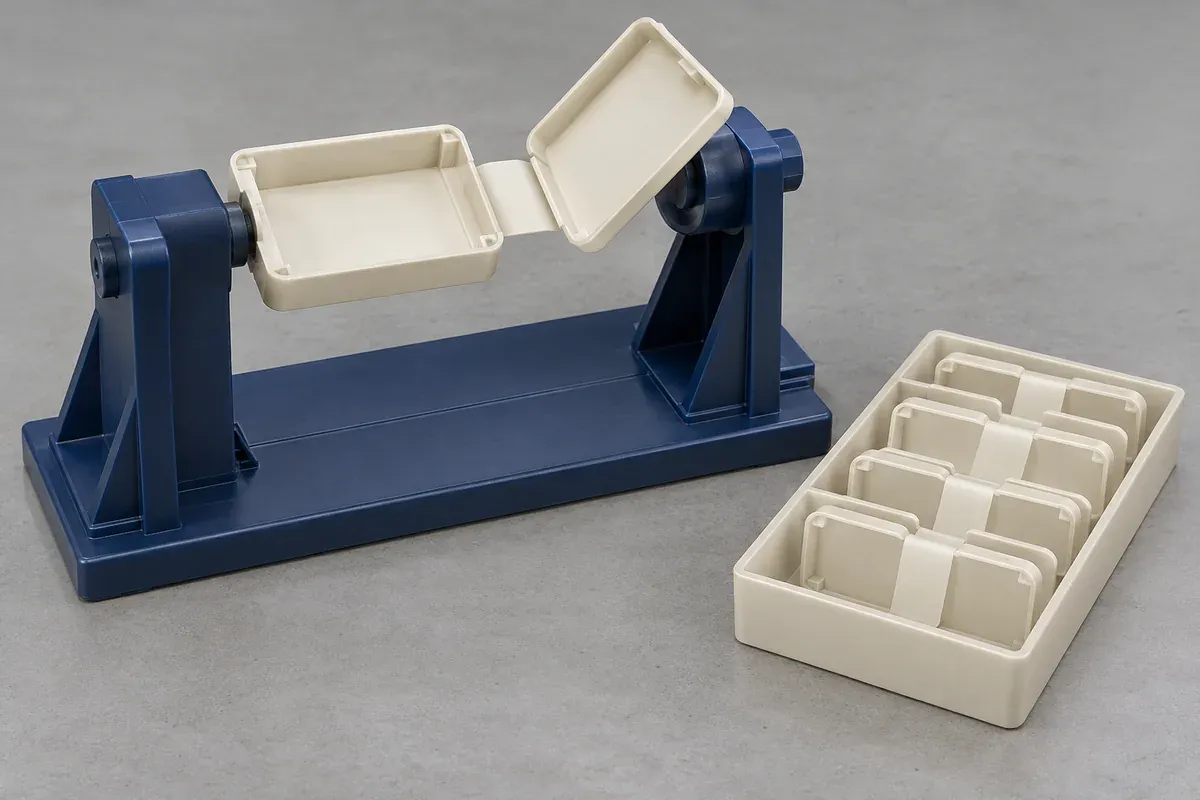
Define the mechanism
Resolve lid, frame, latch and access requirements before isolating the web geometry.
Review resin and mold
Assess the exact grade, transitions, flow and release with the tool proposal.
Use staged samples
Separate envelope mock-ups from representative molded samples and document differences.
Approve required evidence
Record motion and any agreed cycle evaluation before production release.
Practical engineering and buying guides
Six decisions to make before production
- Living Hinge vs Pin Hinge: Choosing a Molded-Part DesignCompare integral plastic hinges and pin hinges using movement, load, material, assembly, service access and the evidence needed before tooling.
- PP vs PE for Living Hinges: Review the Complete PartCompare polypropylene and polyethylene hinge candidates using exact grade, flexure, panel stiffness, environment, molding and validation requirements.
- Living Hinge Thickness, Radius and Transition ReviewReview a molded living hinge as a flexure system: web thickness, bend region, transition, span, opening motion and connected-panel support.
- Living Hinges: Gate Direction and Weld-Line RisksConnect a living-hinge tool proposal to filling direction, weld-line location, flexure surfaces, sample identity and the planned opening evaluation.
- Living Hinge Cycle Tests: Define Motion Before CountingPlan a living-hinge evaluation with controlled opening angles, rate, dwell, loading, exposure, specimen history and explicit rejection criteria.
- Printed vs Molded Living Hinges: What Prototypes Can ProveUse printed living-hinge prototypes for defined geometry questions while keeping material, process and production-cycle validation separate.
Before you request a quote
What is a living hinge?
It is a thin flexible region connecting sections of a single molded plastic part, rather than a separate pin-and-barrel hinge.
Can you promise a universal number of cycles?
No. Material, geometry, molding, motion and environment must be defined and evaluated for the actual application.
Can a printed prototype approve durability?
Not by itself. It can help with geometry and access, but production-related behavior requires representative molded samples.
Should the hinge always use polypropylene?
PP is a candidate, not a universal answer. The exact grade must satisfy the web and connected-part requirements together.
Your next step
Discuss the part with its intended function.
Send the entire cover-and-frame design with its motion and use requirements. We can review a custom molding scope and the evidence needed for approval.
Explore our injection molding service or review other custom molded applications.