
Custom molded parts · Made to your design
Custom Injection-Molded Plastic Hose Barb Fittings
Specify the connection, not just the nominal hose size.
FECISION reviews made-to-design plastic hose barb fittings for customer-defined equipment and tubing connections. Send the fitting drawing, tubing specification, service conditions and acceptance requirements to define the tooling and molding scope. These are custom components, not a stock catalog or universally pressure-rated assemblies.
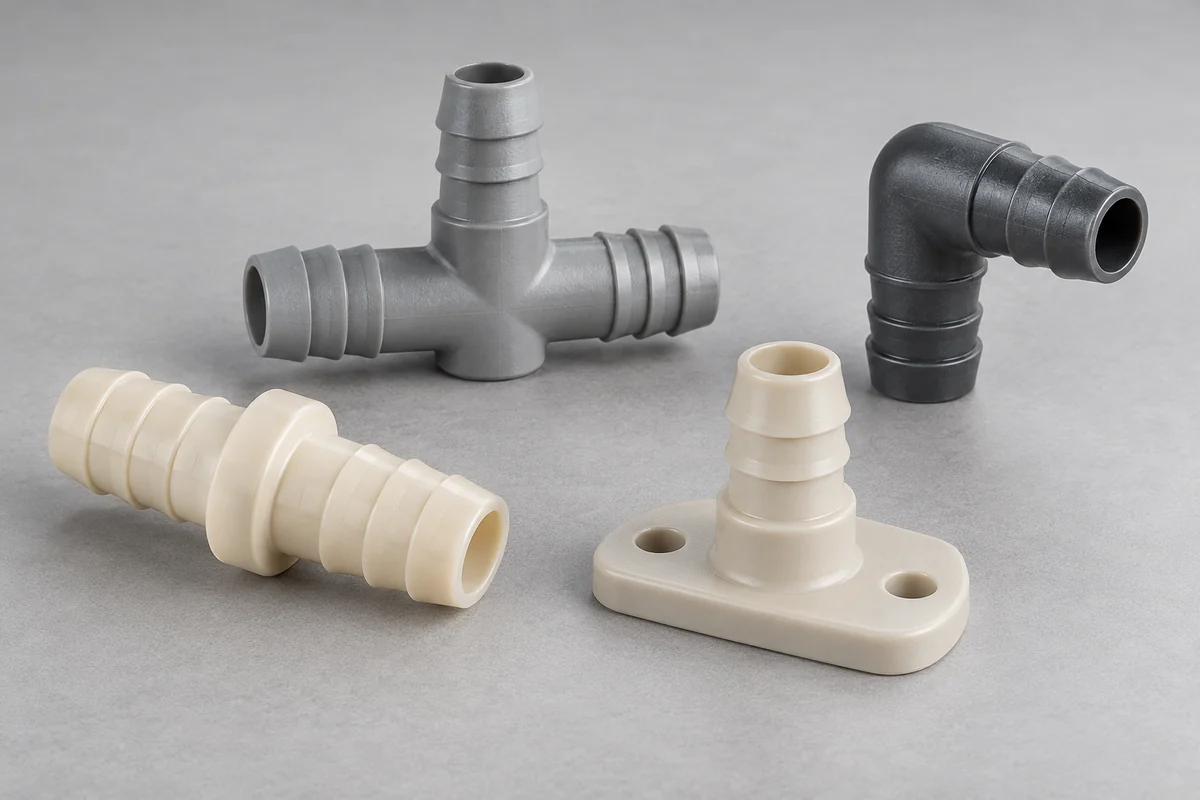
Product details
Review the barb, bore and mating interface in detail
Product design illustrations show possible fitting configurations. Exact geometry, resin and assembly requirements are project-specific.
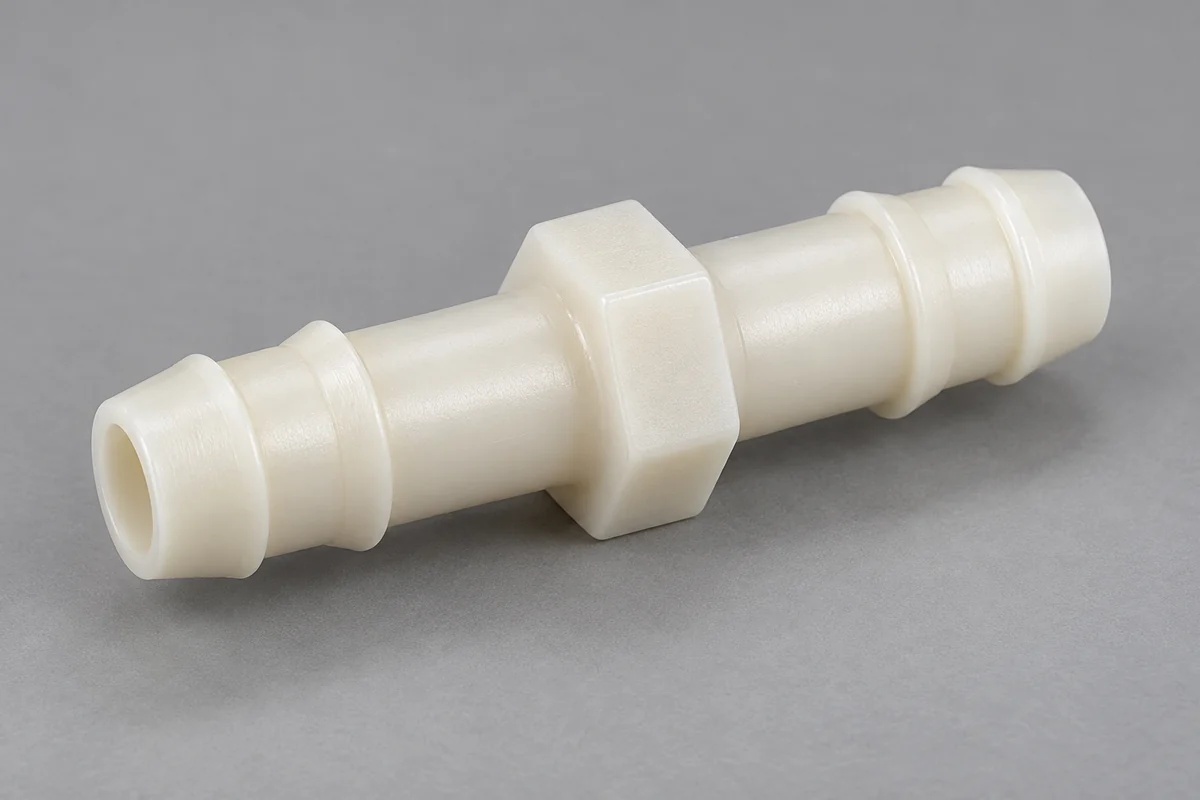
Straight union
Define both tubing interfaces and the central handling or locating feature.
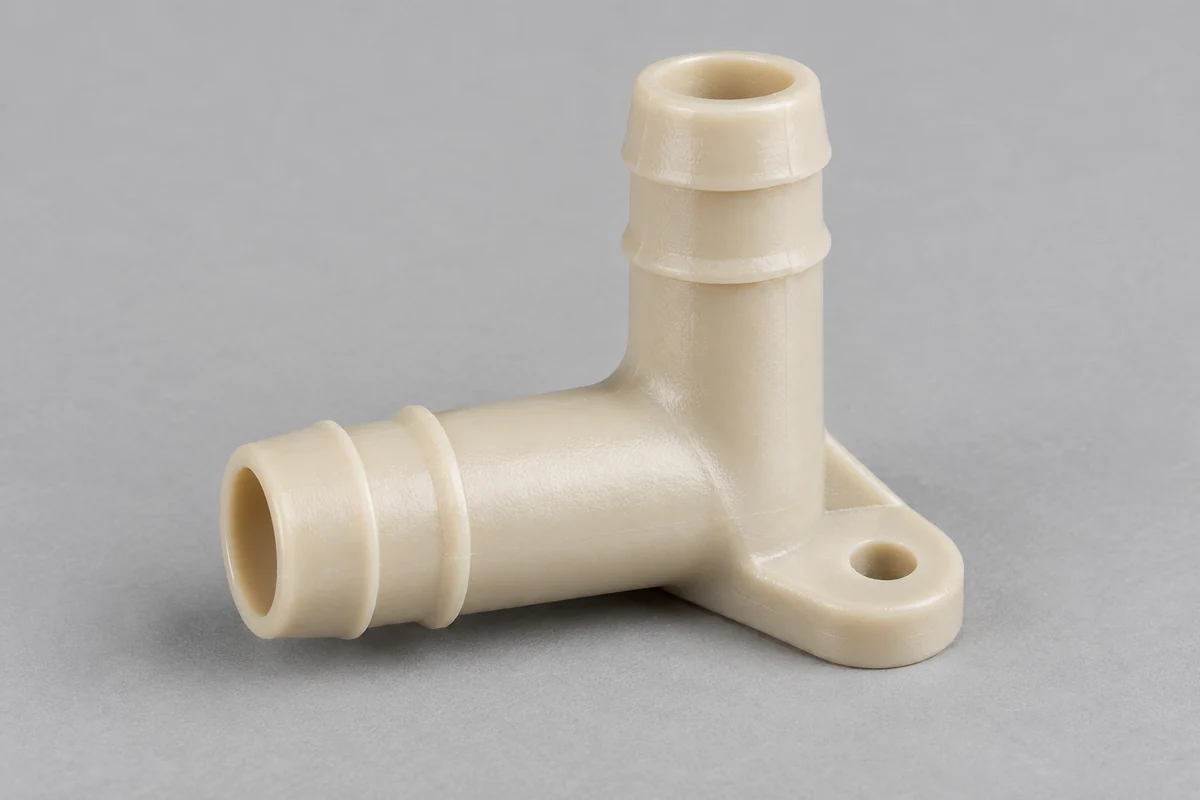
Elbow with mounting feature
Review tube routing, assembly access and the mounting load path together.
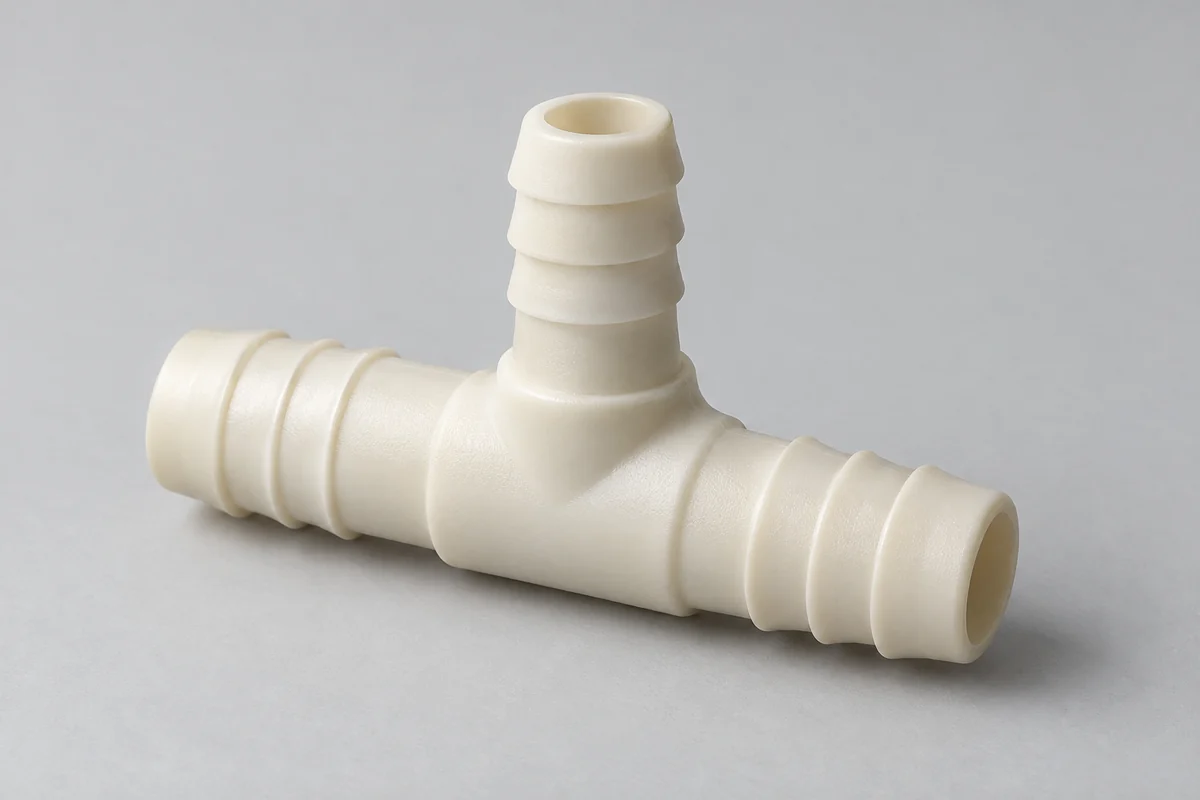
Branch connection
Specify each branch, its tubing and the required internal passage configuration.
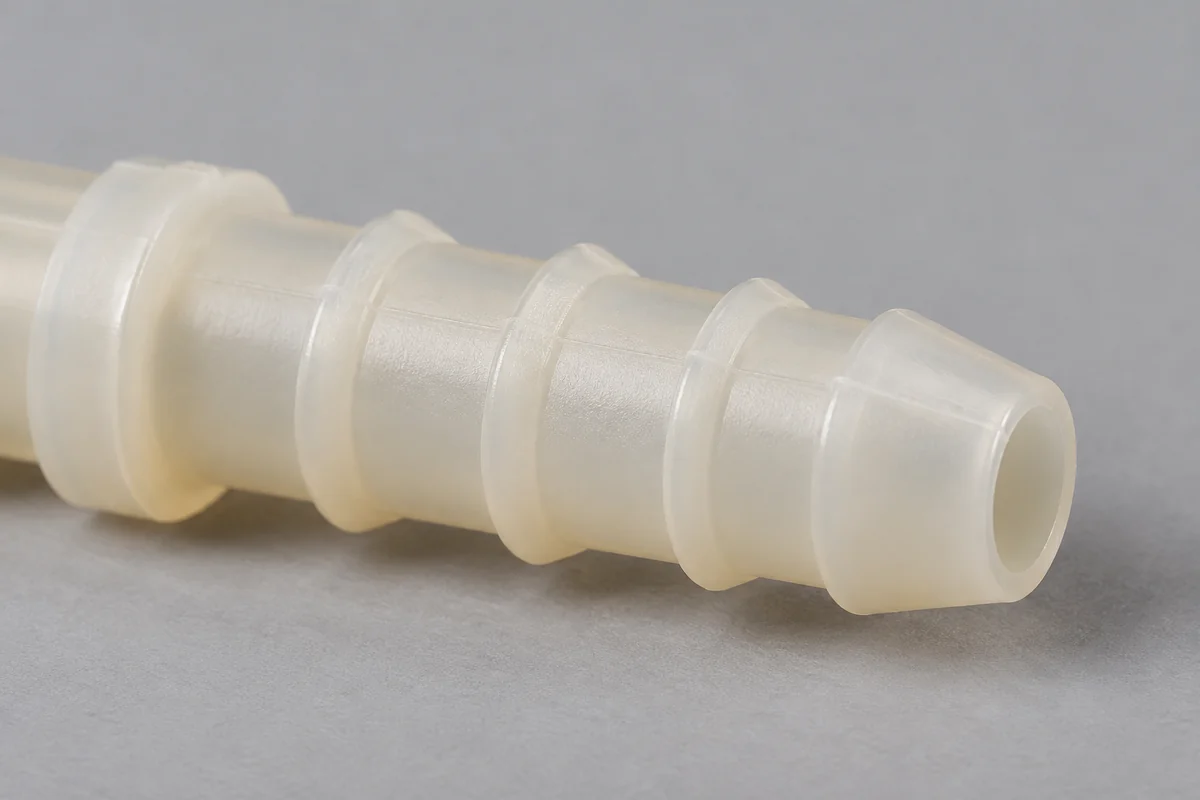
Tube-contact profile
Control the leading nose, ridge profile, bore and surface condition as distinct features.
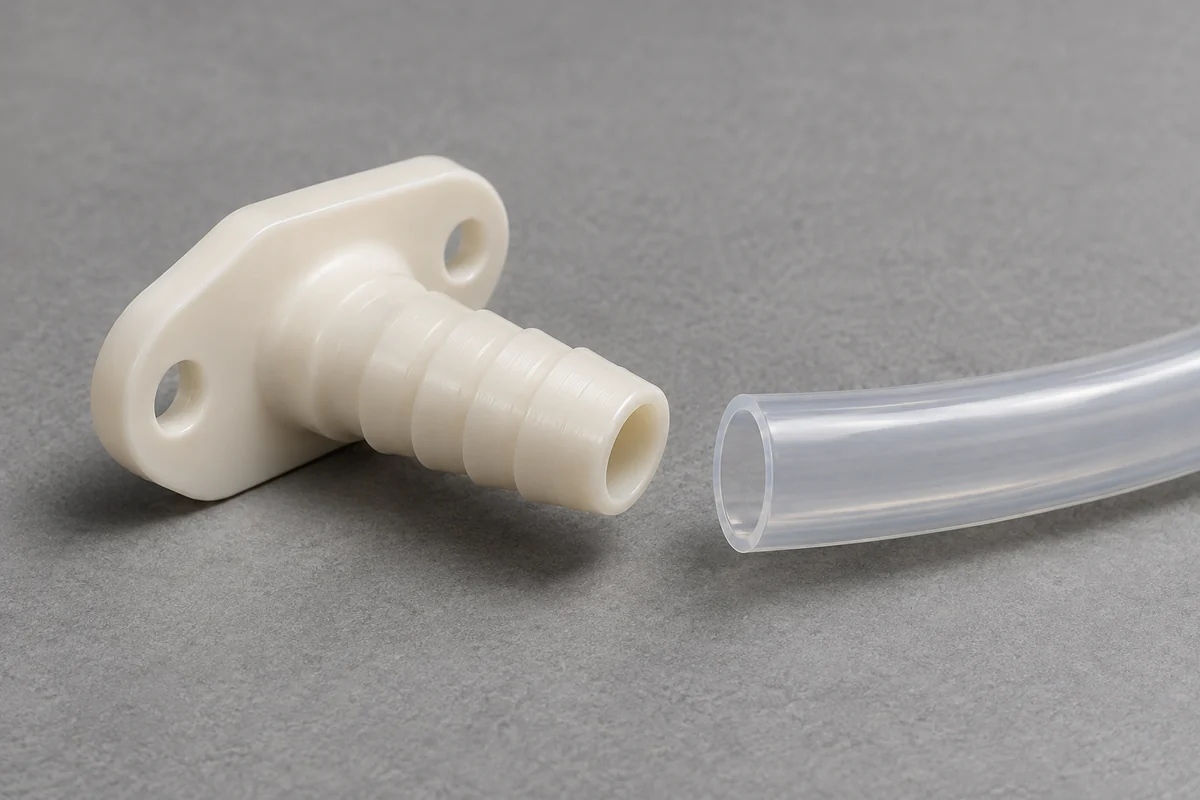
Flange and installation envelope
Provide the equipment interface and available space for installation and inspection.
Illustrative configurations. Final specifications follow your approved drawings.
Application fit
Custom connections for a defined equipment interface
A custom mold should address a specific shape, mounting or integration requirement. Existing catalog fittings may be preferable when they already meet the application.
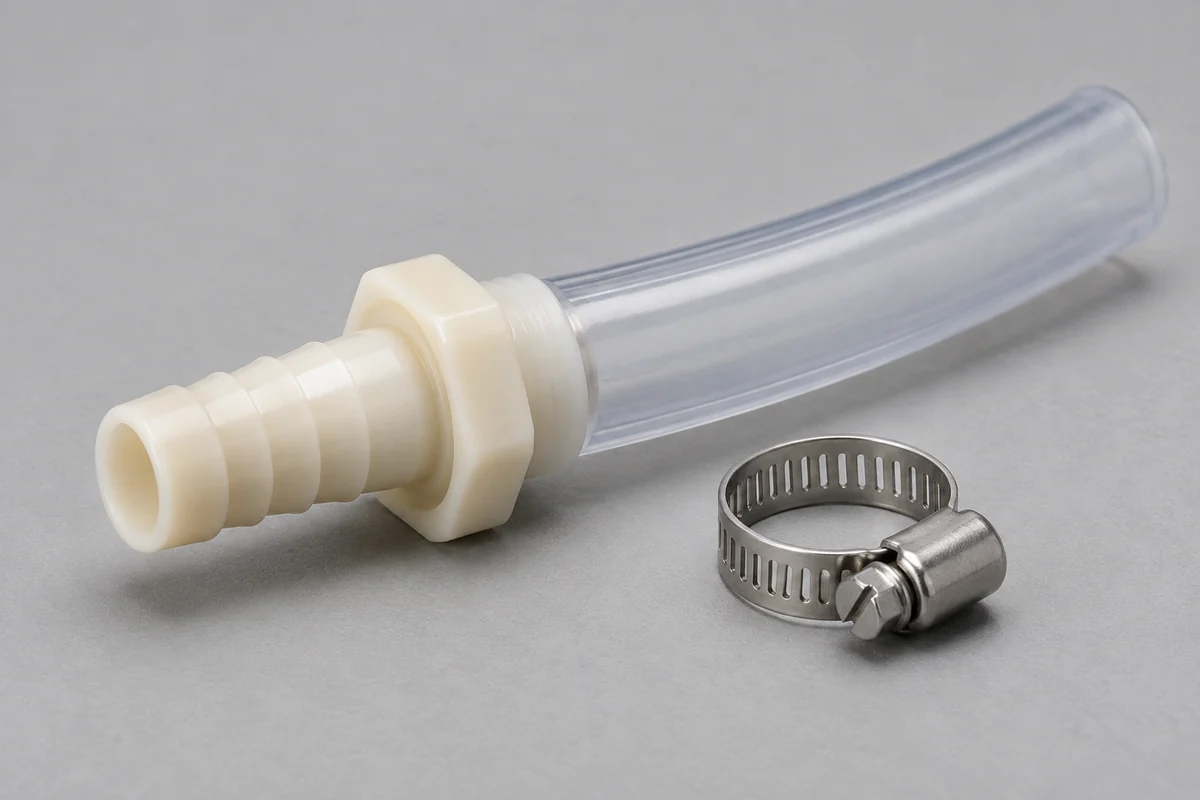
Pneumatic equipment connections
Custom barbed stems and connector bodies reviewed with the exact tube, air-system environment and equipment interface.
Compact tube routing
Elbows, branches and transitions where packaging space, insertion access and the opposite-end connection need a coordinated design.
Integrated mounting features
Fittings incorporating flanges, tabs or locating features, subject to tooling feasibility and an agreed assembly acceptance plan.
Quote-ready inputs
What to send for a meaningful quotation
Use the same drawing and requirements for every proposal. Mark open decisions explicitly so that a low price does not conceal a different deliverable.
| Area | Please provide | Review before release |
|---|---|---|
| Fitting geometry | Current CAD, controlled drawing, bore, barb profile, opposite-end connection and mounting envelope. | Review tool split, core access, gate position and critical tube-contact surfaces. |
| Tubing and assembly | Exact tubing specification, ID, wall or OD, tolerances, hardness where specified, engagement and assembly method. | Assess fit range, seating reference, clamp inclusion and practical assembly access. |
| Material and service | Approved resin grade or candidate requirements, medium, temperature history and relevant contaminants or cleaning agents. | Review grade-specific evidence and keep service requirements separate from test results. |
| Inspection and qualification | Critical dimensions, surface criteria, proposed retention and leak methods, sample quantities and cavity coverage. | Agree the report, specimen preparation, production sampling and owner of complete-system qualification. |
| Quantity and supply boundary | Development order, repeat demand, required assembly, packaging and cleanliness scope. | Separate tooling, trial work, molded parts, partner operations and optional assembly costs. |
From drawing to approval
Connect tool development to an accepted tube interface
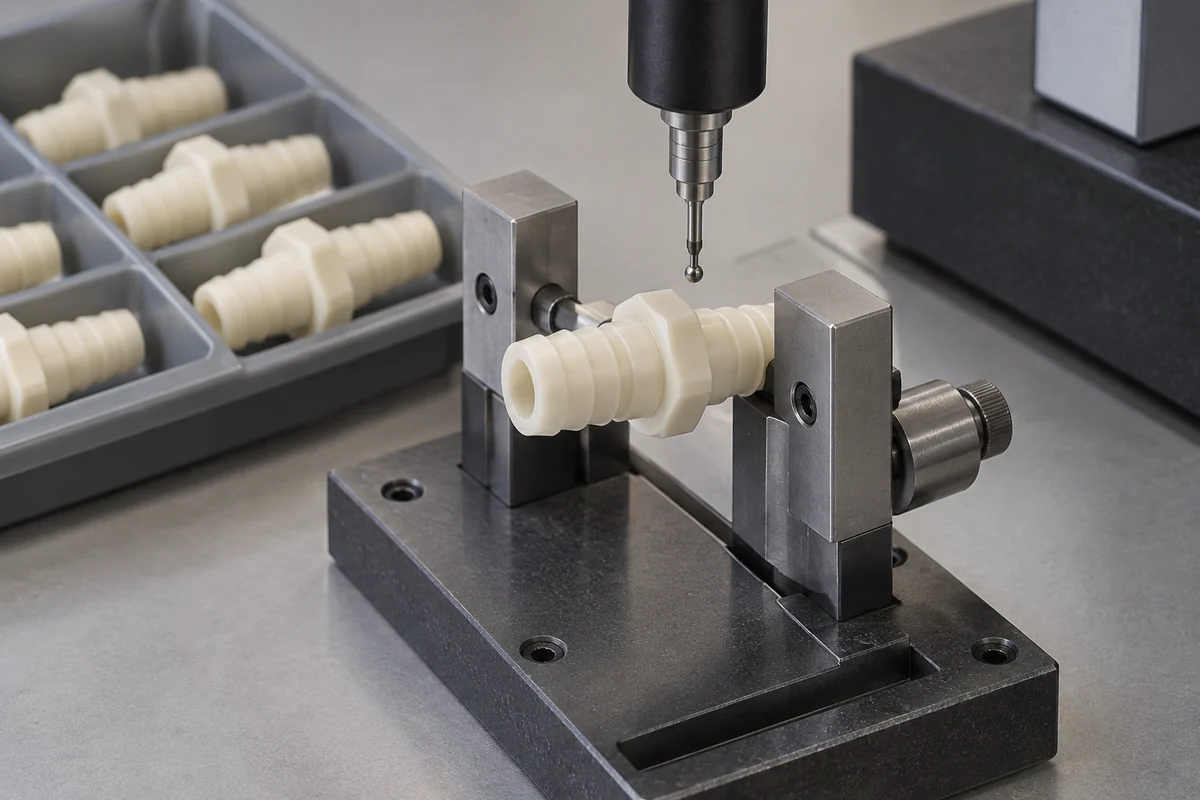
Define the supplied connection
Confirm fitting and tubing revisions, service requirements and the exact quoted components.
Review resin and tool geometry
Assess the proposed material, retaining profile, bore, parting surfaces and cavity arrangement.
Evaluate identified samples
Measure agreed features and test the defined assembly with traceable cavity coverage and specimen preparation.
Approve repeat-supply controls
Record the accepted configuration, sampling plan, packaging and change-review triggers.
Practical engineering and buying guides
Decisions to make before production
- Custom Plastic Hose Barbs: Prepare a Complete RFQSpecify custom plastic hose barb fittings with exact tubing, interfaces, material, tooling, assembly and acceptance requirements before comparing quotes.
- Hose Barb Size: Tubing ID, Interference and InsertionReview tubing ID, wall thickness, barb profile and insertion depth together. Nominal hose size alone cannot define a reliable molded connection.
- POM vs Nylon Hose Barb Fittings: Select for the AssemblyCompare POM and nylon hose barb candidates using exact grades, tubing fit, conditioning, exposure and assembly tests rather than generic material labels.
- Hose Barb Parting Lines: Control Flash at the Tube InterfaceReview parting lines, flash, gate vestiges and molded edges on hose barbs. Define functional surface acceptance before choosing a tooling correction.
- Hose Barb Pull-Off Testing: Define a Comparable MethodDefine hose barb pull-off tests with controlled tubing, insertion, fixtures, rate, cavity coverage and failure records. Retention is not a pressure rating.
- Multi-Cavity Hose Barb Inspection: Keep Each Cavity VisiblePlan cavity-resolved inspection for molded hose barbs, covering ridge profile, bore, surface condition, assembly checks and repeat-production sampling.
Before you request a quote
Do you sell these as standard stock fittings?
This page covers custom molding to an agreed design. If an existing catalog fitting meets your needs, compare that route before commissioning custom tooling.
How much larger should the barb be than the tube ID?
There is no universal interference value. Review the tube dimensions, material, wall, hardness, barb profile, assembly method and required tests together.
Should the fitting use POM or nylon?
Select an exact grade using the service medium, conditioning, dimensions and connection evidence. A polymer-family label or sample color is not a complete specification.
Can you include tubing or clamps?
They can be reviewed within a defined supply scope. Provide the exact specifications and identify assembly, sourcing and final qualification responsibilities.
Does a passing pull-off test establish a pressure rating?
No. Retention, leakage, pressure cycling and service life require separate acceptance criteria and relevant evidence for the complete connection.
What should I send for a quotation?
Send the fitting CAD and drawing, controlled tubing specification, service conditions, trial and repeat quantities, inspection requirements and proposed assembly tests.
Your next step
Discuss the part with its intended function.
Send your fitting drawing with the actual tubing specification and acceptance plan. We can review a defined tooling, molding and sample-inspection proposal.
Explore our injection molding service or review other custom molded applications.