
Custom molded parts · Made to your design
Custom Injection-Molded Plastic Fluid Manifolds
Bring the flow path, connections and service conditions into one component review.
FECISION reviews custom plastic manifold bodies for customer-defined fluid systems, including liquid-cooling applications. Send the drawing, exact fluid, interfaces and acceptance requirements so that tooling, molding and sample checks have a clear scope. These are made-to-design components, not stock pressure-rated assemblies.
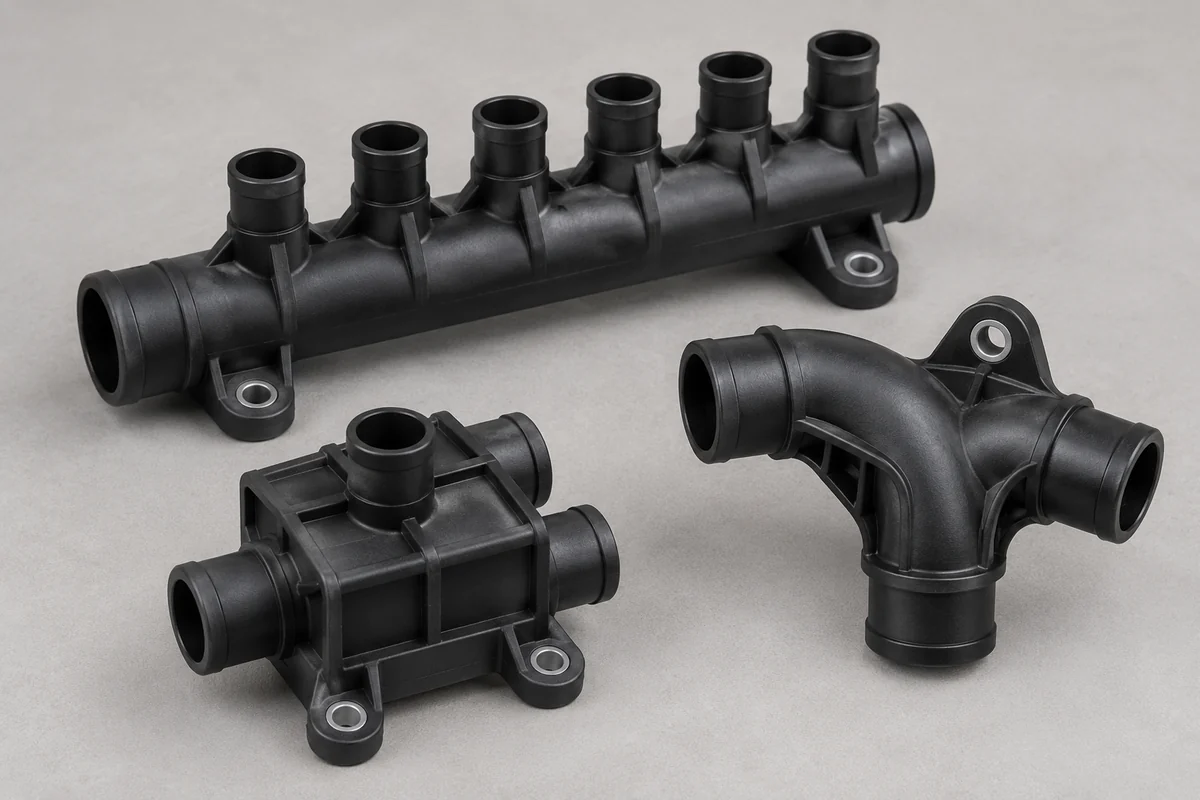
Product details
Review the fluid boundary from channel to connection
Product design illustrations show different manifold constructions and interfaces. Each project needs its own geometry, material and validation plan.
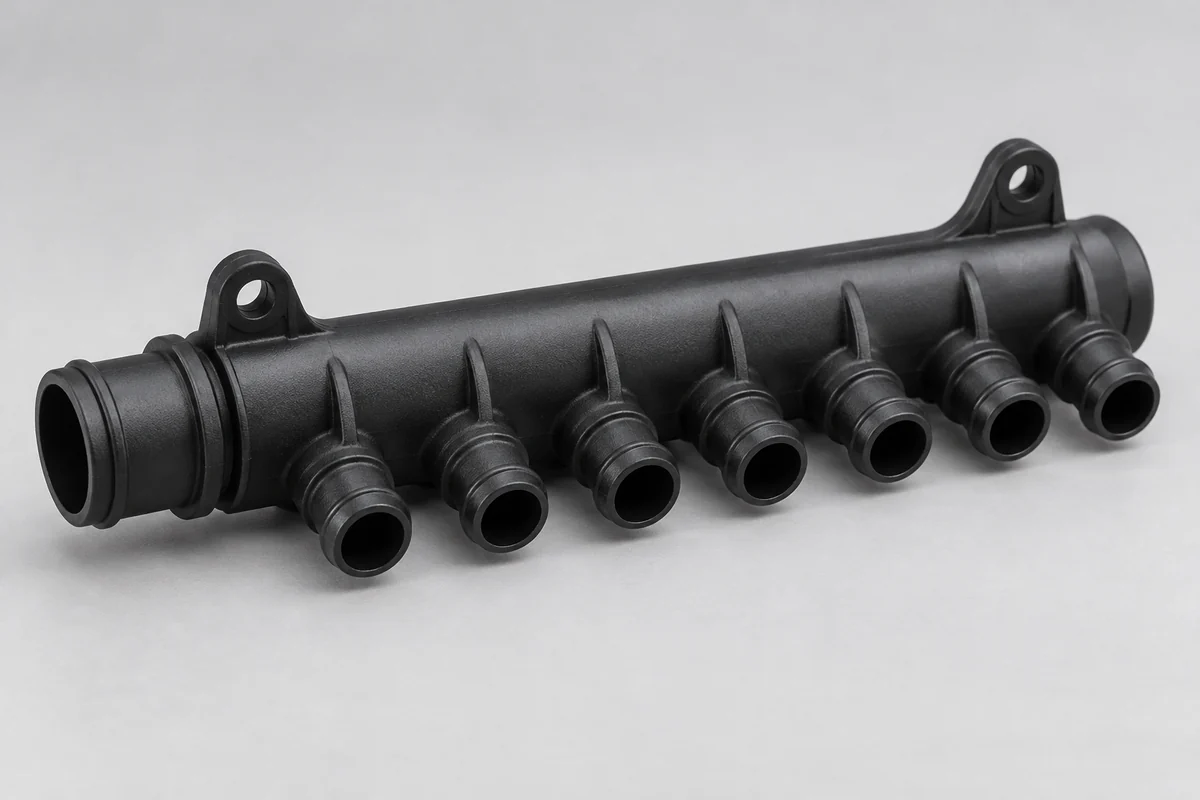
Distribution body
Define the circuit, connection locations and external installation envelope.
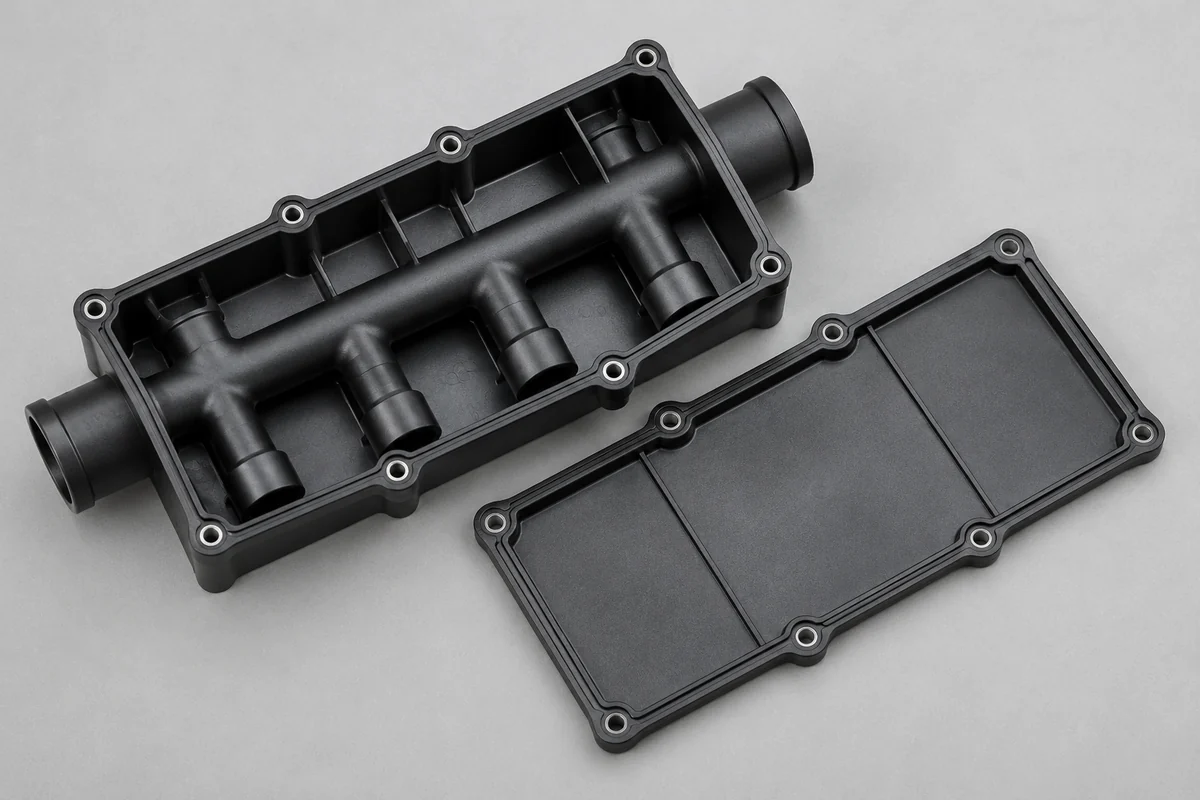
Channel and closure
Review the molding route, closures and joining responsibilities before tooling.
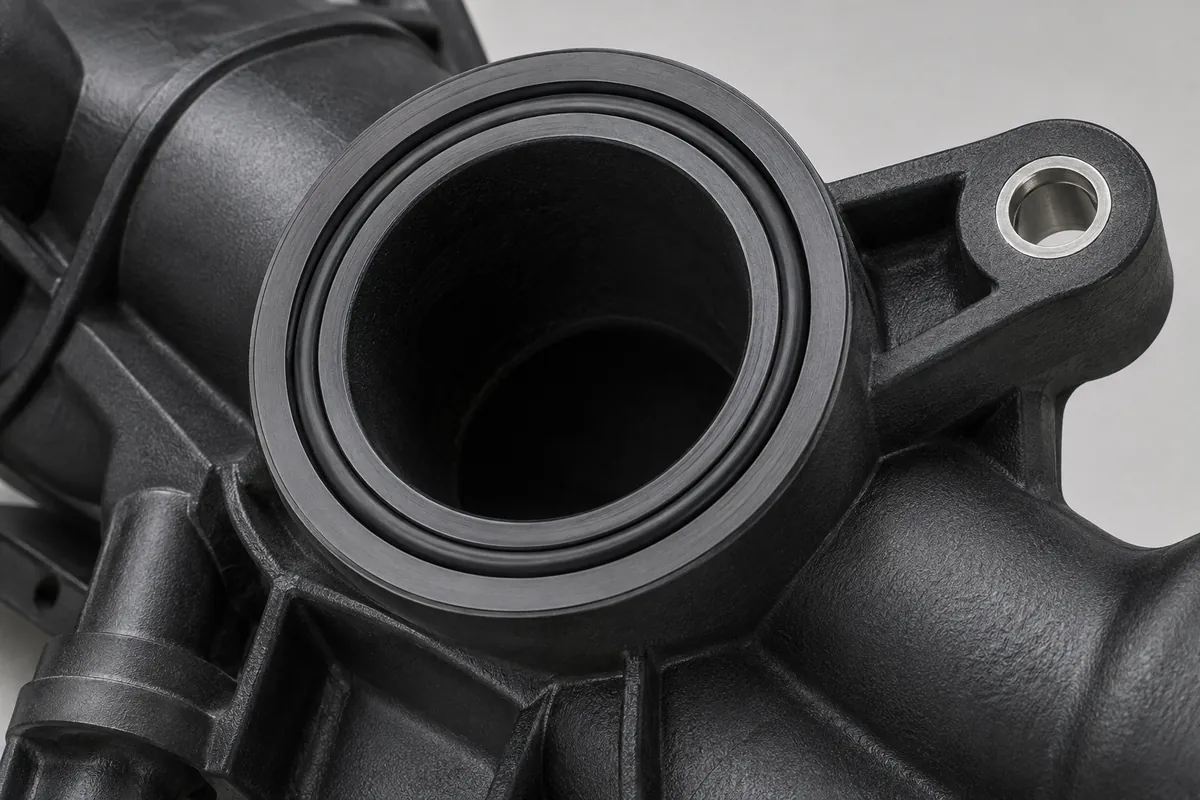
Seal interface
Specify seal geometry and inspection separately from the port location.
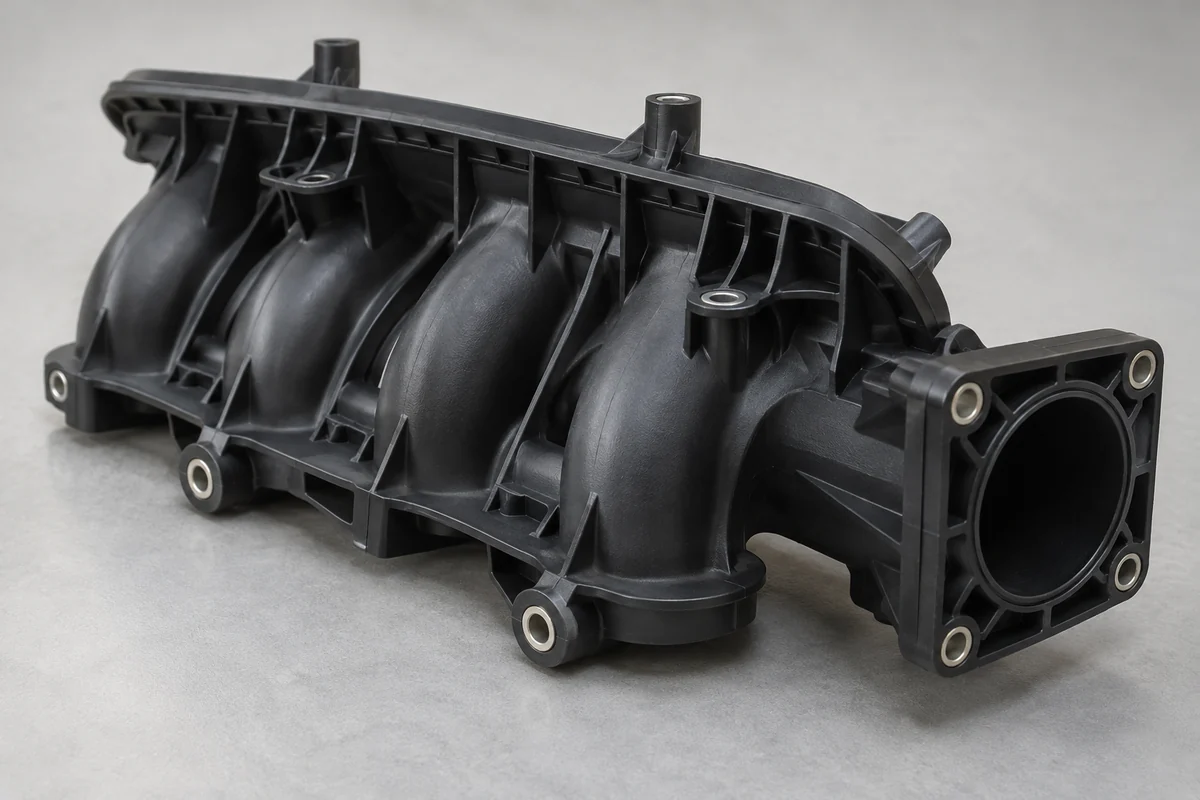
Wall and support structure
Check wall distribution, core support, mounting loads and inspection access.
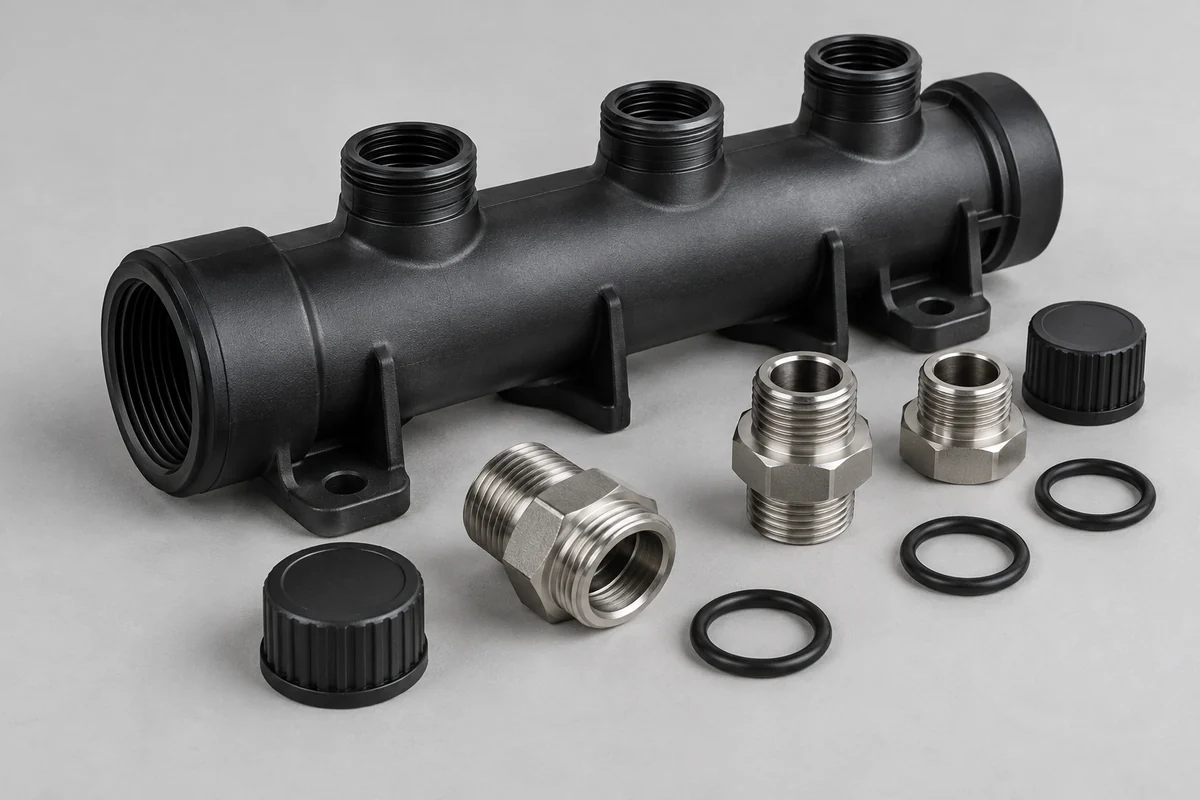
Fittings and closures
Identify every supplied fitting, seal and assembly operation in the quotation.
Illustrative configurations. Final specifications follow your approved drawings.
Application fit
Custom distribution components for defined fluid circuits
The fluid formulation, installation and service duty determine which material and component evidence is relevant.
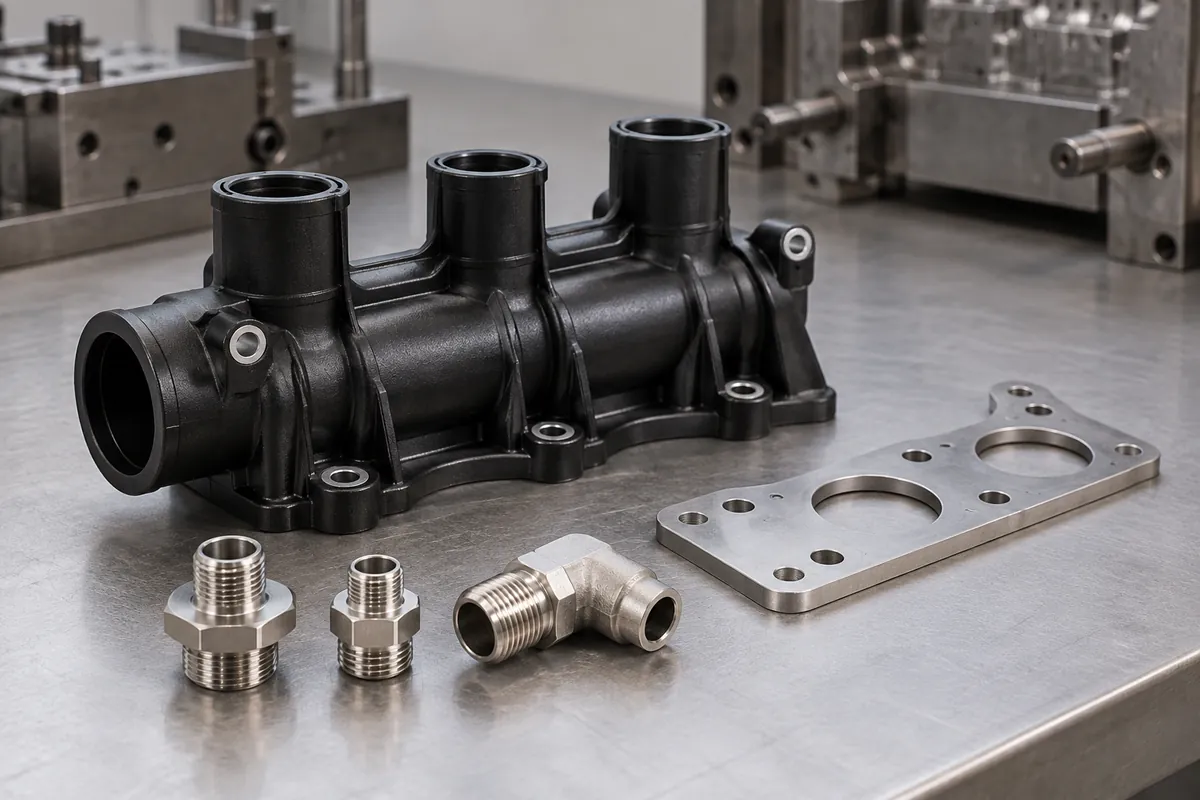
Liquid-cooling distribution
Custom molded supply or return bodies for customer-defined coolant circuits, with connections and system requirements reviewed together.
Industrial fluid routing
Manifold bodies and junctions where passage geometry, mounting, fluid exposure and cleanliness requirements are specified.
Integrated port bodies
Components combining molded passages with defined fittings, closures or inserts, subject to a feasible tooling and assembly review.
Quote-ready inputs
What to send for a meaningful quotation
Use the same drawing and requirements for every proposal. Mark open decisions explicitly so that a low price does not conceal a different deliverable.
| Area | Please provide | Review before release |
|---|---|---|
| Circuit and drawing | Current CAD, controlled drawing, active branches and installation envelope. | Review core access, channel closures, local wall distribution and critical datums. |
| Fluid and duty | Fluid formulation and concentration, temperature range, operating conditions and service life. | Separate normal duty, transients and qualification conditions; identify grade-specific evidence gaps. |
| Connections and seals | Counterpart drawings, seal specification, thread details, loads and assembly method. | Define sealing geometry, surface condition and mating tolerances as distinct requirements. |
| Supply boundary | Required fittings, plugs, inserts, cleaning and joining operations. | Identify supplied parts, partner operations, assembly responsibility and protective packaging. |
| Acceptance and quantity | Trial quantity, repeat demand, inspection requirements and the proposed test procedure. | Agree test medium, temperature, sample identity and acceptance criteria before quotation approval. |
From drawing to approval
Approve a defined component before expanding its service claim
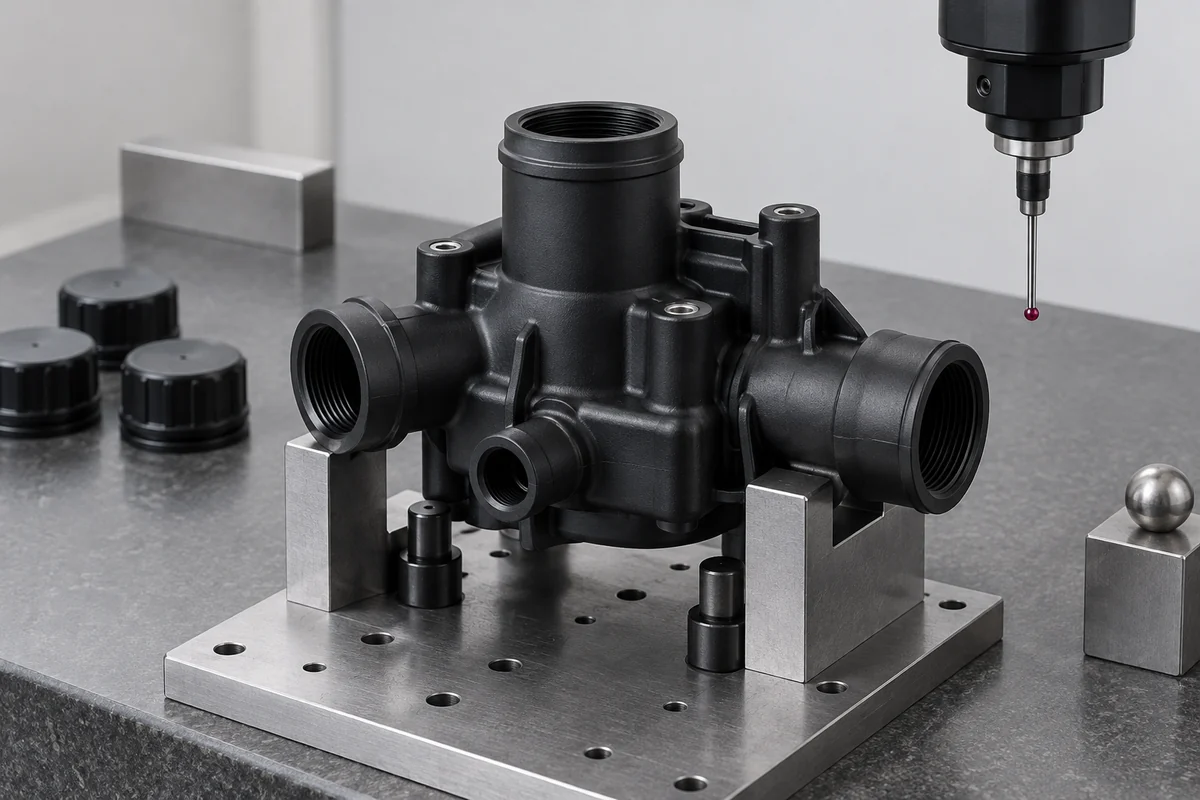
Confirm the circuit and supply scope
Identify the controlled geometry, exact fluid, mating components and ownership of system qualification.
Review resin and moldability
Assess candidate-grade evidence, channel cores, gate locations, shutoffs and seal-surface formation.
Inspect identified trial parts
Check the agreed dimensions and component-test requirements with cavity, drawing and trial traceability.
Close the required validation
Record approved results and open life, environmental and system checks before authorizing repeat supply.
Practical engineering and buying guides
Decisions to make before production
- Custom Plastic Fluid Manifolds: Prepare a Useful RFQPrepare a custom plastic manifold RFQ with defined flow paths, fluid exposure, mating ports, tooling scope and separate part and system acceptance.
- PPS vs PA66 for Fluid Manifolds: Compare the Full DutyCompare PPS and PA66 manifold candidates using actual fluid chemistry, moisture conditioning, temperature, loading and grade-specific validation.
- Molded Manifold Core Shift: Review the Hidden WallReview core support, fill balance and internal wall inspection in molded plastic manifolds. Separate core shift from shrinkage and measurement effects.
- Plastic Manifold Gates and Weld Lines: A Design ReviewReview gate position, flow-front meeting regions, venting and trial evidence for molded fluid manifolds. Appearance alone does not establish strength.
- Plastic Manifold Ports: Separate Fit and Seal TolerancesSpecify molded manifold port location, sealing lands, groove geometry and assembly datums. Separate dimensional fit, surface finish and seal validation.
- Plastic Manifold Leak Tests: Write a Clear Acceptance PlanDefine plastic manifold test medium, pressure, temperature, stabilization, fixtures and acceptance. Separate leak screening, proof testing and service life.
Before you request a quote
Is this an injection-mold hot-runner manifold?
No. These are molded plastic bodies for distributing or collecting a service fluid. The heated polymer-distribution manifold inside a mold is a different product.
Should a cooling manifold use PPS or PA66?
Compare exact grades against the fluid, temperature, conditioning, loading and life requirements. A polymer name alone does not settle the material choice.
Can fittings and seals be included?
They can be reviewed within a defined supply scope. Provide the actual counterpart specifications and identify sourcing, installation and assembly-test responsibilities.
What pressure can the manifold withstand?
There is no universal rating for a custom molded body. Its geometry, material, connections and duty need project-specific engineering and validation. A short proof check does not establish long-term service life.
What is needed for a quotation?
Send CAD and drawings, the circuit and fluid specification, mating components, trial and repeat quantities, required reports and the component acceptance procedure.
Your next step
Discuss the part with its intended function.
Send the manifold drawing with its fluid conditions, connections and acceptance plan. We can review a defined tooling, molding and sample-inspection scope.
Explore our injection molding service or review other custom molded applications.