
Custom molded parts · Made to your design
Custom LSR Silicone Diaphragms
Define the membrane, housing and motion as one controlled interface.
Bring the diaphragm drawing with its clamp, center attachment and operating medium. We review LSR molding feasibility and inspection for flat, shallow-profile or other project-specific designs. Material screening and component trials remain distinct from customer system qualification.
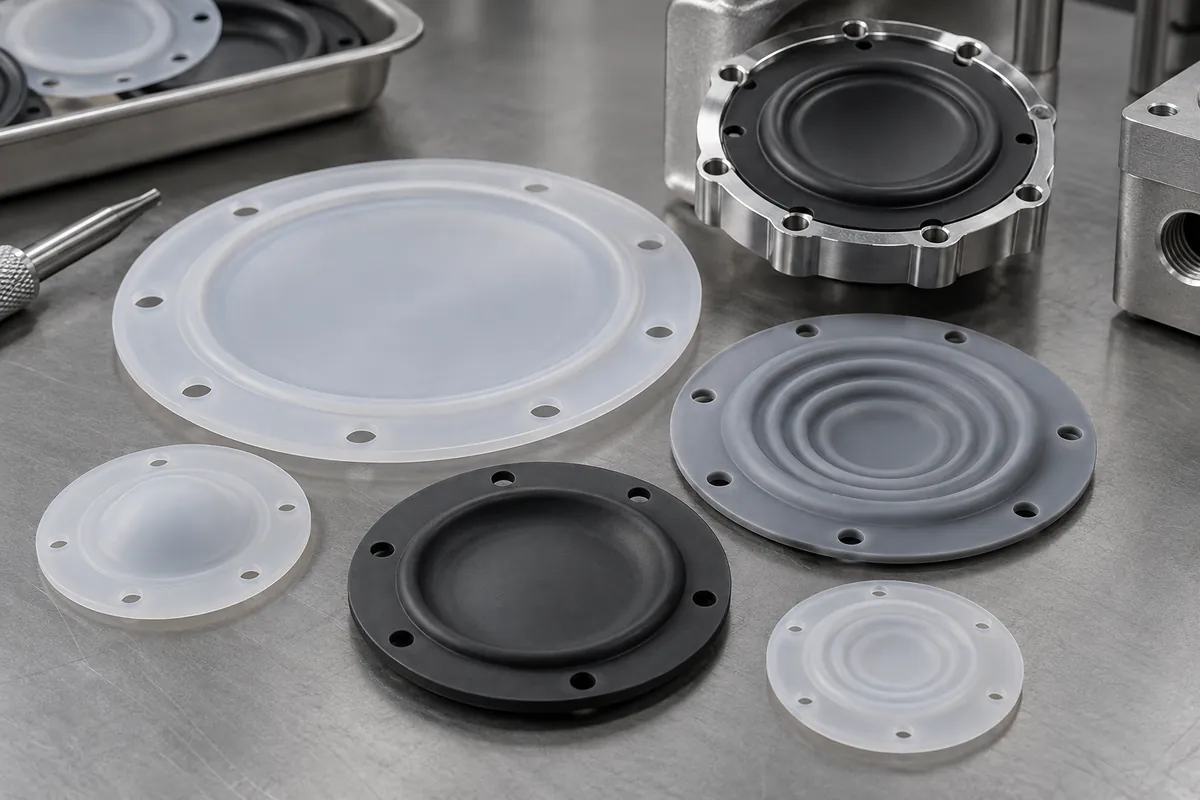
Product details
Silicone Diaphragms: product details
Product design illustrations showing component features and assembly relationships. The final geometry is made to your approved drawing.
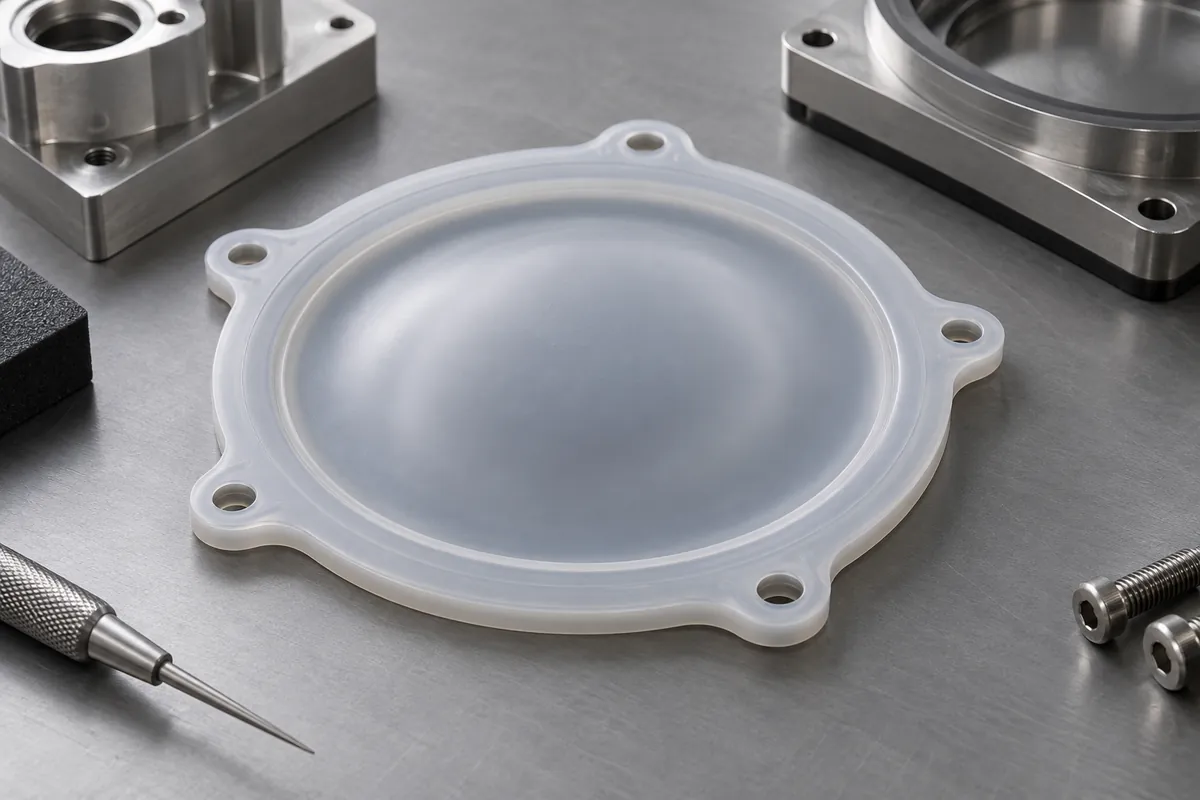
Active membrane
Control thickness and the transition into the clamped region.
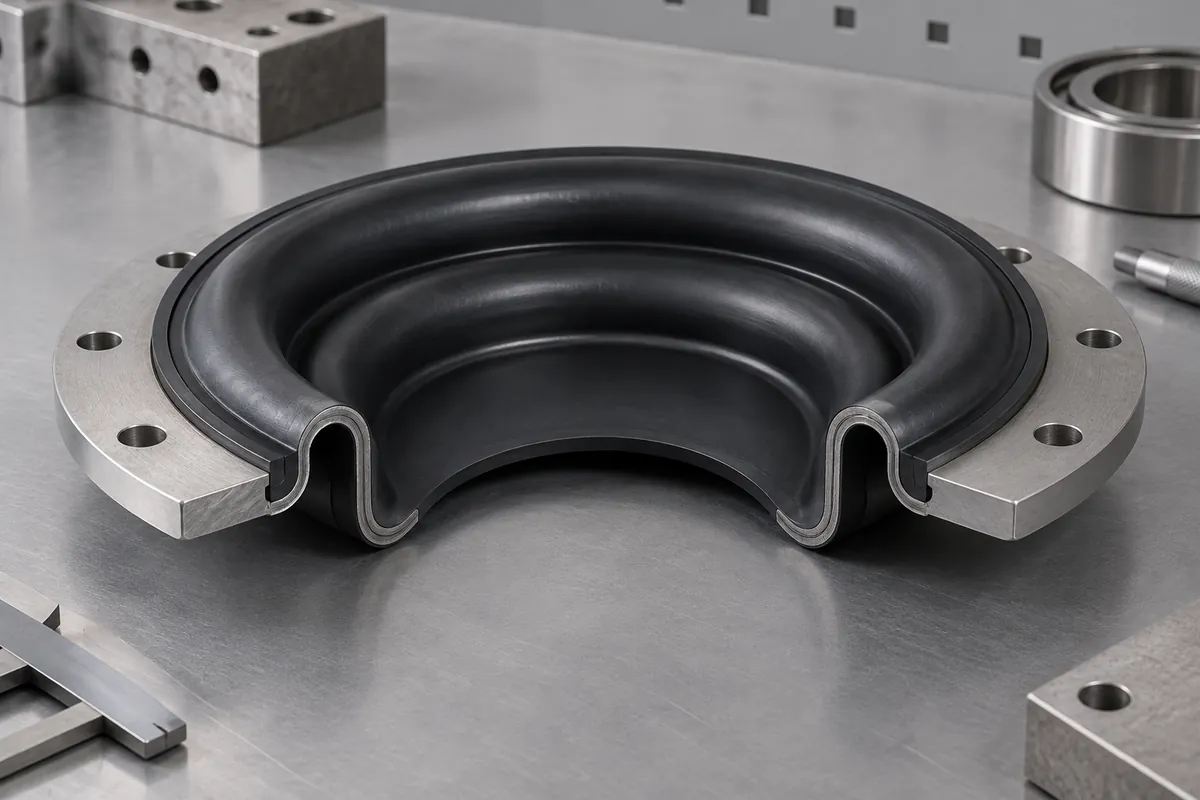
Convolution profile
Review clearance and support through the full motion.
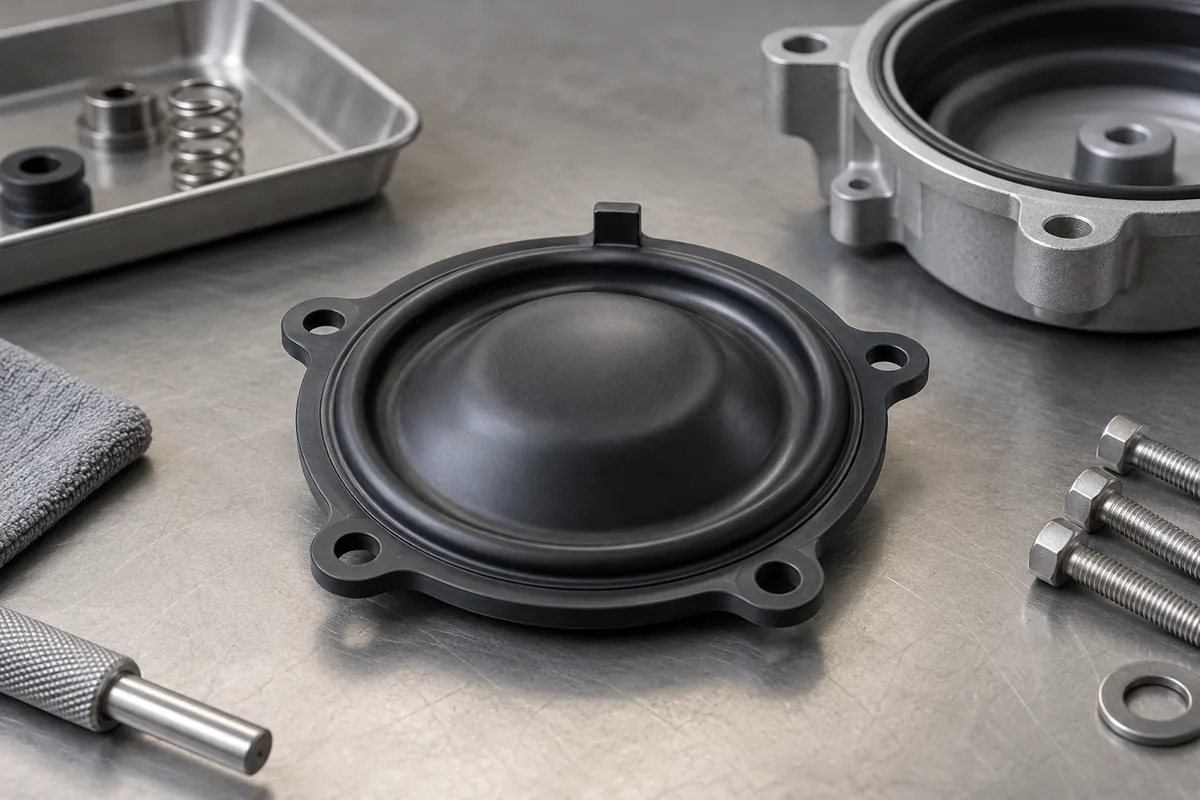
Sealing bead
Match the bead and groove without pinching the membrane.
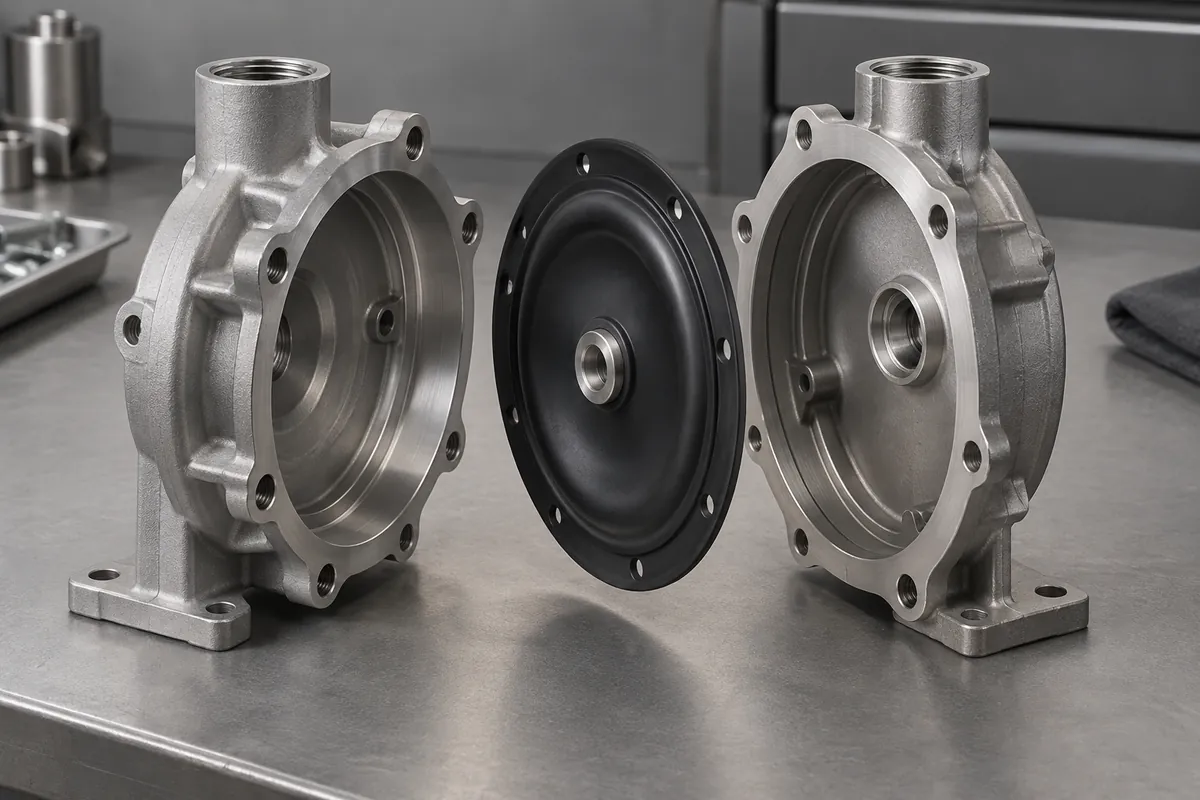
Housing interface
Approve both mating components and the assembly method.
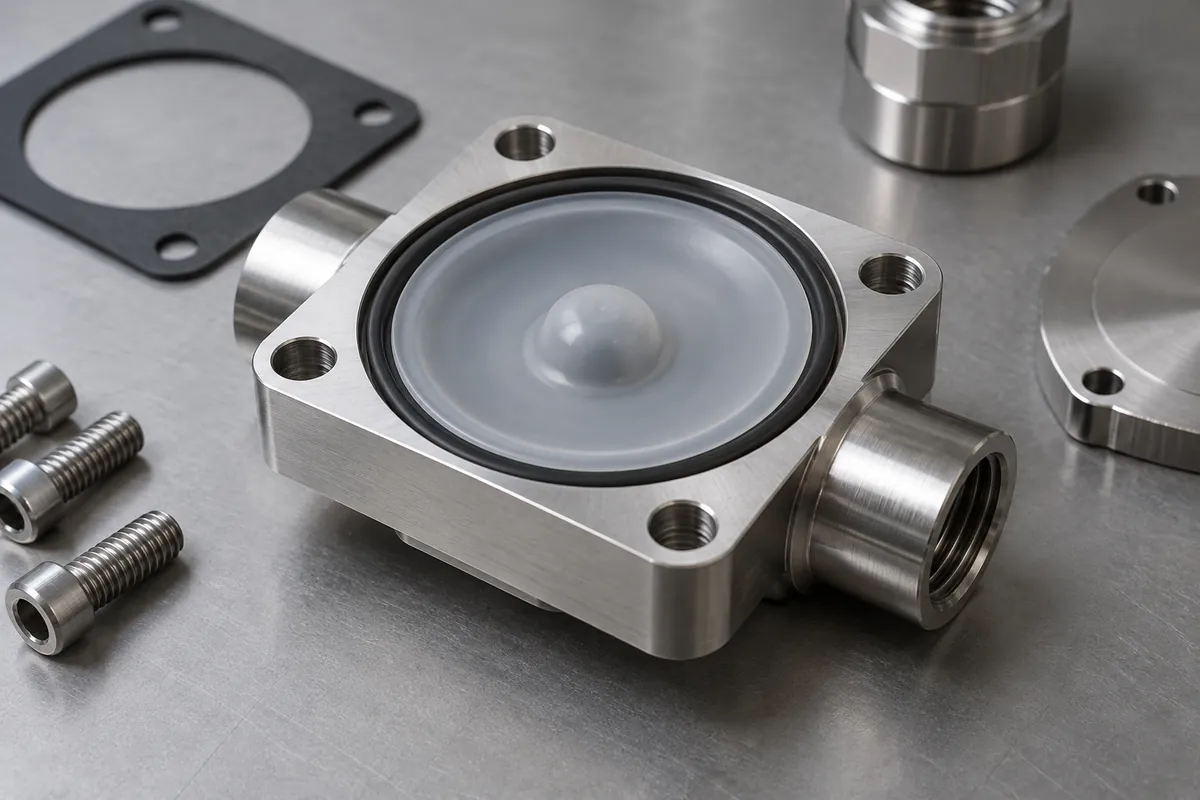
Center transition
Review the local geometry where actuation enters the membrane.
Illustrative configurations. Final specifications follow your approved drawings.
Application fit
A custom component with a defined purpose
Define the membrane, housing and motion as one controlled interface.
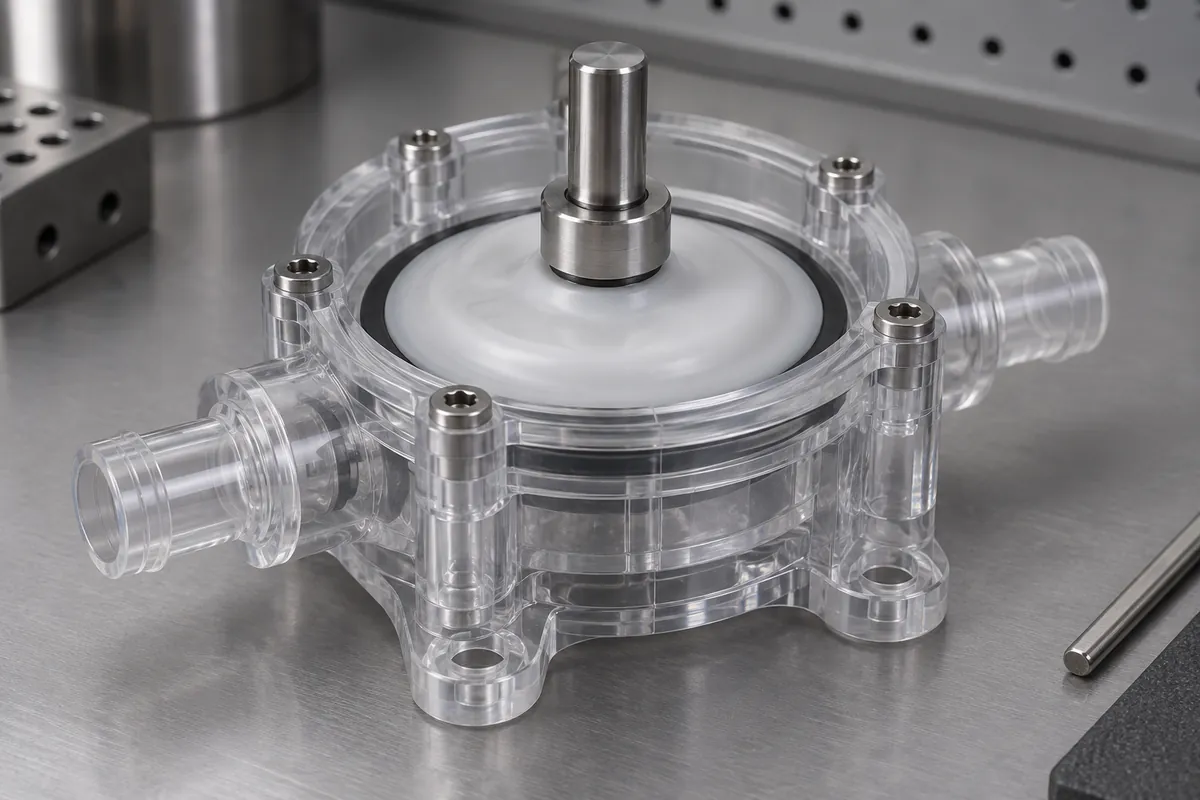
Pump membranes
Flexible moving membranes with defined displacement, housing support and pressure direction.
Valve and actuator interfaces
Diaphragms that separate chambers or transmit movement in a specified assembly.
Clamped sealing profiles
Peripheral beads and locating details reviewed with the mating groove and assembly procedure.
Quote-ready inputs
What to send for a meaningful quotation
Use the same drawing and requirements for every proposal. Mark open decisions explicitly so that a low price does not conceal a different deliverable.
| Area | Please provide | Review before release |
|---|---|---|
| Project definition | Current CAD, drawing revision, mating components and quantities. | Mark fixed interfaces and open design decisions before comparing quotations. |
| Motion | Neutral position, travel limits, rate and pressure waveform. | Distinguish total stroke from one-direction displacement. |
| Material exposure | Exact fluid, cleaning, temperature and selected compound. | A material datasheet is not finished-device approval. |
| Membrane inspection | Thickness locations, measuring contact and cavity coverage. | Connect free-state measurements to assembled function. |
| Supply and release | Trial, first-order and repeat quantities, packing and report needs. | Agree tooling scope, approval hold points and change control. |
From drawing to approval
From the assembly requirement to production approval
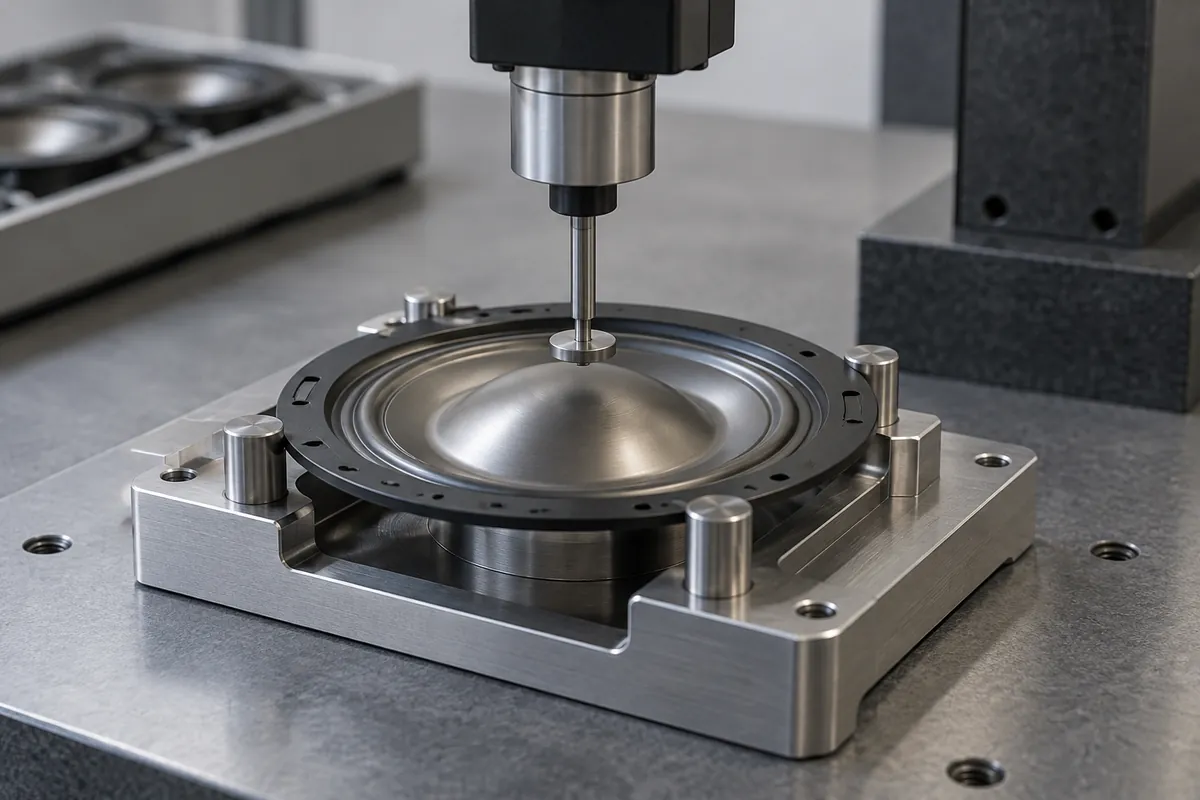
Align the scope
Confirm the compound and assembly, review membrane and tooling geometry, inspect cavity-identified samples, then evaluate sealing and the agreed cycle program.
Review the tool and material
Confirm the exact compound, molding route and any secondary operations. Resolve proposed changes against the functional drawing before tooling release.
Evaluate identified samples
Record cavity and lot identity with dimensional and agreed functional observations. Keep incomplete validation separate from completed acceptance.
Release the approved configuration
Retain the drawing, material, process route and inspection method. Review later changes against the configuration that was actually approved.
Practical engineering and buying guides
Decisions to make before production
- Flat vs Rolling Diaphragms: Match Motion and HousingCompare flat and rolling silicone diaphragms through stroke, support geometry, pressure direction and assembly constraints before choosing a molded construction.
- Silicone Diaphragm Thickness: Flexibility, Stroke and StressConnect silicone diaphragm thickness to flexible span, stroke, pressure and inspection. Avoid using a universal minimum wall or hardness as a fatigue prediction.
- Reinforced vs Unreinforced Rubber DiaphragmsCompare reinforced and unreinforced diaphragms using pressure support, motion, fluid exposure, fabric placement and manufacturing evidence—not strength labels alone.
- Diaphragm Clamping Beads and Housing InterfacesDesign a diaphragm bead and clamping housing around compression, location, edge transitions and assembly repeatability. Separate flange sealing from membrane function.
- Testing Silicone Diaphragm Fatigue Under Pressure CyclingPlan diaphragm fatigue and pressure-cycle tests with defined assemblies, waveforms, sample coverage and interim reporting. Keep endurance targets separate from measured results.
- Silicone Diaphragm Fluid Compatibility: Swell, Hardness and FunctionEvaluate silicone diaphragm fluid compatibility using exact compounds, complete exposure conditions and assembled-part testing. Separate material data from device approval.
Before you request a quote
Does a medical-grade resin certify the diaphragm?
No. Material-level information does not certify the processed component or finished device. The responsible team must assess the complete intended use.
Can thickness alone predict lifetime?
No. Geometry, stroke, pressure, exposure and assembly influence the result. A defined endurance program is needed.
Can you supply reinforced diaphragms?
Reinforcement is a different construction requiring its own process review. Confirm feasibility and scope before treating it as an LSR molding option.
Your next step
Discuss the part with its intended function.
Send the silicone diaphragms drawing with its mating interfaces and acceptance requirements. We will review the proposed molding scope and identify the information needed for a meaningful quotation.
Explore our injection molding service or review other custom molded applications.