
Custom molded parts · Made to your design
Custom LSR Silicone Bellows and Protective Boots
Make the moving cover fit the mechanism at every required position.
Share the boot drawing and mechanism envelope, including minimum and maximum installed lengths. We review LSR molding, end-collar geometry and inspection with the actual motion and environment. Protective coverage, sealing and fatigue life are separate requirements that need their own evidence.
Product details
Silicone Bellows & Boots: product details
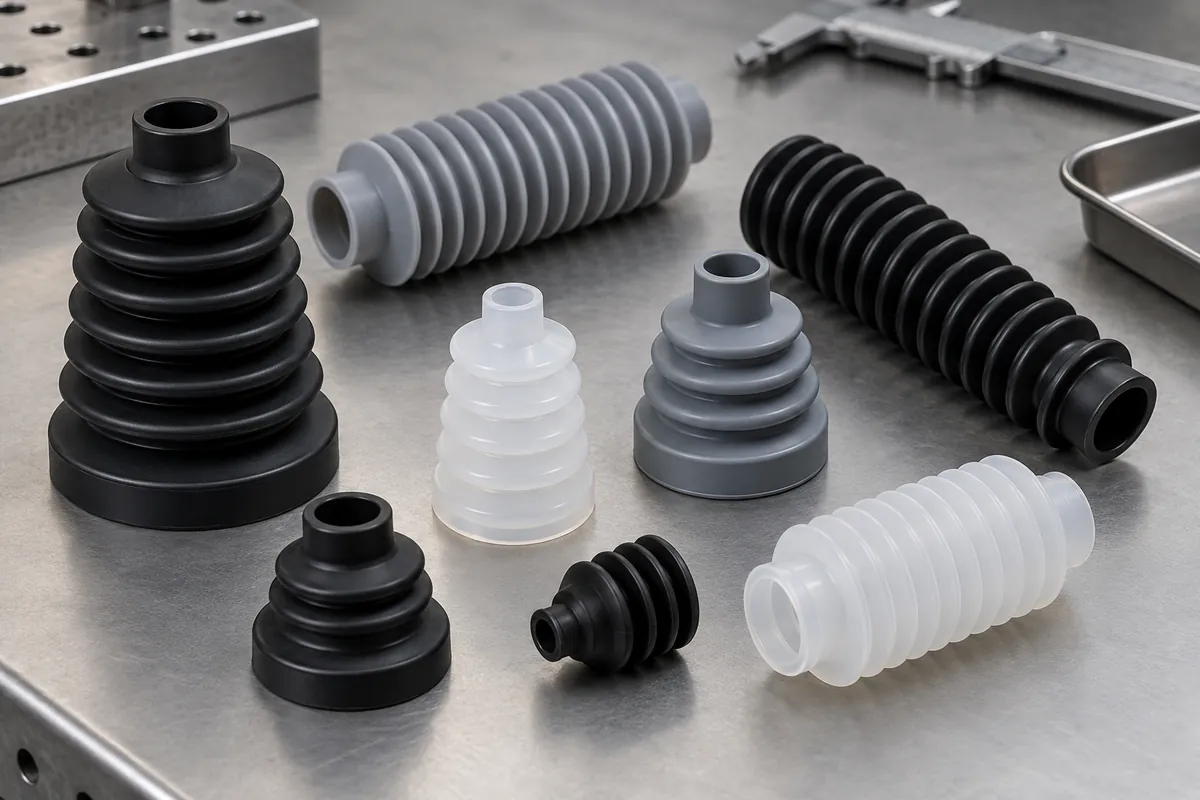
Product design illustrations showing component features and assembly relationships. The final geometry is made to your approved drawing.
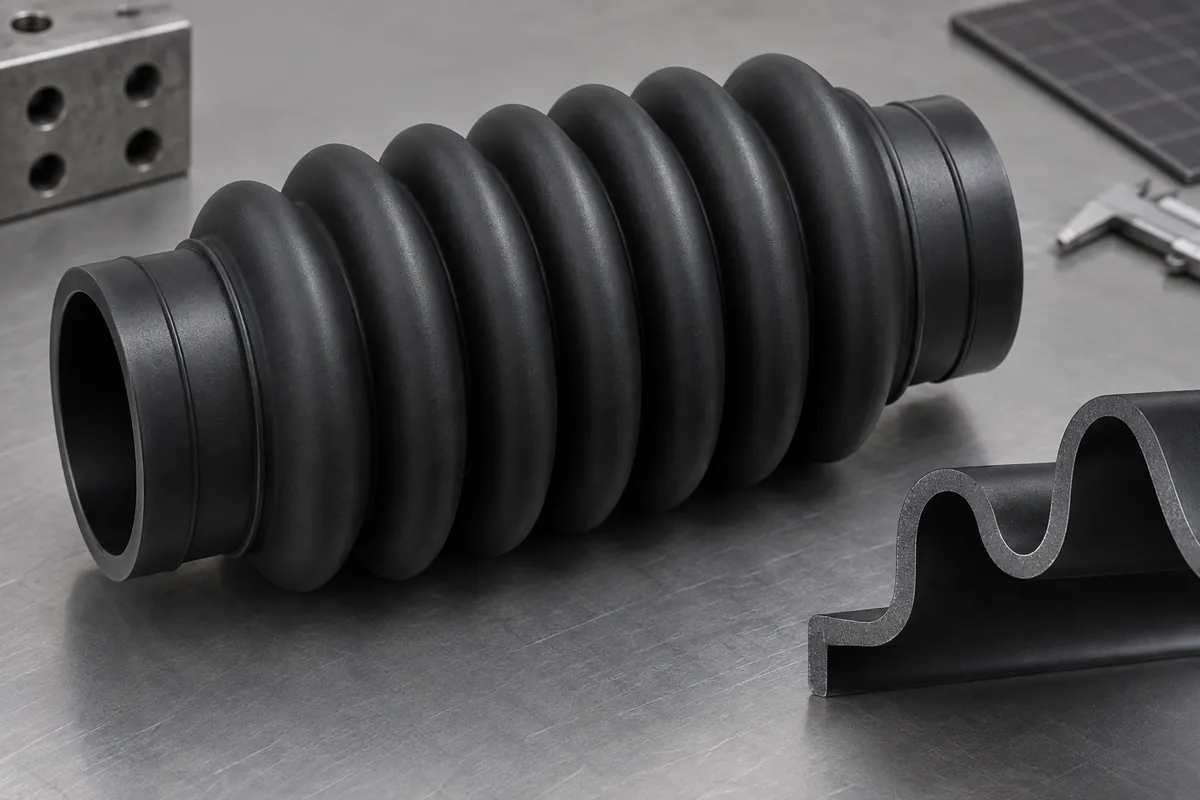
Fold root
Review radii and wall distribution where movement concentrates.
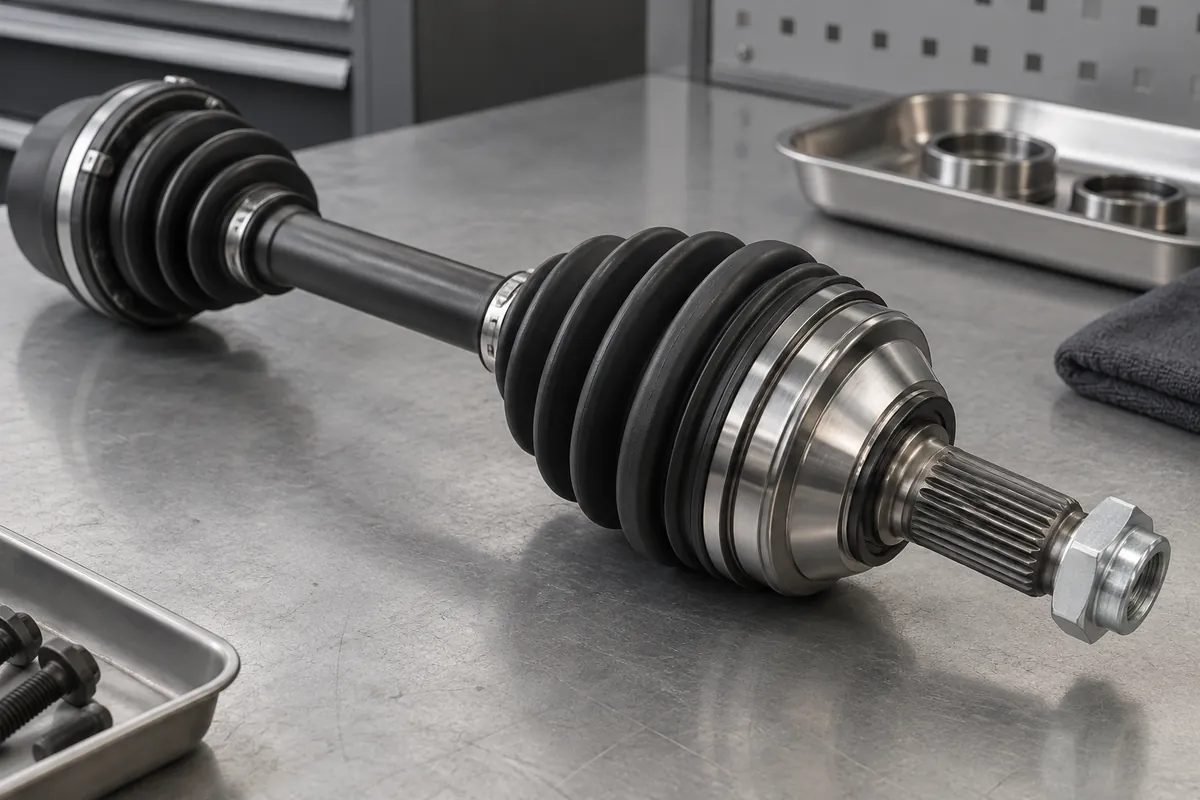
End lip
Define sealing contact separately from collar retention.
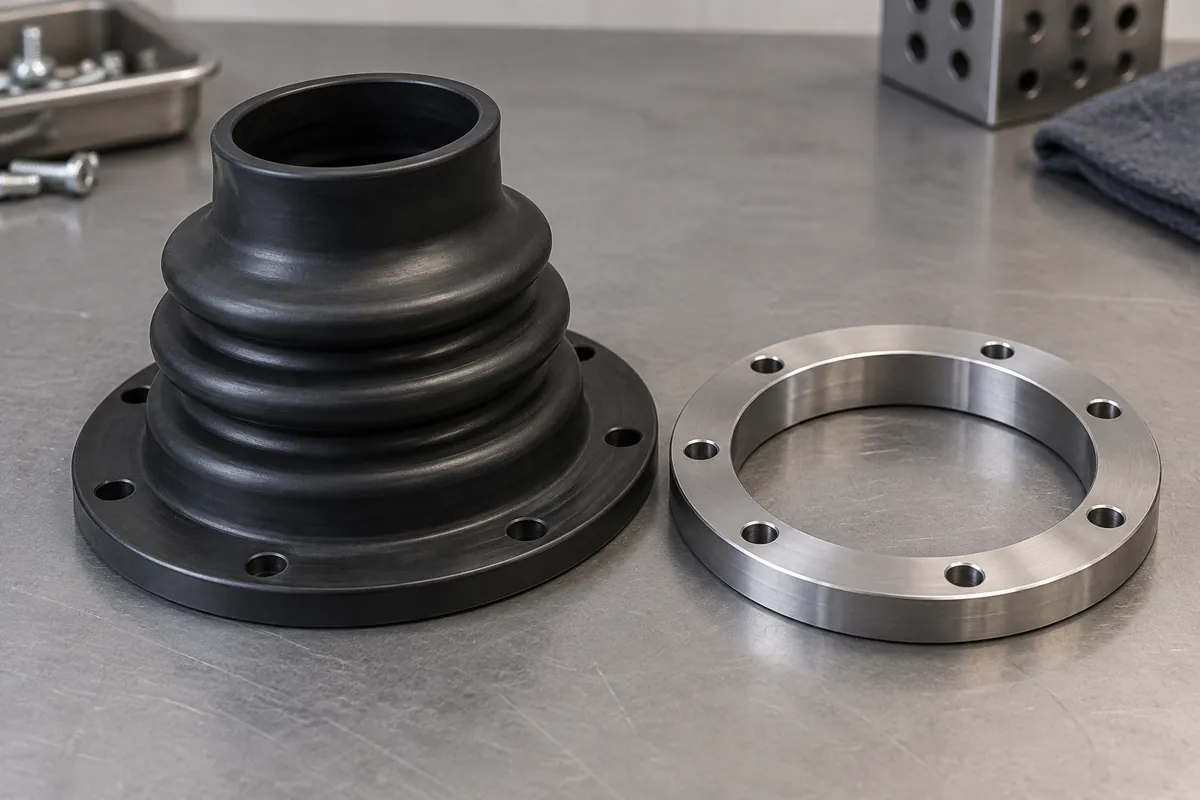
Flange interface
Match the rigid support and tightening method.
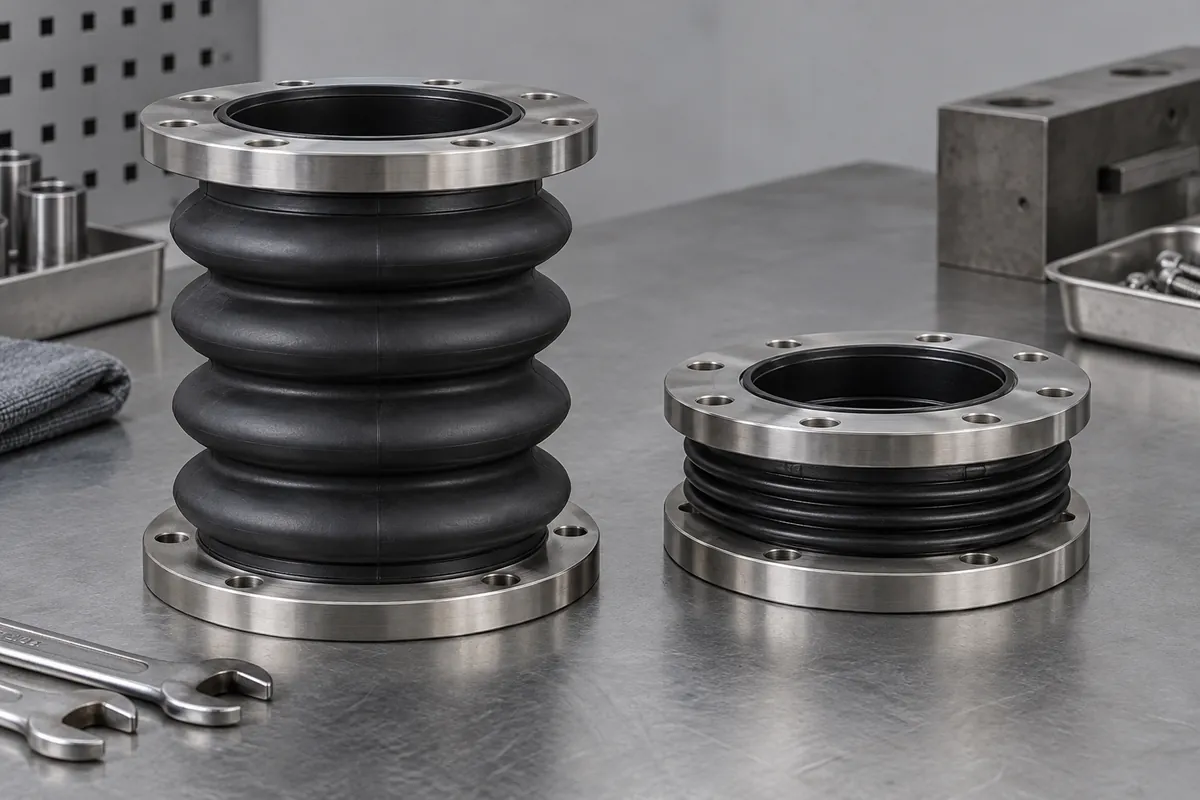
Compressed envelope
Check fold contact and neighboring equipment at minimum length.
Installed clearance
Protect the shaft without unwanted rubbing through motion.
Illustrative configurations. Final specifications follow your approved drawings.
Application fit
A custom component with a defined purpose
Make the moving cover fit the mechanism at every required position.
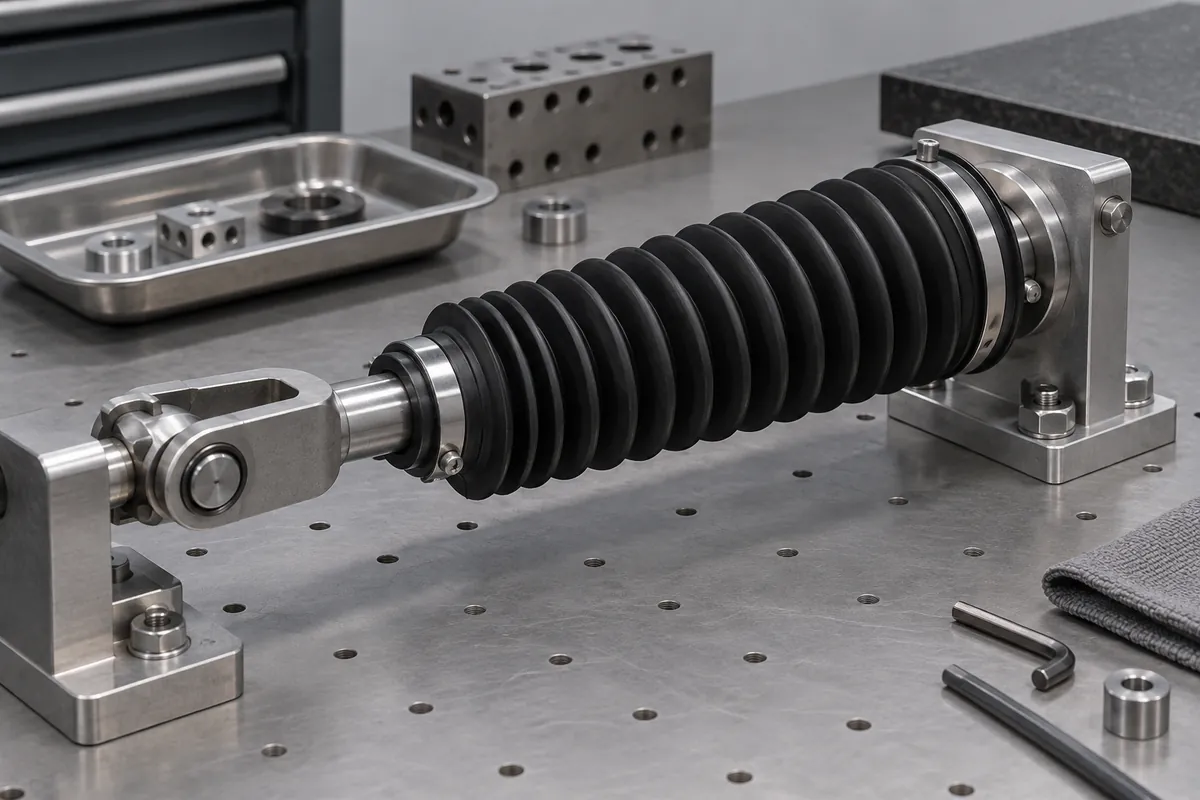
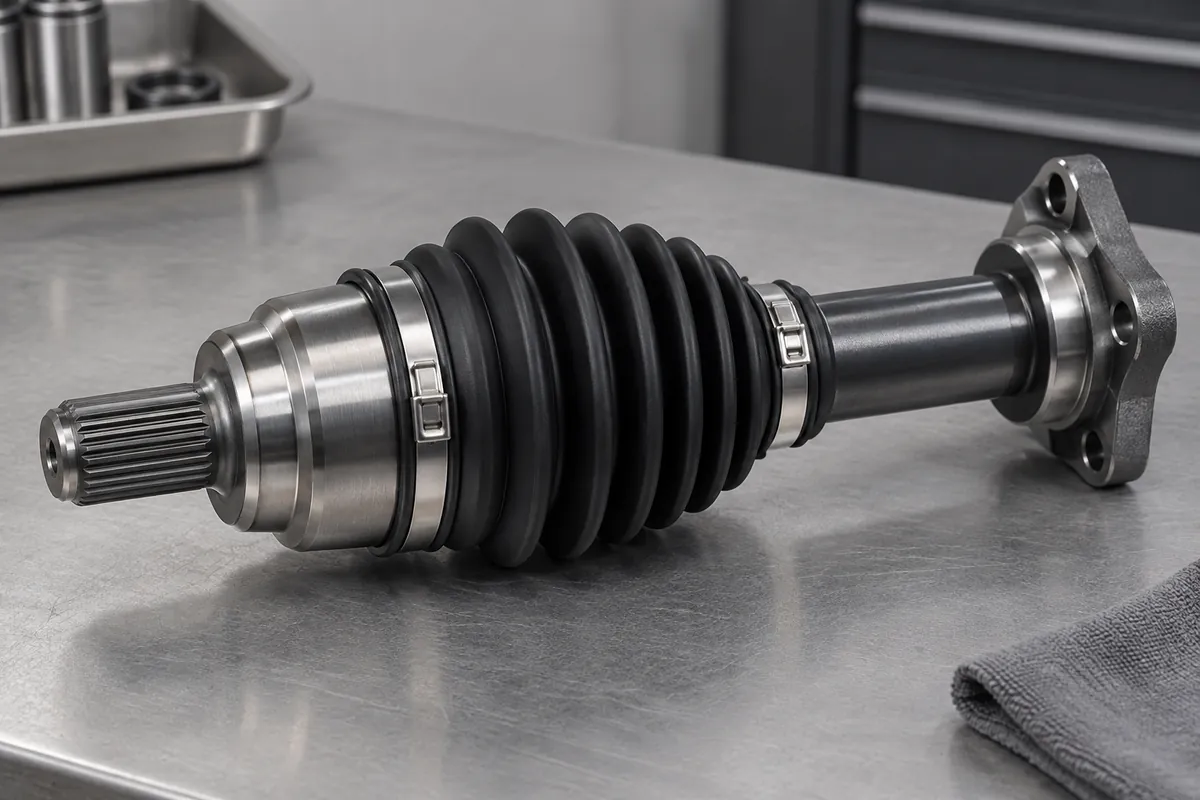
Mechanism covers
Flexible boots around shafts or linkages with defined clearance through travel.
Collared bellows
End attachments designed with the selected clamps and counterpart surfaces.
Flanged protective boots
Mounted profiles for equipment interfaces where retention and environmental boundaries are explicitly specified.
Quote-ready inputs
What to send for a meaningful quotation
Use the same drawing and requirements for every proposal. Mark open decisions explicitly so that a low price does not conceal a different deliverable.
| Area | Please provide | Review before release |
|---|---|---|
| Project definition | Current CAD, drawing revision, mating components and quantities. | Mark fixed interfaces and open design decisions before comparing quotations. |
| Motion envelope | Free, compressed and extended length; lateral or angular movement. | Do not confuse total stroke with displacement from neutral. |
| Environment | Temperature, fluid, cleaning and intended protective function. | Silicone family identity does not establish oil resistance or ingress rating. |
| Attachment and vent | Clamps, flanges, collar counterparts and air path. | Check trapped-air load and installation strain with the molded profile. |
| Supply and release | Trial, first-order and repeat quantities, packing and report needs. | Agree tooling scope, approval hold points and change control. |
From drawing to approval
From the assembly requirement to production approval
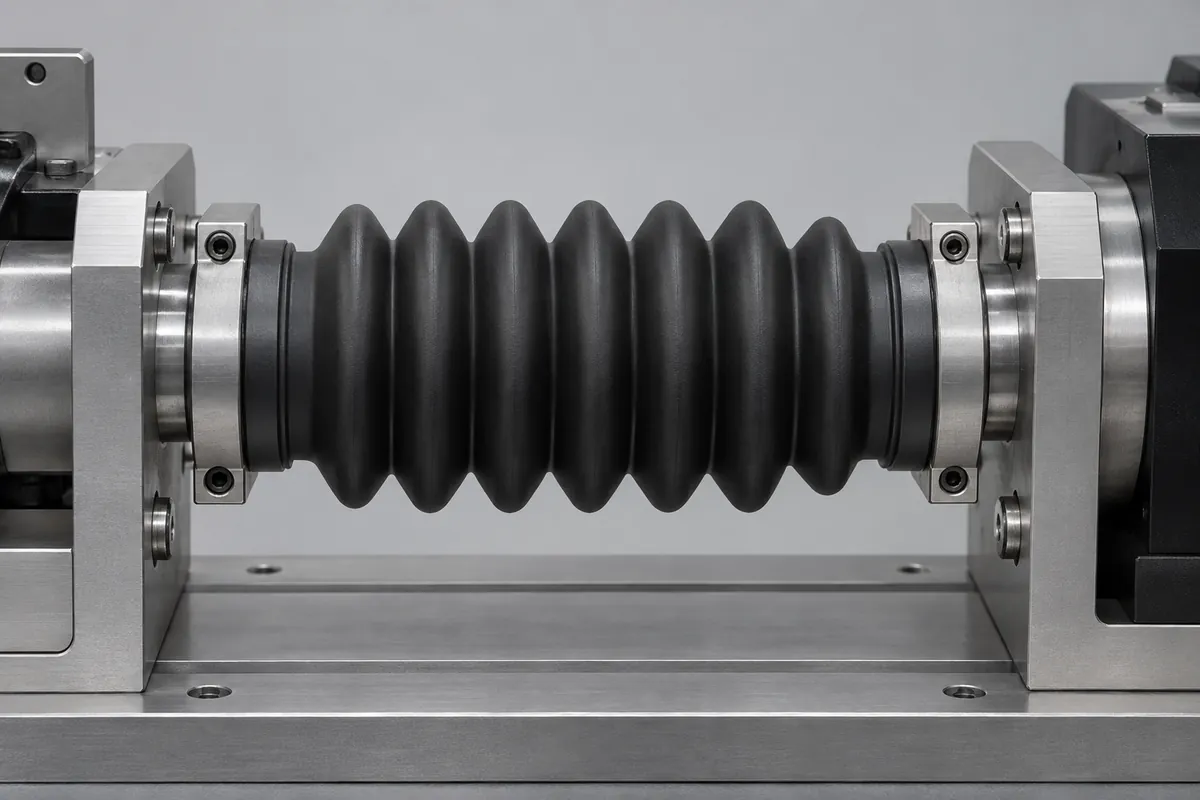
Align the scope
Confirm the installed motion, review fold and release geometry, trial the molding and attachment method, then validate the agreed movement and endurance conditions.
Review the tool and material
Confirm the exact compound, molding route and any secondary operations. Resolve proposed changes against the functional drawing before tooling release.
Evaluate identified samples
Record cavity and lot identity with dimensional and agreed functional observations. Keep incomplete validation separate from completed acceptance.
Release the approved configuration
Retain the drawing, material, process route and inspection method. Review later changes against the configuration that was actually approved.
Practical engineering and buying guides
Decisions to make before production
- Silicone Bellows Design: Convolutions and Usable StrokeSpecify silicone bellows free, compressed and extended lengths separately. Review convolution clearance, end attachments and actual motion before assigning usable stroke.
- Silicone vs TPE Bellows: Motion, Exposure and Process ChoiceCompare silicone and TPE bellows using exact compounds, operating exposure, motion, end retention and manufacturing route. Avoid choosing by softness alone.
- Bellows Attachment: Clamps, Flanges and Molded Sealing LipsDesign bellows clamps, flanges and sealing lips around retention, compression, installation and motion. Distinguish a protective cover from a validated sealed assembly.
- Vented vs Sealed Bellows: Managing Trapped AirReview vented and sealed bellows through changing volume, trapped air, contamination paths and actuator load. Define the protected boundary before adding a vent.
- Molding Silicone Bellows: Undercuts and DemoldingReview silicone bellows undercuts, parting lines, release strain and tooling choices. Flexible material does not make every convoluted shape easy to demold.
- Bellows Fatigue Tests: Axial Motion Is Not Lateral MotionSeparate axial, lateral, bending and combined bellows fatigue tests. Report actual motion, fixtures, cycle count and interim observations without inventing service life.
Before you request a quote
Does reaching both end positions prove fatigue life?
No. A manual movement check and a repeated-cycle qualification answer different questions.
Should every bellows be vented?
The enclosed volume and protective requirement determine the decision. A vent affects both movement and the environmental boundary.
Can a flexible boot always be stripped from a simple mold?
No. Release strain, profile and compound require review; some shapes need specialized tooling.
Your next step
Discuss the part with its intended function.
Send the silicone bellows & boots drawing with its mating interfaces and acceptance requirements. We will review the proposed molding scope and identify the information needed for a meaningful quotation.
Explore our injection molding service or review other custom molded applications.