
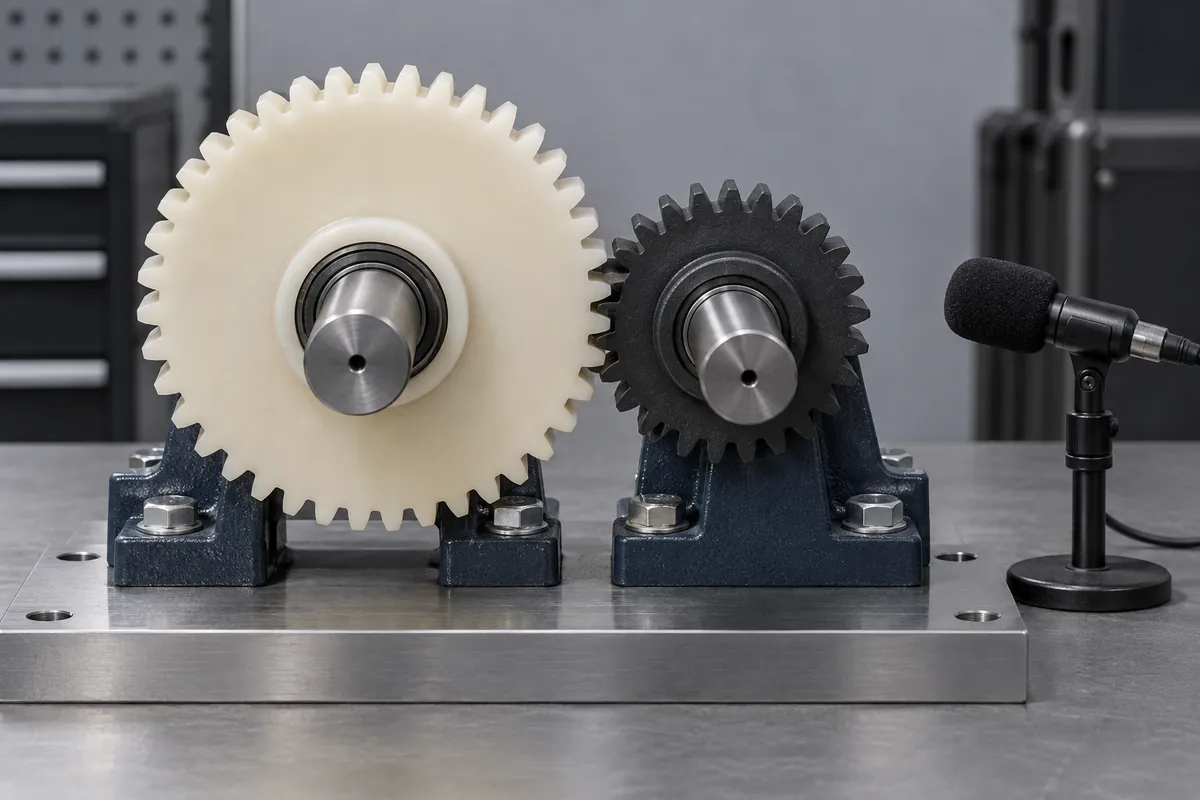
A new gear pair can sound quiet during a brief bench run and behave differently after repeated reversals, heat exposure or installation in its final housing. A material change can also alter several things at once: dimensions, surface behavior and how the assembly responds. “Quieter plastic” is not a sufficiently controlled test conclusion.
Define wear and noise as measurable application outcomes before comparing candidates. The test should preserve the gear pair, mounting, operating sequence and environment that matter to the product. This article proposes an evaluation structure; it reports no measured lifetime, noise reduction or customer result.
Product design illustrations. Final geometry, materials and acceptance criteria are project-specific.
Translate the duty into a test sequence
Describe normal load and speed, starts, stops, reversals and relevant dwell periods. Separate expected operation from overload or fault conditions. If the real product runs intermittently, a continuously rotating bench setup may create a different thermal history. Decide whether that difference is intentional and what the test can legitimately conclude.
Identify the gear revisions, resin grades, counterparts, shafts and housing configuration. For a candidate comparison, keep the common conditions controlled. If the design must change with the material, label each combination as a separate configuration rather than attributing every difference to the resin.
Choose wear observations that support the decision
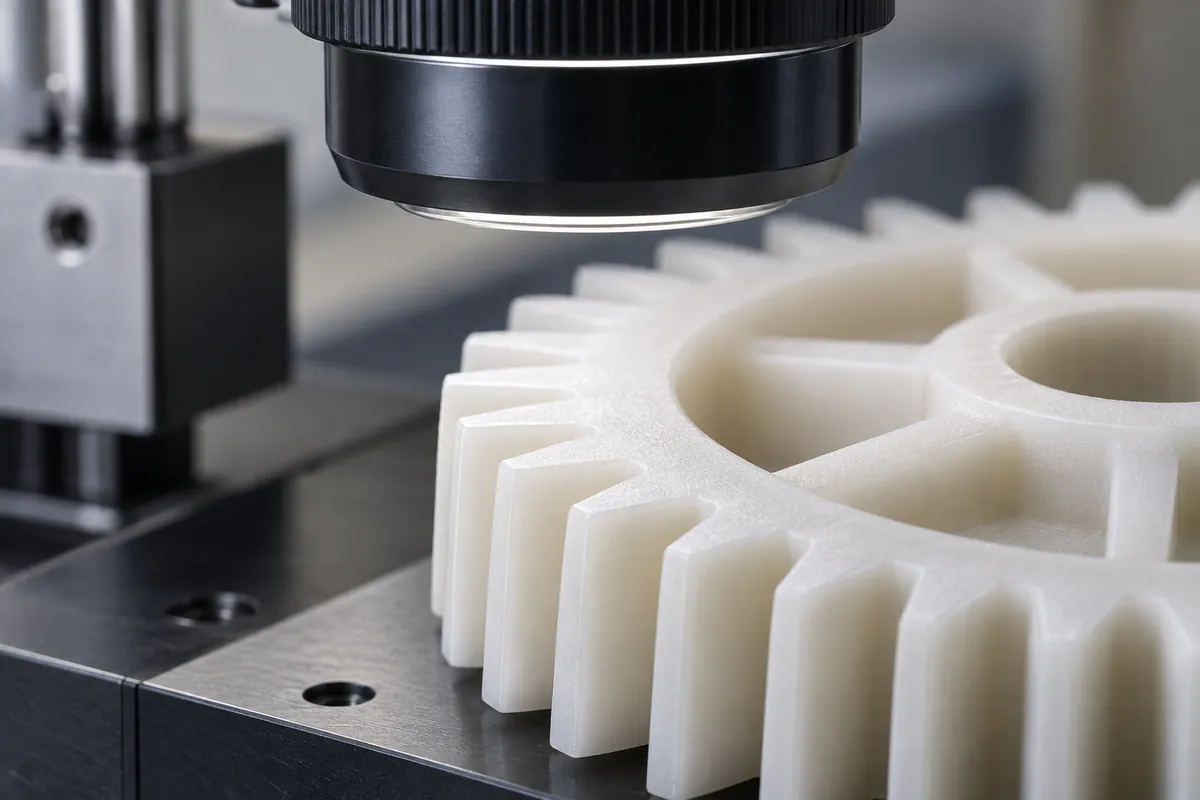
Decide which observations indicate unacceptable change: tooth surface condition, material loss by a defined method, backlash change, loss of function or damage. The relevant metric depends on the requirement. A shiny contact region may warrant investigation but is not, by itself, a measured wear rate or a failure.
Record baseline measurements and the intended observation intervals. Define whether inspection requires disassembly and whether reassembly can affect the comparison. If a specimen is removed or replaced, preserve that event in its history rather than presenting an uninterrupted run.
Delrin's wear and friction material guidance discusses grades intended for tribological applications. Such data can help shortlist candidates, but the actual mating pair and duty need their own evaluation. Do not transfer a supplier's material-test result into a finished-drive lifetime claim.
Measure noise in a defined environment
Specify the operating point, microphone or sensor arrangement, surrounding enclosure and the reported acoustic quantity with the responsible test specialist. An open bench and a closed product housing can produce different results. Keep background conditions and mounting consistent enough for the intended comparison.
If the requirement is subjective sound quality rather than a single numerical limit, define how that assessment will be made and documented. Do not treat a phone recording taken at an unknown distance as equivalent to a controlled measurement. A recording can illustrate an observation while remaining unsuitable for the acceptance decision.
| Area | Specify | Record |
|---|---|---|
| Configuration | Gear pair, resin, support, lubrication and assembly revisions. | Specimen and fixture IDs, initial inspection. |
| Duty | Speed, load, reversals, dwell and environment. | Actual operating history and interruptions. |
| Observation | Wear method, noise method and intervals. | Individual readings, images and setup changes. |
| Decision | Acceptance limits, stop criteria and approval owner. | Failures, incomplete runs and final disposition. |
Monitor the conditions that could change the result
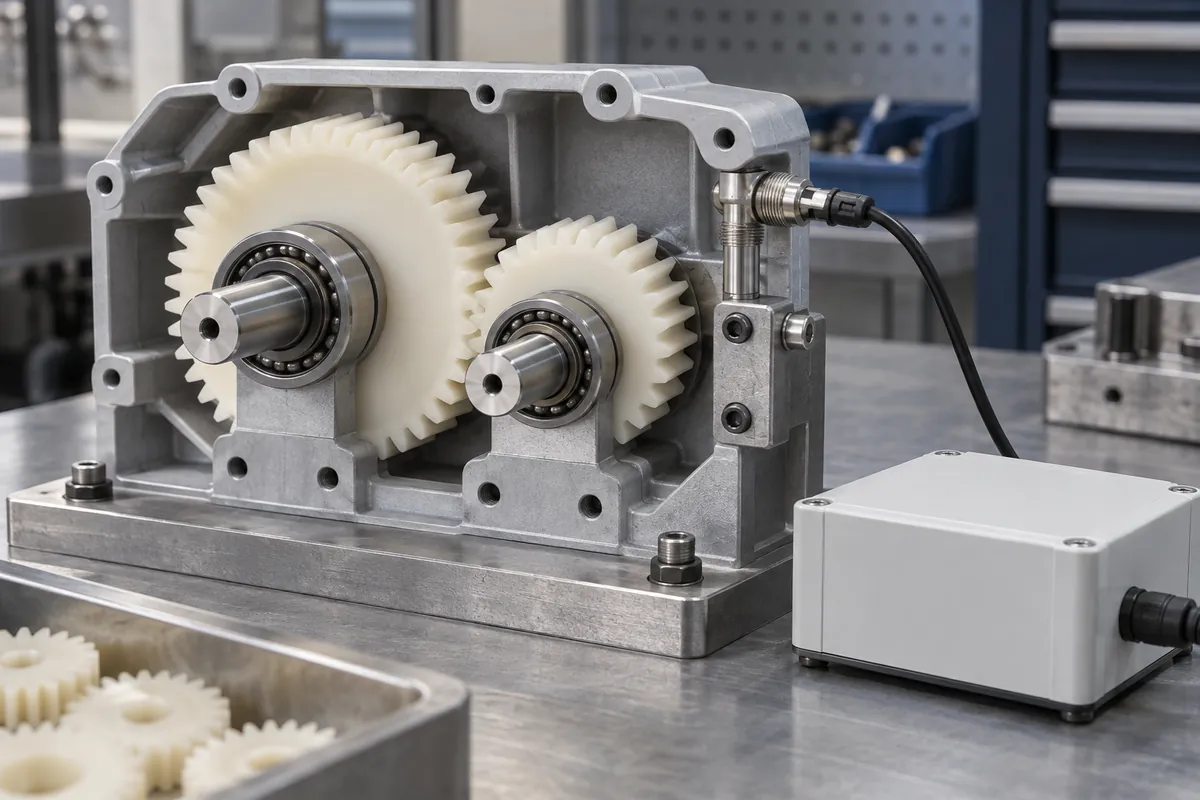
Record relevant temperatures, alignment changes and lubricant condition where they belong to the agreed method. A gear test is also a fixture test: loose supports or an altered center distance can change the contact relationship. Investigate unexpected behavior before assigning it to the polymer.
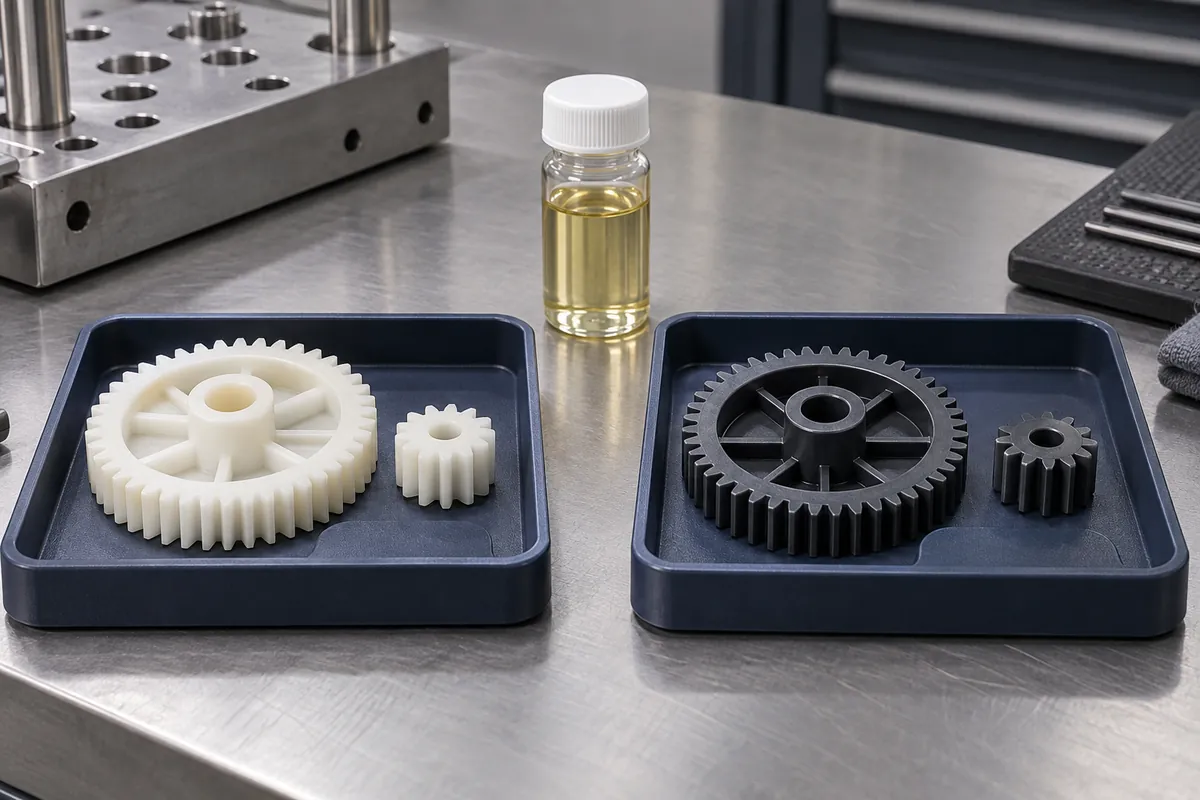
Keep lubricant selection and application controlled. If the product must run without lubricant, test that condition explicitly. If lubrication is intended, a dry trial may be useful for another question but should not be presented as representative production validation. See the POM versus nylon comparison for material-screening inputs.
Do not convert a short run into a lifetime promise
Define the required duration or cycle count from the application and the approved method. If an accelerated test is proposed, explain and justify the relationship to service use. More severe conditions can introduce a different failure mechanism; they are not automatically a simple shortcut to a lifetime result.
Report incomplete and failed runs as well as completed ones. Preserve the first observed change, the stop reason and the sample history. An average among surviving specimens does not describe the full test group and should not replace the agreed acceptance rule.
Finish with a decision limited to the tested configuration and conditions. A useful result may be “revise the support and repeat the comparison,” not an immediate material winner. Connect the operating evidence to the component inspection records so that drawing approval and functional qualification remain distinct but traceable.
Turn the review into a defined molding scope
Explore our custom injection-molded plastic gears and the related illustrative engineering study. Send the drawing revision, counterpart details, intended use and the decisions still open. Development samples and production approval should have separate, agreed deliverables.