
Custom molded parts · Made to your design
Custom Injection-Molded Coil Bobbins
Keep the core, winding envelope and terminal arrangement connected to the molding specification.
Request custom plastic coil formers with defined barrels, flanges, lead routes and terminal features. Provide the core and winding-process interfaces so the proposal covers the component you need, with electrical assembly responsibilities kept explicit.
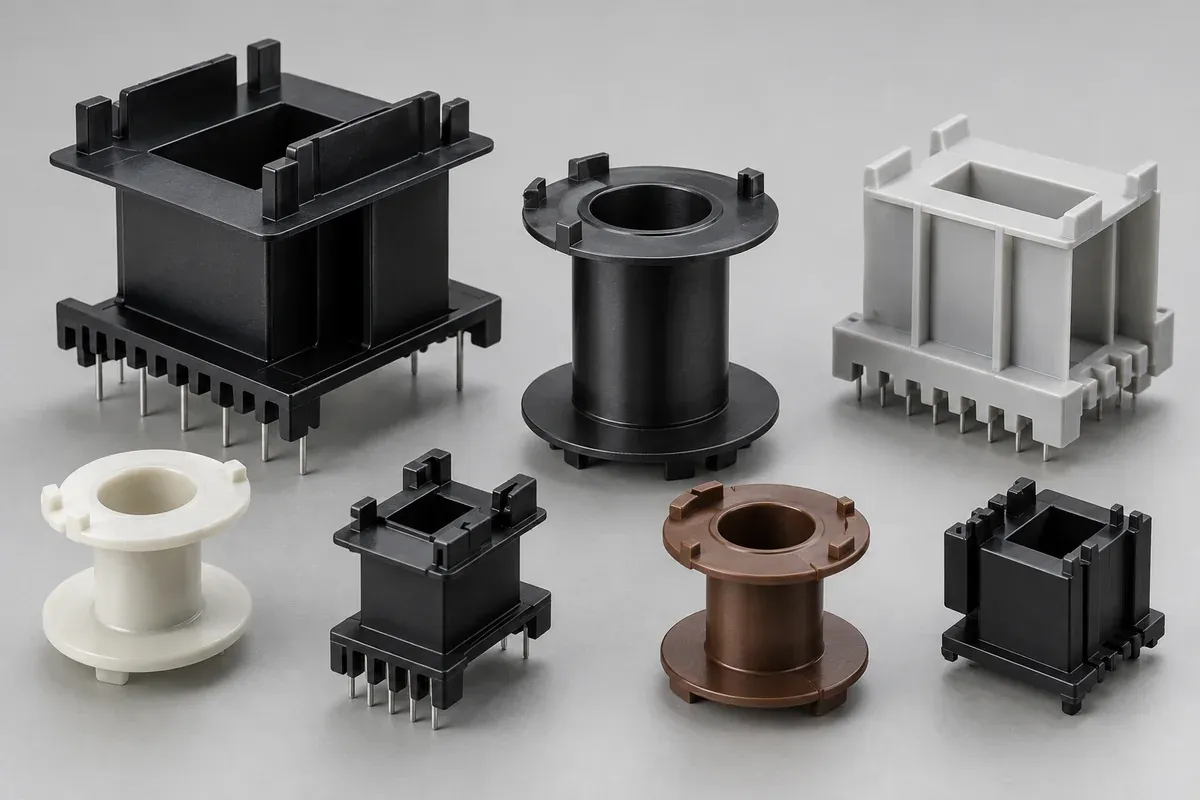
Product details
Winding space, flange roots and terminal details
Explore empty molded coil-former concepts and the small interfaces that affect winding and later assembly.
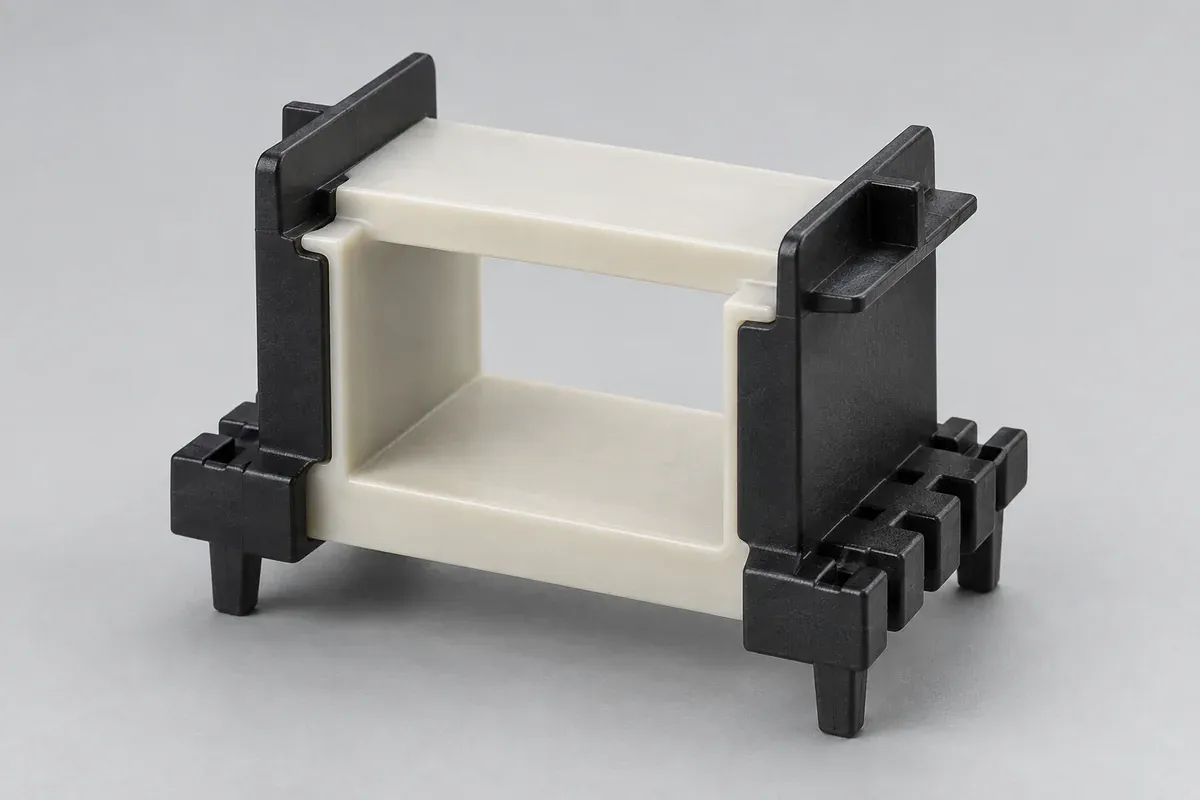
Rectangular former
Define the core passage separately from the external winding envelope.
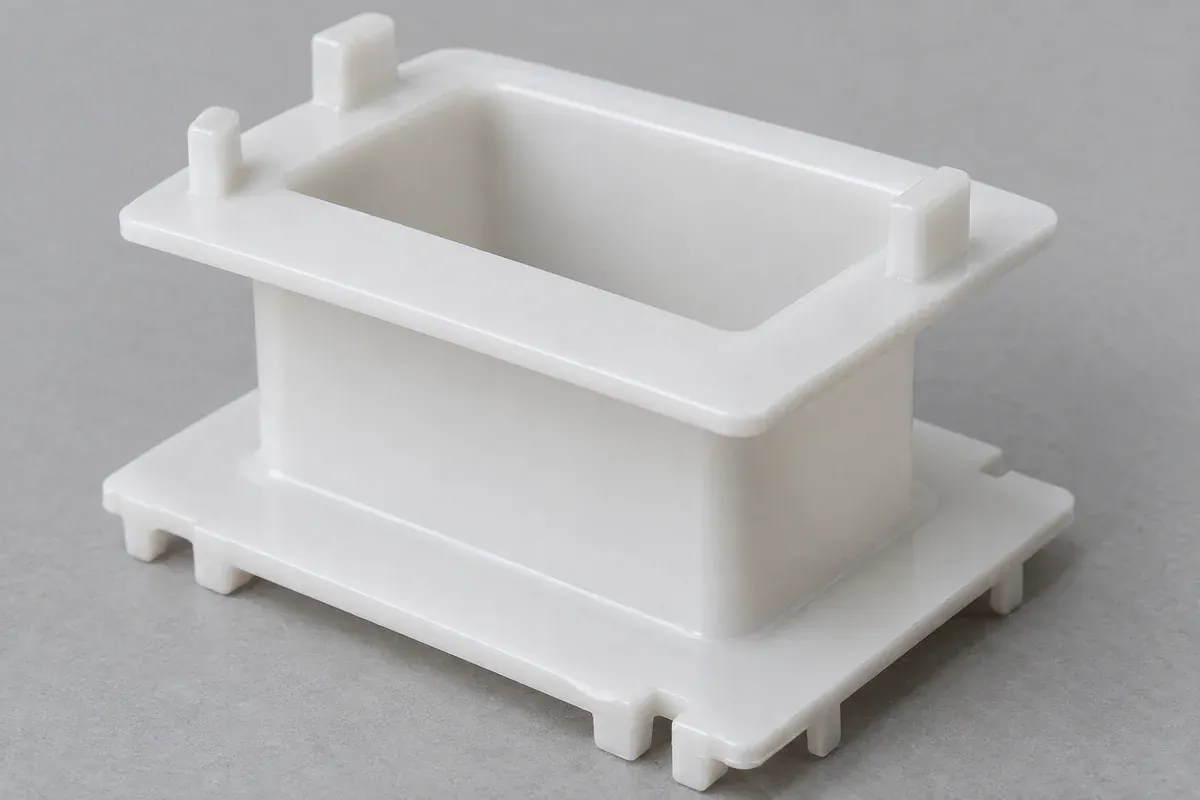
Flange transition
Review local support, wire contact and molding feasibility together.
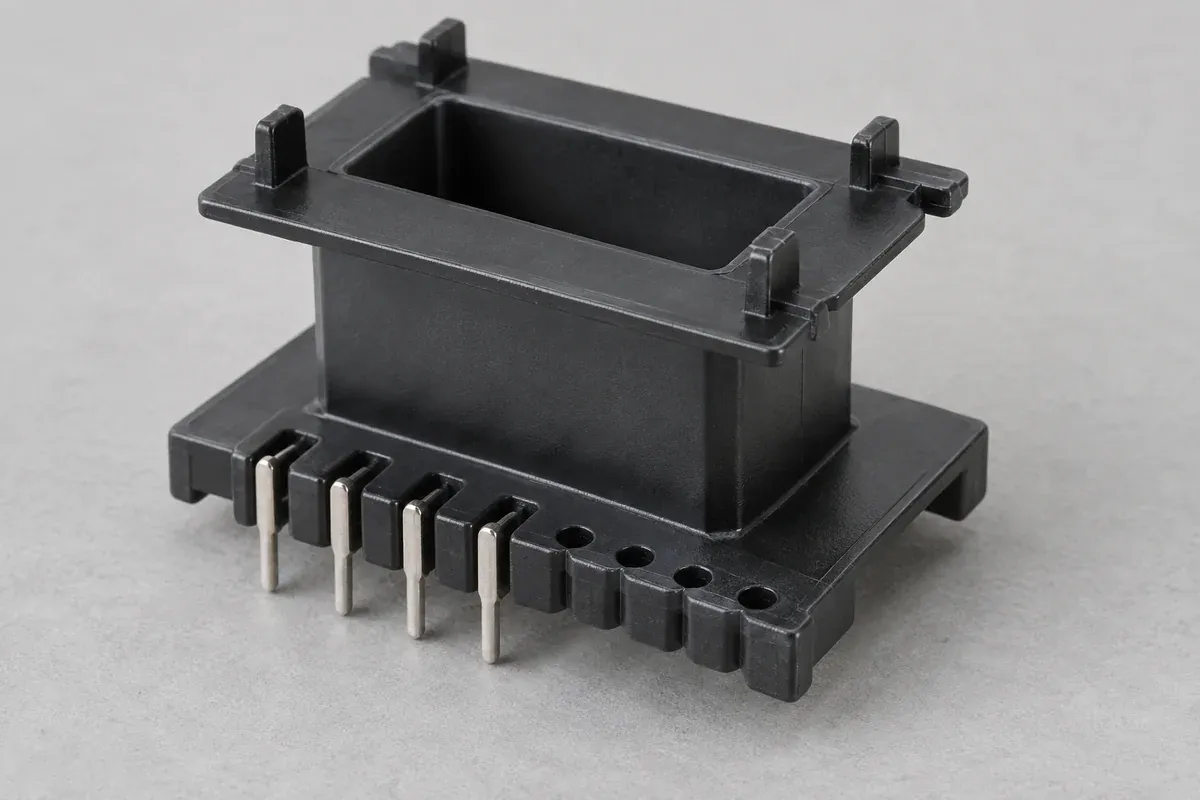
Terminal region
Specify pin supply, installation and acceptance as an explicit scope.
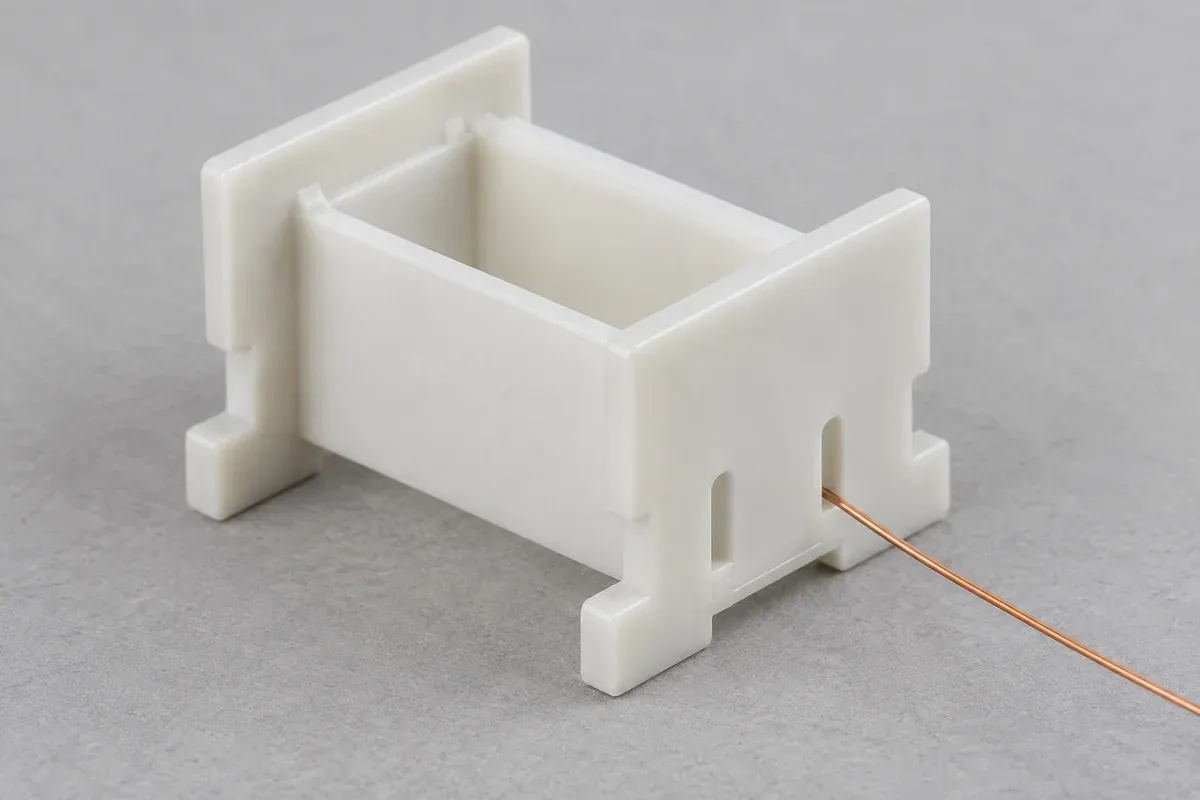
Lead routing
Inspect the surfaces contacted by wire during the actual routing motion.
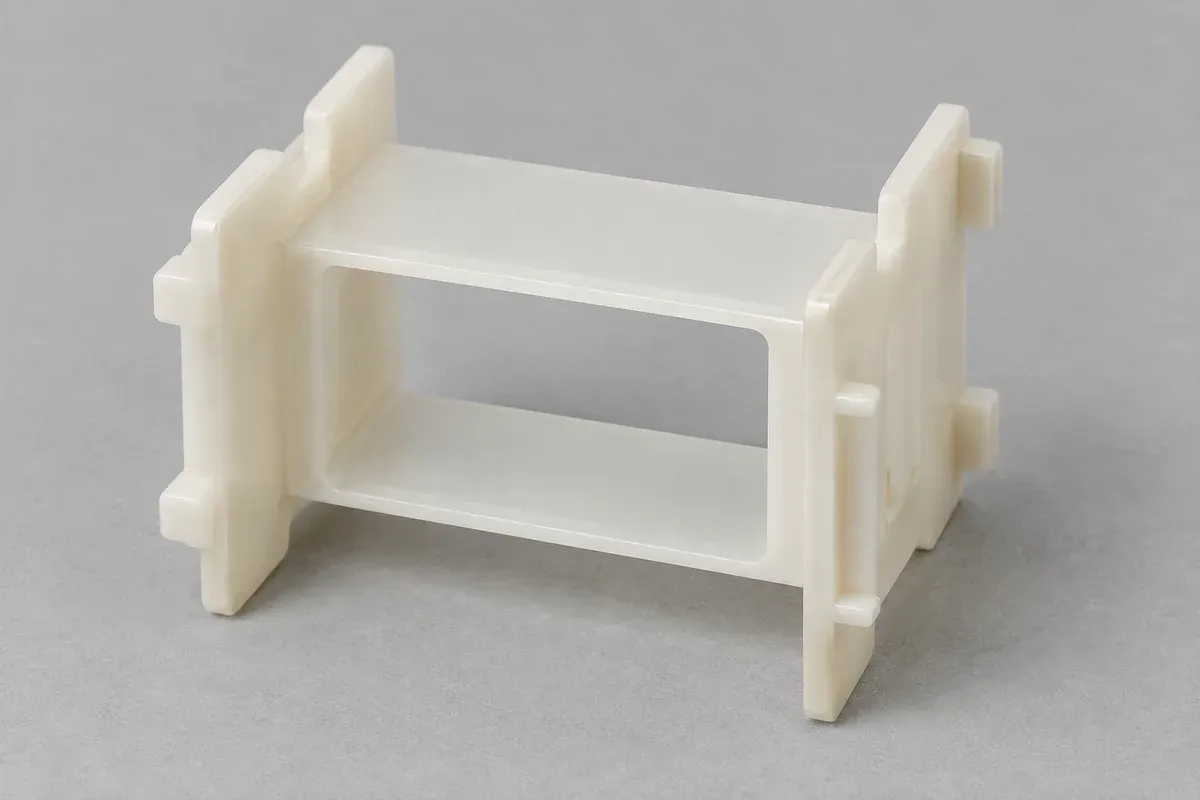
Core passage
Agree mating core geometry and a suitable inspection method.
Illustrative configurations. Final specifications follow your approved drawings.
Application fit
Custom molded formers for specified magnetic assemblies
The delivered plastic geometry is defined by controlled drawings, not by a generic electrical rating.
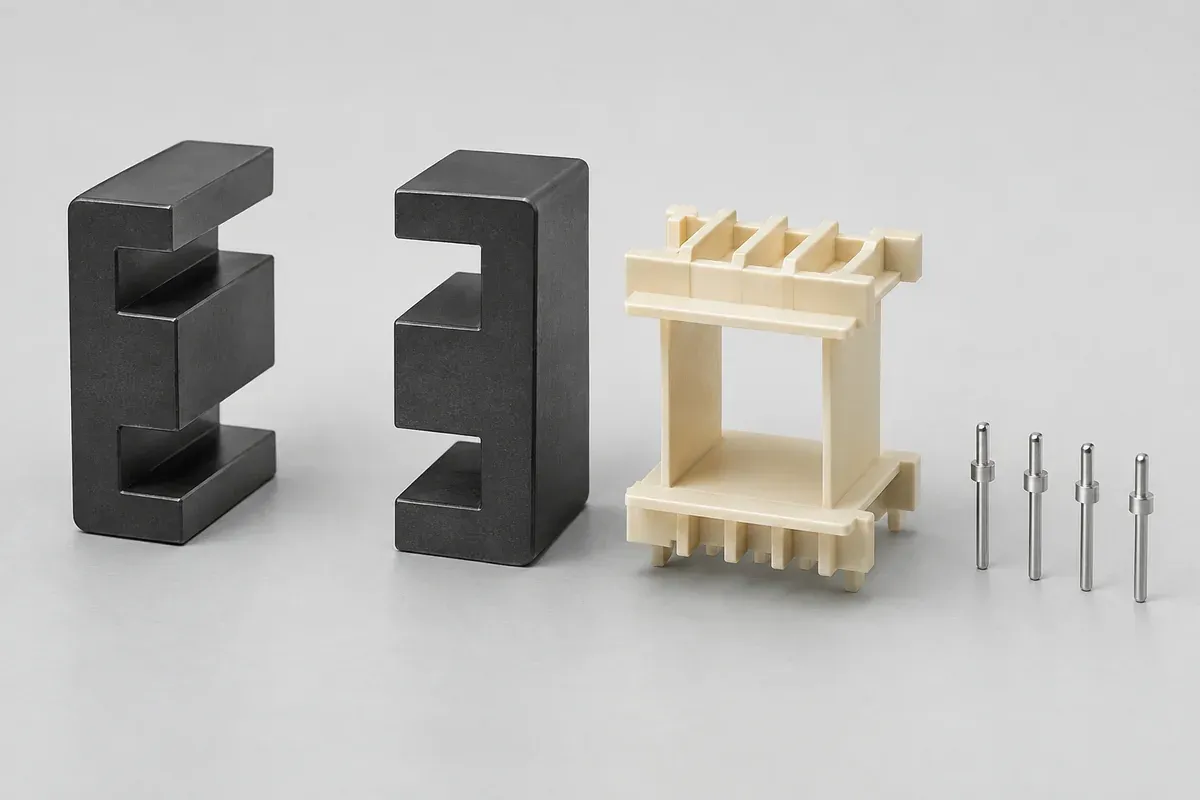
Transformer coil formers
Custom barrels and flanges for a selected core and winding arrangement.
Terminal-bearing bobbins
Plastic formers with defined pin bosses or insert arrangements, subject to an agreed terminal supply route.
Application-specific coil supports
Custom winding and locating geometries where a standard former does not satisfy the assembly interfaces.
Quote-ready inputs
What to send for a meaningful quotation
Use the same drawing and requirements for every proposal. Mark open decisions explicitly so that a low price does not conceal a different deliverable.
| Area | Please provide | Review before release |
|---|---|---|
| Geometry | Bobbin, core and winding envelope drawings. | Control passage, flanges, lead slots and fixed interfaces. |
| Resin | Exact grade, color, exposure and required records. | Match material evidence to the intended configuration and conditions. |
| Terminals | Pin drawings, finish, supply responsibility and installation method. | Define position, protected surfaces and any retention checks. |
| Downstream process | Winding nest, routing and termination sequence. | Keep wire-contact and fixture-seating surfaces inspectable. |
| Acceptance | Critical dimensions, reference features, specimen state and reports. | Separate plastic component approval from electrical assembly qualification. |
| Order | Sample quantity, repeat demand, packing and destination. | Clarify tooling, secondary work and recurring inspection scope. |
From drawing to approval
Release the component before the winding operation
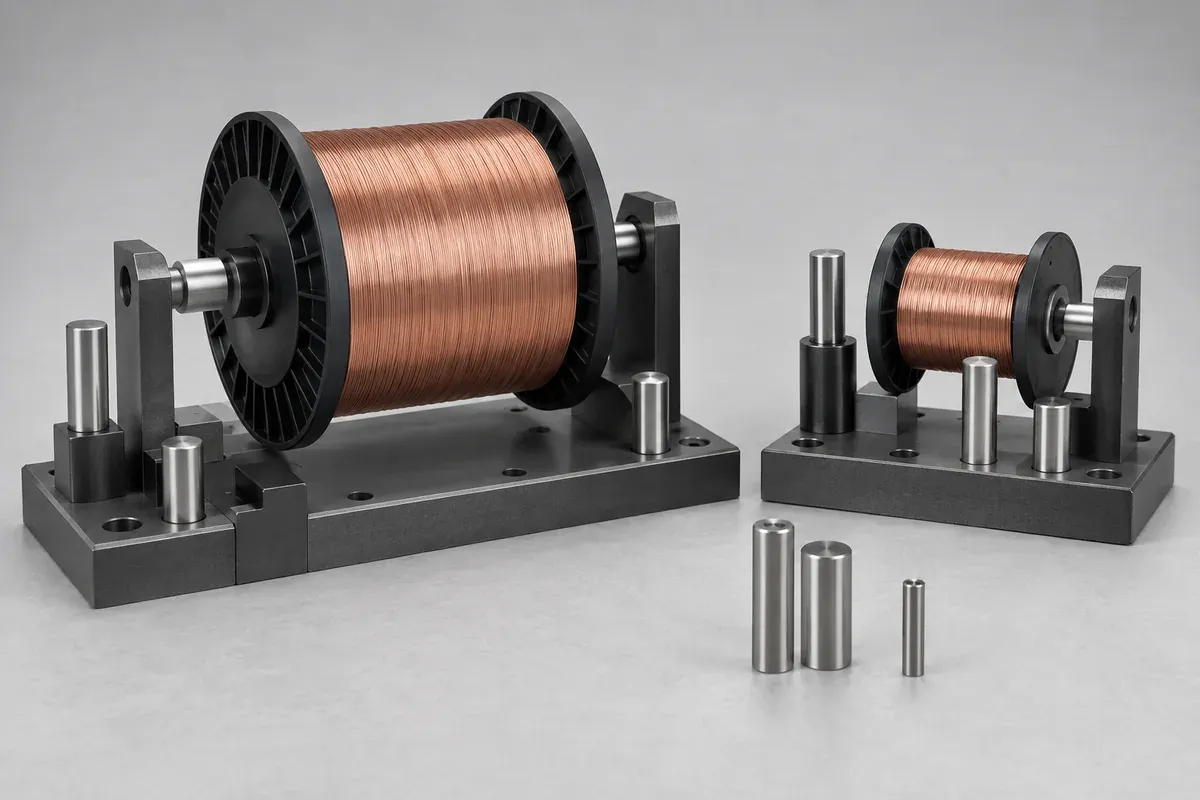
Resolve the interfaces
Align core, winding and terminal revisions with the bobbin drawing.
Review material and tool
Assess exact resin, walls, lead slots, gate, release and insert requirements.
Inspect empty samples
Check passage, contact edges, seating and terminal relationships using identified parts.
Support the assembly trial
Record the agreed downstream observations and release only the approved configuration.
Practical engineering and buying guides
Six decisions to make before production
- Transformer Bobbins: A Structure and Buying GuideDefine the winding barrel, core passage, flanges and terminal interfaces before requesting a custom injection-molded transformer bobbin.
- PBT, PA66 or PPS for a Custom Coil Bobbin?Compare bobbin resin candidates by exact grade, winding and termination exposure, dimensional condition and required electrical material records.
- Coil Bobbin Windows, Flanges and Lead SlotsReview winding space, flange support, wire exits and core interfaces together when designing a custom injection-molded coil bobbin.
- Coil Bobbin Pins: Molded-In or Installed After Molding?Compare molded-in and post-installed bobbin terminals by pin position, tooling, assembly support, retention evidence and quotation scope.
- Coil Bobbin Resin Records: What Buyers Should CheckMatch bobbin material records to the exact resin, color, thickness and supply traceability without confusing material recognition with product certification.
- Inspecting Molded Coil Bobbins Before WindingPlan bobbin checks for core passages, wire-contact edges, terminals, fixture seating and traceability before adding value through winding.
Before you request a quote
Are these finished transformers?
No. This service concerns custom molded plastic coil formers. Cores, windings and finished electrical qualification require a separate agreed scope.
Can pins be included?
A molded-in or later-installed pin route can be reviewed. Send controlled terminal details and specify procurement, assembly and acceptance responsibilities.
Is every PBT bobbin electrically certified?
No. Exact material records and the finished-product evaluation have separate scopes. A resin family name is not certification.
What helps a first quotation?
Send the bobbin, core and terminal definitions, winding-process interfaces, resin requirements, quantities and required inspection evidence.
Your next step
Discuss the part with its intended function.
Share the bobbin with its core, winding and terminal interfaces. We can review the plastic molding deliverable and the checks needed before downstream assembly.
Explore our injection molding service or review other custom molded applications.