
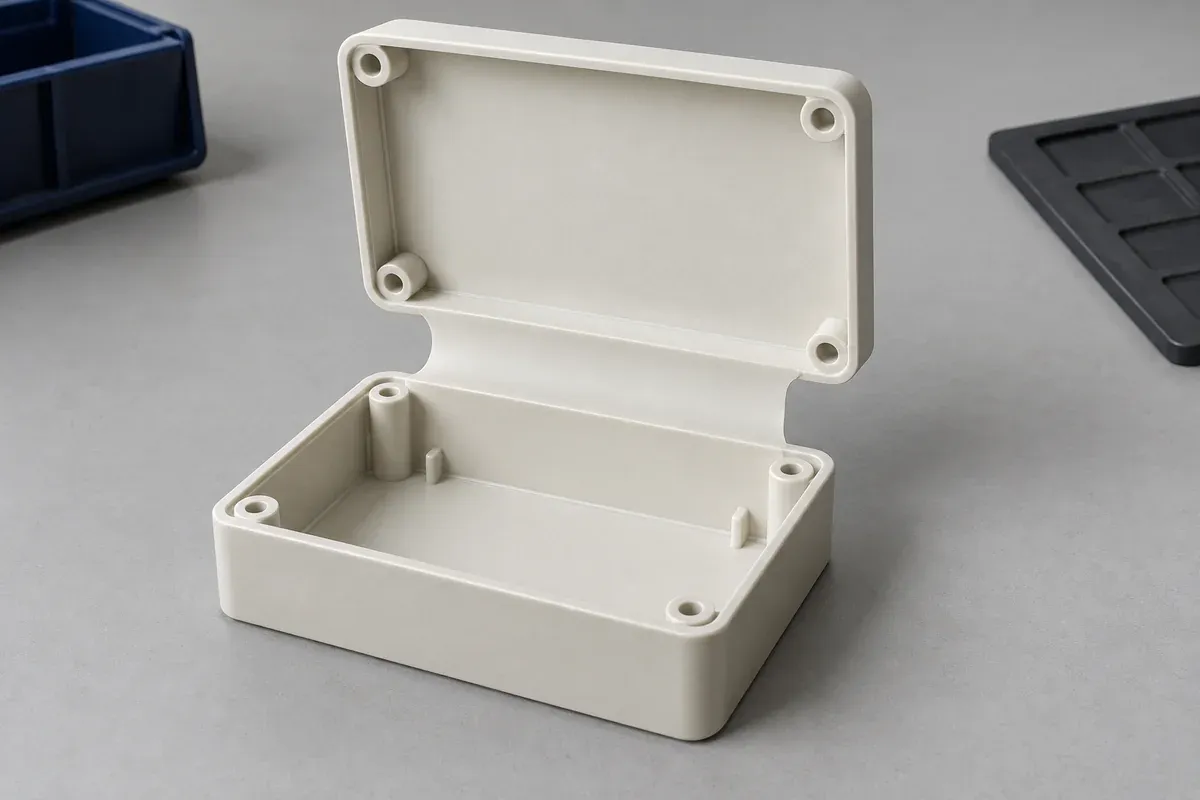
Product design illustrations. Final geometry, materials and acceptance criteria are project-specific.
A statement that a hinge survived a number of cycles is incomplete without the motion that produced them. Opening angle, speed, dwell, applied load and environment can all change the question being tested. A counter is useful only after the cycle itself has been defined.
Start with the intended use and distinguish development characterization from production acceptance. A development test may explore how a mechanism behaves. An acceptance test checks agreed criteria. Neither should invent a lifetime promise from an arbitrary bench routine.
Write the opening sequence in operational terms
Define the starting and ending positions, opening direction and whether the cover reaches a physical stop. State how the lid is loaded and where the fixture applies force. A centered actuator on a rigid frame may not represent a user pulling one corner.
Include closing and any latch action if the application requires them. Count what constitutes one cycle and record partial or interrupted cycles consistently. If the latch is excluded to isolate hinge behavior, say so rather than presenting the result as a complete-cover durability test.
Protolabs discusses hinge behavior in relation to material and geometry. The procedure proposed here is an application-specific planning framework, not a standardized test claimed by that source or a universal acceptance specification.
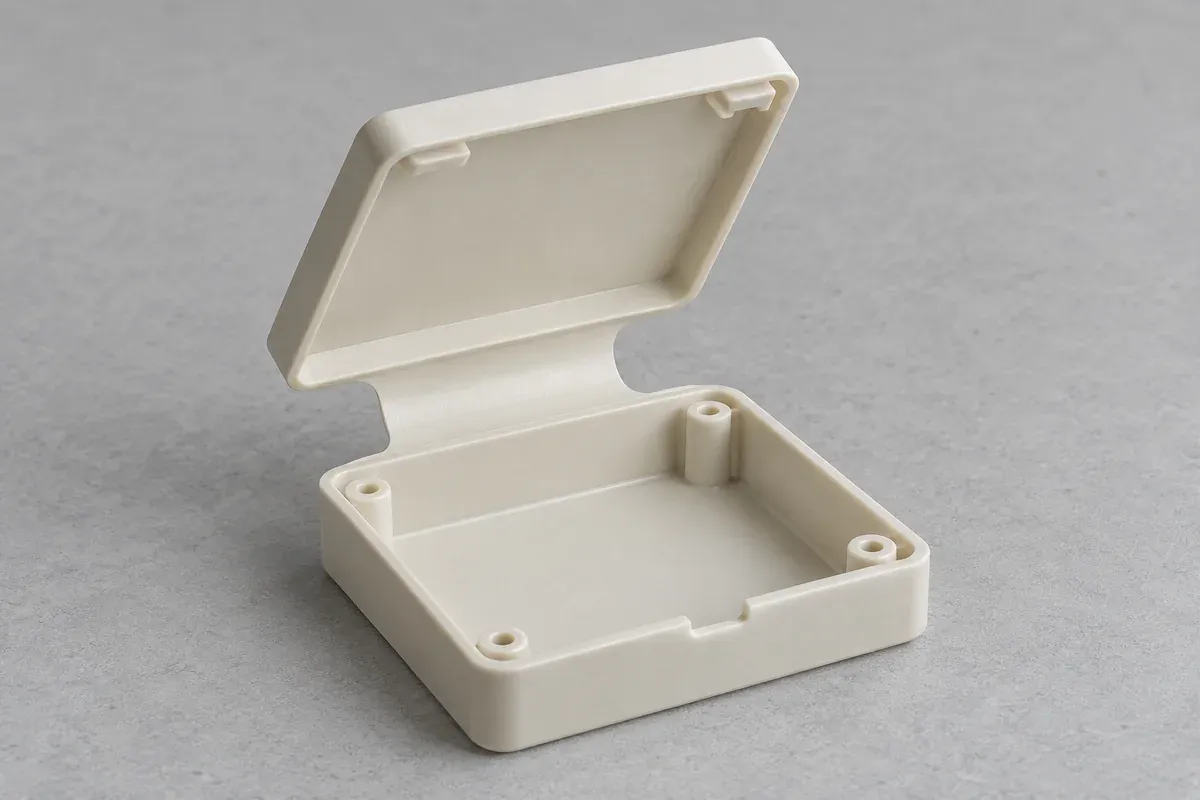
Set the rate and dwell deliberately
Choose a movement rate that answers the intended question. Accelerating the motion for convenience can change heating or dynamic loading. If an accelerated method is used, document its rationale and limitations instead of equating elapsed bench time with years of service.
Record pauses in open and closed positions when they matter. A mechanism left closed under strain can present a different condition from one continuously swept back and forth. Keep storage, operating and exceptional exposure requirements distinguishable.
Include relevant temperature and chemical exposure through an agreed plan. Do not add an unqualified outdoor or cleaning-resistance claim because samples completed a dry room-temperature test. The environment belongs to the stated result.
Define rejection before viewing the samples
Decide which observations constitute a failure or require investigation. Possibilities include a crack, loss of attached function, unacceptable movement or a defined change in operating force. The appropriate criteria depend on the product and must be approved by its responsible engineer.
Whitening, surface marks or changes in feel should be described consistently and related to the agreed decision. Do not treat every visible change as harmless or every mark as failure without a defined basis. Retain photographs under repeatable conditions where they assist the record.
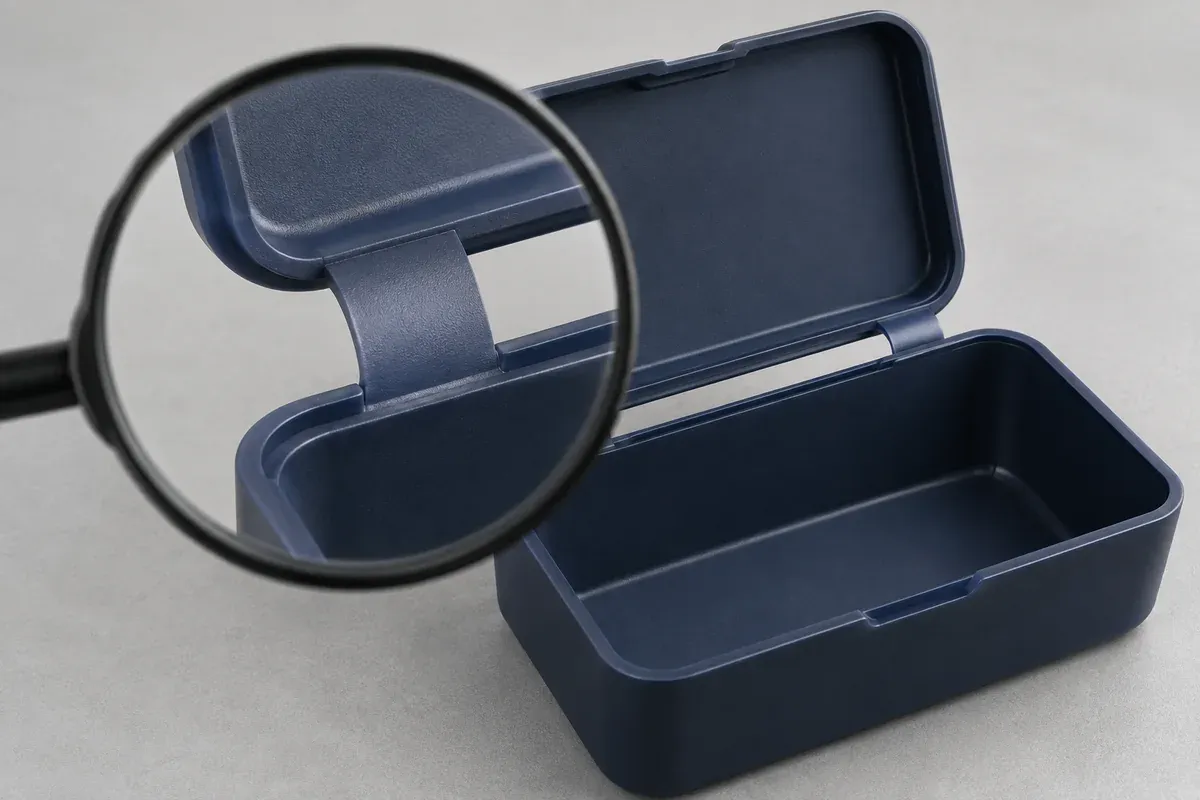
Track the manufactured configuration
Record exact material, drawing revision, cavity and relevant processing or first-fold history. If a sample is manually trimmed or repaired, identify it as modified. A favorable result on a specially handled sample must not silently approve untouched production parts.
Agree sample coverage and inspection intervals for the development stage and risk. A sample that survives until the test stops provides evidence of that exposure, not a measurement of its eventual failure life. Report that distinction clearly.
When comparing concepts, hold the intended use and evaluation method consistent. If the frame, latch and hinge all change, the outcome is a comparison of configurations. Do not attribute the entire difference to one radius or polymer family without further evidence.
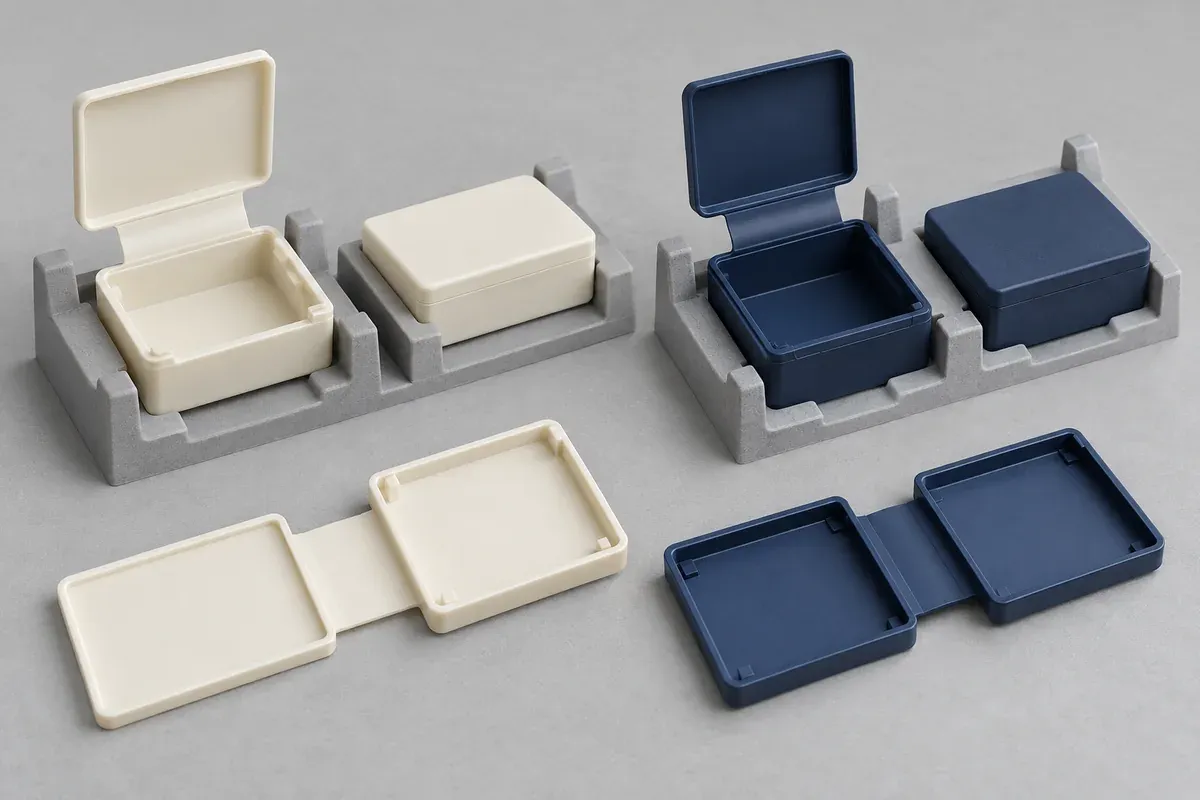
Use results to close specific design decisions
A useful report identifies what was tested, what occurred, which criterion governed and which questions remain. Record interruptions and departures from the method. A revised tool or material should trigger a deliberate decision about the checks that need repeating.
For prototypes, consult the printed-versus-molded guide before transferring conclusions between processes. For early cracking, connect the observations with gate and flow review and the actual geometry.
The objective is a repeatable approval method grounded in intended use. A large cycle number is not a substitute for that method, and an illustrative fixture image is not evidence that a test has already been performed.
Turn the review into a defined molding scope
Explore our custom injection-molded living-hinge parts and the related illustrative engineering study. Send the drawing revision, counterpart details, intended use and the decisions still open. Development samples and production approval should have separate, agreed deliverables.