
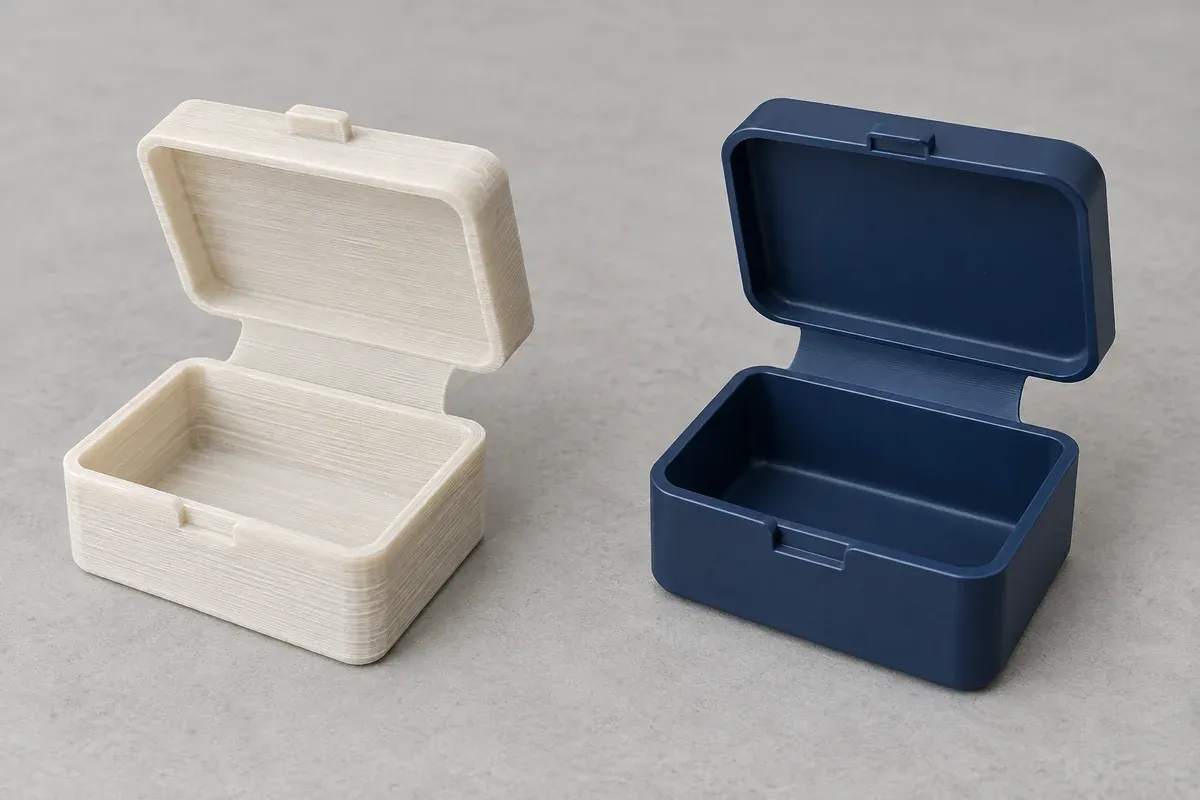
Product design illustrations. Final geometry, materials and acceptance criteria are project-specific.
A printed hinge prototype can be very useful without being a production-life predictor. It can reveal an inaccessible latch, a cover that hits another component or an opening that is too small for service. These are valuable findings, provided the team is clear about what the prototype represents.
The risk comes when a successful printed bend is treated as approval of an injection-molded flexure, or when a broken printed web is treated as proof that the molded design cannot work. The material, process and often the geometry differ. Keep those differences in the evidence record.
Give the prototype a specific question
Define whether the build is for envelope, assembly sequence, access, appearance or mechanical characterization. A prototype intended to check a cover's swing can use an adjusted hinge region if that adjustment is documented and does not obscure the geometric question.
If the hinge is modified to make printing practical, mark the difference from the intended molded design. Do not send the modified file to a mold maker as though it were the approved production revision. Keep a controlled design model and a separate prototype configuration where needed.
Formlabs describes printed flexures and compliant mechanisms as useful design forms. Their existence does not establish equivalence between a printed resin and a selected injection-molding grade in a particular living hinge.
Record the process-specific configuration
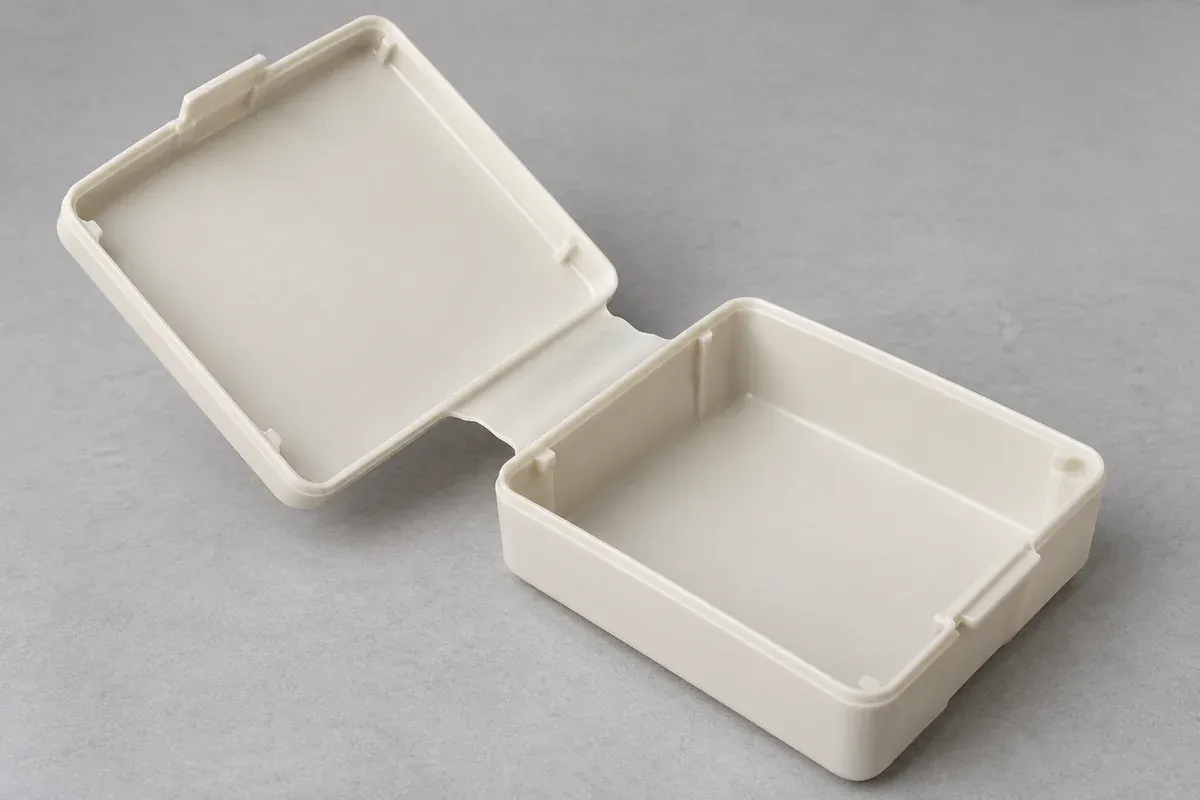
Identify the printing method, exact material, build orientation, relevant processing and any post-treatment. For a molded sample, identify the resin grade, tool revision, gate arrangement and relevant first-fold procedure. A simple label such as plastic prototype leaves too much unspecified.
Inspect the actual web geometry. A thin region may not reproduce the model exactly in either process. A comparison that ignores the measured shape can mistakenly attribute a dimensional difference to the material alone.
Keep support-removal marks and finishing visible. Sanding, heating or coating a printed sample changes its condition. These actions may be appropriate for a particular mock-up but should not disappear from the record when its behavior is discussed.
Separate fit evidence from repeated-use evidence
A printed part may establish that a cover clears a connector through the intended opening range. That is an assembly observation for the prototype. It does not quantify fatigue behavior of a molded hinge under the final service environment.
Likewise, a convenient hand-fold demonstration has no controlled rate, load or cycle definition. It can reveal an obvious interference and guide the next iteration, but it should not be described as a durability qualification.
Use the cycle-test planning guide when repeated use must be evaluated. State which samples are representative enough for each decision and which findings remain preliminary.
Plan the transition to molding early
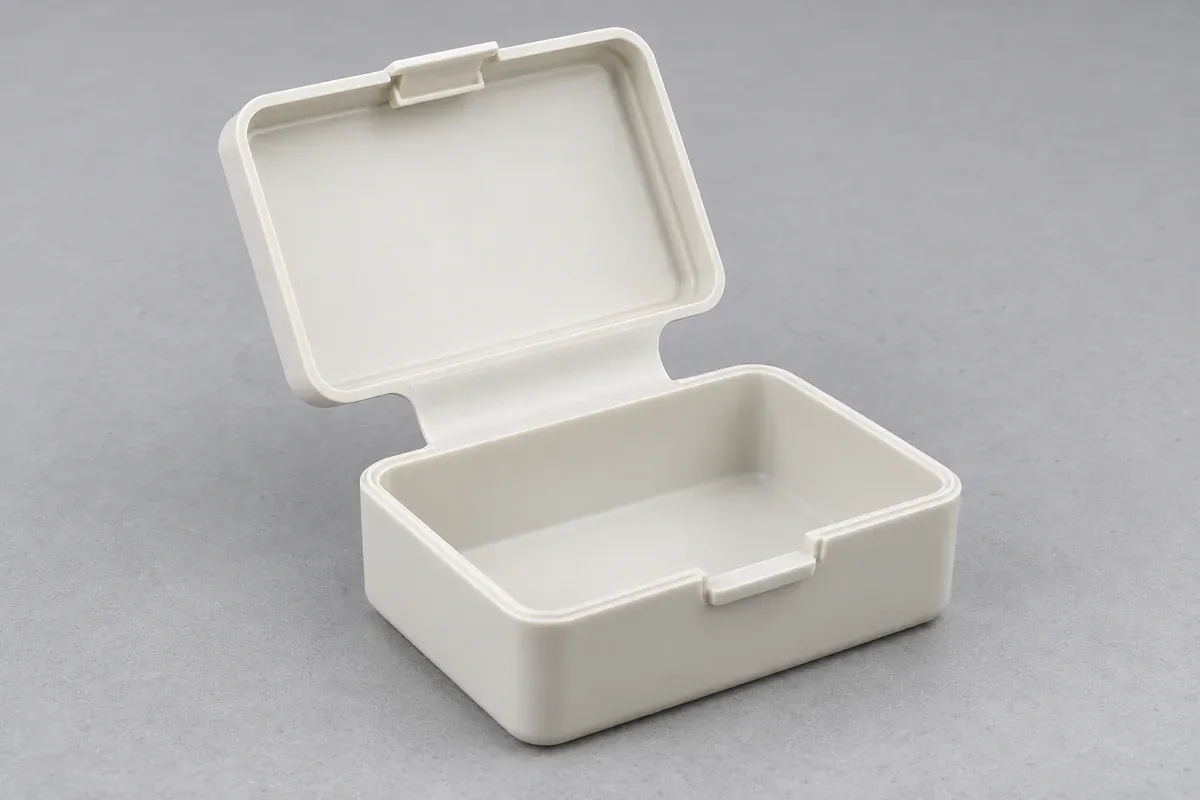
Review draft, gate, parting line, release and critical surface restrictions before treating a prototype as a finished design. Printed geometry can include details that require a different tool strategy or a design adjustment. The review should preserve the product's required interfaces while making those trade-offs explicit.
Do not postpone material selection until after the mold is fixed. The PP-versus-PE guide discusses the connected-part requirements. A resin change can affect more than the flexible web and should remain a controlled engineering decision.
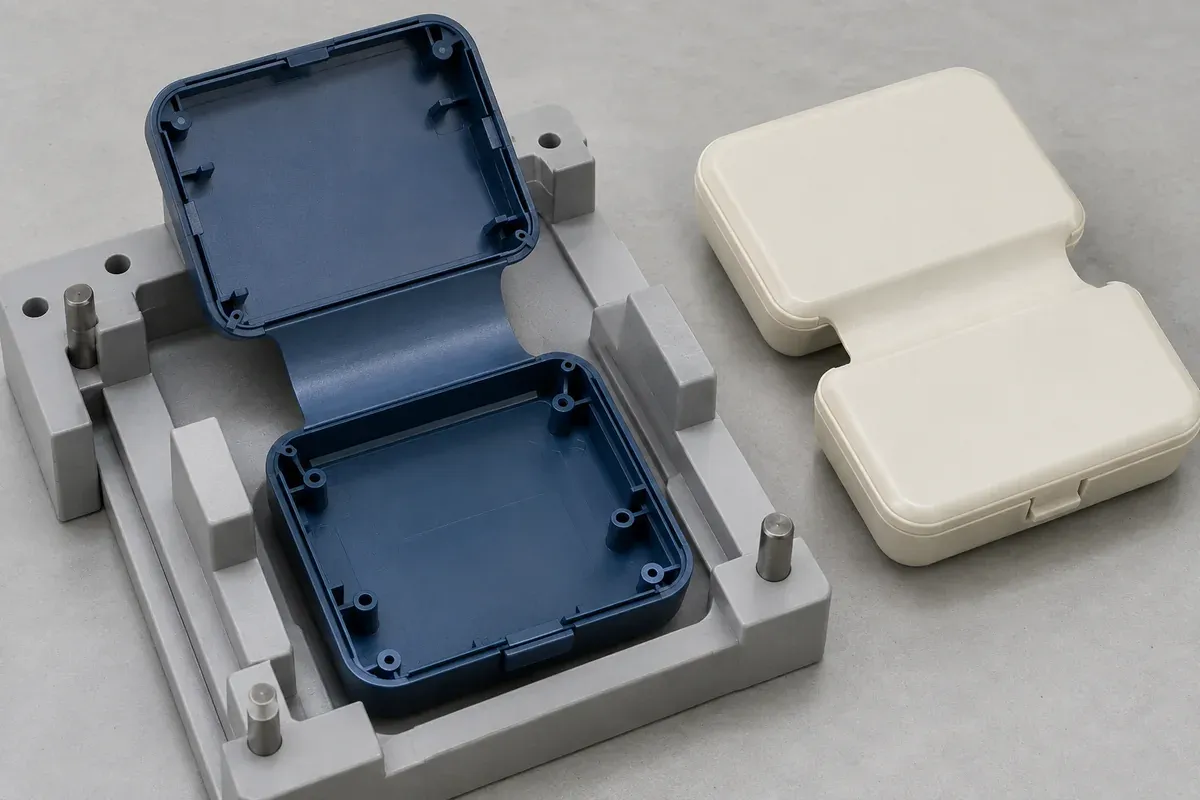
Define the first molded trial's purpose. It may close local geometry, examine filling and release or provide samples for an agreed movement test. Separate these objectives so a successful dimensional report is not used to imply that an endurance test also passed.
Keep the conclusion proportional to the evidence
Record each finding as a specific observation: the prototype clears an interface, a particular sample cracks during a defined motion, or a molded revision meets an agreed check. Avoid upgrading those statements into broad claims of production readiness without the corresponding evidence.
A good development sequence uses each process for the questions it can answer and plans the next evidence gap. That makes prototypes genuinely useful to a custom injection-molding project without pretending that all plastic samples are interchangeable.
Include the prototype's known deviations when requesting a molding quotation. This helps the supplier distinguish a design requirement from a temporary workaround and prevents prototype-only features from becoming unintended production commitments.
Turn the review into a defined molding scope
Explore our custom injection-molded living-hinge parts and the related illustrative engineering study. Send the drawing revision, counterpart details, intended use and the decisions still open. Development samples and production approval should have separate, agreed deliverables.