
Illustrative engineering study · September 28, 2026
Living-Hinge Access Cover: Motion and Latch Design Study
Give the web, stop and latch distinct jobs before assigning a durability target.
The design question
Which feature controls opening and which holds the cover closed?
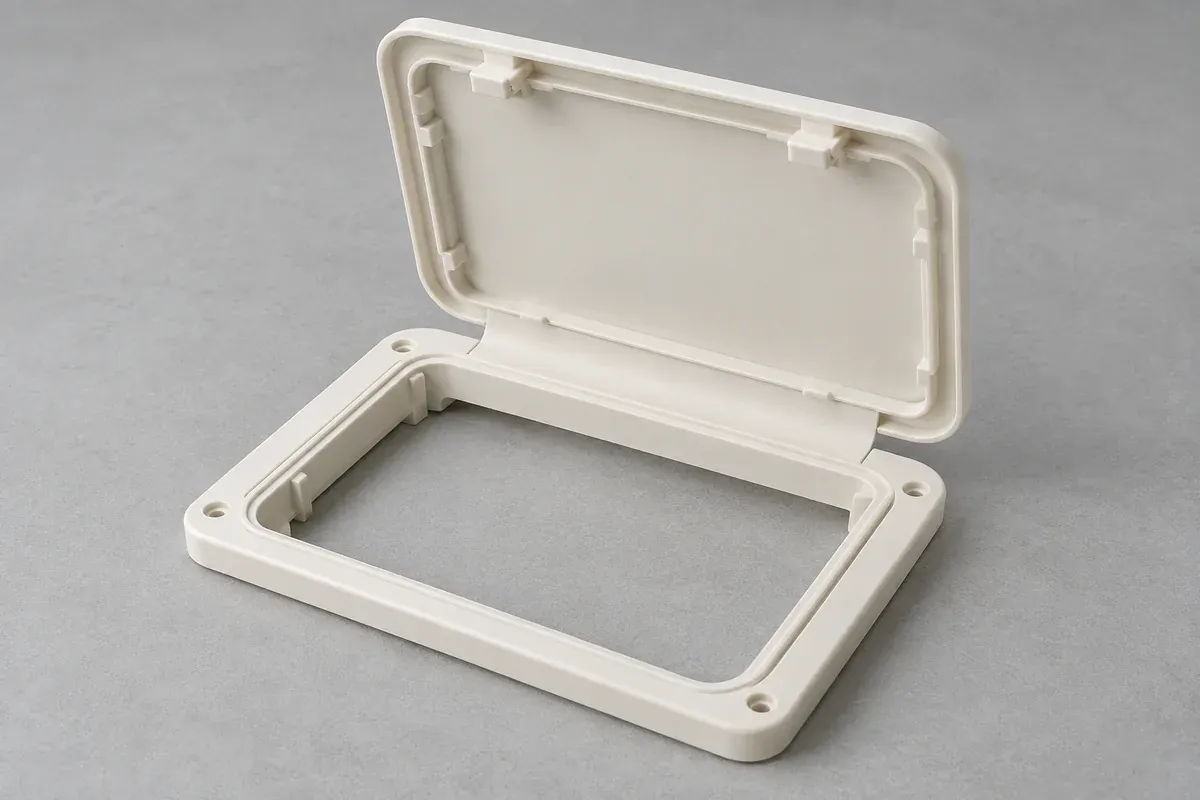
Consider a small access cover molded together with a mounting frame through a thin living-hinge web. A latch sits opposite the web. The cover must open far enough for a defined service task and return to a specified closed position. Material grade and cycle requirements remain undecided.
The study asks whether the mechanism has clearly assigned functions. The web permits motion, a stop may limit travel, and the latch retains the cover. If all loads are implicitly assigned to the thin region, an otherwise convenient one-piece design may contain an unresolved mechanism problem.
Keep the frame mounting and required access envelope fixed when comparing concepts. A cover that survives by opening less than required has not solved the same problem. Likewise, a latch change that makes access difficult needs to be assessed as part of the whole design.
Concept comparison
Compare free travel with a deliberately defined stop.
Concept A uses the flexible connection without a separately defined opening stop. Concept B introduces a stop on the rigid portions of the frame and cover. Neither concept is inherently approved; the intended use determines which loads and movement limits need to be addressed.
For A, ask how the cover is handled at the end of travel and whether the required motion imposes unintended twisting. For B, review where the stop contacts, how the reaction reaches the frame and whether it obstructs service access. A stop adds another interface rather than eliminating the need for analysis.
Inspect the latch's behavior separately. Closing force and retention should not be inferred from the web's flexibility. The latch, frame and web share the molding configuration but do not share identical functional requirements.
Molding relationships
Keep local geometry connected to material and flow.
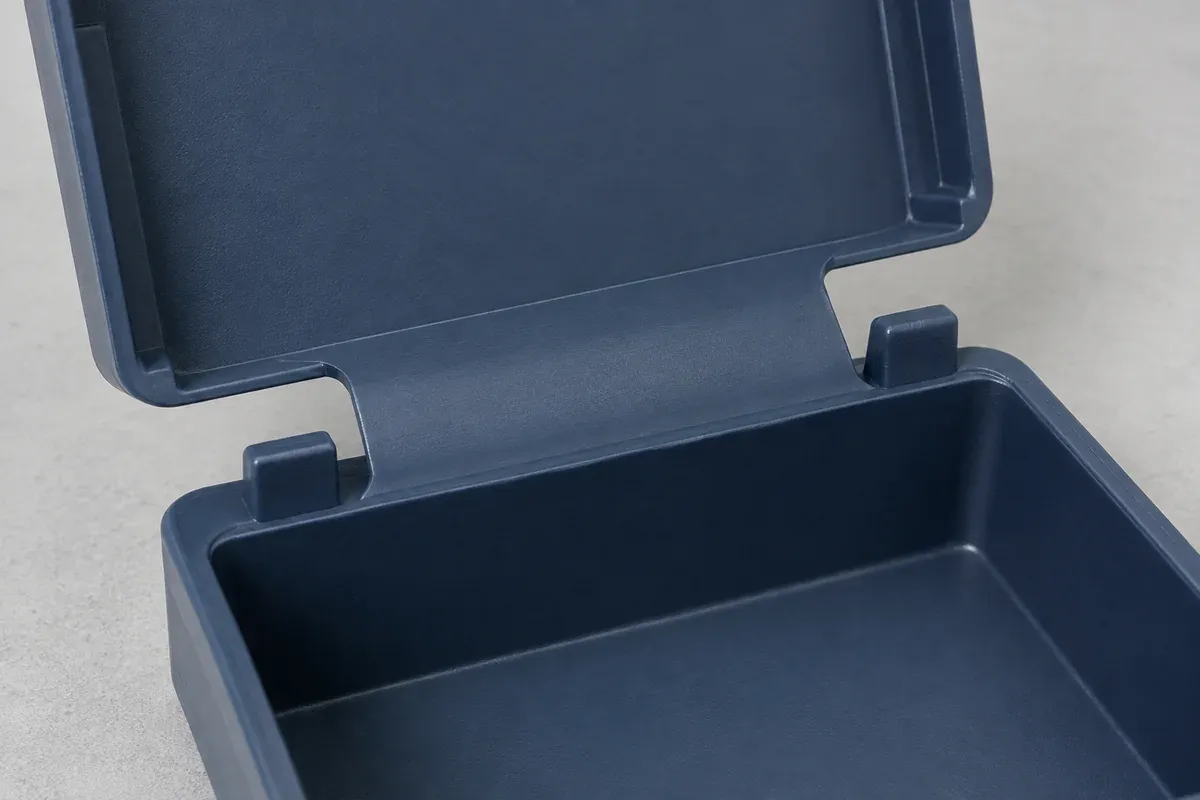
Define the web span, transitions and connected panel geometry in the controlled model. Review the exact resin candidate with the intended movement and exposure. A flexible coupon made from one formulation does not approve the entire cover in another formulation.
Discuss gate location, flow through the relevant regions, release and any agreed first-fold handling with the mold maker. A proposed tooling change should show its relationship to both the thin web and the thicker frame. Molding feasibility is a whole-part question.
| Feature | Required role | Evidence to plan |
|---|---|---|
| Flexible web | Permit the defined motion without unintended twisting. | Representative molded geometry and motion evaluation. |
| Opening stop | React the specified end-of-travel condition if required. | Contact and support review in the installed frame. |
| Latch | Establish the agreed closed retention and release action. | Separate closing, retention and access checks. |
The gate and flow guide explains why the molding configuration must remain in the approval record. The table does not prescribe a thickness or cycle rating.
Proposed sample sequence
Use each prototype for a defined question.
An early mock-up can check the access envelope, latch reach and interference. Record any geometry or material differences from the proposed molded design. Its role is to answer those specific questions, not to establish production fatigue performance.
Use identified, representative molded samples for process-dependent decisions. First inspect the critical geometry and condition, then observe the defined opening and closing sequence in the intended mounting arrangement. Keep the applied motion and support repeatable.
If repeated use must be evaluated, agree the angle, rate, load, environment, inspection intervals and failure criteria. Preserve sample identity and record observations rather than reporting only a headline count. A fixture that moves the cover centrally may not represent an application dominated by corner loading.
Investigation plan
Identify which part of the mechanism caused the observation.
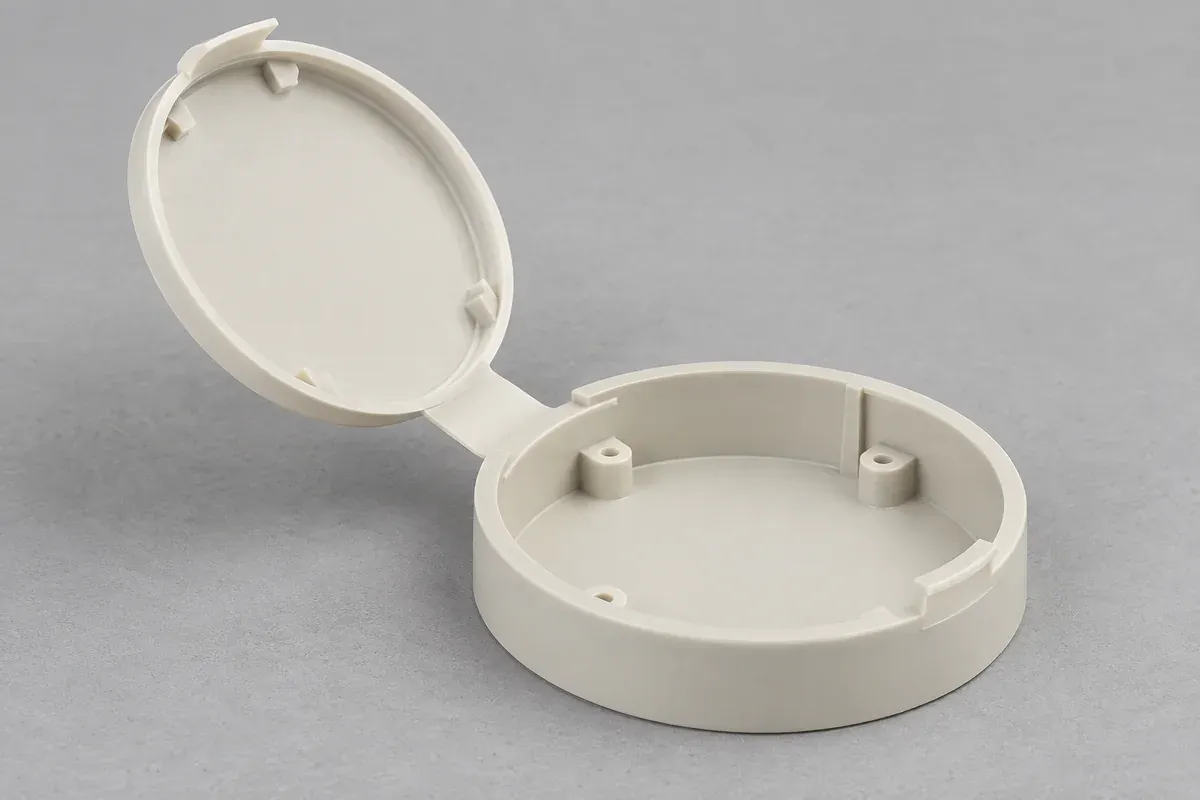
If a cover is difficult to close, inspect interference and latch engagement before assuming that the web is too stiff. If the cover opens but does not reach the required position, compare stop contact and access geometry. These are different questions from whether the web survives repeated bending.
During sample evaluation, record where deformation or damage appears and the motion that preceded it. A crack at an unintended witness, a frame that twists in its mounting and a latch that prevents closure lead to different investigations. A single statement that the hinge failed loses that useful distinction.
Preserve any agreed first-fold and handling history. A sample that has been manually worked or modified before the recorded test represents a different condition from an untouched sample. The difference need not invalidate learning, but it must remain visible in the evidence.
A proposed revision should name the observation it addresses and the requirements it must preserve. That keeps the next tooling or material decision connected to the complete mechanism instead of repeatedly changing the web in isolation.
Decision boundary
Approve the mechanism rather than an isolated flexible strip.
A real trial may support the integral concept, require revised stops or latch geometry, or lead to a separate-hinge alternative. This study does not claim that a one-piece part is always the correct route or that it reduces assembly cost by a measured amount.
Before production release, close the material, tool configuration, motion and acceptance requirements. Assign any remaining product-level evaluation to its owner. Changes to the resin, gate or web should follow the agreed review process rather than being treated as cosmetic revisions.
The useful deliverable is a defined mechanism and staged evidence plan. See the living-hinge test planning guide and prototype comparison for the limits of each development stage.
Apply the review to your part
Turn your drawing into a defined review.
Share the complete cover, frame, mounting and required movement. Decide how the web, stop and latch will be evaluated before committing to a performance claim.
Explore our custom injection-molded living-hinge parts or the broader injection molding service.