
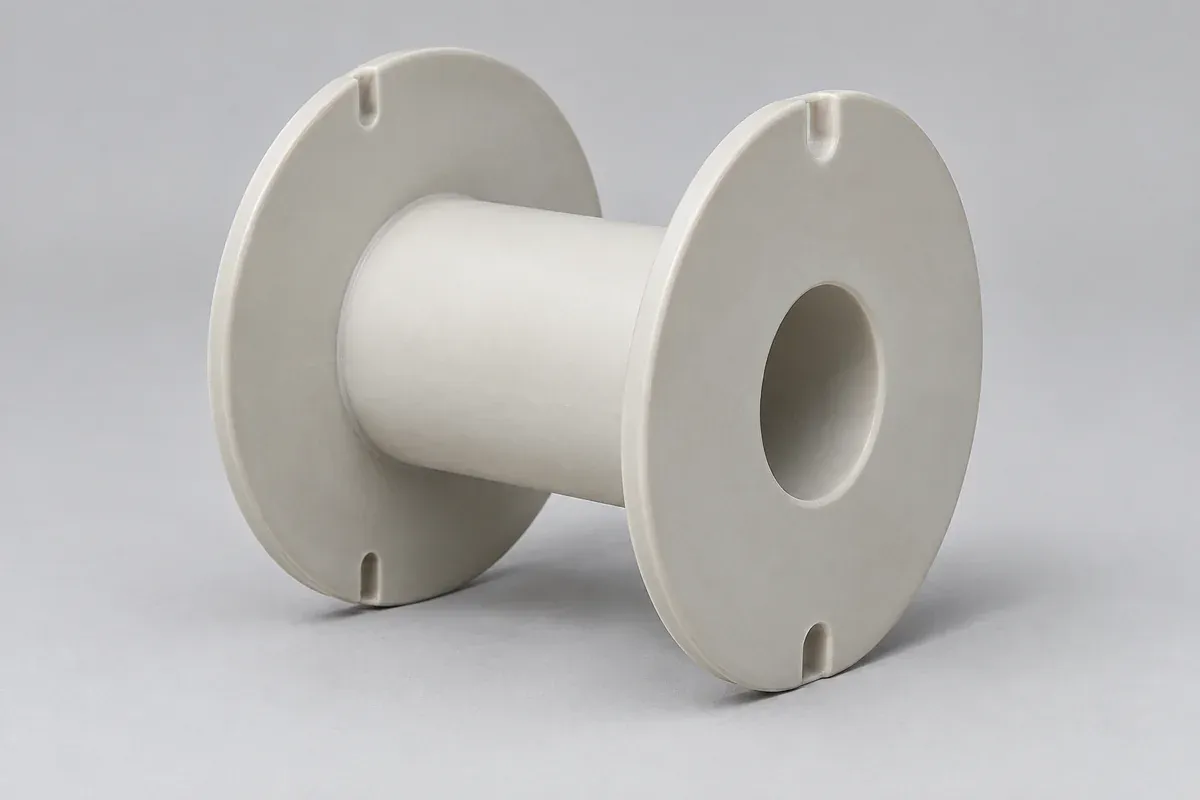
Product design illustrations. Final geometry, materials and acceptance criteria are project-specific.
A bobbin drawing can appear generous until the winding, lead exits and assembly tooling are added. The available winding window is a relationship between several features, not one convenient dimension. Reviewing them together helps prevent a late request to thin a flange or move a terminal after tooling is fixed.
Begin with the intended winding package, selected core and manufacturing sequence. Mark their controlled envelopes in the assembly model. The molding review can then distinguish functional boundaries from surfaces that remain available for draft, gate placement or other tooling adjustments.
Define usable space, not just nominal space
The barrel length and flange spacing describe part of the winding envelope. Local lead routing, insulation provisions and any winding-process access can reduce the space available in practice. Ask the winding owner to define the required envelope and its relationship to the plastic features.
Do not make an electrical design decision by estimating capacity from a product illustration. The wire system, winding arrangement and applicable safety evaluation belong to the responsible designer. This article addresses the molded component interfaces that support that work, not an approved transformer design.
Consider the passage for the core separately. A change that expands winding space by reducing a wall also changes the molded section and the separation between interfaces. It requires a coordinated review rather than an isolated tooling edit.
Support the flange without obstructing its job
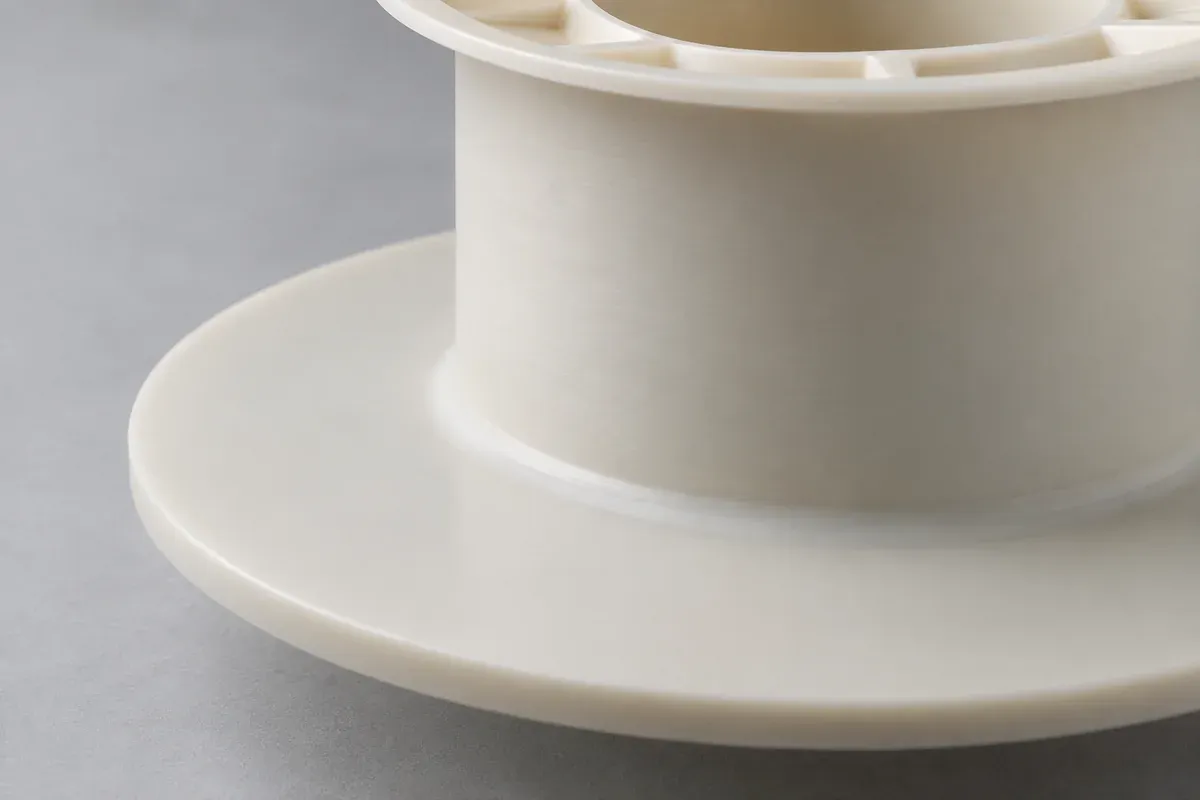
A flange may guide wire, support terminals and provide a handling reference. Ask which forces it experiences during winding and installation. Local reinforcement should be considered against those loads, the mold's release direction and the space needed by neighboring components.
Ribs or thicker regions can interfere with a winding nest or lead route even when the outside envelope is unchanged. Show the proposed features to the downstream process owner. A feature that helps handling in one operation should not make the next operation inaccessible.
Keep critical contact faces identifiable on the drawing. If a flange is used as an axial reference, specify the relevant surface condition and how it will be supported during inspection. A heavily restrained measurement can conceal free-state distortion that affects assembly.
Design the lead path as a continuous route
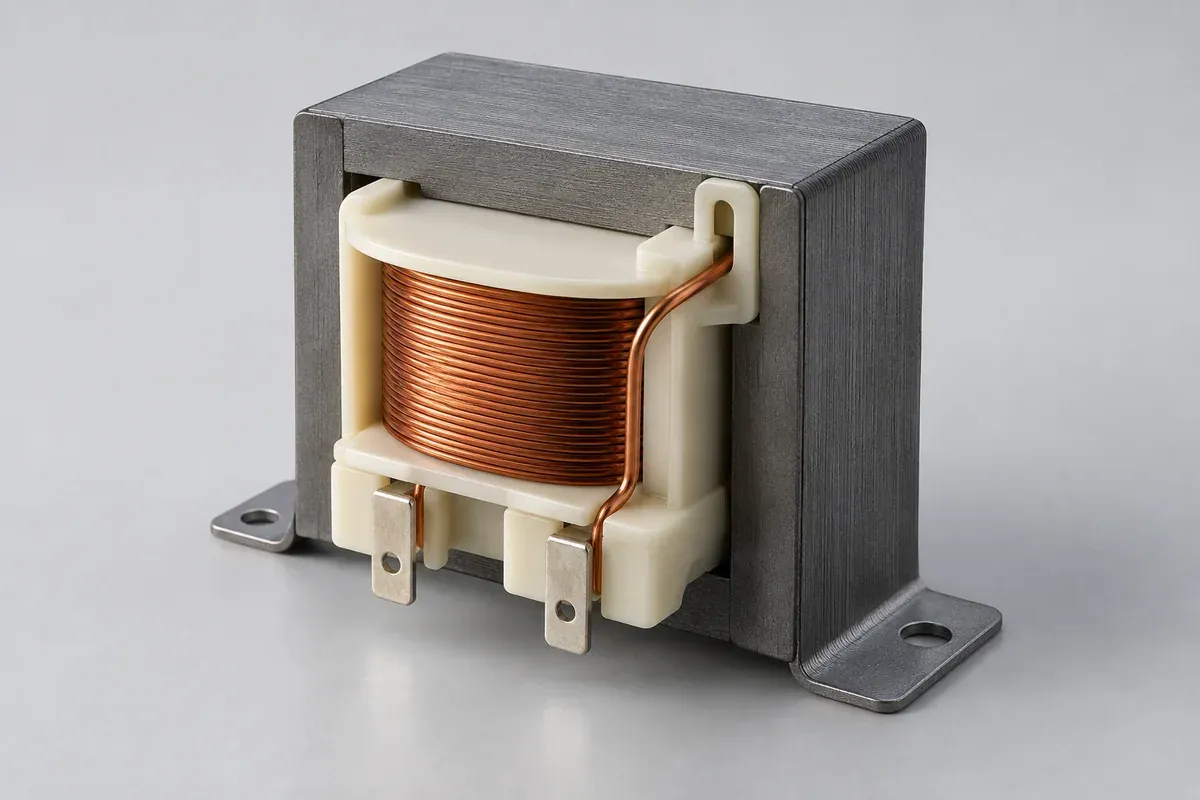
Trace the wire from the winding region to its termination. Review slot entrances, bends, adjacent edges and the direction of assembly. A slot that admits the wire in a static CAD view may not allow the actual threading or automated routing motion.
Define acceptable edge condition and molding witnesses on wire-contact surfaces. A parting line through a slot or a gate near an exit needs explicit evaluation. The important question is what the wire contacts, not whether the feature is described generally as smooth.
Where a lead changes direction, include the required wire-system guidance from the design owner. Do not substitute a universal bend radius or insulation spacing from a generic bobbin example. The material and electrical requirements are application-specific.
Reserve tooling decisions before release
Agree the likely parting arrangement, gate region, ejection contacts and permitted witness zones. A small lead slot may be toolable in several ways, with different implications for local flash, access and maintenance. Ask for those trade-offs while geometry changes are still manageable.
Discuss how the core passage will be formed and inspected. Long or constrained features deserve a specific tooling review. A quotation should state any assumed geometry changes instead of silently pricing a simplified model that no longer matches the assembly.
Use the bobbin buying guide to collect the counterpart and process information. The terminal pin comparison addresses the additional requirements when pin bosses share the flange.
Evaluate an identified trial configuration
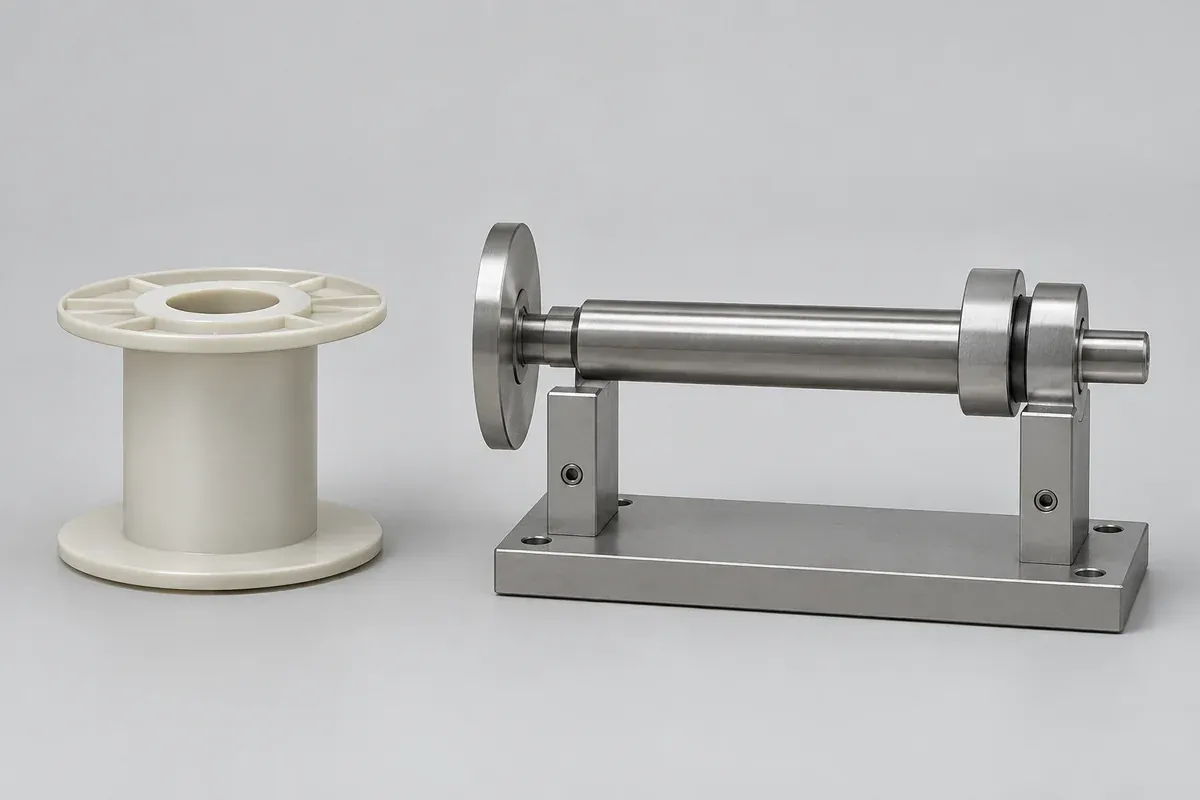
For first samples, check the empty component before adding wire or other parts. Record core-passage fit, flange references and lead-slot condition. Follow that with the defined downstream trial so any new damage or interference can be traced to the relevant operation.
A successful trial should record the winding setup, counterpart revisions and agreed checks, not merely a photograph of a completed assembly. If the lead route is changed during the trial, preserve that change in the configuration record before ordering production.
This sequence makes a bobbin review practical: establish the space required, protect the surfaces that make assembly possible, and connect each requirement to an inspection or process check. It also gives competing molding quotations a common technical boundary.
Turn the review into a defined molding scope
Explore our custom injection-molded coil bobbins and the related illustrative engineering study. Send the drawing revision, counterpart details, intended use and the decisions still open. Development samples and production approval should have separate, agreed deliverables.