
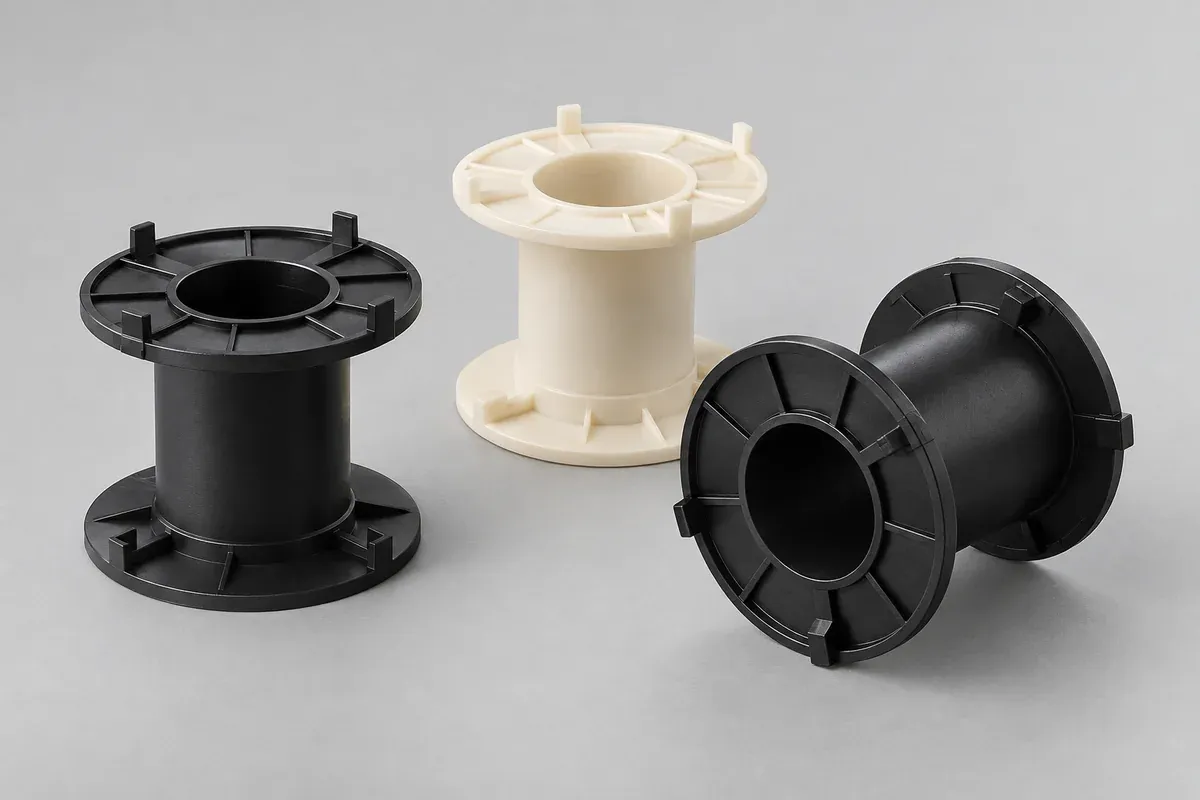
Product design illustrations. Final geometry, materials and acceptance criteria are project-specific.
Choosing PBT, PA66 or PPS for a coil bobbin starts with the assembly process and operating environment. The family names organize the search, but they do not identify an approved material. Filled, modified and specially classified grades can behave differently within the same family.
A useful comparison keeps the bobbin geometry and acceptance questions constant while identifying the precise candidate formulations. It also records why a candidate is being considered. Otherwise the discussion tends to become a ranking of generic plastics rather than a decision about one component.
Build the exposure sequence before the shortlist
Describe storage, winding, termination, subsequent assembly and expected service conditions. Include the duration and location of relevant thermal exposure, rather than providing only one maximum temperature. A brief local process exposure and a sustained operating condition are different questions.
Identify contact with adhesives, coatings, cleaners or other process materials. If a compatibility requirement exists, ask for evidence relevant to the exact materials and conditions. Do not assume that a general chemical-resistance chart approves a combined manufacturing sequence.
The BASF Ultradur overview describes multiple PBT product variants. Its range illustrates why the actual grade designation, not just the family name, belongs in the RFQ and sample record.
Compare dimensions in the condition that matters
Specify when and how samples will be measured. If moisture conditioning is relevant to a candidate, define the condition instead of comparing an as-molded sample with another part that has been stored differently. Keep the inspection environment and waiting period documented.
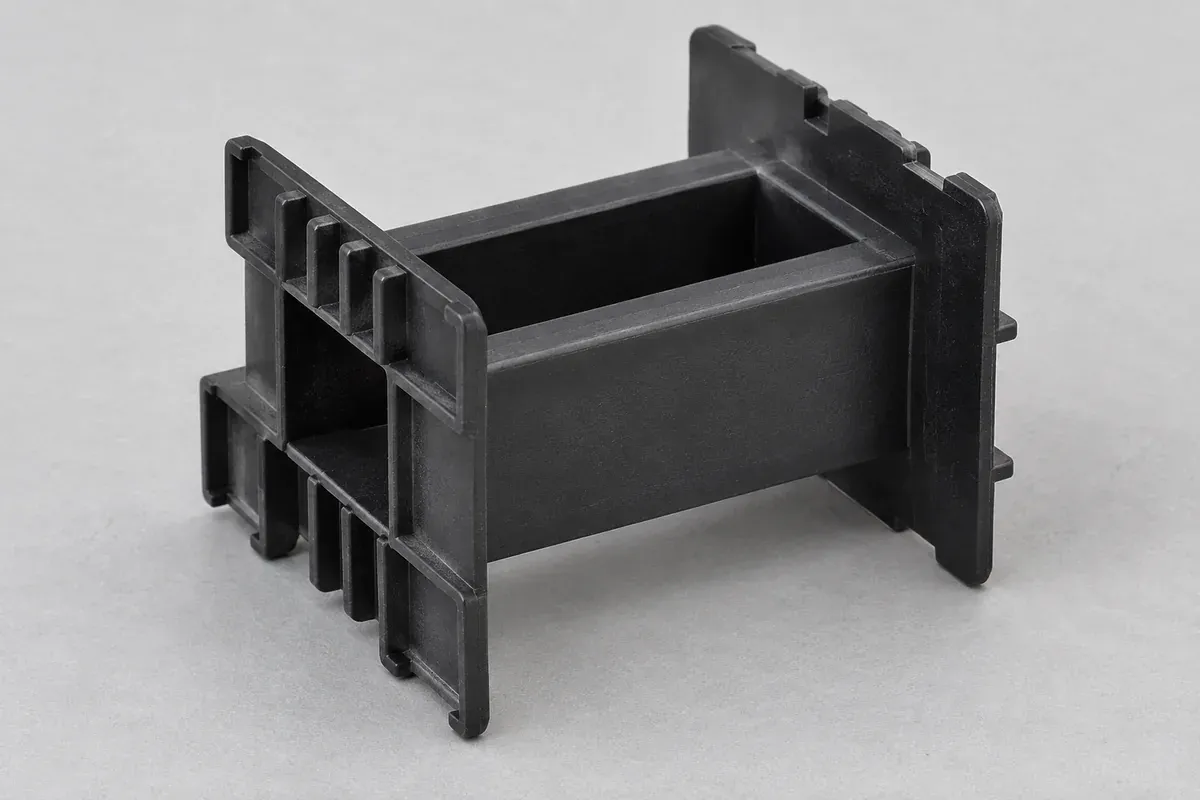
Relate the measurements to function. A core passage, terminal pitch and winding-machine seating feature can have different consequences when they vary. Give the supplier the critical interfaces rather than applying an unnecessarily tight general tolerance to every surface.
Review reinforcement as part of the grade choice. Filled materials introduce tooling and processing considerations that need to be assessed for the actual walls, flow path and reference features. A generic shrinkage number is not a complete prediction of the finished part.
Keep documentation matched to the exact formulation
If a material recognition or classification is required, match the current record to the proposed designation and relevant conditions. Ask who will check that the selected color and component thickness are within the scope needed by the product design.
UL's plastics recognition resources explain a material-level evaluation program. Such a record is evidence about the recognized material under its stated conditions, not automatic certification of a molded bobbin or complete electrical assembly.
The resin document review guide separates material identity, incoming traceability and finished-product responsibilities. That separation is important when a commercially available substitute has a similar description but a different designation.
Include molding and assembly in the trial
Ask how the candidate will be dried, handled and processed according to its manufacturer's current guidance. The moldability review should address filling, venting, release and the condition of wire-contact edges. A datasheet cannot show whether a particular trial part was made appropriately.
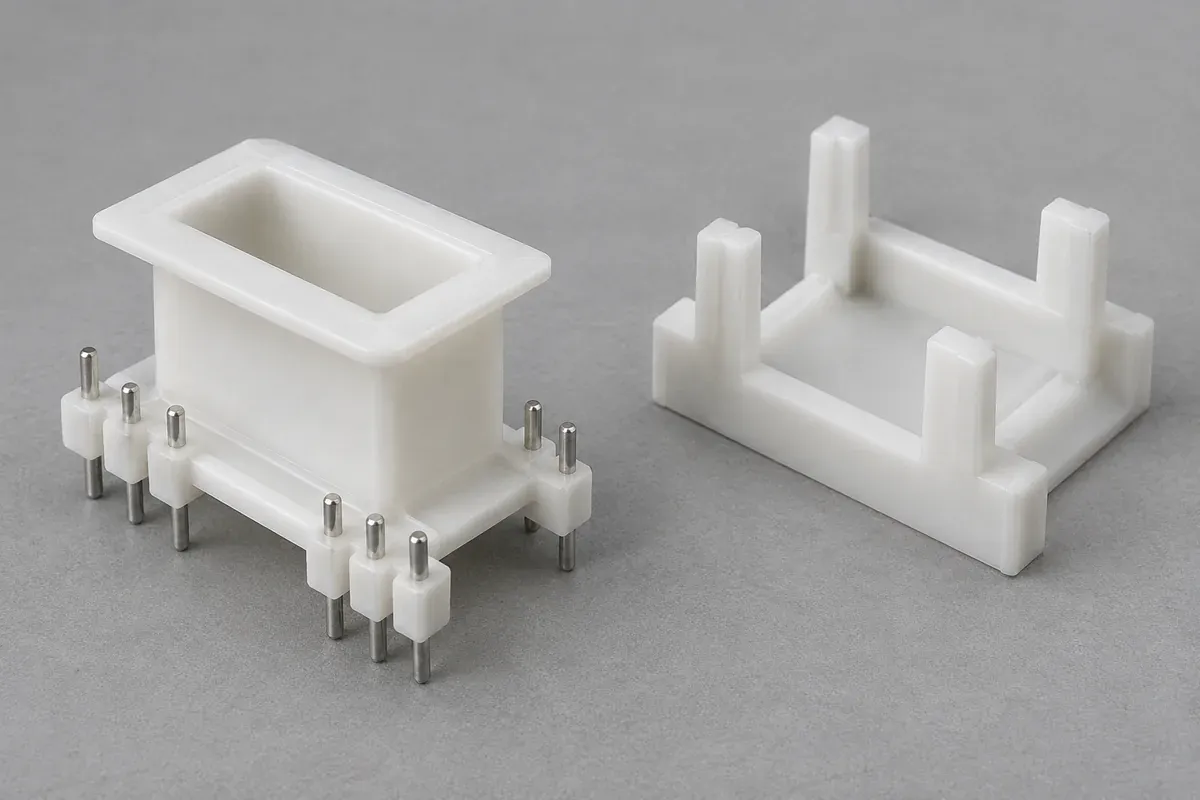
Evaluate representative parts through the agreed downstream steps. Inspect the component before and after those operations when the design requires it. Distinguish damage created during molding from damage introduced by a winding fixture or terminal installation method.
A candidate should not be accepted merely because one sample fits a core. The trial needs the defined dimensional, assembly and documentation checks. Conversely, a failed setup should be investigated before the entire material family is rejected.
Close the selection and substitution rules
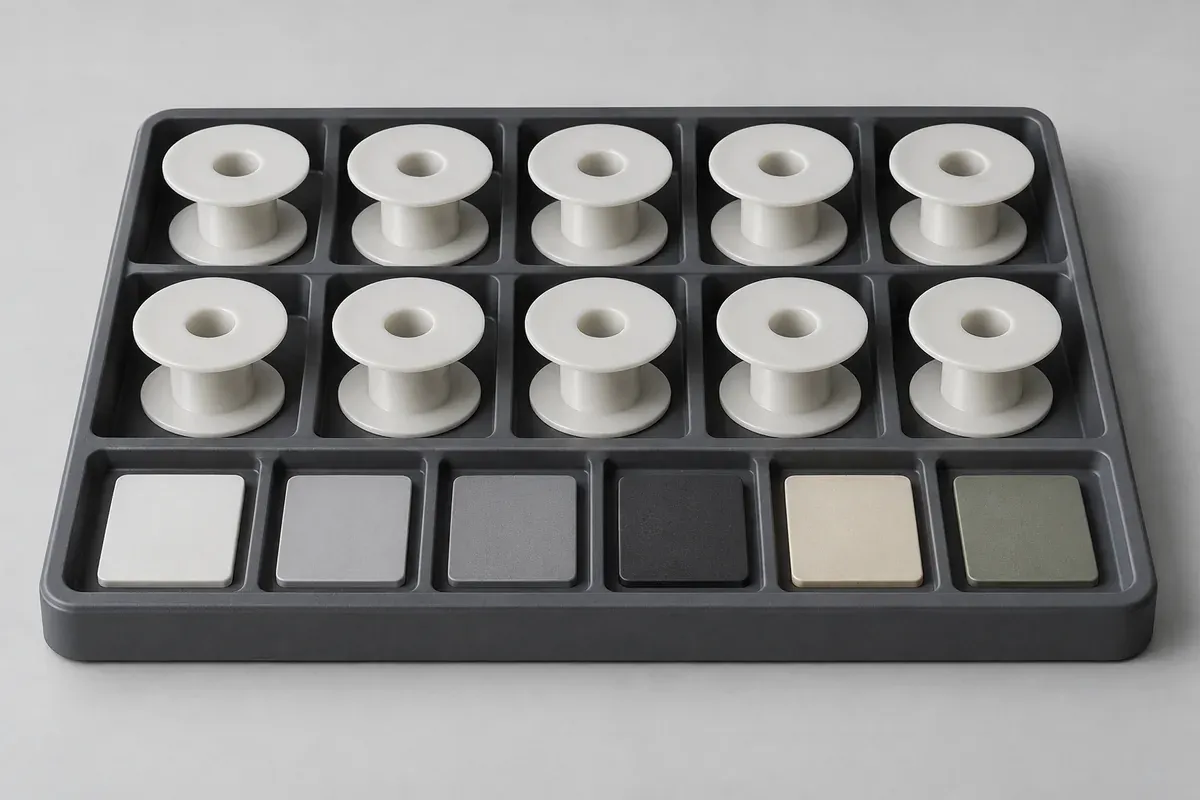
Record the chosen grade, permitted color, required records and the approved drawing revision. State which changes require renewed engineering review. A supplier's availability issue should trigger a controlled alternative proposal, not a silent replacement during production.
Compare total scope as well as resin price: drying and handling, tooling assumptions, terminal assembly, inspection and rejected-part responsibility all affect the offer. Use the pre-winding inspection guide to define what evidence accompanies the delivered parts.
The result should be a material decision linked to a specific design and process. It need not claim that one polymer is universally best; it needs to explain why the selected grade meets the documented requirements and which questions remain subject to testing.
Turn the review into a defined molding scope
Explore our custom injection-molded coil bobbins and the related illustrative engineering study. Send the drawing revision, counterpart details, intended use and the decisions still open. Development samples and production approval should have separate, agreed deliverables.