
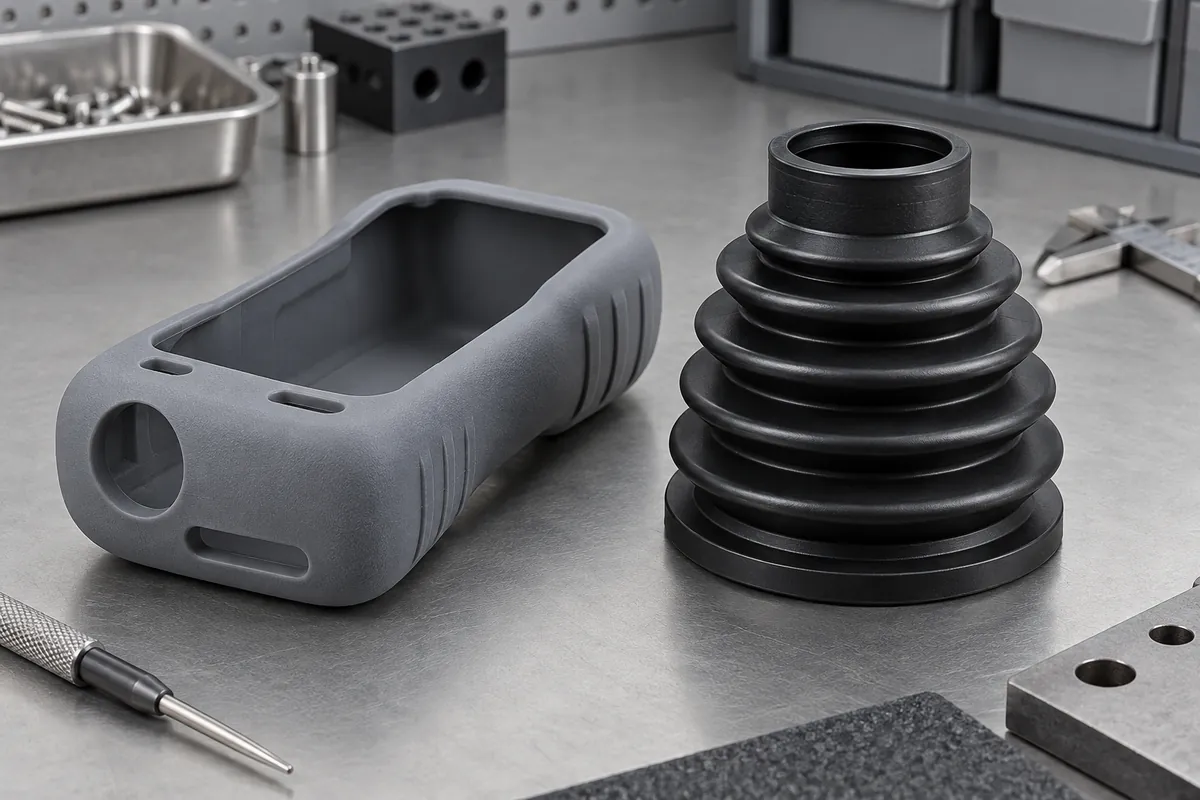
Product design illustrations. Final geometry, materials and acceptance criteria are project-specific.
Silicone and thermoplastic elastomers can both produce flexible protective parts, but they are not interchangeable material labels. The exact compound, bellows geometry and operating exposure determine whether a candidate works. Selecting the softer sample by hand can miss requirements that appear only after repeated movement or environmental conditioning.
Write the application boundary first. Identify temperature, fluids, cleaning, outdoor exposure, expected motion and whether the boot is intended only as a dust cover or as a validated seal. These distinctions prevent a broad material comparison from becoming an unsupported claim about the finished assembly.
Compare exact compounds and processes
TPE describes several material families with different behavior. A proposal should name the grade and relevant formulation rather than simply offering TPE as a substitute. Likewise, a silicone candidate needs an exact material identity and an agreed cure and finishing condition where those affect the supplied component.
LSR molding and thermoplastic molding use different processing routes. Tooling, gate design, release and secondary operations should be reviewed for the chosen material. A shape that can be produced in one route is not automatically a drop-in conversion to the other with unchanged cost and tolerances.
Manufacturer resources such as WACKER's silicone information support grade screening. They do not establish the usable stroke, cycle life or sealing performance of a particular custom bellows.
Connect material behavior to the moving profile
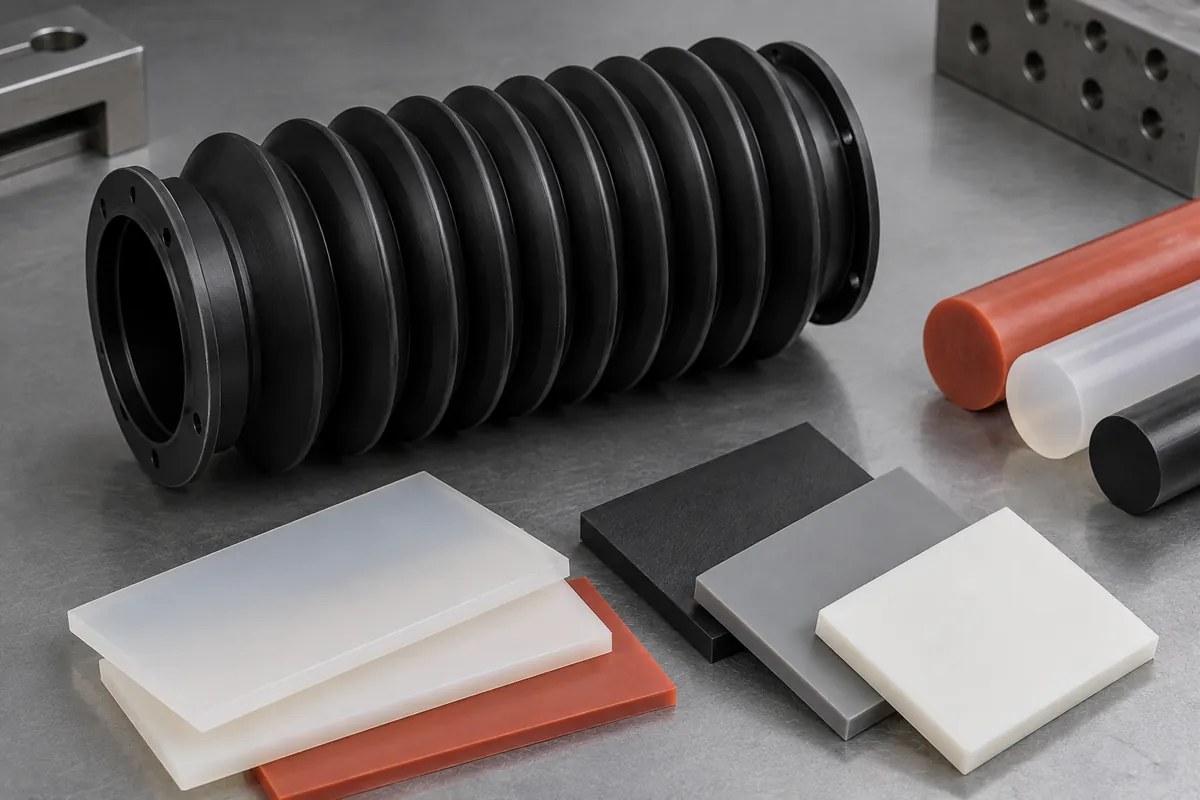
Hardness alone does not describe the force required to move the installed bellows. Wall thickness, fold radius, end constraints and trapped air also contribute. Compare candidates in representative geometry rather than using solid material samples as a complete prediction of the assembled response.
Check how the part recovers after the relevant dwell and movement. A cover that looks acceptable immediately after installation may behave differently after remaining compressed or extended under operating conditions. Define the observation and acceptance method rather than relying on a vague resilience requirement.
Review tear-sensitive regions and installation strain. A narrow collar stretched over a sharp shoulder may be more demanding than the central folds during normal motion. The material decision should include how the part is fitted, removed and handled in production or service.
Evaluate the complete exposure sequence
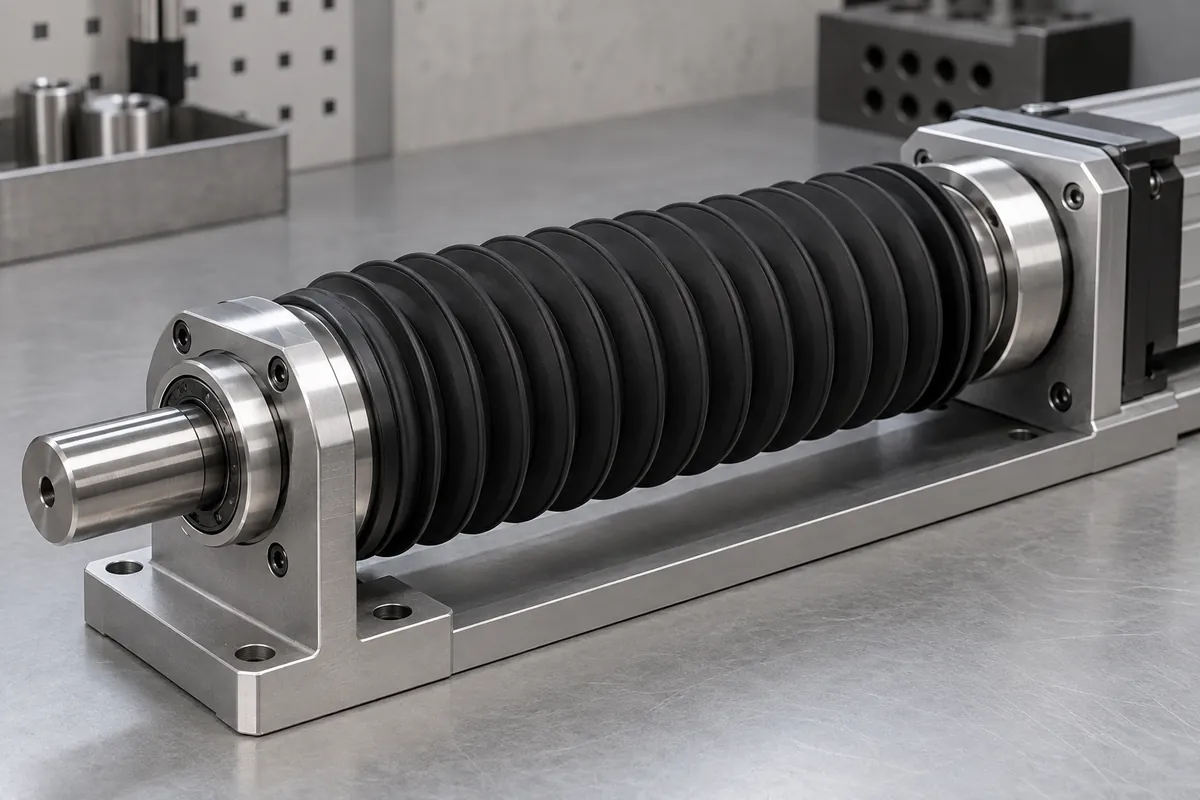
Do not assume every silicone is oil resistant or every TPE tolerates the same cleaning agent. Identify the actual fluid and concentration, temperature and contact duration. Material-family guidance is a screening aid; the exact grade and application conditions determine the next validation step.
Include residues from assembly aids, lubricants and cleaning. A bellows may encounter these even if the protected mechanism normally operates dry. If a proposed process introduces a coating or lubricant, review it as part of the delivered configuration rather than treating it as invisible manufacturing detail.
Where appearance matters, distinguish cosmetic requirements from functional degradation. A color change may require investigation but is not automatically equivalent to a loss of mechanical performance. Conversely, an unchanged appearance does not establish unchanged flexibility, dimensions or sealing behavior.
Ask whether the proposed colorant or additive is included in the grade-specific evidence. A material described as equivalent may use a different formulation to achieve appearance or processing goals. Keep those changes visible so the qualification applies to the actual supplied compound rather than an uncolored base resin considered earlier in development.
Compare the commercial scope fairly
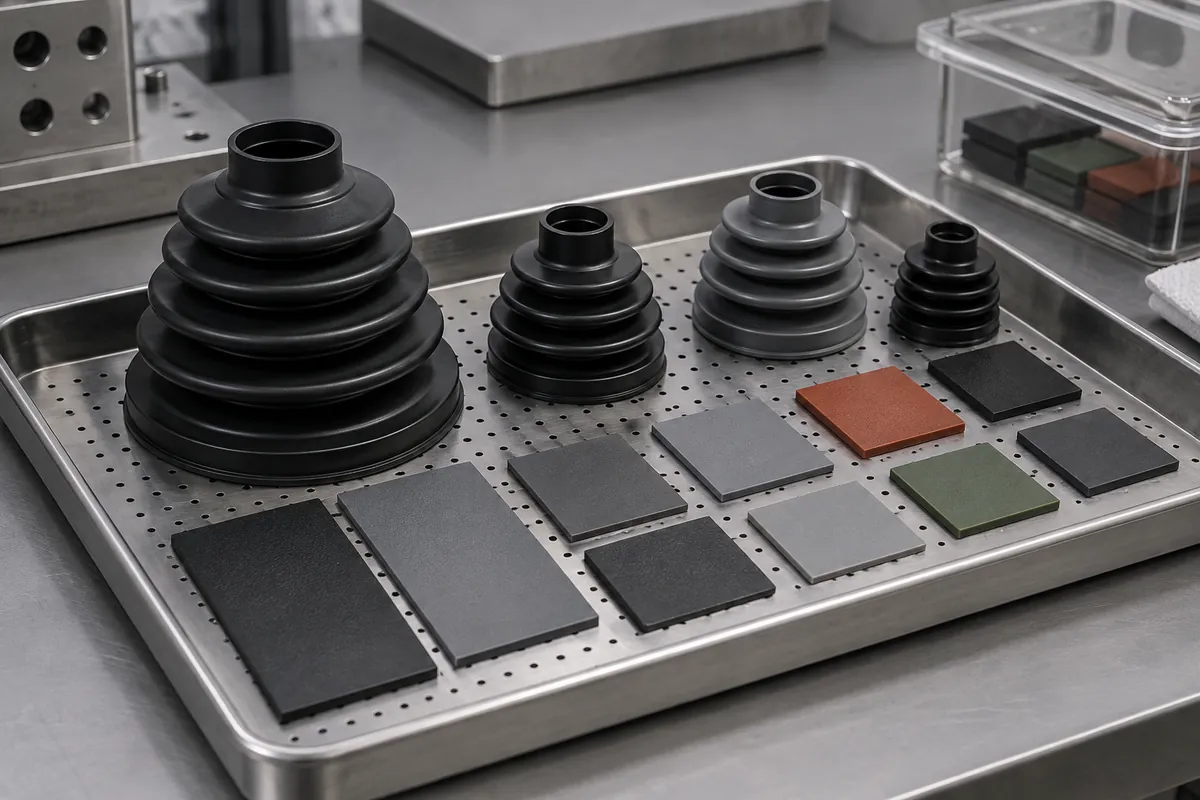
Include tooling, trial samples, finishing, inspection and required validation when comparing quotations. A lower unit price may come with a different material, wall profile or release method. Record those differences before treating the proposals as equivalent alternatives.
Review tooling and demolding early. If one candidate requires a geometry change, reassess the motion envelope and attachments instead of assuming the approved design remains functionally identical.
Approve the selected grade with the part revision and assembly conditions. Later material substitutions should be evaluated against that baseline, especially where the replacement keeps a similar hardness but changes the formulation or manufacturing route. A clear specification is more useful than a universal ranking of silicone versus TPE.
Discuss the component and its acceptance requirements
Explore our custom silicone bellows & boots and the related project case study. Send the current drawing, mating-part details, operating conditions and required quantities. We can review tooling, molding and inspection as a defined supply scope, with development samples and production approval kept separate.