
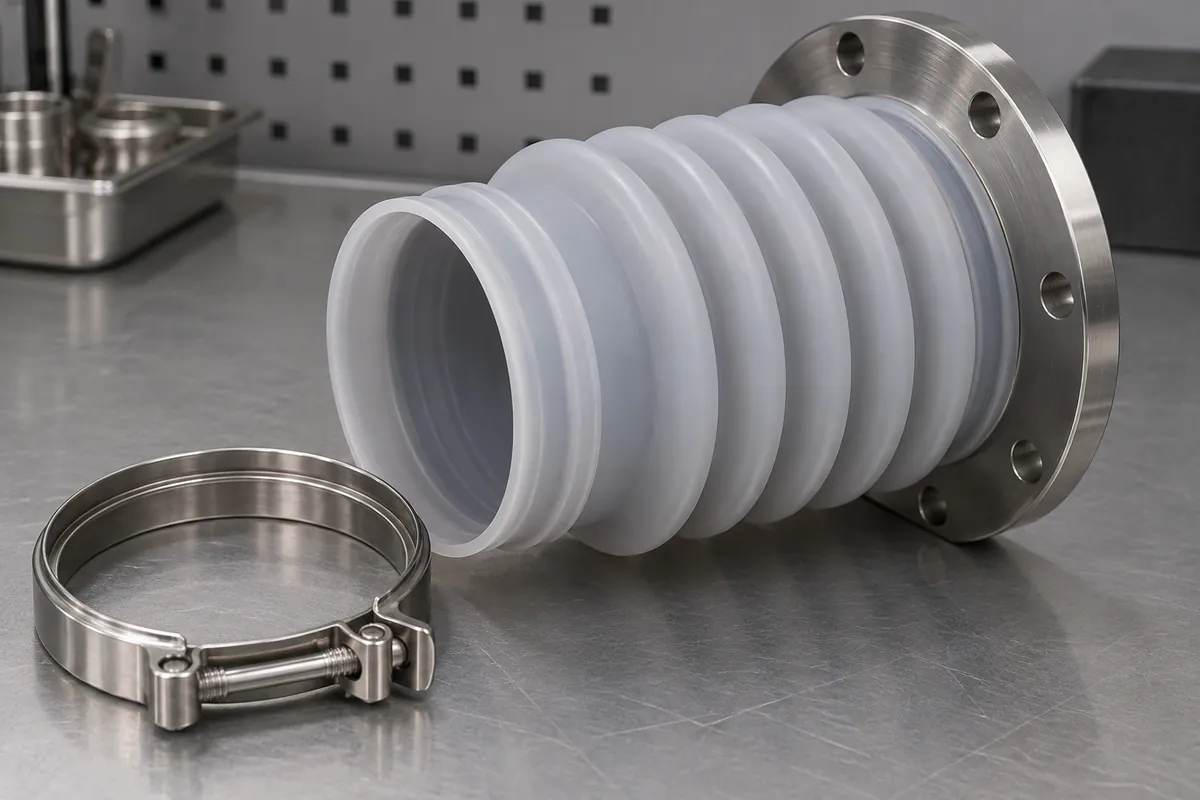
Product design illustrations. Final geometry, materials and acceptance criteria are project-specific.
The ends of a bellows determine how it stays attached and how its flexible section begins to move. A secure-looking collar can slip, tear or leak if the counterpart and installation method are not controlled. Retention and sealing should therefore be defined before selecting the fold profile or clamp style.
First decide what the boot must exclude or contain. A general protective cover, a splash barrier and a pressure-containing seal have different requirements. Do not assign an ingress or pressure rating simply because the ends are clamped tightly to a housing.
Separate retention from sealing contact
A clamp can provide retention while a lip or other geometry establishes the sealing path. Identify both functions in the section drawing. Increasing clamp force to compensate for an unsuitable sealing profile can damage the elastomer or distort the counterpart without creating a reliable interface.
Define the counterpart diameter, surface condition and available engagement length. A collar approved on one machined fixture may behave differently on a molded or coated production surface. The actual counterpart variation belongs in the interface specification.
For sealing principles, the Parker O-Ring Handbook is useful background where an O-ring-like interface is involved. A custom bellows lip still needs its own geometry and assembly validation rather than an assumed equivalence to a standard seal.
Protect the transition into the folds
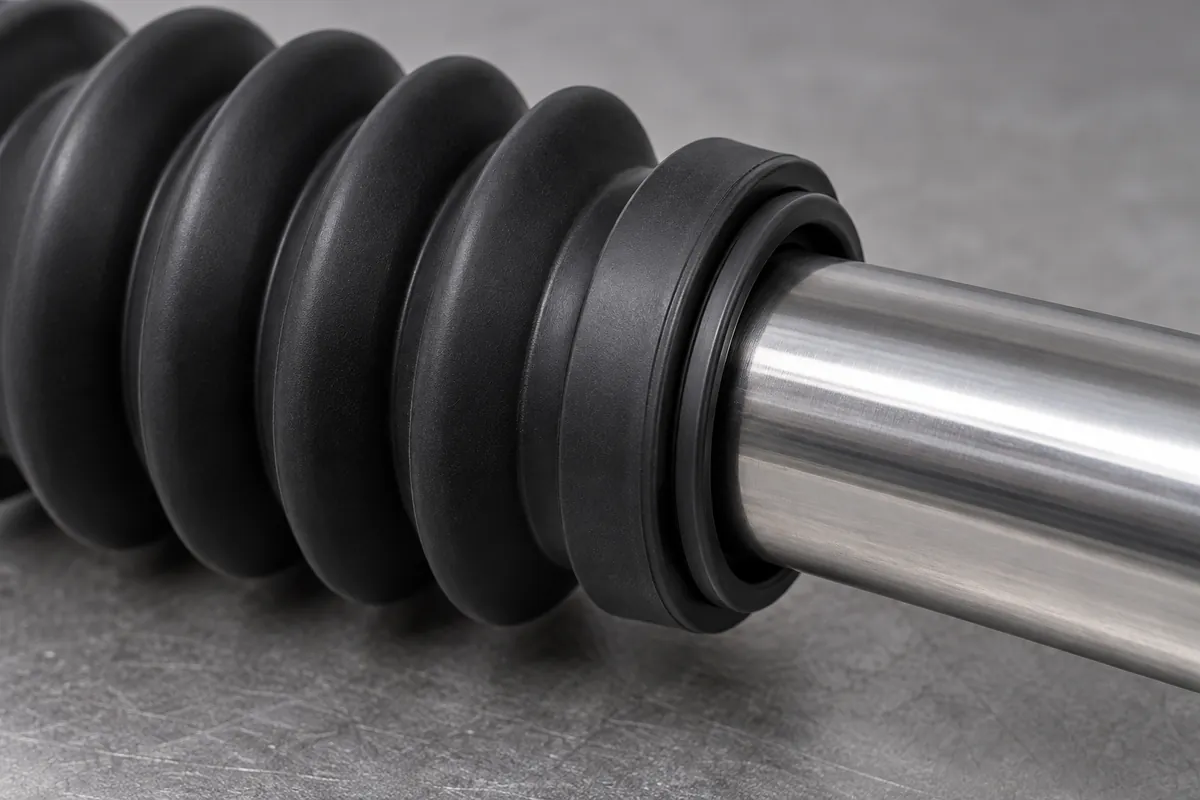
The clamped section is more constrained than the moving wall. Check the transition between them throughout travel so the first fold does not repeatedly bend against a clamp edge or housing shoulder. This local region can become important even when the central convolutions have ample clearance.
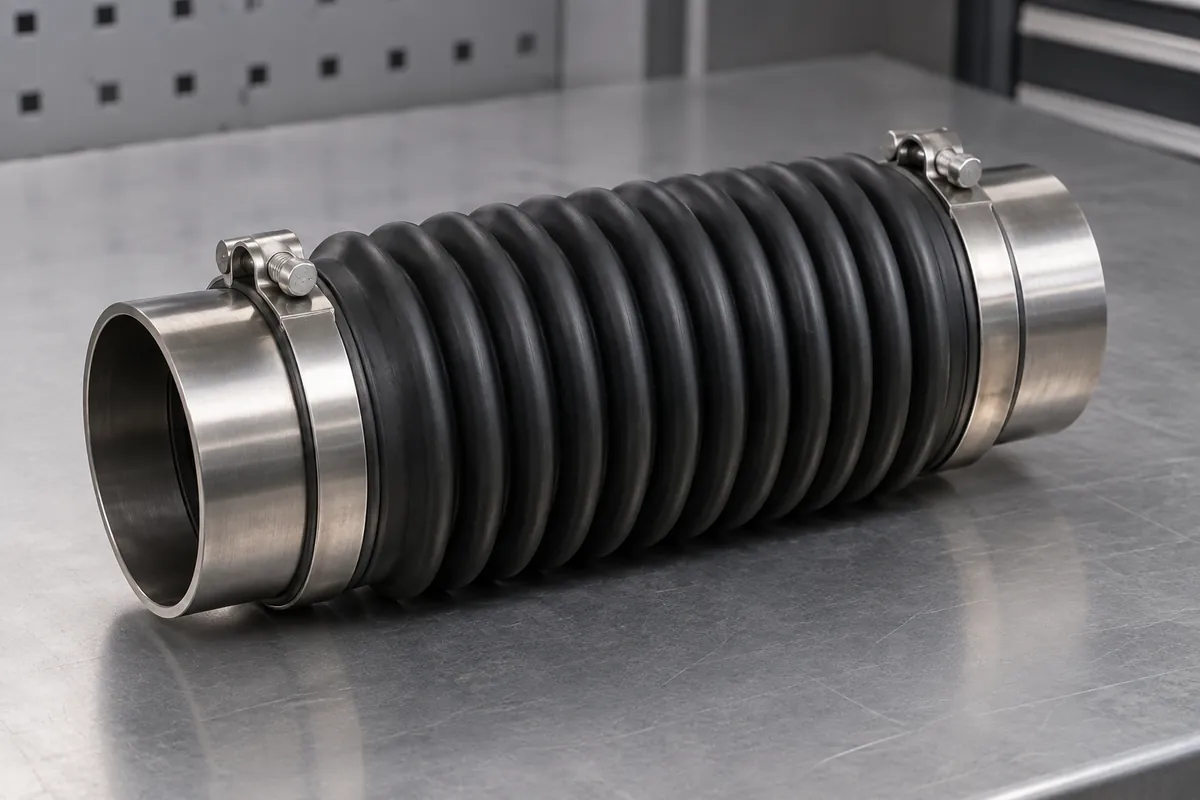
Leave suitable space for the selected clamp and its installation tool. A design that requires the clamp to sit partly on a fold creates an uncertain boundary. The assembly drawing should show the installed position and how it is located repeatably.
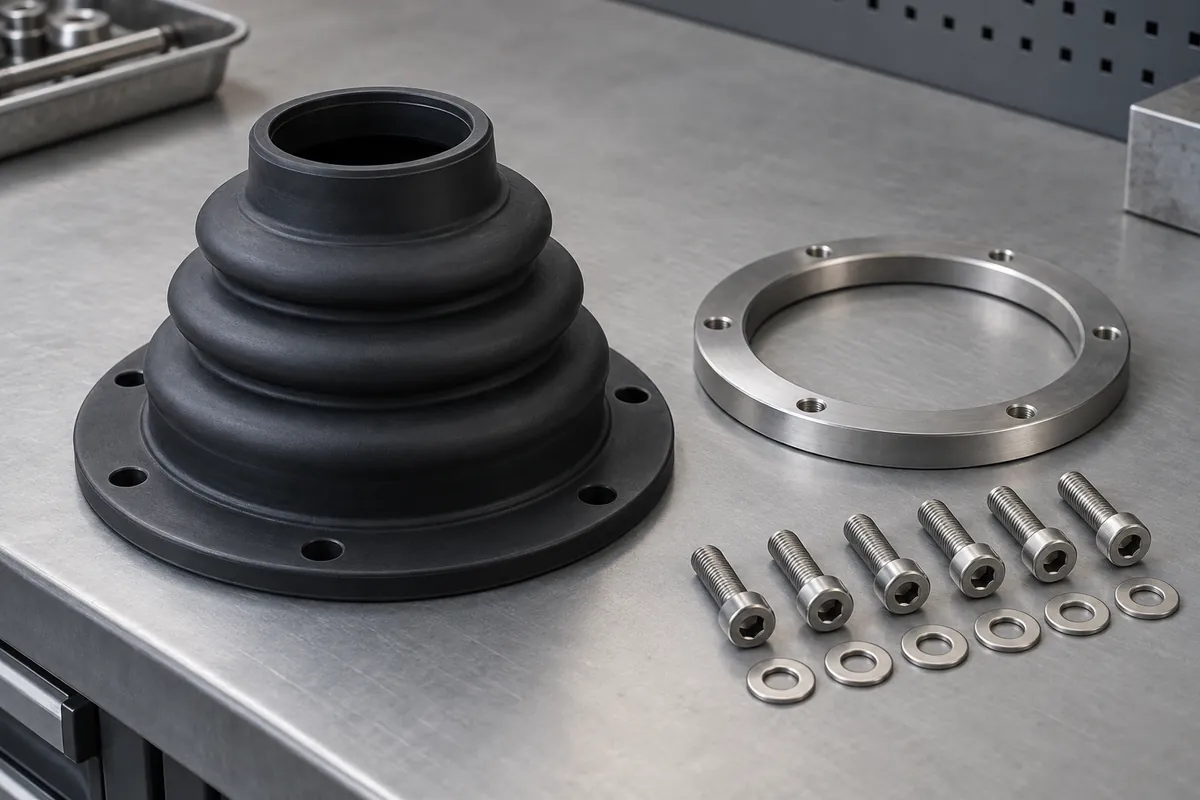
Review flange arrangements for uneven compression. Fastener spacing, flange stiffness and tightening sequence can alter the contact around the perimeter. A favorable result from a carefully assembled prototype is not enough if ordinary permitted assembly variation produces a different sealing condition.
Make installation a controlled operation
Check the route by which the boot passes over shoulders, threads or sharp features. Temporary installation strain can exceed the strain experienced during normal use. Provide a practical method that avoids cutting or overstretching the collar, and validate any assembly aid or lubricant.
Define inspection after installation. A hidden rolled lip or partially seated collar can create an inconsistent result without an obvious external defect. Consider locating features or observable witness relationships that make correct assembly easier to verify.
Account for removal and replacement if the boot is a service item. Reusing a clamp or stretching the same collar repeatedly may not be part of the original approval. State the intended replacement procedure and which components are replaced together.
If a collar can rotate during installation, check whether that twist remains trapped between the two attachments. The resulting preload can change fold motion even when both ends are dimensionally correct. A controlled orientation mark outside the functional surface may help assembly, provided its placement and durability are included in the design review.
Validate the required function
Use a defined retention test if pull-off resistance matters, with the direction and loading method stated. If sealing matters, evaluate the assembled interface under the relevant medium and exposure. Passing one of these tests does not establish the other.
Combine the interface review with venting requirements. A sealed moving volume may impose pressure loads on the attachments, while a vented protective cover introduces a deliberate environmental path that needs separate consideration.
Keep attachment geometry, clamp specification and assembly method with the bellows release. Changes to any of these can alter the moving boundary and the seal, even when the molded boot itself is unchanged. That record helps distinguish an interface problem from a material or molding defect.
Discuss the component and its acceptance requirements
Explore our custom silicone bellows & boots and the related project case study. Send the current drawing, mating-part details, operating conditions and required quantities. We can review tooling, molding and inspection as a defined supply scope, with development samples and production approval kept separate.