
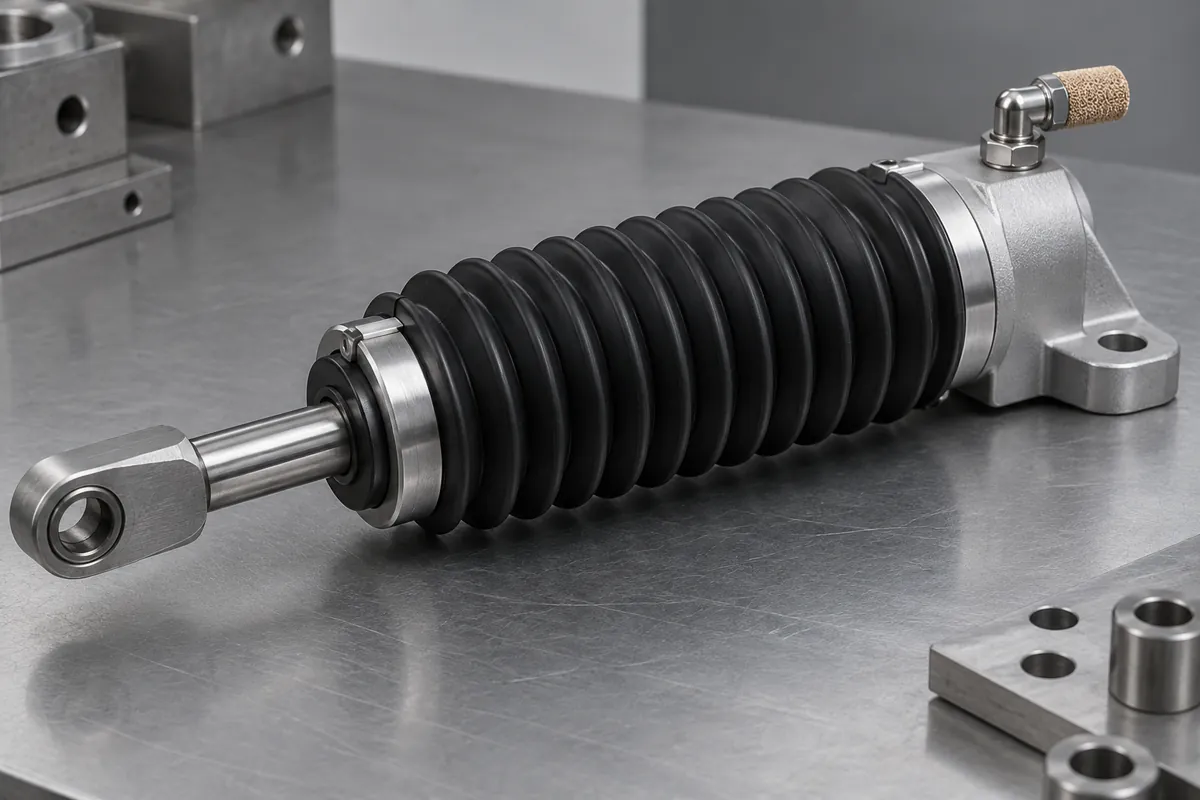
Product design illustrations. Final geometry, materials and acceptance criteria are project-specific.
A moving bellows changes the volume enclosed by its folds. If that volume is effectively sealed, the enclosed gas can contribute to the force required to compress or extend the boot. The resulting behavior may be mistaken for excessive elastomer stiffness when the real issue is pressure exchange.
Begin by identifying the entire enclosed space, including cavities in the mating hardware. A small visible boot may communicate with a much larger internal volume, or an apparently open path may be blocked after assembly. Review the installed configuration rather than assuming the free part describes the pneumatic boundary.
Understand the volume change
As the bellows compresses, the available gas volume changes; as it extends, the direction of that change reverses. The response depends on leakage, venting and motion rate as well as geometry. A slow manual movement may therefore feel different from the intended machine cycle.
Define whether pressure difference across the wall is allowed and whether it affects the mechanism. The actuator may need to overcome this additional load, and the folds or attachments may deform in an unintended way. Do not assign the whole measured force to the elastomer without checking the air path.
For protective covers, resources from suppliers such as Dynatect reinforce the need to define the operating mechanism and environment. A custom molded boot still requires its own vent and exposure assessment.
Consider the failure condition of the vent as well as its normal operation. The system team should decide whether restriction needs detection, maintenance or a design change. A cover intended only to exclude debris should not inadvertently become a pressure-loaded component because the vent path was overlooked during a later equipment modification.
A vent solves one problem and creates an interface
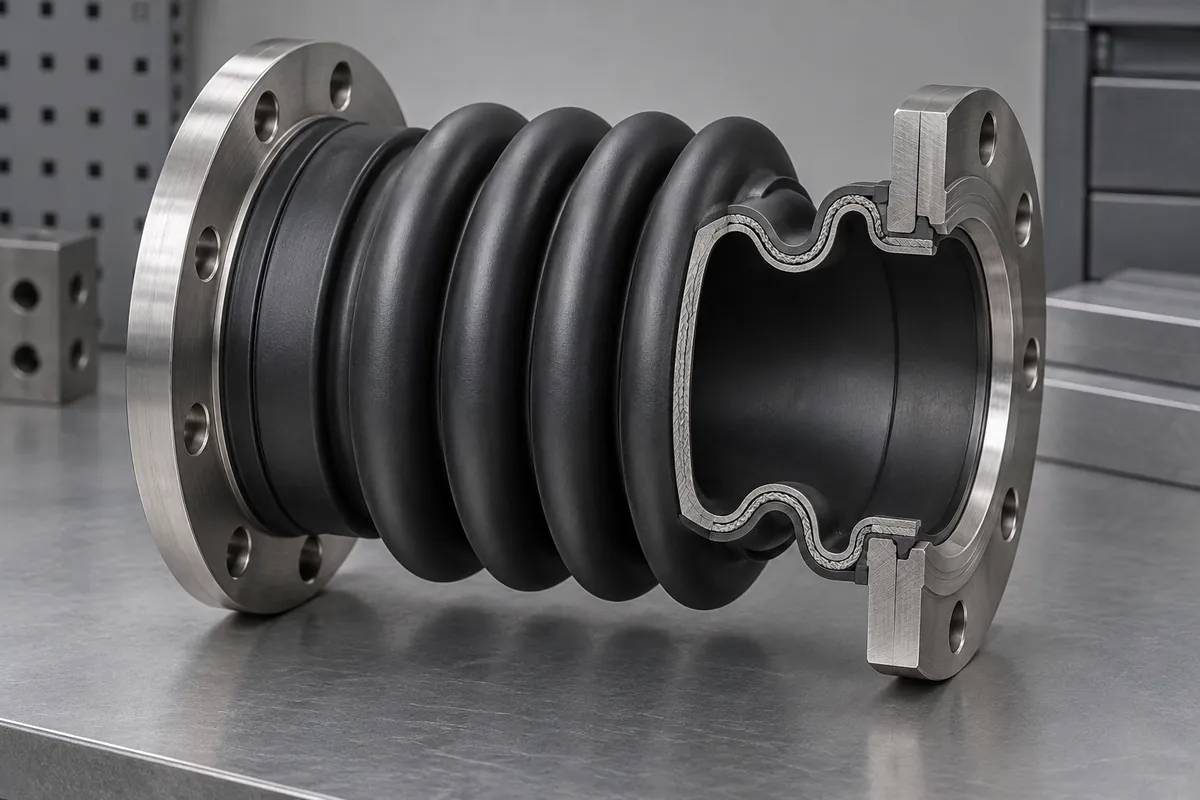
A vent can allow pressure exchange, but it also provides a possible path for contaminants or fluids. Its location and protection should follow the environmental requirement. Adding a hole without reconsidering the protected boundary can defeat the original purpose of the cover.
If a filter or membrane is proposed at the vent, identify its flow and exposure requirements. A blocked or wetted vent may behave differently from a clean dry one. The complete vent assembly, not just the opening in the elastomer, belongs in the test configuration.
Consider whether the vent communicates with a controlled internal area or the outside environment. These arrangements can create different contamination and maintenance responsibilities. The system drawing should show the intended destination rather than leaving the path to be improvised during installation.
Test at representative motion and condition
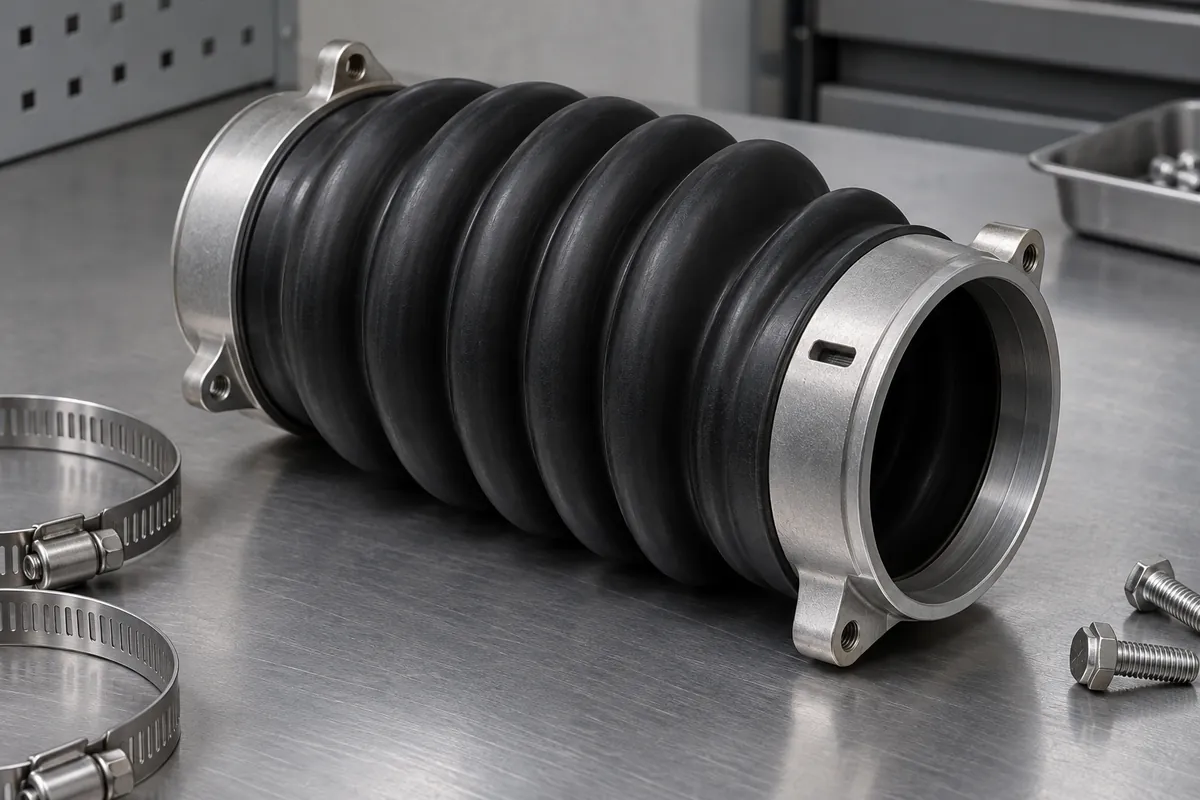
Measure movement and force at the relevant cycle speed and positions. If the application includes long dwells or rapid reversals, include them where they affect the requirement. A test performed only at a convenient slow speed may miss the load imposed during normal operation.
Compare vent conditions deliberately. A clean vent, a restricted vent and a defined sealed condition may help diagnose the mechanism, but they are not interchangeable acceptance configurations. Record which arrangement represents the intended product and which is only a diagnostic experiment.
Observe the folds and end attachments while monitoring the response. Pressure-related deformation may concentrate at a local weak point or pull on the collars. A total actuator-force reading becomes more useful when it is connected to the visible movement and the measured pressure condition.
Keep protection claims precise
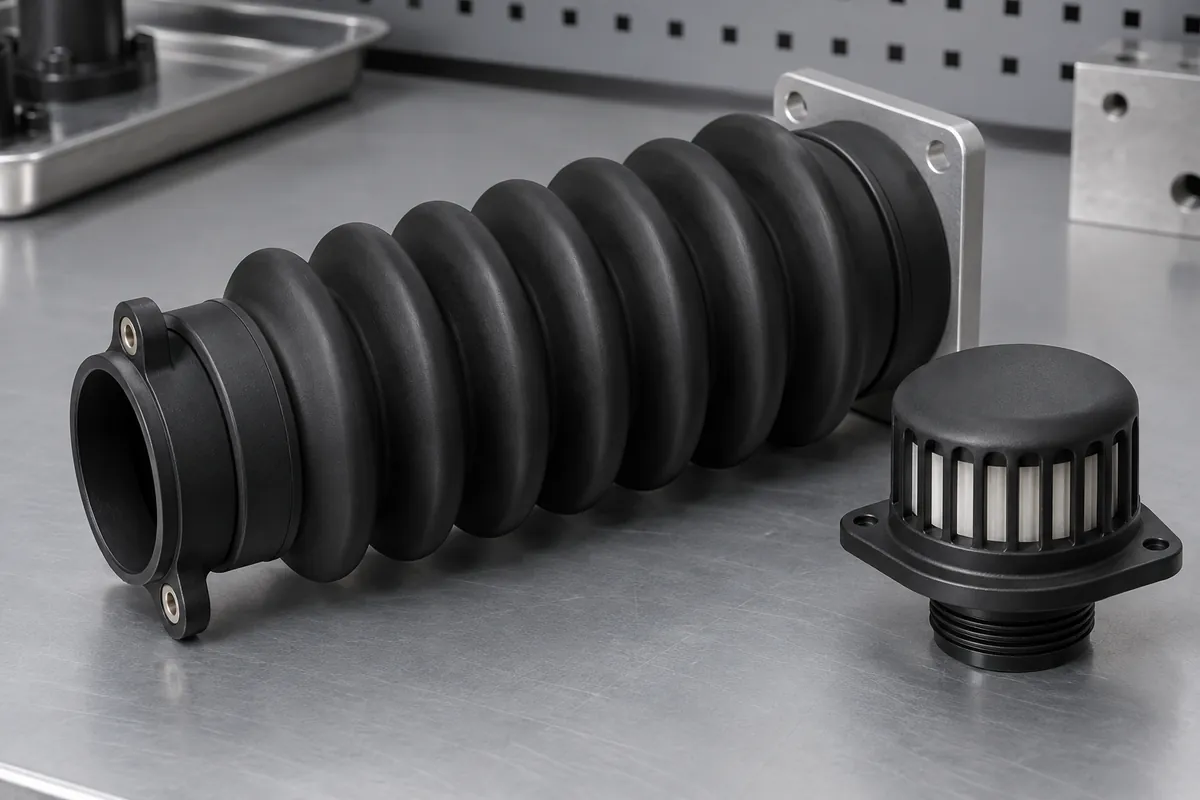
A vented cover should not be described as hermetically sealed. Likewise, an unvented boot is not automatically qualified against dust, water or pressure. Any such claim needs the relevant assembly test and conditions, including the attachment and vent configuration.
Coordinate vent design with clamps and sealing lips. These features define the boundary together, and changing one may alter both pressure exchange and environmental protection.
Document maintenance where the vent can become contaminated or obstructed. Inspection and replacement requirements should match the actual environment. This makes the vent a controlled functional feature rather than a late modification added because a prototype was difficult to compress.
Discuss the component and its acceptance requirements
Explore our custom silicone bellows & boots and the related project case study. Send the current drawing, mating-part details, operating conditions and required quantities. We can review tooling, molding and inspection as a defined supply scope, with development samples and production approval kept separate.