
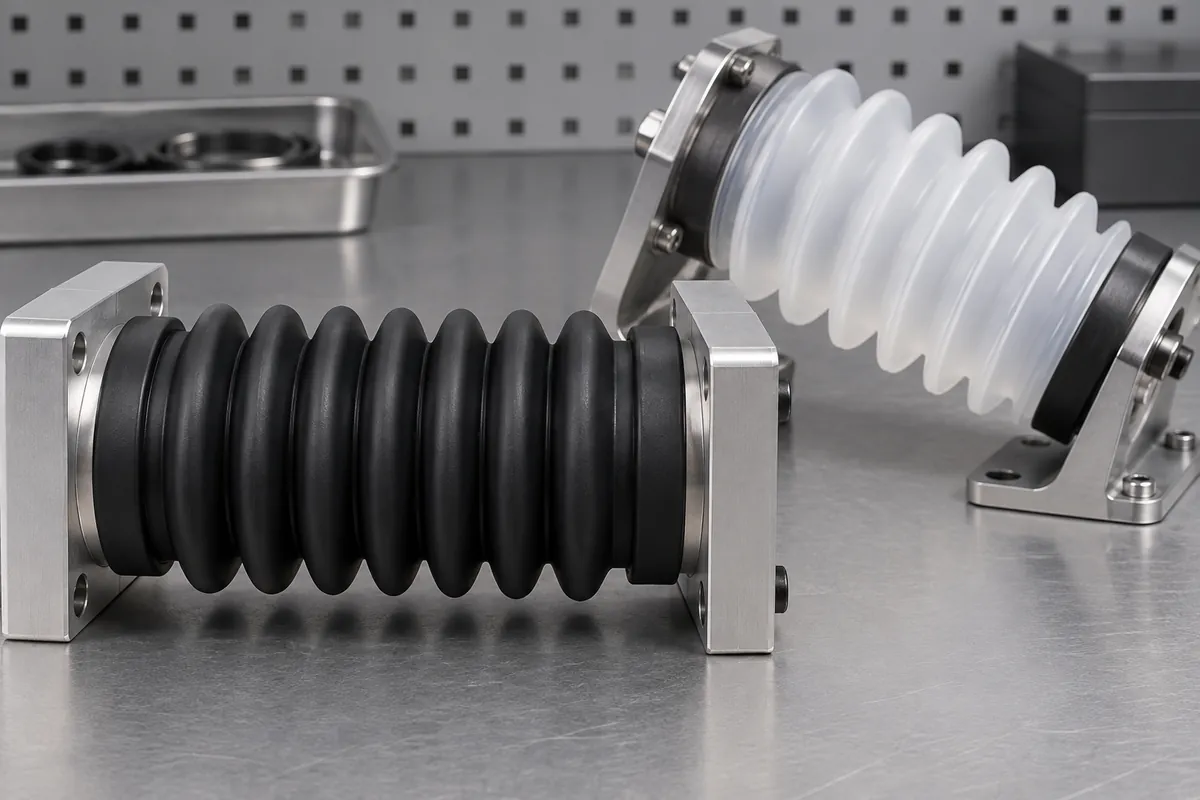
Product design illustrations. Final geometry, materials and acceptance criteria are project-specific.
Bellows fatigue is not described adequately by a cycle count alone. Axial compression, lateral offset, bending and combined motion load the folds differently. A test report that calls every repeated movement bending can make a result appear relevant to an application it did not actually reproduce.
Start with the mechanism's motion path. Identify end positions, alignment, speed, dwell and any simultaneous displacement. Record which end moves and how both ends are attached. These details establish the test requirement more clearly than a general request for a million-cycle boot.
Name the motion being tested
Axial motion changes the distance between attachments along the intended axis. Lateral displacement shifts one attachment sideways, while angular movement changes orientation. Real mechanisms may combine these effects, but a result from one isolated mode should not be presented as validation of all of them.
Define the amplitude and reference position. A quoted travel may mean the total movement between extremes or movement on each side of neutral. Resolve that ambiguity before the test begins so the fixture does not apply a different duty from the one engineering intended to evaluate.
Protective-cover specialists such as Dynatect organize solutions around the mechanism and environment. For a custom molded bellows, the same principle means validating the actual installed motion rather than borrowing a cycle rating from another construction.
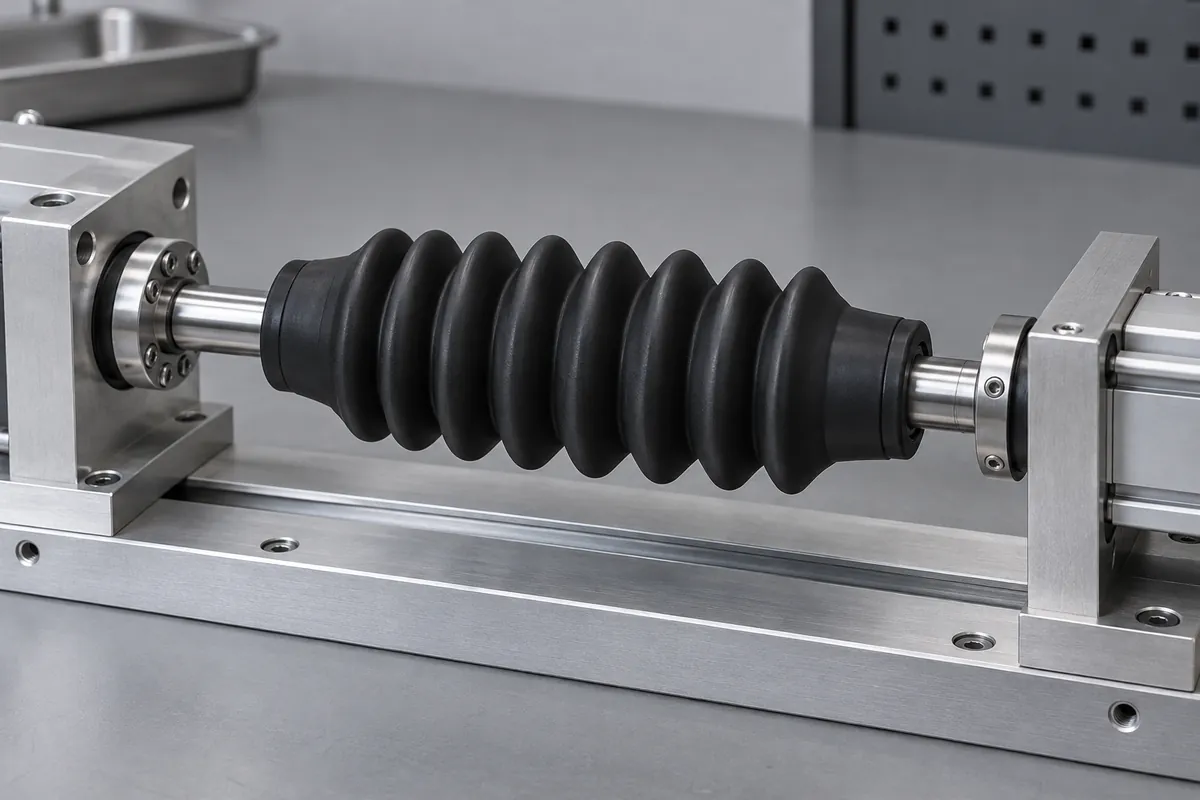
Control the fixture and environment
Use representative collars, clamps or flanges and record their installation condition. A rigid laboratory attachment can constrain the bellows differently from the production counterpart. Inspect for rubbing, twisting and unintended contact before interpreting an early failure as a material limitation.
Include the venting condition. Trapped air can change the load and deformation during motion, especially when the test speed differs from a manual check. The fixture should reproduce the intended air path or state clearly why a different condition is being used for a diagnostic run.
Record temperature and relevant fluid or cleaning exposure. A dry room-temperature cycle test may be useful for development, but it cannot silently replace testing after the conditioning required by the application. Keep each result tied to the conditions actually applied.
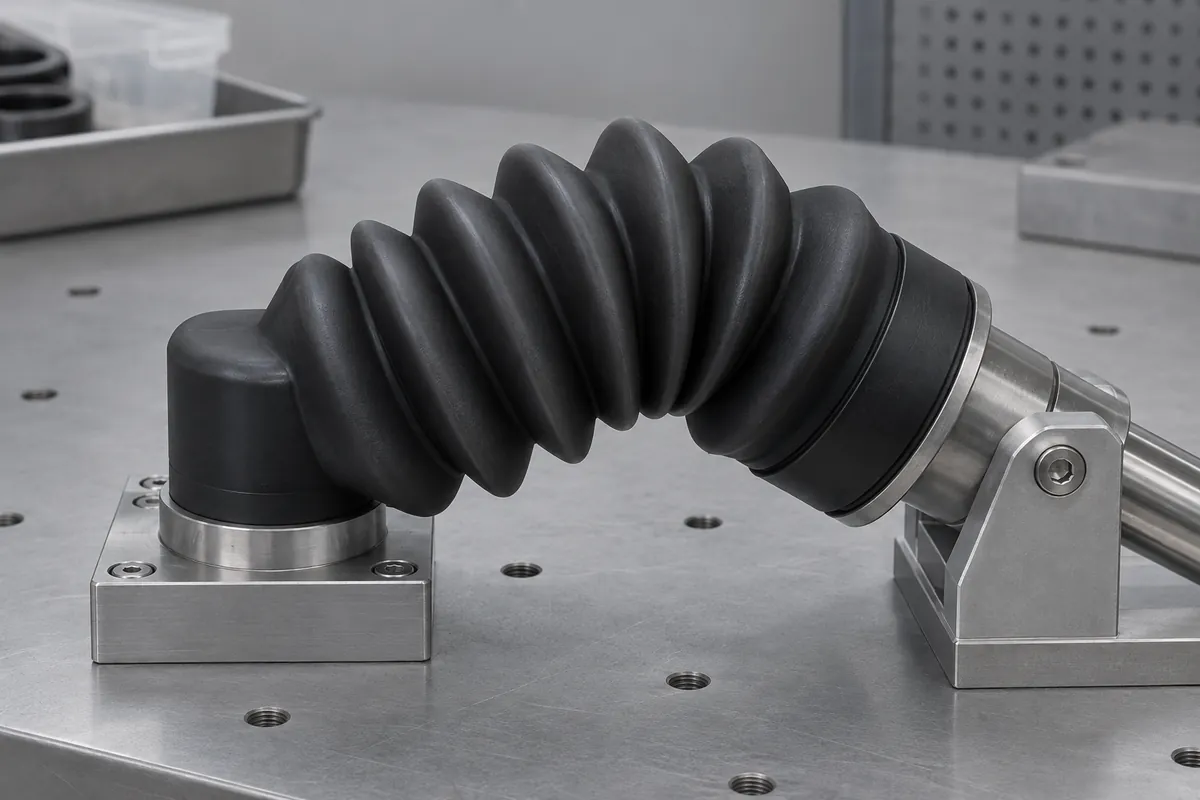
Report observations before making a lifetime claim
Define failure criteria in advance. Cracks, leakage, loss of recovery, excessive force change or attachment slip may each matter. A part that has not separated completely can still fail the functional requirement, so survival should not be the only observation unless that is truly the agreed criterion.
State how many specimens started and how many reached each checkpoint. Record interruptions and replacements. A favorable result from one selected specimen should not be described as the production reliability of the whole design without a justified statistical plan.
Distinguish the planned target from the completed count. If a run is still in progress, publish the latest verified checkpoint and its observations as interim results. Do not describe the target as passed or extrapolate a guaranteed operating life from an unfinished endurance program.
Keep the cycle counter tied to actual completed motion rather than merely counting controller commands. A stalled fixture or incomplete stroke can otherwise accumulate an impressive number without applying the intended duty. The test team should verify motion and record interruptions so the reported count remains connected to the specimen's real exposure.
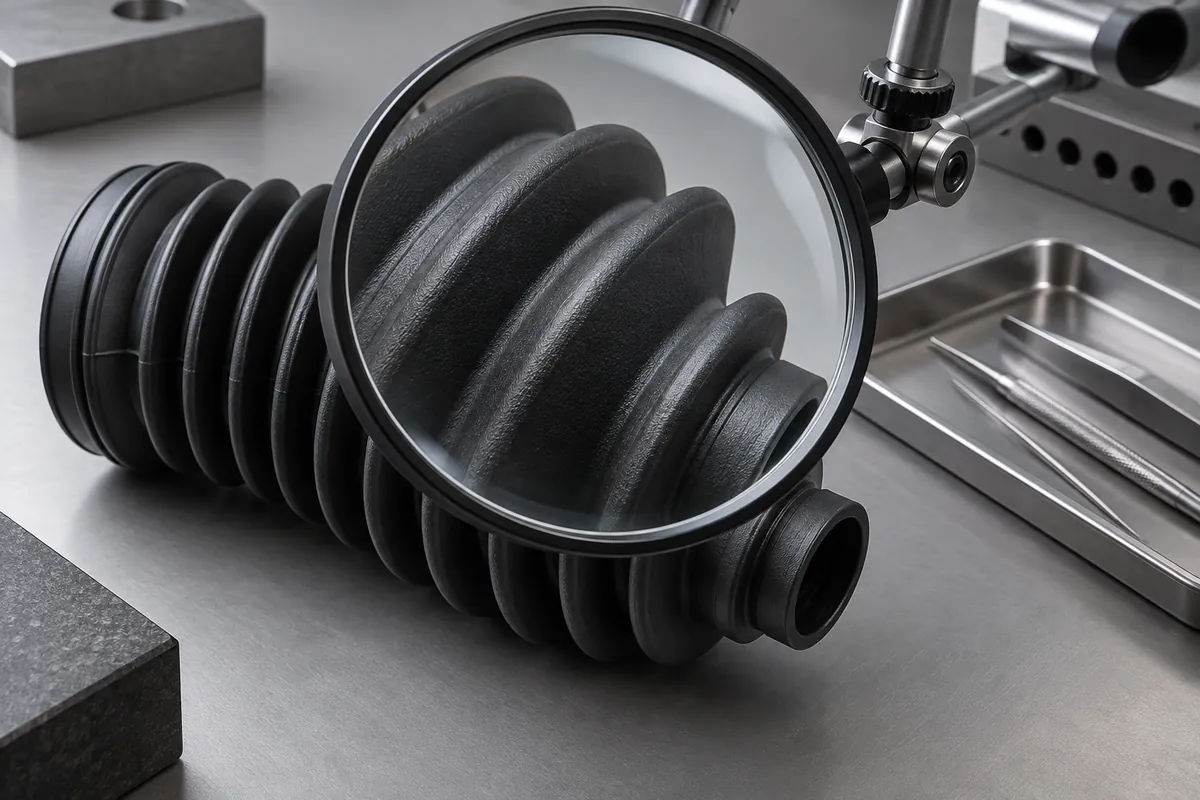
Use failure location to guide improvement
A crack at a clamped transition suggests a different investigation from wear caused by contact with the protected shaft. Record the location, direction and condition before changing the design. Photographs support that investigation but should be linked to specimen identity and the test history.
Review convolution geometry and material choice together while changing variables deliberately. If the fixture, compound and profile all change at once, the new result may be useful but cannot isolate which change produced the difference.
Close the program with a bounded conclusion covering the tested configuration and motion. Keep unresolved combined-motion or environmental requirements visible. This gives the customer an honest development record and prevents a simple cycle number from becoming an unsupported promise about every installation.
Discuss the component and its acceptance requirements
Explore our custom silicone bellows & boots and the related project case study. Send the current drawing, mating-part details, operating conditions and required quantities. We can review tooling, molding and inspection as a defined supply scope, with development samples and production approval kept separate.