
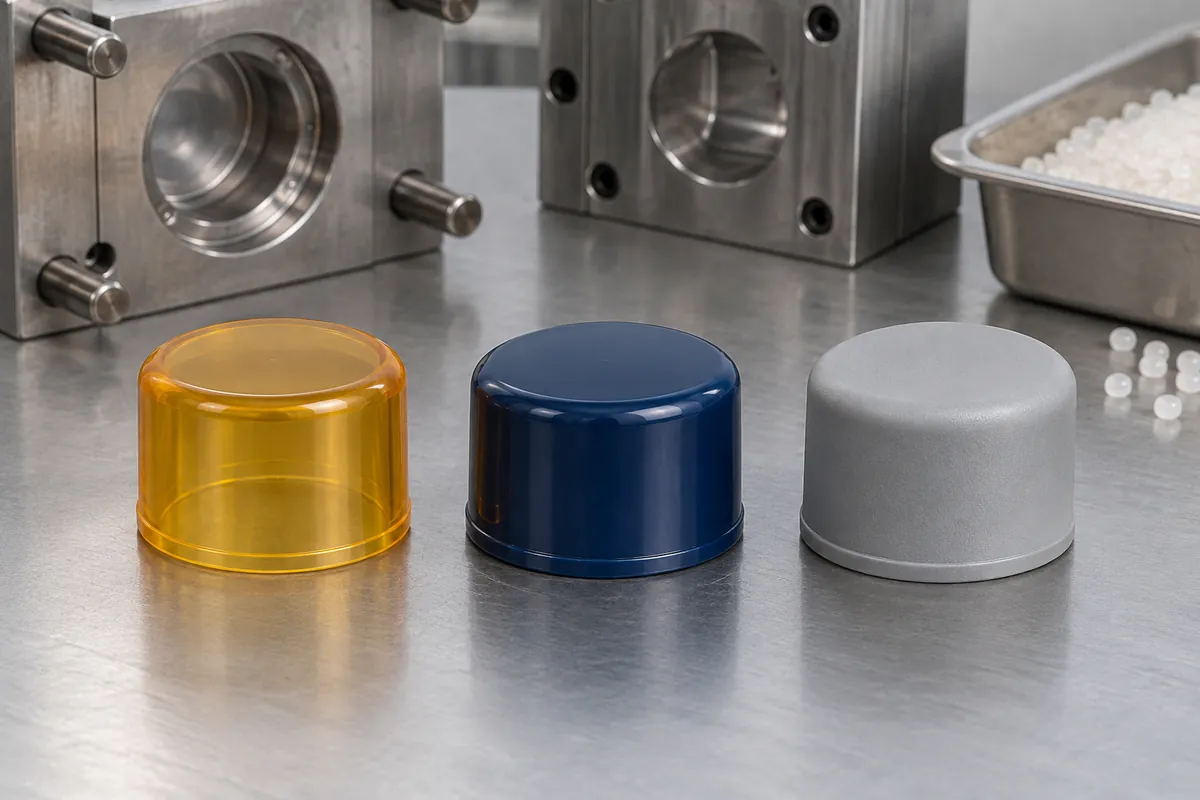
A softer cap may be easier to install, while a stiffer one may preserve a particular shape more effectively. Neither observation proves which material is right for a protective part. The correct choice depends on the contact geometry, handling sequence, exposure and the function that must remain after storage or processing.
Use LDPE, PP and TPE as candidate families, then compare exact grades against the application. Do not choose solely by color, a generic hardness value or a material name already used on another protector. This framework is for custom molded industrial caps and plugs, not a substitute for a grade-specific technical review.
Product design illustrations. Final geometry, materials and acceptance criteria are project-specific.
Write the required behavior first
List the installation, retention and removal requirements. Does the wall need to flex around an external feature? Must a plug retain a defined shape in a bore? Is a pull tab the intended removal point? These questions help identify which mechanical properties and geometry decisions need attention.
Include the duration of use. A part evaluated immediately after installation can behave differently after an extended dwell under deformation. Define the relevant storage and handling conditions rather than asking for a material that is simply “flexible but strong.” The fit and retention guide provides a method for turning that phrase into a testable requirement.
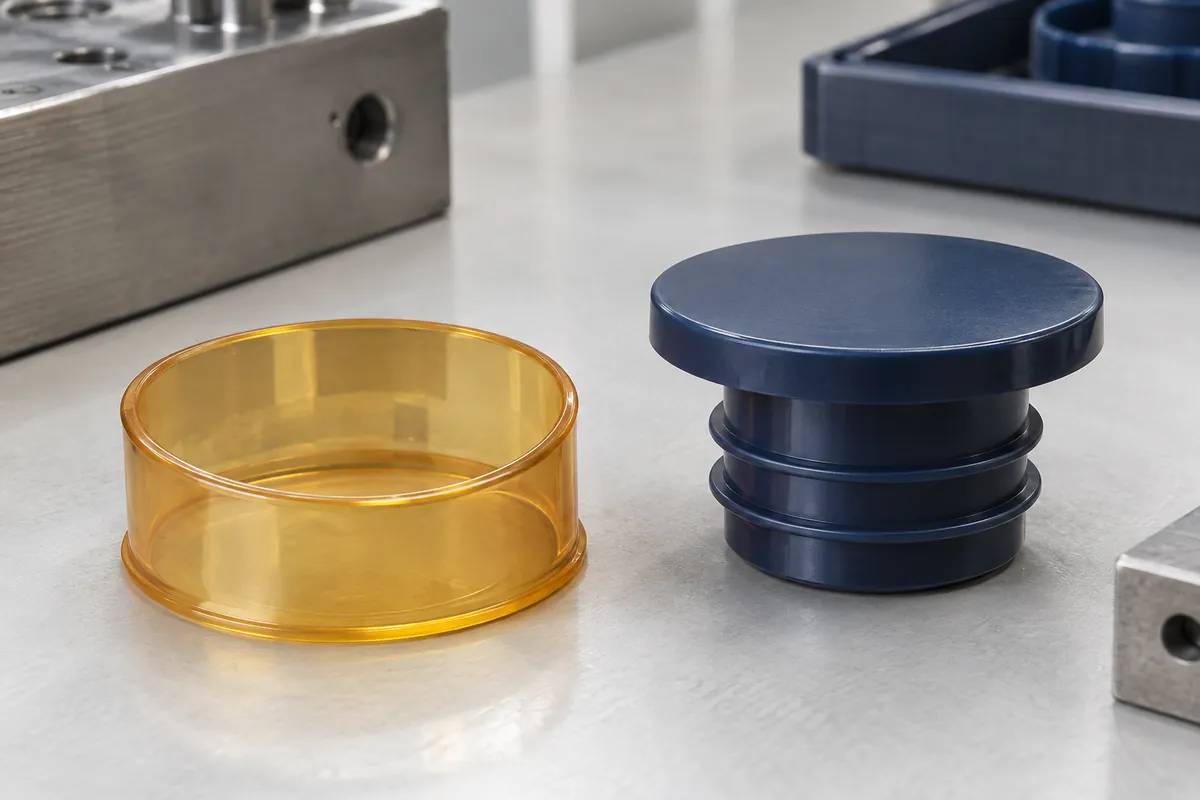
Use family-level tendencies only for screening
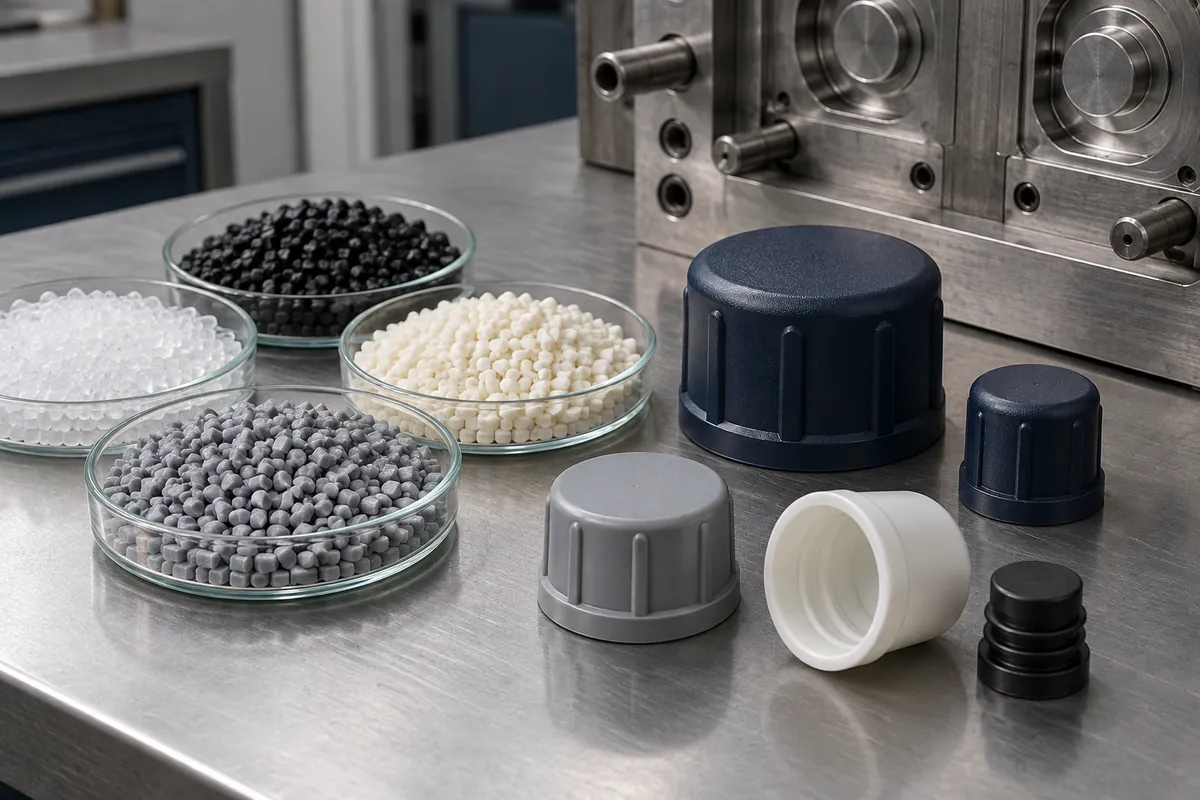
LDPE is a common candidate where a compliant protective shape is useful; PP can be considered where a different stiffness and thermal-property balance is needed; TPE covers a broad range of elastomeric formulations. These are screening directions, not universal rankings. Reinforcement, additives, hardness and exact formulation can change the comparison.
Caplugs discusses LDPE, HDPE and TPE among materials used for protection applications in its custom molding guidance. Essentra lists different polyethylene and TPE options in its protective-cap range. Those examples support checking alternatives; they do not establish a grade or design for your part.
Ask for the technical data and processing guidance for each shortlisted grade. If data comes from different test conditions, note that before comparing the values. A higher value in a datasheet column does not necessarily improve the required installation or removal behavior.
Match exposure to a documented requirement
Record temperature and time together, including heating, cooling and repeated exposure if relevant. A temporary shipping protector and a masking component used in a finishing process can face very different conditions. Do not treat a generic maximum temperature as proof that the part will retain its geometry and release cleanly throughout the actual process.
List relevant fluids or chemicals by their actual identity and conditions of use. Include concentration, contact duration and the part's loaded state where required by the test plan. Broad labels such as “oil resistant” or “chemical proof” leave too much room for interpretation and should not replace an application review.
| Requirement | Ask for each candidate | Check on the part |
|---|---|---|
| Fit and handling | Relevant mechanical data and grade limitations. | Installation, seating and removal under the defined method. |
| Exposure | Grade guidance for the actual temperature and fluids. | Function and condition after the specified sequence. |
| Cleanliness | Additive, handling and packaging requirements. | Loose material, residues and agreed cleanliness evidence. |
| Manufacturing | Processing guidance and proposed molding route. | Critical surfaces, gate removal and dimensional acceptance. |
Do not overlook cleanliness and surface transfer
A protector can remain attached yet leave unwanted material or residue on the surface it covers. If that risk matters, define it explicitly. Name the protected surface, the downstream operation and the inspection or test needed. A clean-looking sample is not proof of compatibility with every cleaning, painting or assembly process.
Discuss colorants, lubricants or other additives when they are relevant to the application. Avoid adding a blanket “no additives” requirement without understanding the selected formulation, but do not leave a critical contamination constraint unstated. The customer and material supplier should resolve the requirement together.
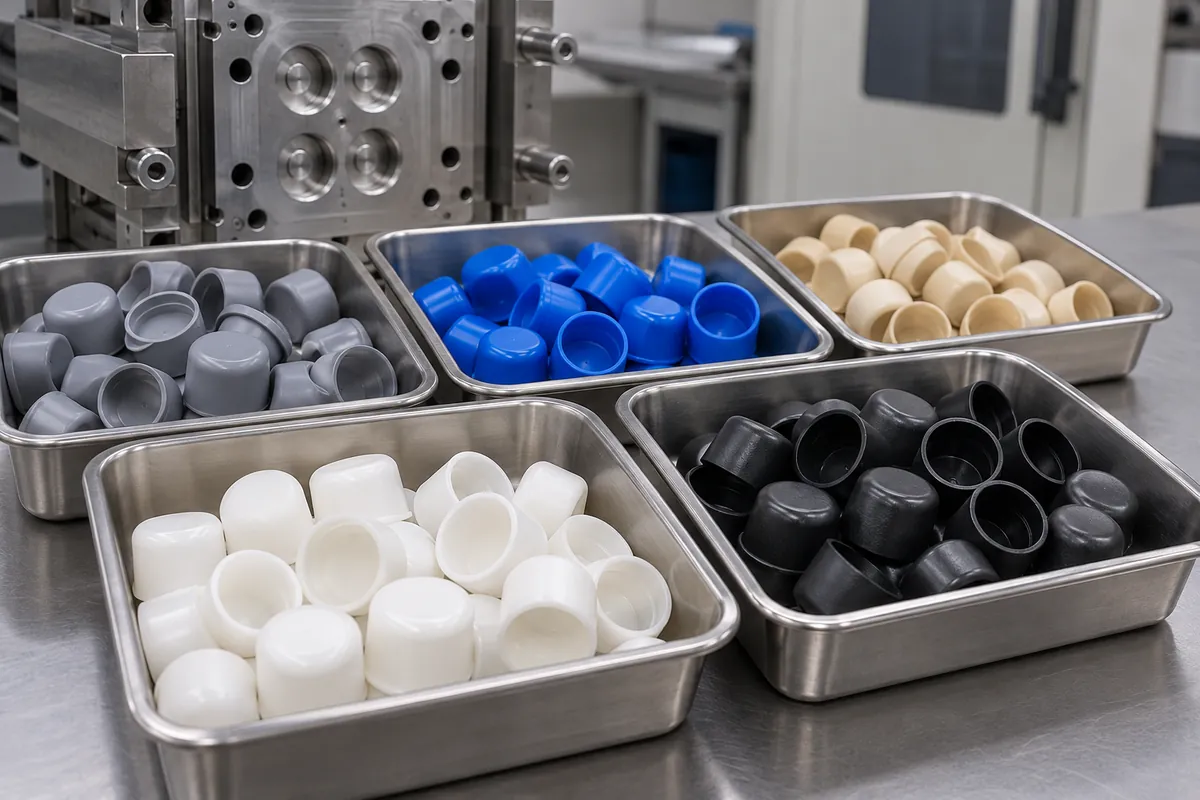
Approve a configuration, not a family name
Keep geometry, grade, color, molding condition and counterpart revision linked during trials. If one candidate needs a changed wall or retention rib, treat it as a distinct configuration. That may be the right engineering choice, but it no longer isolates the material as the only changed variable.
Record the selected configuration, the evidence supporting it and the changes that would reopen review. A future substitution within the same family should not bypass that process. Connect the selection record to the RFQ and the inspection plan so that purchasing orders the evaluated part rather than a vaguely similar polymer.
Turn the review into a defined molding scope
Explore our custom injection-molded protective caps and plugs and the related illustrative engineering study. Send the drawing revision, counterpart details, intended use and the decisions still open. Development samples and production approval should have separate, agreed deliverables.