

Protective caps are often treated as simple consumables, so their inspection instructions may stop at color and overall size. That can miss the features that matter most: a sharp internal edge, loose material at the gate, incomplete seating or residue left on the component after removal.
Inspect the protector against its protection job, not just its general appearance. A useful plan connects drawing characteristics, functional checks, surface condition and packaging. The scope should be agreed before the order, particularly when the cap protects a sensitive port, thread or downstream assembly interface.
Product design illustrations. Final geometry, materials and acceptance criteria are project-specific.
Identify critical surfaces on the drawing
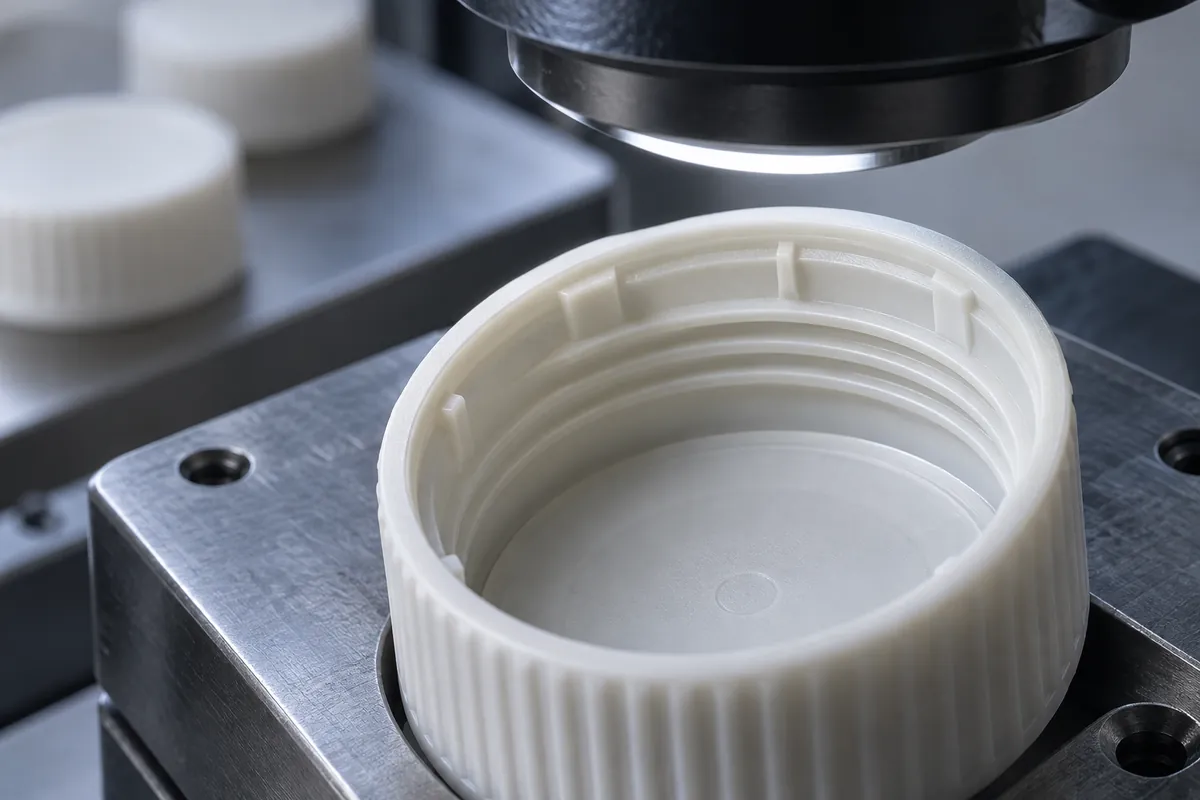
Mark the surfaces that contact the component and the regions that control engagement. Include retention ribs, seating shoulders, tab transitions and any area where loose material could enter the protected opening. A generic cosmetic acceptance standard may not adequately describe those risks.
Distinguish a permitted molding witness from an unacceptable protrusion or detachable fragment. Define where gates and parting lines may occur and what evidence will be used to judge them. The tab design review provides context for the handling features, while the fit guide covers the mating interface.
Choose a dimensional method that suits the part
A compliant cap can change shape under measuring force. Define the method, support and part condition for critical dimensions. If a gauge is used, state what it checks and how it is verified. A reading made while squeezing the wall can describe the measurement setup as much as the free part.
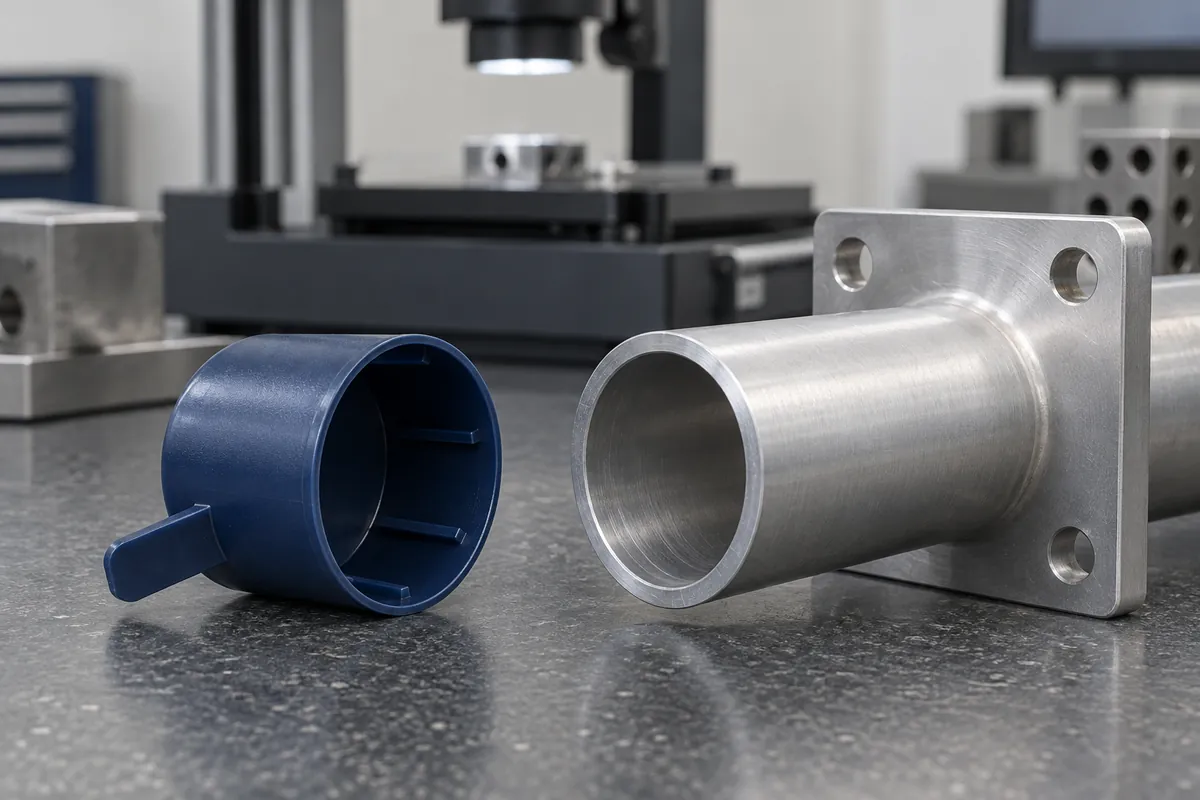
Record the counterpart or mandrel used for functional fit checks. Its actual geometry, surface condition and revision should be controlled. A convenient tube off the workshop shelf may help an early discussion, but it should not become an undocumented production acceptance master.
Define cleanliness in terms of the application
“Clean” can mean visibly free of debris, compatible with a downstream process or compliant with a specific particulate test. These are not interchangeable requirements. State the protected surface, the consequence of contamination and the method needed to assess it with the customer's quality team.
Do not claim that a protector is sterile, medical-grade or suitable for food contact simply because its surface looks clean or a resin family is used in those sectors. If regulated-use documentation is required, identify the exact application and evidence scope. This checklist establishes no such qualification.
| Check | Define before sampling | Record |
|---|---|---|
| Dimensions | Critical features, method, support and part condition. | Actual results and sample IDs. |
| Appearance | Contact regions, gate/parting witnesses and defect limits. | Identified observations and reference images where approved. |
| Function | Installation, retention, exposure and removal sequence. | Individual result and any damage or fragments. |
| Handling | Segregation, cleanliness and packaging requirements. | Lot, pack and shipment relationships. |
Include the surface after the cap is removed
For a representative application check, inspect both the protector and the component after the defined sequence. Look for the application-specific defects agreed in advance, such as scratches, fragments, residue or an unacceptable masking edge. Do not let a protector-only inspection hide damage on the item it was meant to protect.
Keep the exposure and removal action identified. A fresh, dry sample removed axially may not represent a part removed after storage or processing by its tab. The shipping and masking comparison helps define which sequence should be assessed.
Connect the sampling plan to production
Agree sample selection, cavity coverage, collection intervals and the decision rule with the quality owner. No universal sample number is assigned here. A first-article review and routine lot acceptance can have different purposes and should not be described as the same activity without agreement.
Keep drawing revision, resin grade, material lot, tool/cavity information where required, and inspection results connected. If a group is sorted or repacked, preserve its original identity and record the new disposition. A new label should not erase the history needed to investigate a later problem.
Approve packaging as part of the delivery
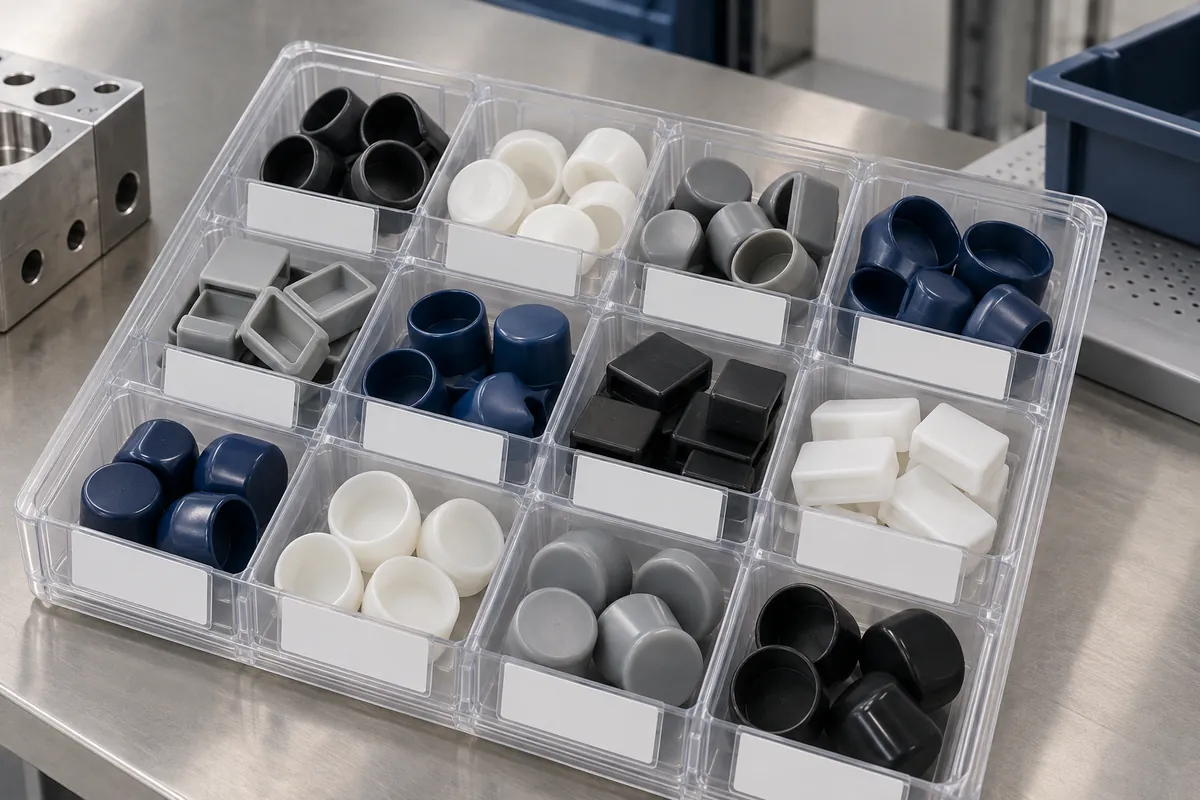
Specify whether parts may be bulk-packed, whether different sizes can share a carton and what protection or segregation is needed. Consider how the receiving team will identify, store and install the parts. A labeling scheme that is clear at shipment but lost when bags are opened may not support the intended handling process.
Caplugs' custom protection overview emphasizes application-specific fit and process requirements. For your purchase, translate those needs into the actual drawing, inspection and packing requirements rather than borrowing a broad product claim. The agreed evidence should show what was checked and what was outside scope.
Finish approval with a controlled configuration and a change-notification rule. Review changes to grade, geometry, tooling, relevant processing or packaging before assuming previous evidence still applies. This keeps a low-cost protector from becoming an uncontrolled variable in a much more valuable assembly.
Turn the review into a defined molding scope
Explore our custom injection-molded protective caps and plugs and the related illustrative engineering study. Send the drawing revision, counterpart details, intended use and the decisions still open. Development samples and production approval should have separate, agreed deliverables.