
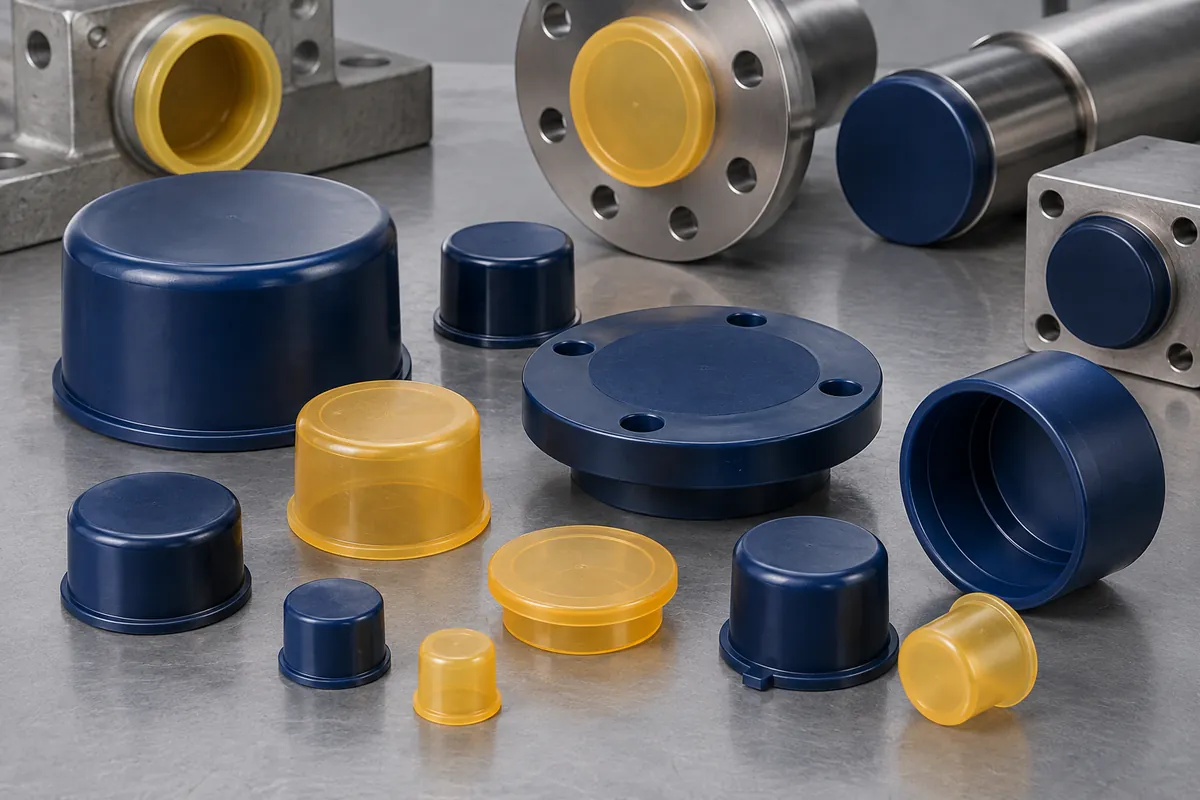
A protective cap can be inexpensive compared with the component it covers, but an ambiguous specification can create costly handling problems. A cap that falls off during transport, a plug that cannot be removed at assembly or a loose fragment left in a port all point to requirements that should have been discussed before the order.
Begin a custom cap or plug RFQ with what must be protected, for how long and how protection ends. This guide concerns temporary industrial protection parts made by injection molding. It does not describe beverage closures, pressure-rated plugs or a stock catalog of universal replacement sizes.
Product design illustrations. Final geometry, materials and acceptance criteria are project-specific.
Choose the interface: outside cap or inside plug
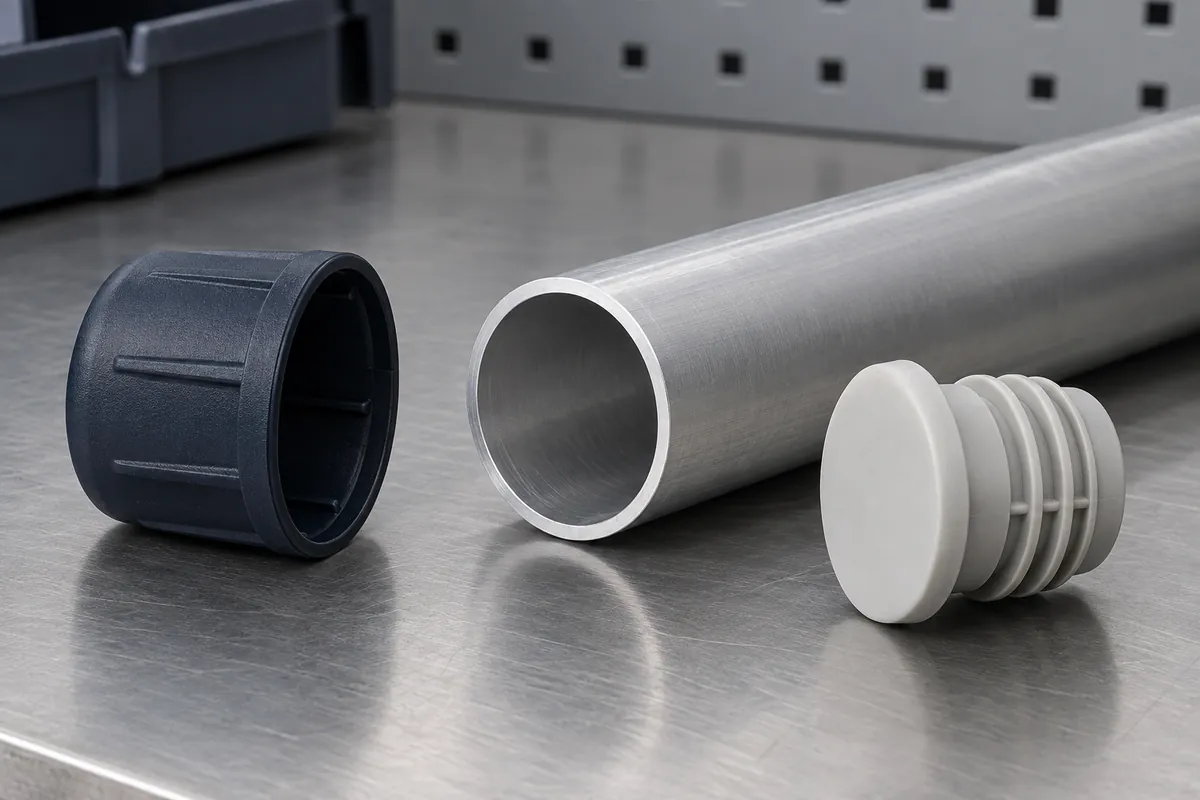
A cap commonly covers an external feature; a plug commonly enters an opening. Some designs can serve more than one purpose, but the intended use should still be explicit. Supply the mating component's drawing, its relevant size range, edge condition and surrounding access. A single nominal diameter does not define the complete fit.
Identify threads, coatings, grooves or sharp edges that could affect installation and removal. If only certain surfaces may contact the protector, mark them. Include the component state when protection is applied: before or after coating, warm or cooled, clean or carrying an agreed process residue. These are inputs to review, not assumptions for the supplier to invent.
Describe the protection job
State whether the part prevents handling damage, limits dirt entry during transport, masks a finishing area or provides another defined function. Distinguish those uses from sealing under pressure or a rated environmental barrier. A temporary dust cover should not be described as a certified seal without the relevant evidence.
Caplugs' custom injection-molding overview shows that protection components can be designed for specific applications. The useful lesson for an RFQ is to describe your actual interface and exposure. Another supplier's product range or claims do not establish FECISION's performance for a new design.
Include installation and removal
Tell the supplier how the part will be installed: manually, with a fixture or by an automated station. State the seating condition and what confirms completion. Then describe removal access, direction and whether the protector is discarded or reused. A cap can meet its retention requirement and still fail the assembly process if the removal tab is inaccessible.
If force limits matter, provide the requirement and agree a method. Name the mating specimen, alignment, travel and relevant condition after storage or exposure. Avoid substituting “easy to remove” for a repeatable criterion. Our fit and retention guide explains the test questions in more detail.
| Area | Provide | Clarify |
|---|---|---|
| Mating geometry | CAD, drawing, size range, edge and surface condition. | Which surfaces may be contacted or changed? |
| Protection | Threat, exposure duration and process sequence. | Temporary cover, masking component or separately qualified seal? |
| Handling | Installation, seating, access and removal action. | One-time use, reuse and any force requirement. |
| Supply | Quantities, color, packaging and inspection evidence. | Trial approval and first production release. |
Screen materials against the actual exposure
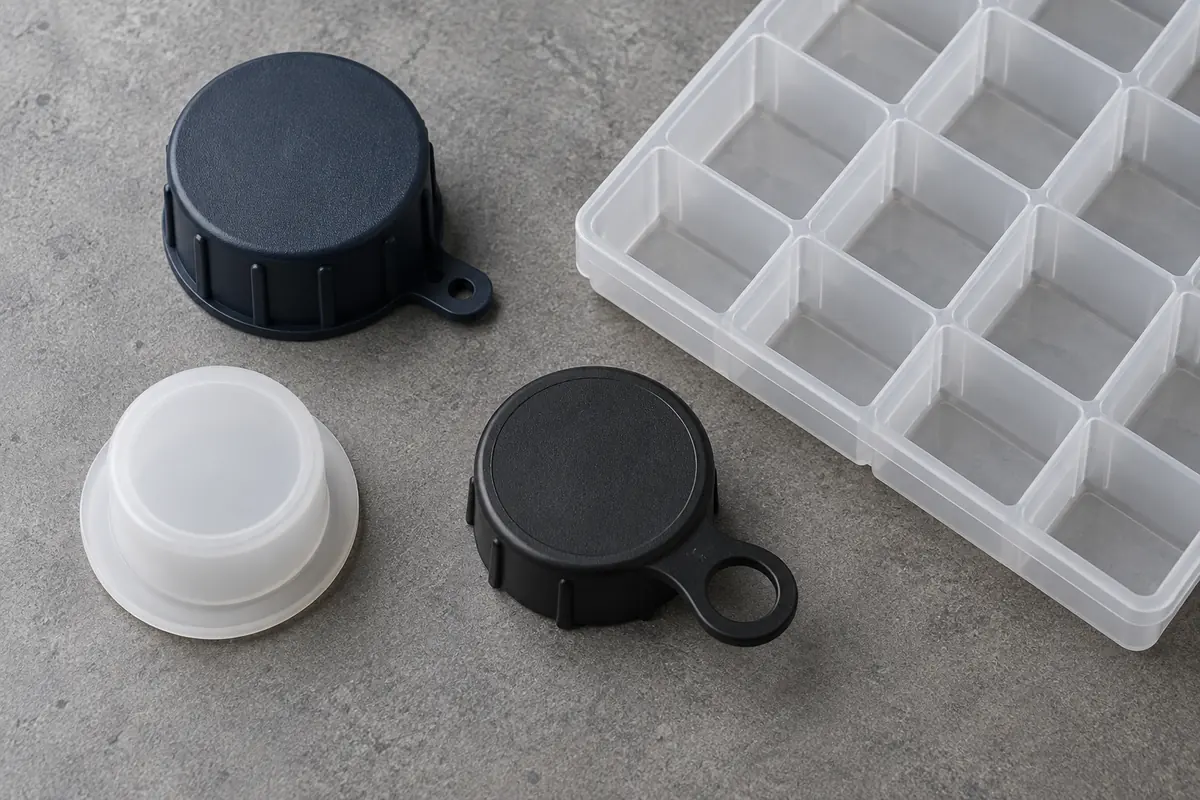
Identify the candidate grade if selected, or describe what the material needs to withstand. Include temperature history, chemicals, outdoor exposure and any cleanliness restrictions. “Plastic” and “rubber” are not enough to define a quote. Neither is a color, which does not reliably identify the underlying formulation.
If the part is used for masking, provide the finishing process and its actual conditions. Do not transfer a shipping cap's suitability to an oven or chemical bath. The shipping versus masking comparison helps keep those scopes separate, while the LDPE, PP and TPE guide organizes candidate-grade questions.
Specify what the buyer will approve
Define dimensional, visual and functional checks separately. Identify critical edges, permitted gate or parting-line witnesses and any unacceptable loose material. If a cleanliness test is needed, state its method and acceptance criteria with the responsible quality team. A clear photograph is useful but should not become a substitute for a defined inspection requirement.
Agree the sample and production packaging. A protector intended to keep debris out of a component should not arrive with an undefined handling history. Requirements for segregation, labels or sealed packaging need to be quoted and verified rather than implied by a general “clean parts” statement.
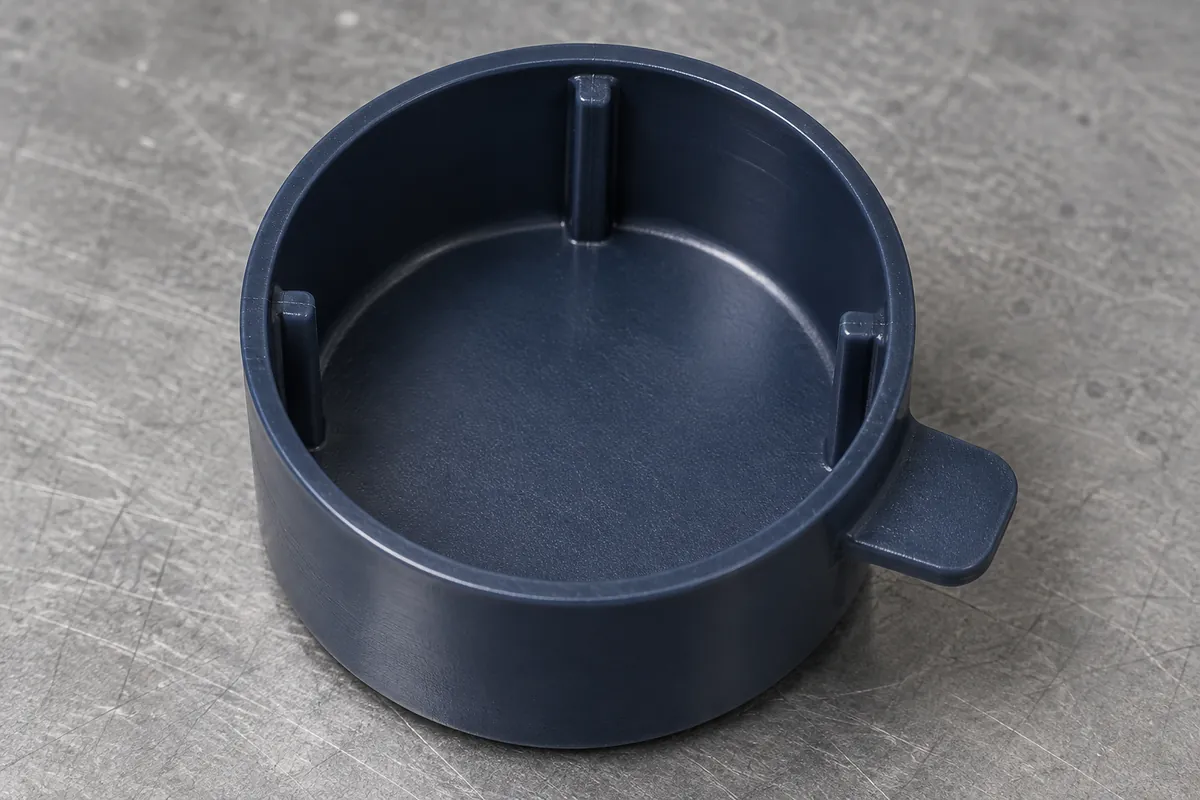
Finally, identify why a custom part is needed. If an existing standard protector meets the verified requirement, custom tooling may not add value. When a unique interface, handling sequence or protection boundary justifies customization, state that reason in the RFQ. It helps focus the design review on the feature that actually earns the investment.
Turn the review into a defined molding scope
Explore our custom injection-molded protective caps and plugs and the related illustrative engineering study. Send the drawing revision, counterpart details, intended use and the decisions still open. Development samples and production approval should have separate, agreed deliverables.