
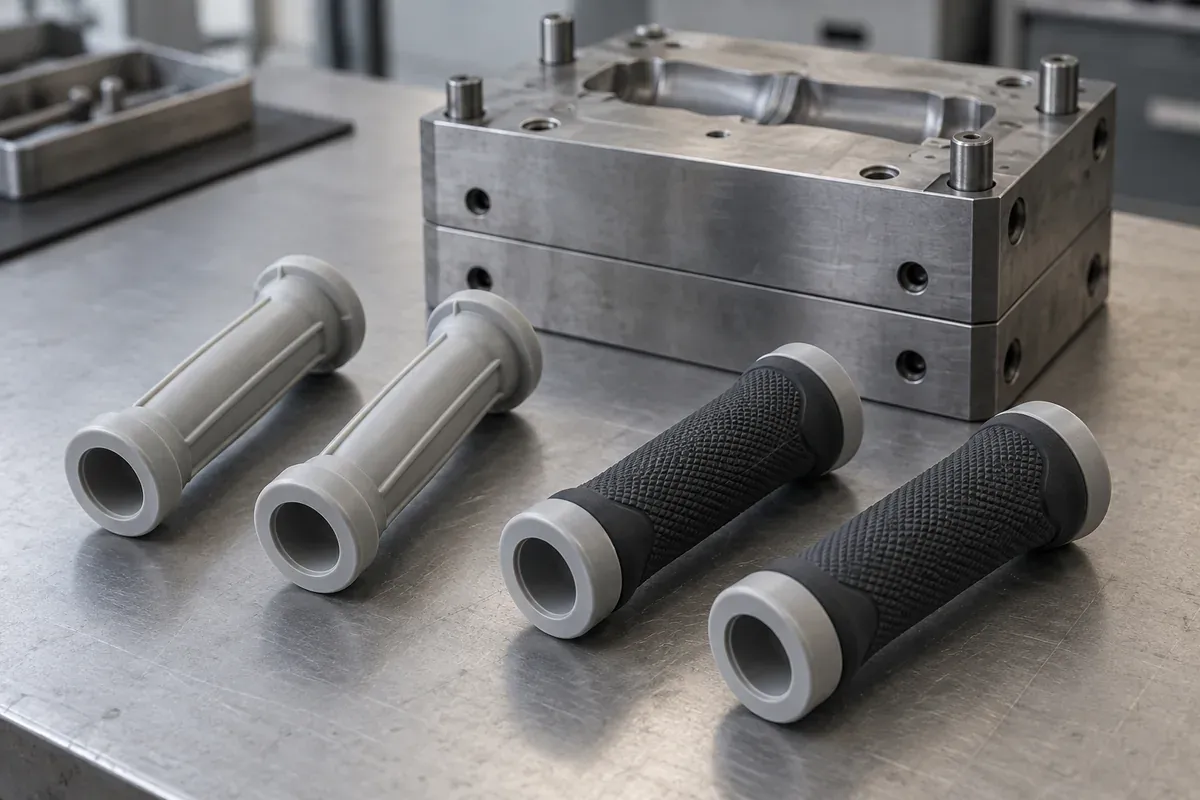
A lower overmolding unit price can describe a genuinely attractive proposal—or simply a smaller scope of work. If one bidder supplies the rigid substrate and finished grip while another prices only the second molding operation, the difference says little about which route is economical. Buyers need to reconstruct the complete deliverable before comparing the bottom line.
The production sequence is more useful than the label on the quotation. Here, “transfer” means separately molded substrates loaded into an overmolding tool. The term is not universal: Protolabs' process guide also uses transfer overmolding for robotic transfer within a two-shot sequence. Ask each bidder to describe what actually happens between the first and second shots. This article compares purchasing decisions rather than redefining the processes.
All images in this article are newly AI-generated illustrations of engineering concepts, not photographs of a customer project or evidence of completed testing.
Start with One Finished Part, Not Two Different Proposals
Issue one drawing revision for the substrate and finished part, together with exact material grades or clearly identified candidates. State color, finish, critical dimensions, exposed grip edges and any bonding or functional requirements. Keep proposed design or material alternatives separate from the response to the baseline.
List trial samples, the first production release and the annual forecast as different quantities. Mark an uncertain forecast as an estimate. Ask both bidders for the same order scenario and delivery point, and identify whether repeat orders are expected to use the same materials and design. A forecast is not an automatic commitment to buy a larger batch.
It is reasonable for suppliers to propose alternatives. The problem begins when an alternative replaces the baseline without being identified. A different grade, cavity arrangement or acceptance package may suit the project, but the buyer should know which tradeoff created the price difference. Keeping an original-scope response alongside an optional alternative makes that tradeoff visible instead of allowing it to disappear inside a total.
Where the Scope Can Disappear Between Operations
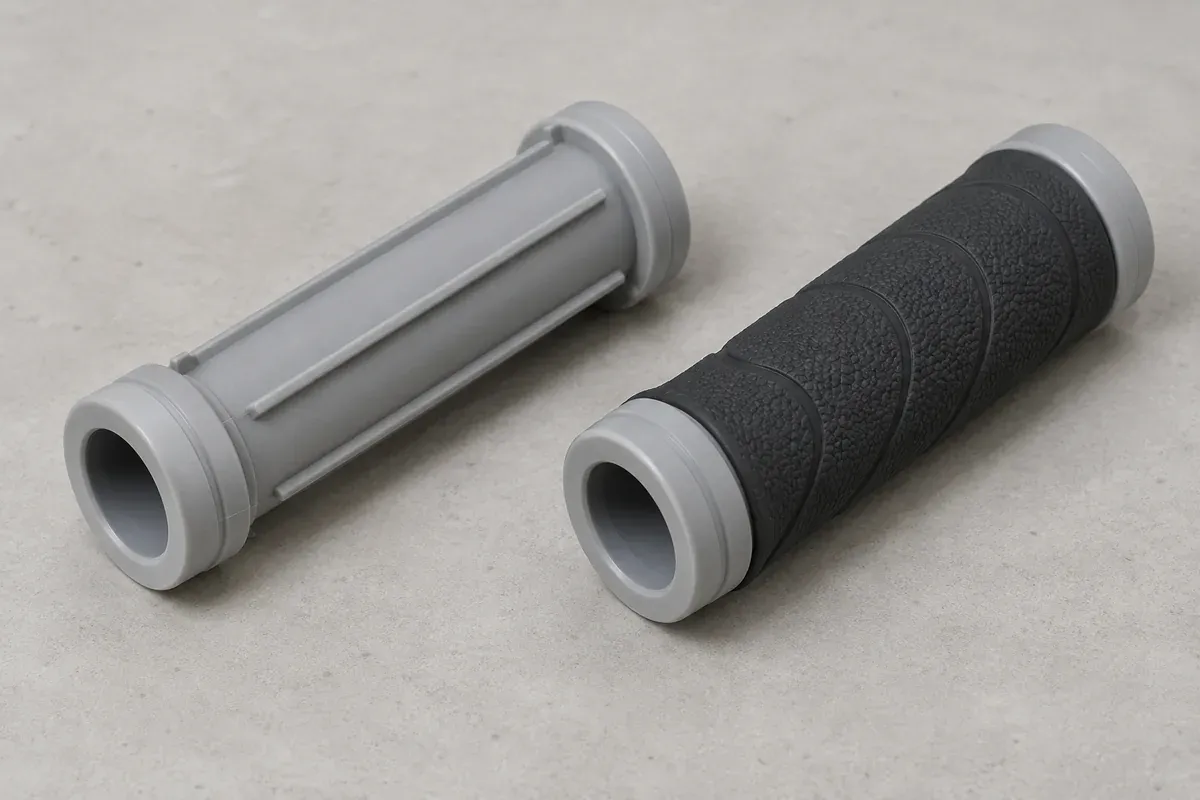
A separately loaded route introduces a visible substrate supply interface. Someone must produce, identify, deliver and accept those parts before the second operation begins. An integrated proposal may put several responsibilities under one commercial line, but that does not make them irrelevant. The comparison should show who owns each activity and which party resolves an interruption.
| Cost or responsibility | Two-shot proposal | Separately loaded proposal |
|---|---|---|
| Tooling and substrate | Identify both-shot tooling, materials and equipment assumptions. | Identify substrate ownership, second-operation tooling and delivery. |
| Handling and trials | State included transfer, setup and sample operations. | Include receiving, loading and trial substrate consumption. |
| Acceptance and repeat supply | Define reports, approval and future-order assumptions. | Also define incoming checks and substrate supply responsibilities. |
Use “included,” “separately priced,” “customer responsibility” and “unanswered” as distinct statuses. An unanswered line is not free. Where a quote bundles several operations, ask for a scope description even if the supplier cannot disclose its internal cost breakdown.
This does not require every bidder to use the same factory accounting system. A buyer can compare clear deliverables without demanding confidential machine rates. What matters is whether the proposal covers the required work and how exclusions change the customer's own spending or coordination. A transparent bundled quote can be more useful than a detailed spreadsheet whose important assumptions remain unexplained.
First-Release Cost and Repeat-Order Cost Are Different Decisions
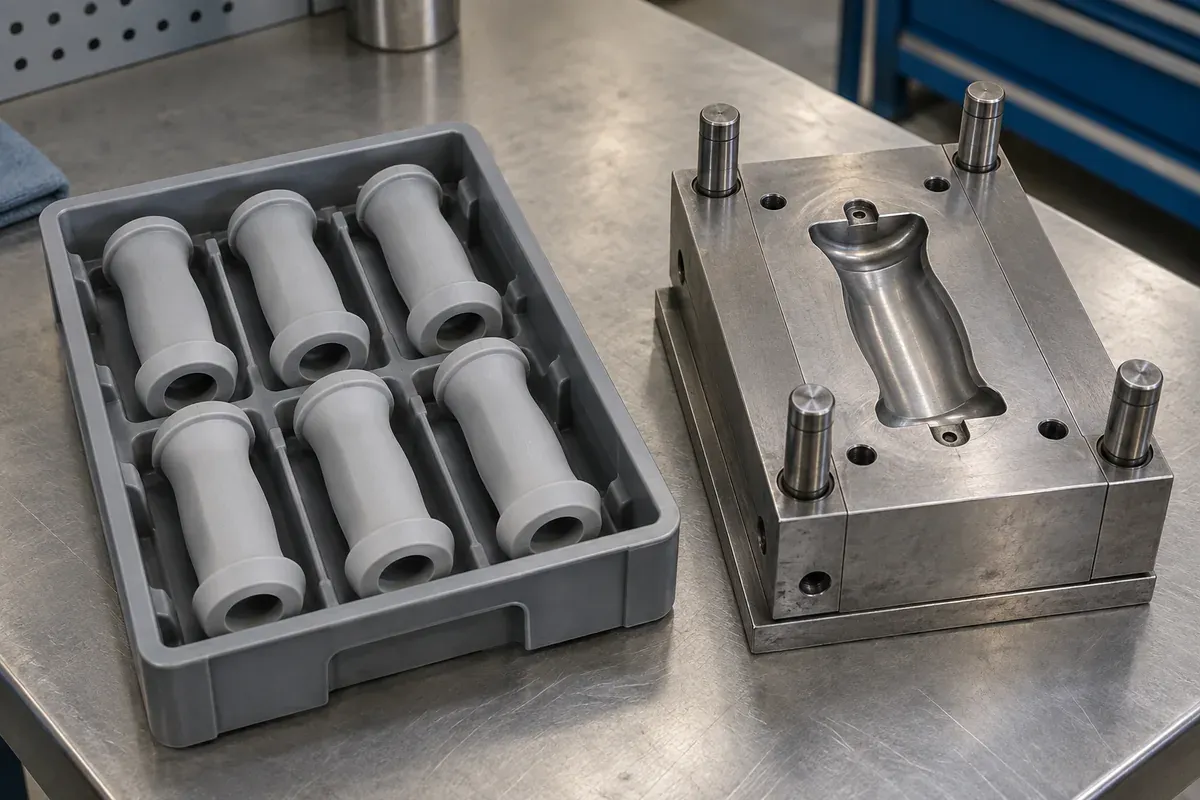
For the first release, include the agreed tooling investment, trials, required reports, ordered parts and delivery items. Add customer-purchased substrates and their logistics only where they are outside the molding quote. Do not count a tool charge again if its recovery has already been included in the relevant price.
For repeat orders, use the same released quantity and required deliverables. Keep one-time investment separate from recurring charges, and record which assumptions may change. There is no universal quantity at which two-shot becomes cheaper: use written proposals for this geometry and supply arrangement rather than borrowing another supplier's volume threshold.
If comparing total program cost, show each demand scenario explicitly. Do not distribute tooling over an optimistic lifetime volume and present that average as the price of the first order. The order quantity planning guide helps keep trial demand, purchase releases and forecasts separate.
For example, an evaluation program with an unsettled design and a confirmed repeat-order program ask different commercial questions even if they use the same CAD today. The first buyer needs to understand the cost of reaching an approval decision and the consequences of change. The second also needs a credible repeat-supply arrangement. This is a planning distinction, not a claim that either process is always the correct choice for one situation.
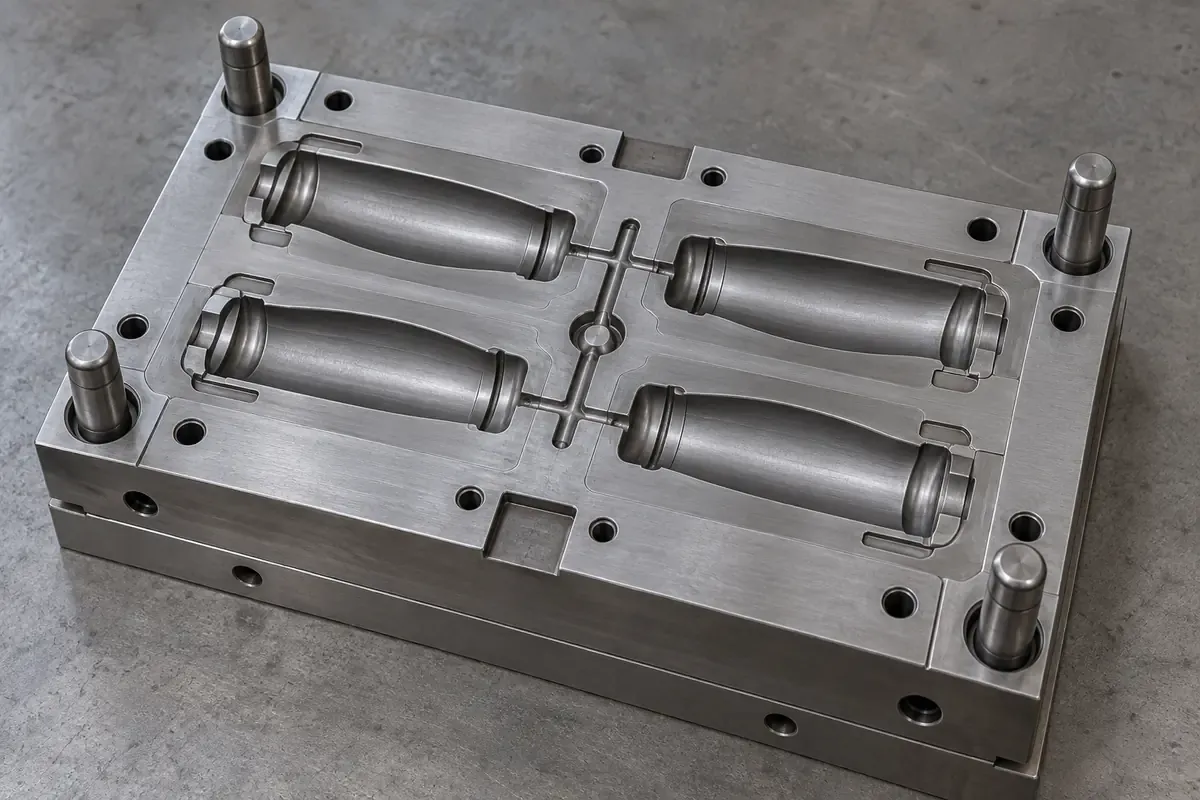
Cavity layout deserves similar care. It is part of the proposed manufacturing configuration, not a standalone promise of lower delivered cost. The quotation should connect its configuration to the required quantities, inspection coverage and production assumptions. A buyer comparing different layouts should retain them as explicit alternatives and ask what evidence supports the proposed capacity for this project.
A Cheaper Approval Package May Be a Different Product Commitment
Specify whether the acceptance requirement concerns appearance, assembly fit, adhesion, mechanical retention or another function. Ask what evidence each bidder will provide using its proposed sequence. A change in production method should have an explicit sample-review decision; approval from a different route should not be silently reused.
Use the bond-test RFQ worksheet to align test scope. For externally supplied parts, attach the substrate acceptance checklist. Allocate responsibility for rejected substrates, failed trials and replacement parts before selection, especially when more than one manufacturing site is involved.
Choose the Proposal You Can Explain and Repeat
Record the selected sequence, proposal version, initial quantity, forecast assumptions, unresolved questions and sample-approval hold point. Explain whether the decision prioritizes a particular first-release cost, repeat-order arrangement or development requirement. Confirm proposed dates with the supplier rather than inferring them from the process name.
FECISION can coordinate a project review for custom overmolding and assess whether two-shot molding belongs in the comparison. Availability, costs and validation scope depend on the selected production partner and the actual part.