
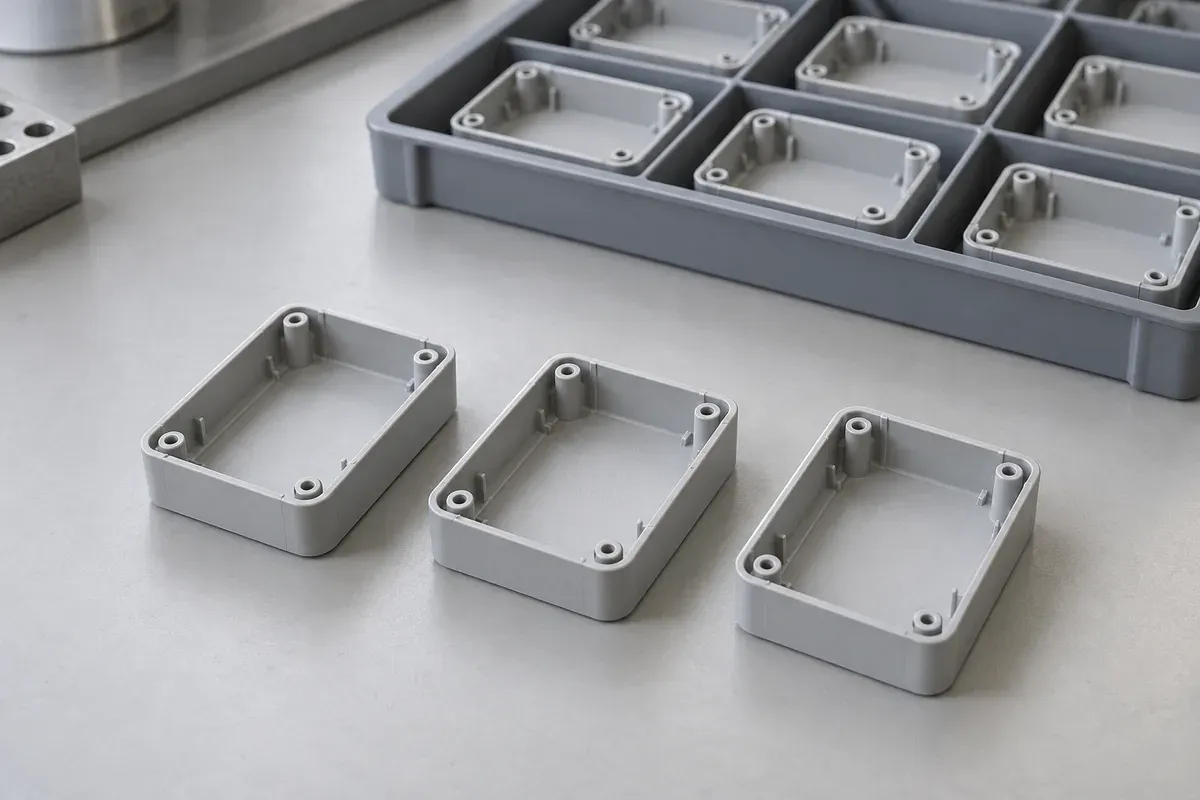
“How many parts do you need?” looks like the simplest question in an injection molding RFQ. In a developing program, it can be one of the least settled. Engineering needs enough samples to make a decision, purchasing needs a realistic first order, and the business may be discussing an annual demand that depends on a successful launch. Those quantities should inform one another without being confused.
A useful quantity plan separates evaluation samples, the first production release and the forecast. Each has a different purpose and level of commitment. Giving a supplier one optimistic number can produce a quote that makes sense for a future program but not for the order the buyer can authorize today. The approach below is especially relevant to rapid tooling and low-volume molding; it is not a minimum-order policy or a production promise.
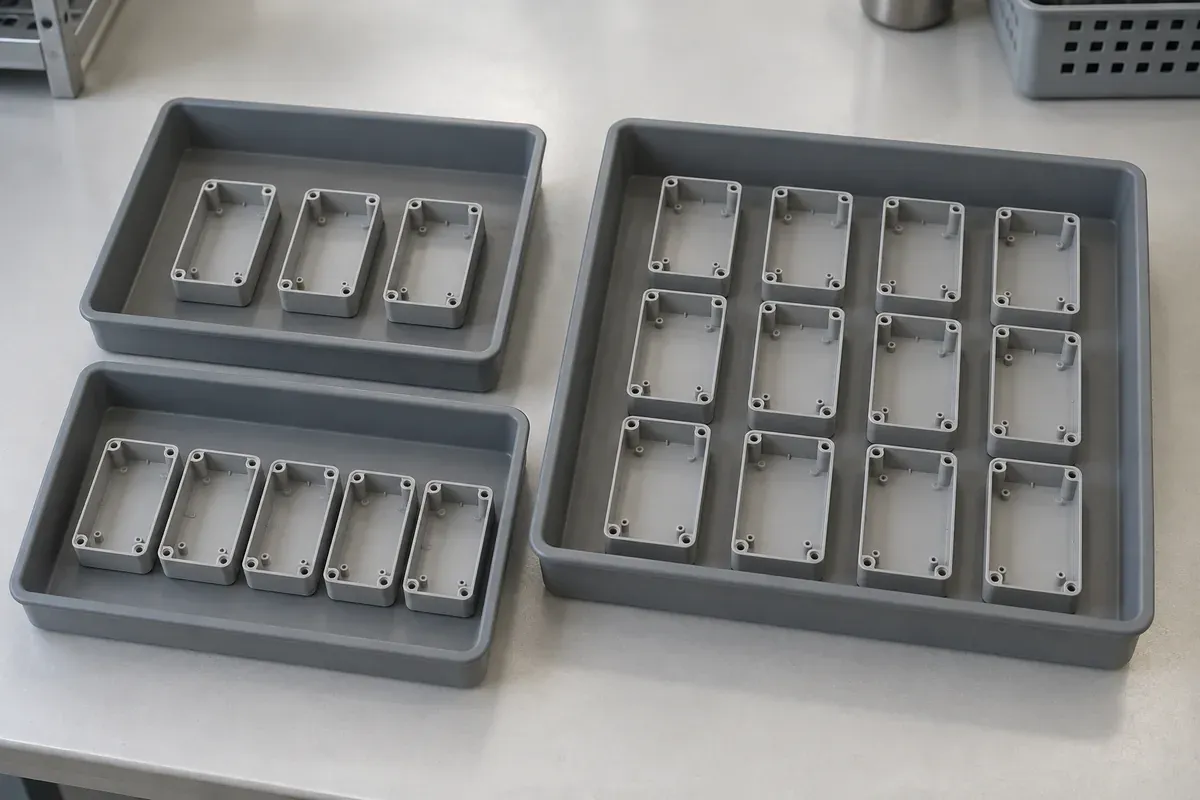
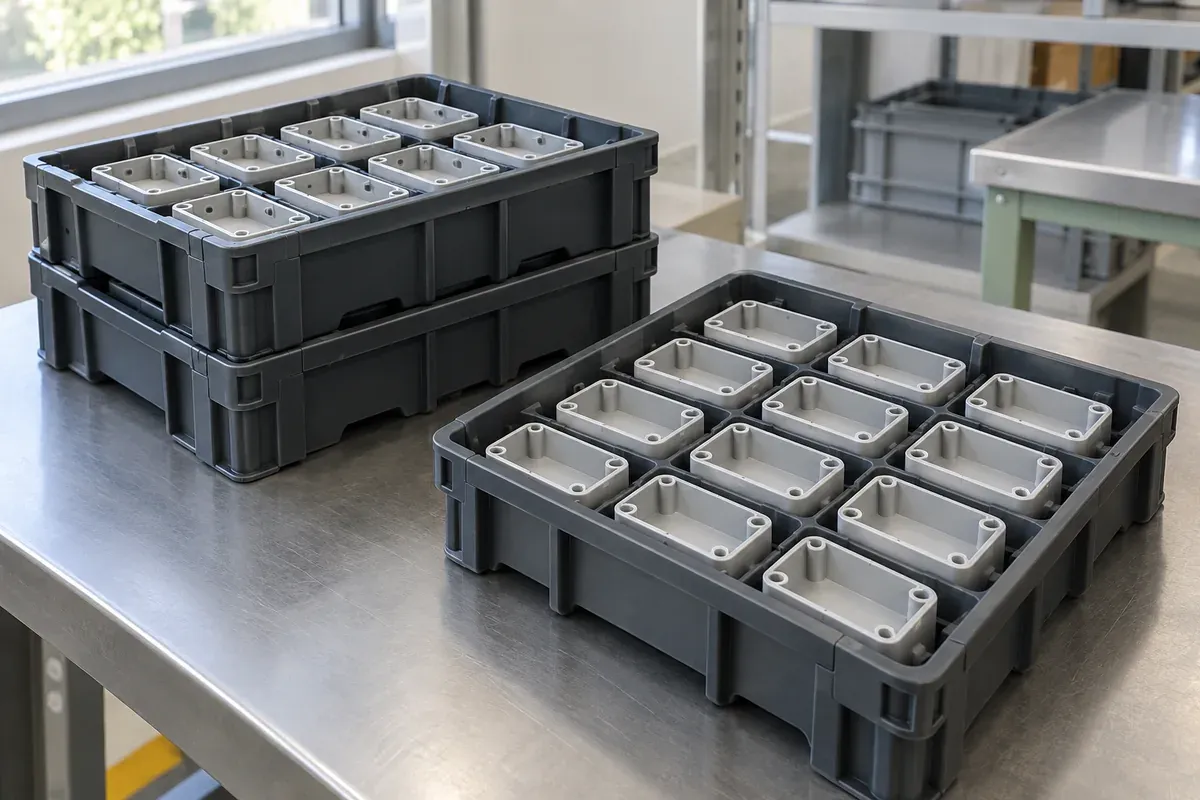
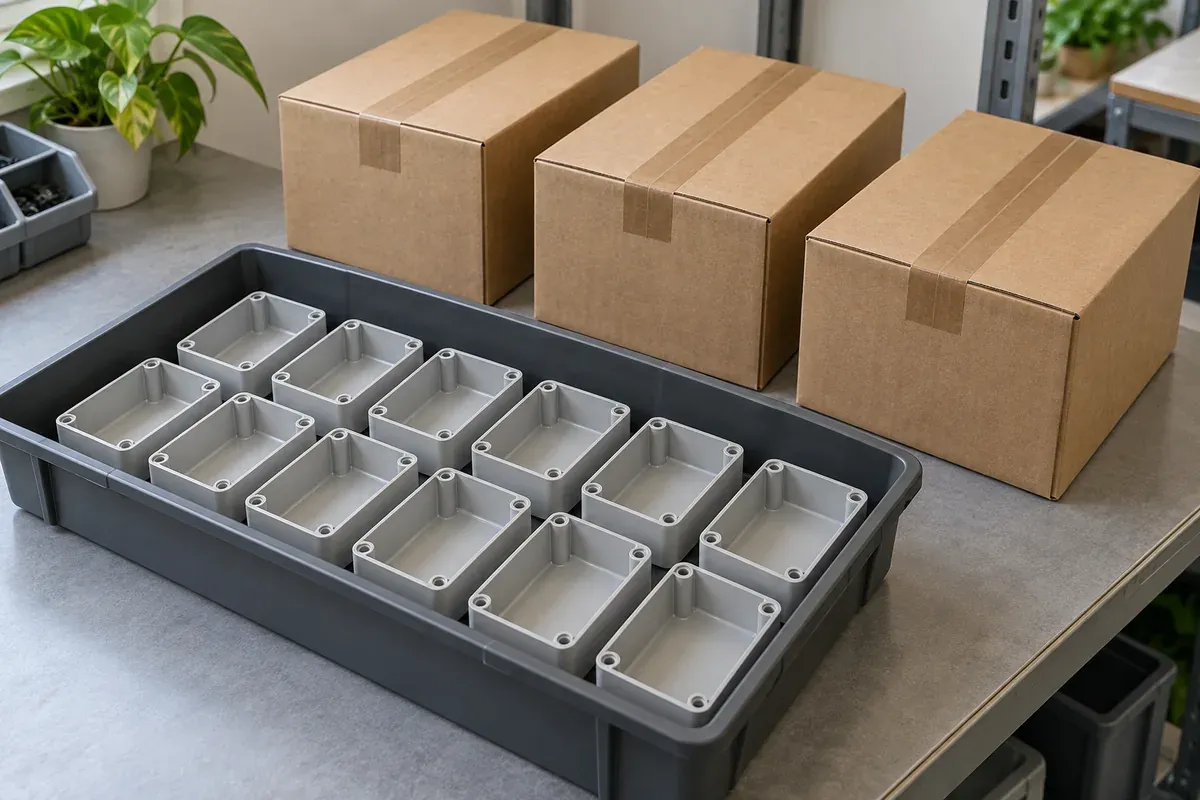
All images in this article are newly AI-generated illustrations of engineering concepts, not photographs of a customer project or evidence of completed testing.
Three Numbers Describe Three Different Decisions
| Quantity | What to specify | What it does not mean |
|---|---|---|
| Evaluation samples | Parts needed for measurement, assembly trials, destructive tests and retained references. | Permission to run the first production order. |
| First production order | Accepted pieces required, intended release timing and delivery splits after the agreed approval. | A promise that every future order will have the same quantity. |
| Annual or program forecast | Expected demand, timing, confidence and alternative scenarios. | A binding purchase or authorization to buy material unless separately agreed. |
Also identify whether quantities refer to individual parts, matched sets or finished assemblies. A housing with a lid creates a different purchasing question from the same number of loose molded components. List the requirement per part number so there is no ambiguity in tooling or packing assumptions.
A clear forecast can still be valuable when it is not a purchase commitment. It gives the supplier context for discussing tooling and repeat supply. The important distinction is what that information authorizes. If material purchases or production beyond the first release require separate permission, state that explicitly rather than expecting both parties to infer the same boundary from the word “forecast.”
Sample Quantity Comes from the Questions Being Asked
Start with the activities, not an arbitrary round number. List what engineering, quality, assembly and any external laboratory need to do. Identify which activities consume or alter a part, which can share a sample, and which require an untouched retained reference. Let the responsible technical team set the sampling requirements for the risks involved.
For example, a part used in a destructive test cannot subsequently serve as an unchanged appearance reference. An assembly trial may leave marks that affect a later cosmetic assessment. These are allocation problems even before statistical sampling is considered. Agree the needed cavity representation and sample identification with the supplier.
Keep additional trial material or startup requirements separate from the buyer's count of evaluation pieces. Ask what the supplier has included, rather than assuming the requested number of shipped samples represents the total trial activity. Use the first-article checklist to connect each allocation to an approval question.
This distinction helps avoid two opposite mistakes: ordering a round number with no plan for using it, or assuming a small shipment means only that many parts were needed to complete the trial. The evaluation plan defines what the buyer needs to receive; the molding proposal should explain the work required to supply it. The two belong in the same discussion but are not the same count.
A Low Unit Price Does Not Decide the First Order
State the quantity needed for the first assembly or market release and explain any planned split delivery. Distinguish a manufacturing batch from a shipment: producing one batch and storing it for later shipments is not the same commercial arrangement as producing several smaller batches on demand.
Ask for comparable quotations at the release quantities you could realistically authorize. Include setup, inspection, packaging and other separately charged items in the comparison. Short runs can spread setup costs over fewer pieces; Protolabs discusses that tradeoff in its short-run molding guide. Its quantities, tool-life terms and pricing policies are specific to its offering, not universal thresholds.
Do not increase an order solely to reach an attractive unit price without considering cash committed, storage, design-change risk and the possibility of unused stock. A smaller first release can cost more per piece yet expose the project to less unwanted inventory. The appropriate choice depends on your actual program, not a generic “best” batch size.
The first-order discussion is therefore about the cost of a usable release, not simply the price printed beside one molded component. If packaging, inspection or a later delivery arrangement differs between quantity options, include that difference openly. Otherwise a price break may be evaluated against a delivery or acceptance scope that the lower price does not include.
Forecast Uncertainty Is Information, Not an Embarrassment
Label the forecast period and its confidence. Separate demand already supported by orders from expectations based on a launch or an unconfirmed opportunity. Present a conservative scenario alongside the working forecast, and ask whether the recommended tooling changes between them.
Keep changes in demand distinct from changes in the part. A higher forecast for a stable design presents a different decision from a forecast tied to a possible redesign. Ask what can be reused if the geometry changes and what would require another technical or commercial review.
Tooling allocation should use the same scenario as the unit-cost comparison. Dividing the tool investment by an optimistic lifetime forecast can conceal the expense of a small first order. Our mold cost guide separates the upfront investment, while the complete molding cost guide covers the broader production calculation.
A practical scenario review asks what would change if demand were lower, later or associated with a revised part. The answer may be that the same tooling proposal still makes sense, or that an alternative deserves review. Either is more informative than presenting a single precise forecast with no explanation of its uncertainty. The purpose is to expose the decision's sensitivity, not to predict the market with false precision.
Turn the Quantity Discussion into a Coherent RFQ
The final brief can be short if its distinctions are clear: the part and revision, sample allocation, first release, shipment intention and forecast confidence. Alternative quantities should use the same material, finish and acceptance basis. Separately identify which purchases or production steps need another authorization so the supplier can plan without mistaking context for an order.
Save the supplier's assumptions beside the quote and update them when the program changes. When comparing responses, use the quote scope matrix rather than mixing one supplier's annual-volume price with another's first-batch price.
Have a part ready for review? FECISION coordinates the tooling and molding proposal with the assigned manufacturing partner. Share your samples, first-order quantity and forecast.