
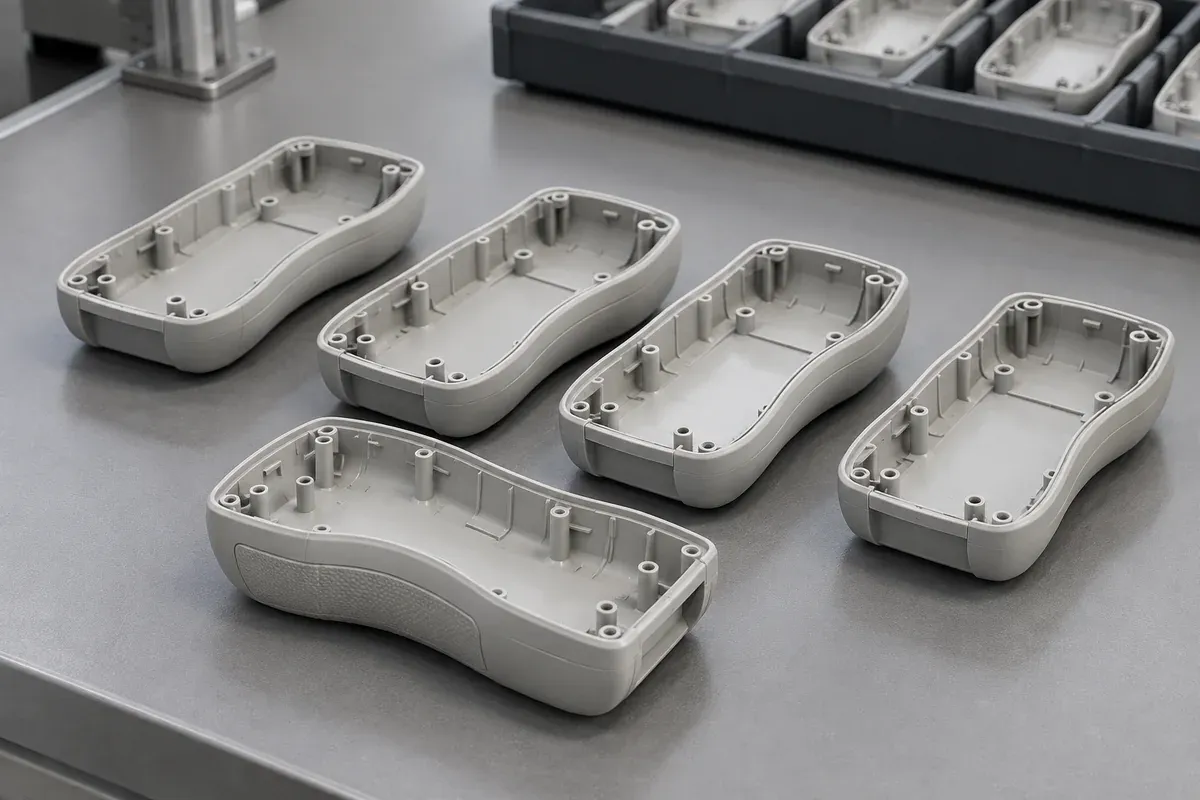
Using an existing rigid component for overmolding can seem like a straightforward way to extend a product: keep the established shell and add a soft grip. Commercially, however, it creates a handoff between two manufacturing operations. The overmolder receives a finished substrate whose material, geometry and handling history were decided elsewhere. That handoff deserves as much attention as the second material.
Customer-supplied substrates are a workable project concept only after the receiving team has reviewed the actual parts and supply conditions. Existing stock is not automatically ready-to-use stock. In FECISION's overmolding project review, the selected manufacturing partner must confirm acceptance for the proposed substrate; this article explains what makes that review useful rather than assuming every supplied part can be processed.
All images in this article are newly AI-generated illustrations of engineering concepts, not photographs of a customer project or evidence of completed testing.
Why a Good-Looking Sample Is Only the Starting Point
Supply the substrate CAD and drawing, the finished overmolded-part model, revision identifiers, and a marked drawing showing intended overmold areas. Identify surfaces that must remain clear and features used for locating the part. Explain which dimensions may vary in the existing supply, and provide actual inspection records where available.
State the exact resin grade, fillers, color system and any known coatings or release agents. A family name such as ABS or nylon is not a complete material definition. If the original resin or surface treatment is unknown, label that uncertainty. Do not substitute an assumed grade on the quotation form simply to fill every field.
Avient's TPE overmolding guide identifies substrate cleanliness and mold-release contamination as important adhesion considerations. Its preparation guidance is material-specific. Ask the responsible material and molding teams to approve any cleaning, drying or preheating step; a general-purpose solvent wipe is not an automatic solution.
A sample allows the receiving team to examine a physical object, while the drawing states what the entire supply is supposed to be. Those are complementary inputs. If the sample represents an unusually favorable fit but the released drawing permits a wider range, a tooling decision based only on that sample can leave the purchasing agreement ambiguous. The review should reconcile the physical example, specified limits and available production measurements.
Receiving Is a Technical Handoff, Not Just a Box Count
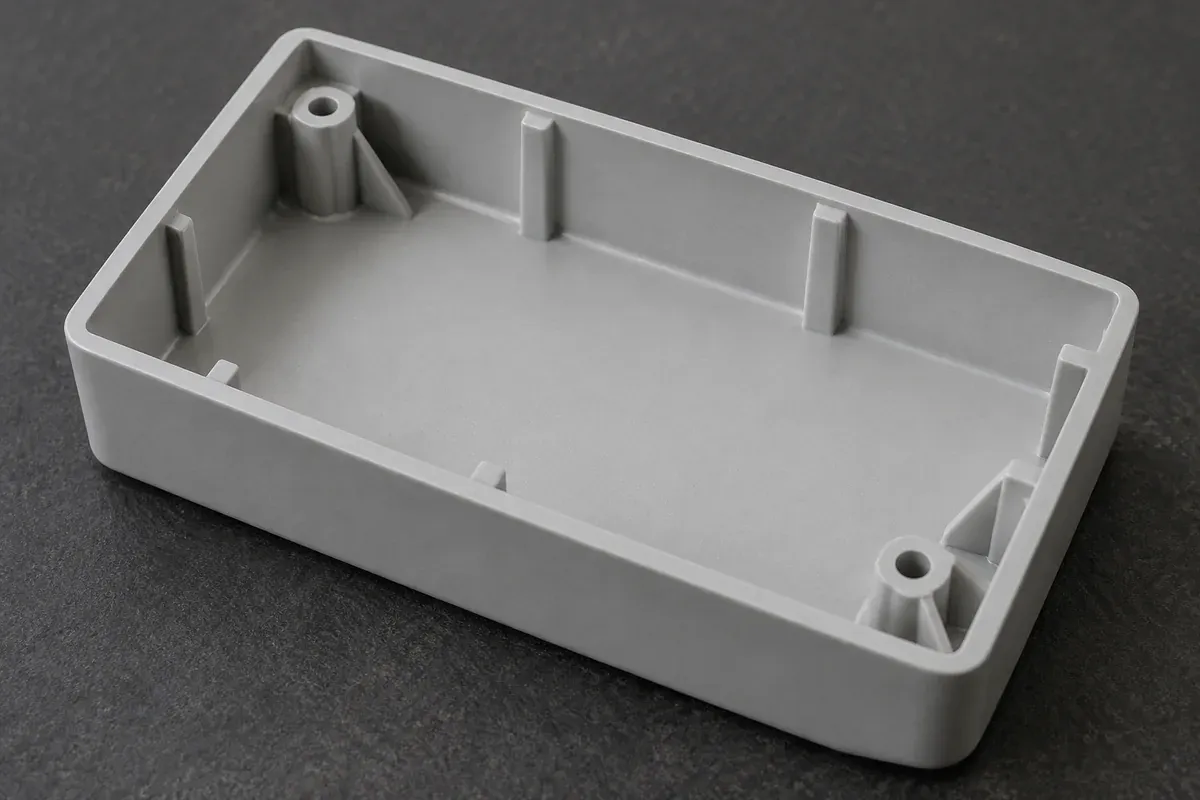
It helps to separate three decisions that can otherwise be confused. Receiving confirms what arrived. Inspection checks the agreed incoming requirements. Release authorizes use in the overmolding operation. A delivery receipt should not be interpreted as all three. Keeping them distinct makes a disputed shipment easier to resolve because the open decision is visible.
| Check | Information to supply | Disposition to agree |
|---|---|---|
| Identity and fit | Revision, grade, lot and agreed critical dimensions. | Hold unidentified or out-of-limit parts for a decision. |
| Surface and packing | Known treatments, storage history and protected surfaces. | Approve preparation and document transport damage. |
| Quantity and use | Counts by lot and authorized trial or production allocation. | Reconcile unused, consumed, rejected and finished units. |
Use an inspection method and sampling scope agreed for the actual risk. Receipt confirmation should not silently mean dimensional approval, bond approval and permission to mold every unit. Make those decisions separate entries in the project record.
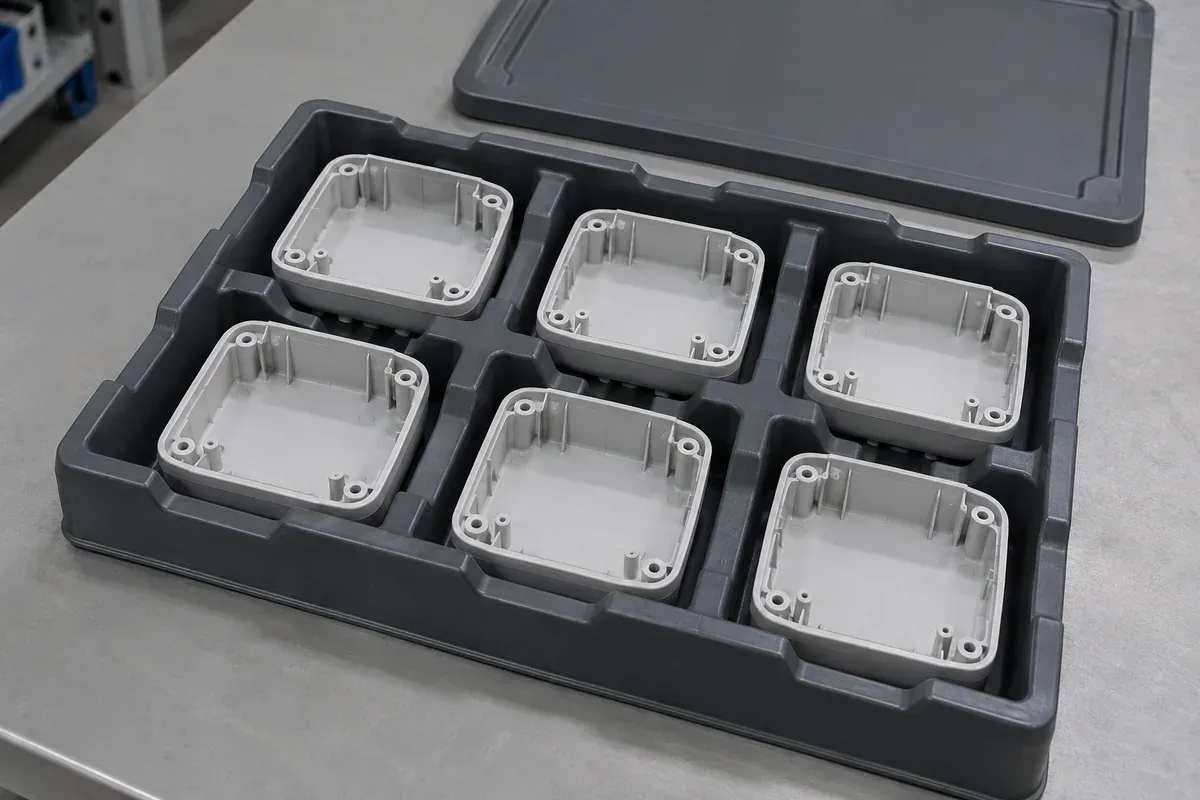
Packaging belongs in this discussion because it carries both the parts and their identity. A compartmented tray may be useful where surfaces or projecting features need separation; another design may suit a different arrangement. The specification should explain what is protected and how lots remain distinguishable. “Packed securely” is less useful than a packing example both parties can recognize and follow.
A Trial Lot Reveals What the Quotation Has Assumed
Agree which lot represents the intended production supply and how trial pieces will be identified. Tell the molding team whether these parts are scarce, costly or irreplaceable. Ask how many are requested for setup, inspection, destructive evaluation and retained references, with the allocation confirmed before shipment.
A supplier cannot credibly promise a universal spare percentage for every geometry and process. Request a project-specific allowance and decide who authorizes further consumption if the trial does not resolve the open issues. Include the cost and lead time of replacement substrates in the purchasing decision, even when the second molding operation is priced separately.
This is especially important when the substrate is customer-owned inventory rather than a component the overmolder can replenish independently. A low second-operation price does not describe the value at risk if development consumes scarce parts. A clearly priced trial, agreed consumption limit and replacement route allow sourcing to compare the real first-release commitment without assuming either perfect yield or an arbitrary scrap allowance.
Traceability Must Survive the Second Operation
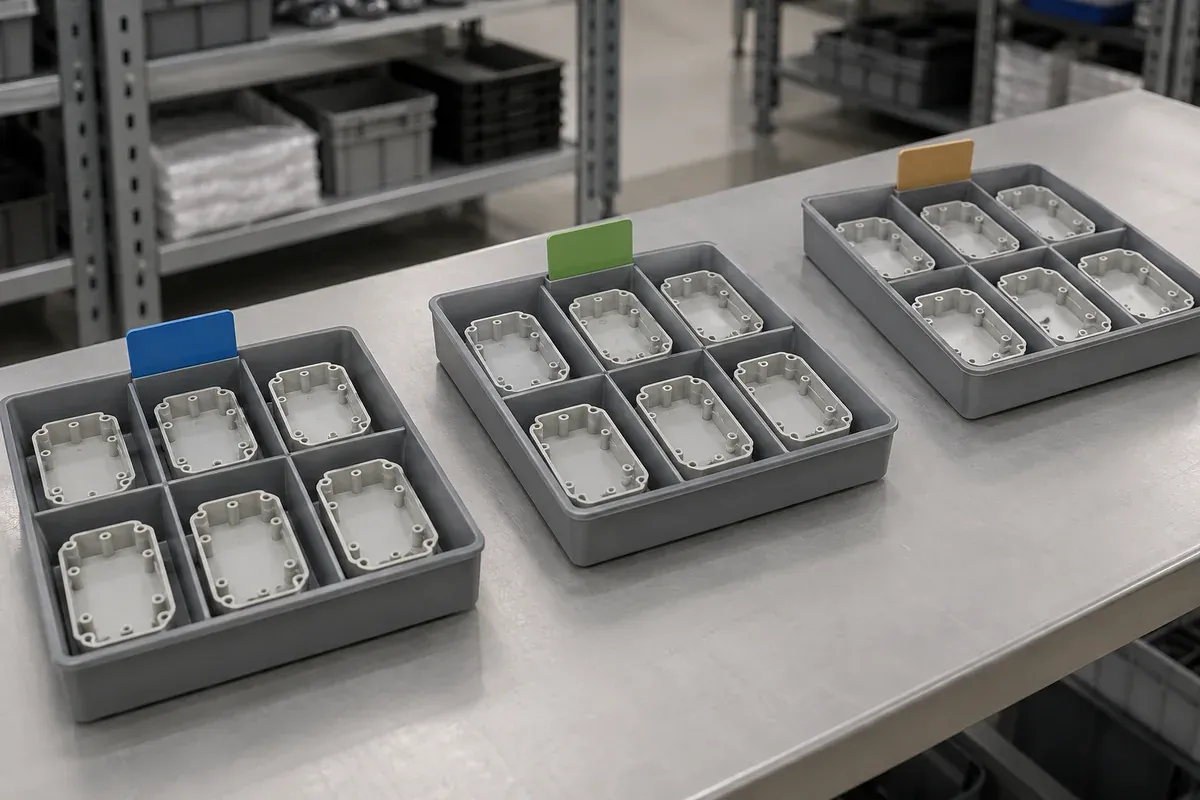
Keep the substrate lot connected to the overmolding batch and finished-part shipment. Define whether different substrate lots may be combined and how the relationship will appear in the records. If one box contains mixed revisions, hold it for clarification instead of relying on visual similarity to decide what belongs in the tool.
Request a simple end-of-run reconciliation: parts received, used for authorized trials, released as finished parts, rejected with a reason, and returned unused. Confirm who decides the disposition of rejected customer-owned parts. This avoids an unexplained gap between the quantity shipped and the quantity delivered.
A practical record need not be elaborate to be useful. It needs to answer which incoming group supplied a finished batch and where exceptions were recorded. That relationship helps both parties investigate a concern without treating every shipment as interchangeable. The appropriate detail depends on the project and customer requirements; the important point is to agree it before the first group is opened and mixed with another.
The Repeat Order Depends on What Stayed the Same
Ask the supplying party to flag resin, colorant, tool, surface treatment, packaging and drawing changes before the next shipment. The project team should decide which changes require renewed fit or bond evaluation. An unchanged part number alone is not evidence that the underlying supply is unchanged.
Include the agreed bond-test scope and relevant cleaning-exposure requirements in sample approval. For purchasing alternatives, compare the cost of supplied substrates with a proposal covering both molding operations, using the overmolding quotation worksheet.