
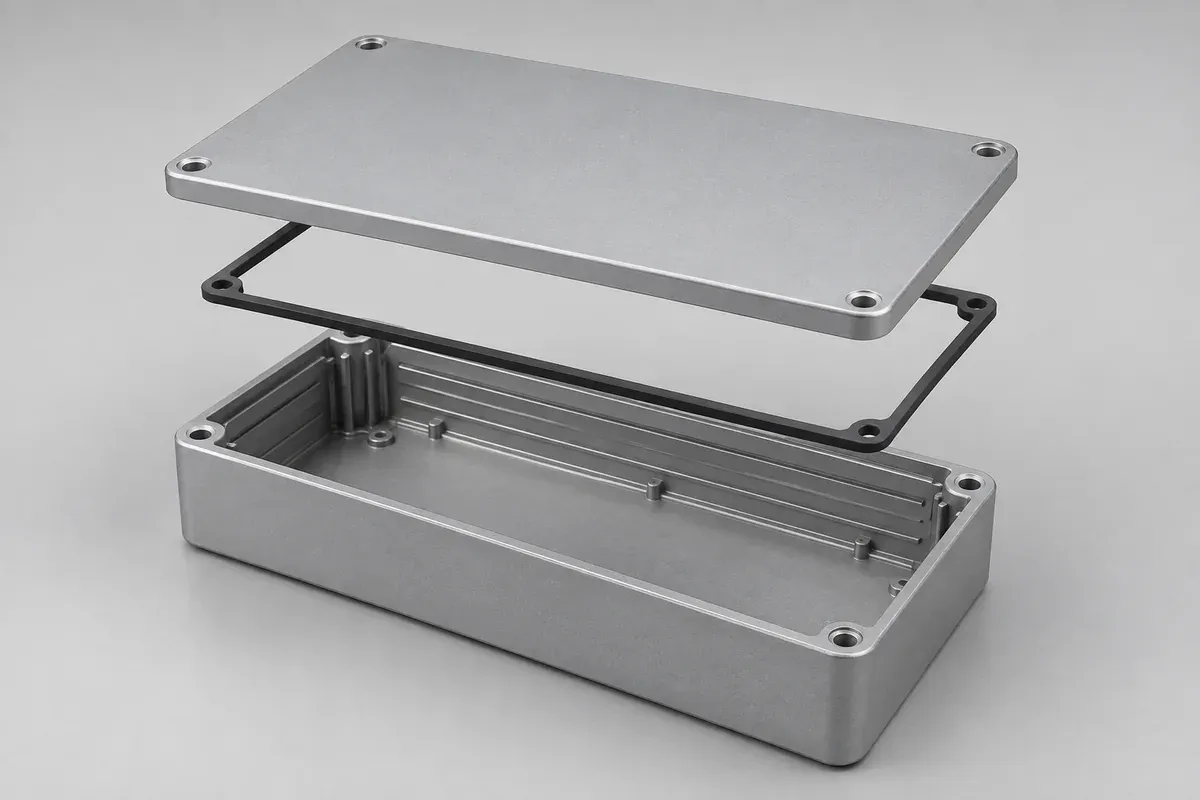
Product design illustrations. Final geometry, materials and acceptance criteria are project-specific.
A silicone gasket is compressed by an assembly, not by its own drawing. The groove, mating face, stops and fasteners determine the space available to the seal after closure. Reviewing only the nominal gasket height leaves a large part of the sealing question unanswered.
Begin by defining the joint in its intended closed state. Identify the surfaces that establish closure and the path that must maintain contact. Then evaluate permitted dimensional and form variation. A single nominal compression percentage cannot describe every point around a flexible enclosure.
Identify what controls the closed space
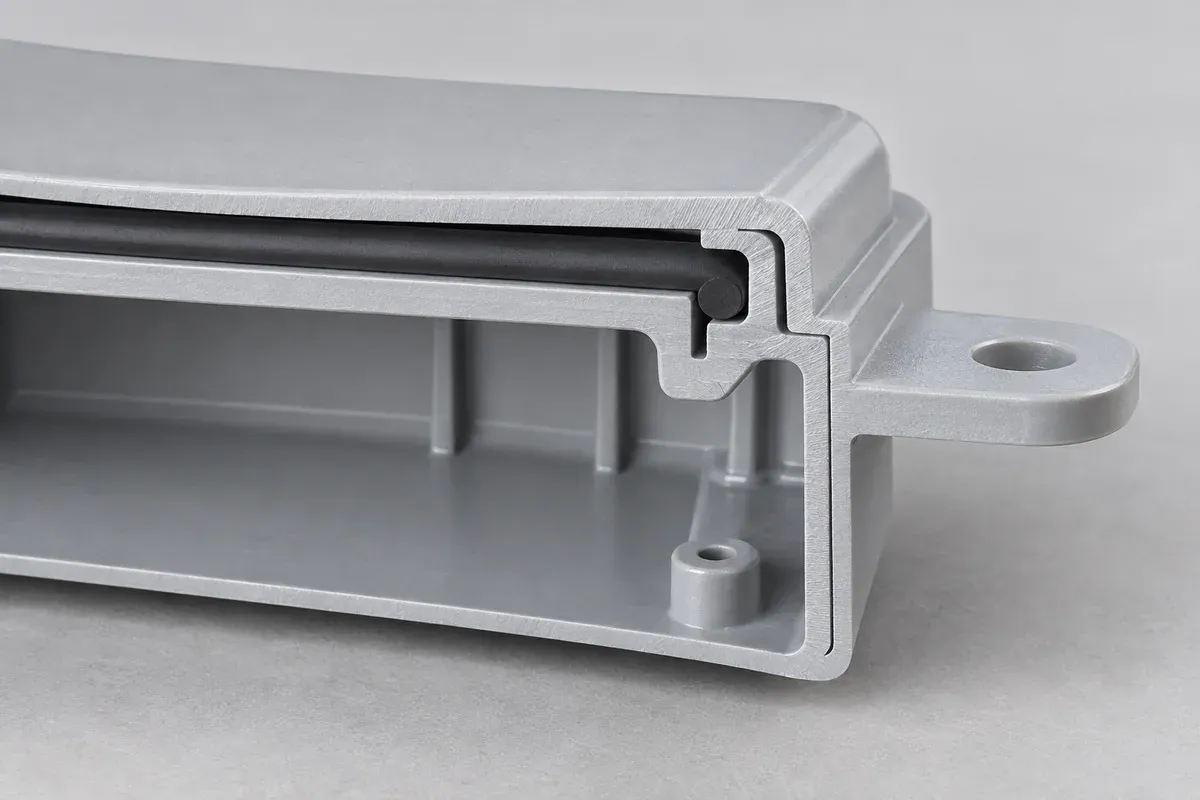
If the housing closes against hard stops, their relationship to the groove and mating face helps determine the available space. If there is no hard stop, closure may depend on fastener loading and the response of the housing and seal. These are different designs and need different evidence.
Mark the groove depth, seal section and mating-face relationship with consistent references. Avoid measuring each from a different convenient surface unless their relationship is explicitly controlled. A collection of individually acceptable dimensions does not automatically establish an acceptable assembled gap.
Include local form. A lid can reach its stops near fasteners while leaving a different condition between them. The Stockwell enclosure-gasket discussion includes housing stiffness and fastener spacing among sealing considerations. No particular spacing or ingress rating is inferred for this design.
Consider space for deformation, not only vertical squeeze
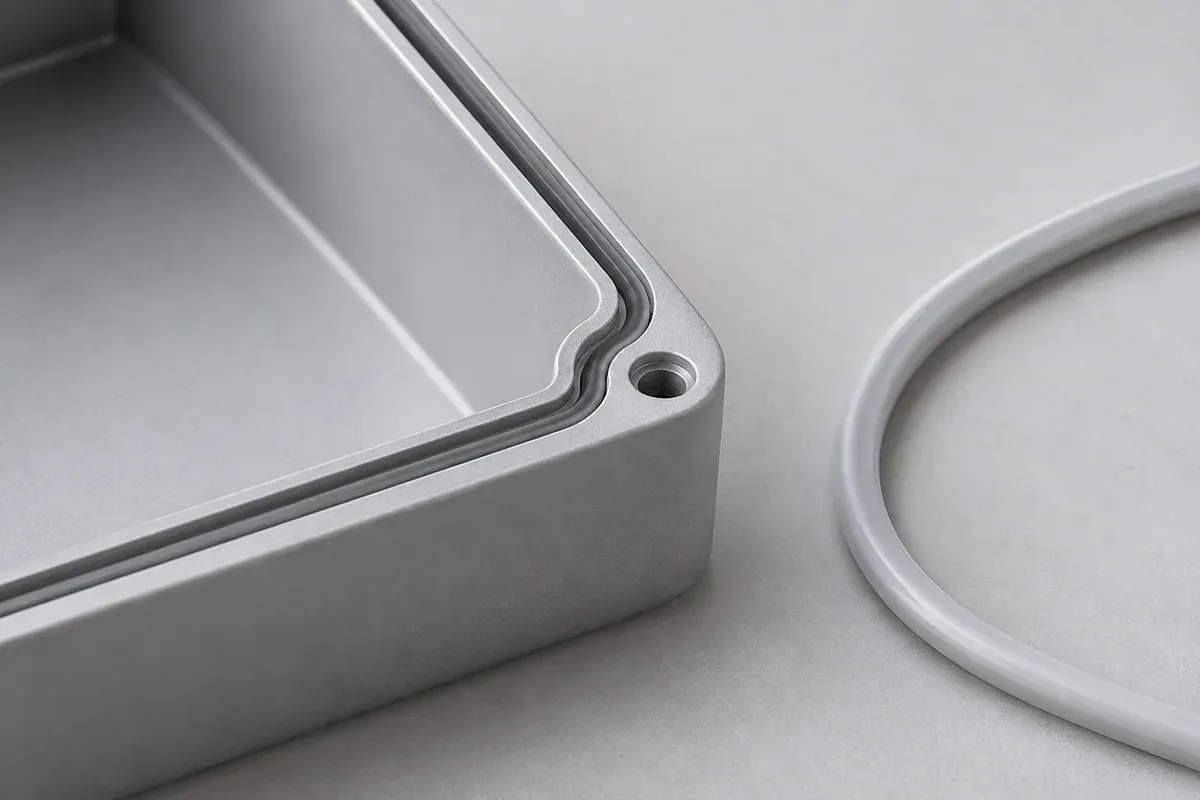
As the seal is compressed, its shape changes within the available joint. Review groove width, section shape, corners and local constraints. A design that looks acceptable in a straight cross-section may trap excess material at a transition or locating feature.
Do not impose a universal groove-fill or squeeze value from an unrelated seal profile. Use exact material guidance, the relevant design method and an application-specific review. The section, environment and whether the seal is static or moves all matter to that decision.
Keep the locator separate from the sealing job. A tab should help position the gasket without stretching the working section or preventing it from seating. Check the insertion motion and whether the seal can twist when the lid is placed.
Evaluate the permitted combinations
Review the combinations that can reduce or increase compression within the approved component limits. Include seal dimensions, groove dimensions, mating form and closure variation as applicable. Decide whether a deterministic stack, statistical model or another method is appropriate for the available evidence.
Do not claim a statistical yield from tolerances alone. A statistical analysis requires justified distributions and dependencies. For an early design, it may be more honest to identify sensitive dimensions and the measurements needed than to present an attractive but unsupported success percentage.
Record the material and specimen state used for dimensional checks. A compliant seal can be distorted by a measuring fixture. Agree support, contact force and conditioning so the reported dimension corresponds to a defined state rather than the inspector's handling.
Plan assembly checks before the mold is released
Inspect the gasket and housing individually, then observe seating and closure in a controlled assembly. Check corners and interruptions as well as accessible straight sections. Record the fasteners, tightening procedure and counterpart revisions.
If pressure or ingress performance is required, scope the actual test separately with its applicable method and responsible party. A closed seam or compressed-looking illustration is not a qualification result. Component inspection can support the investigation without replacing the finished-assembly evaluation.
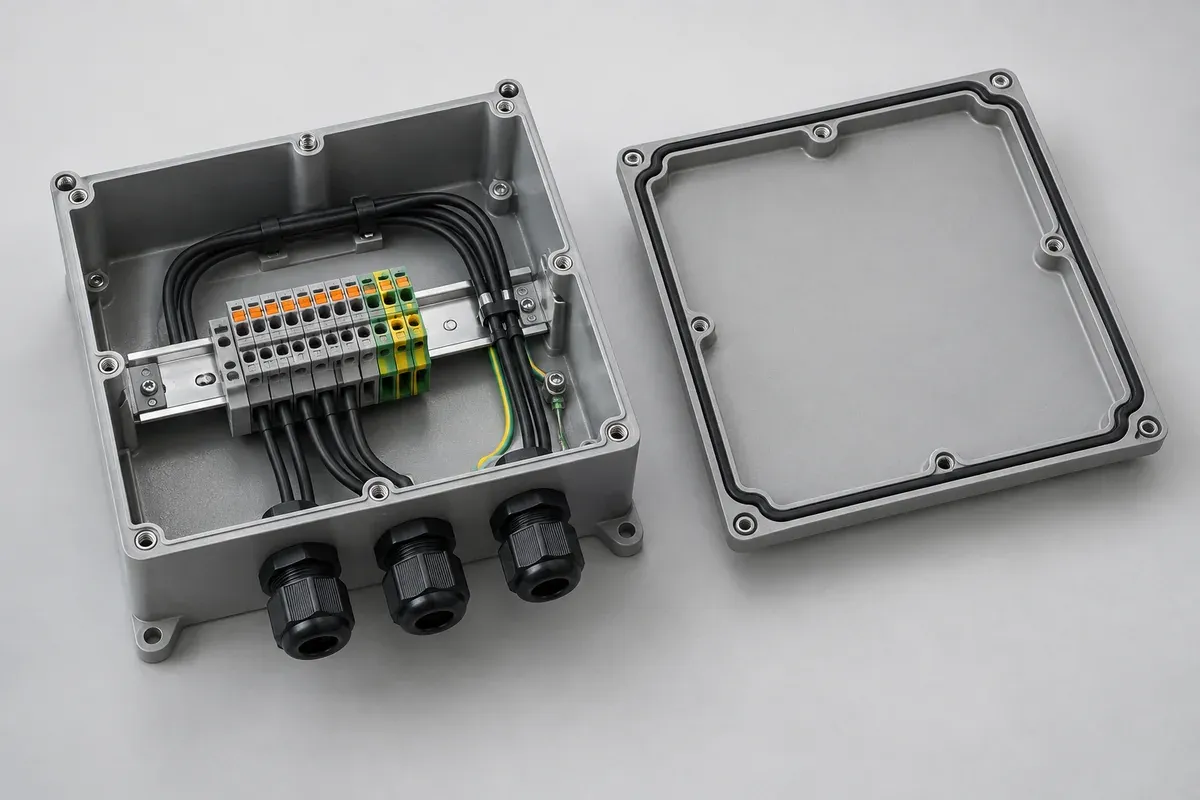
When a leak or closure problem appears, preserve the unmodified configuration before adding shims, changing torque or trimming the gasket. Each change can help investigate a hypothesis but creates a different assembly. Record which variable changed and what was observed.
A quotation should therefore include the seal and mating geometry together. Use the hardness and force guide to avoid treating material softness as the only adjustment, and the compression-set review for longer-term material screening.
Turn the review into a defined molding scope
Explore our custom LSR injection-molded gaskets and seals and the related illustrative engineering study. Send the drawing revision, counterpart details, intended use and the decisions still open. Development samples and production approval should have separate, agreed deliverables.