
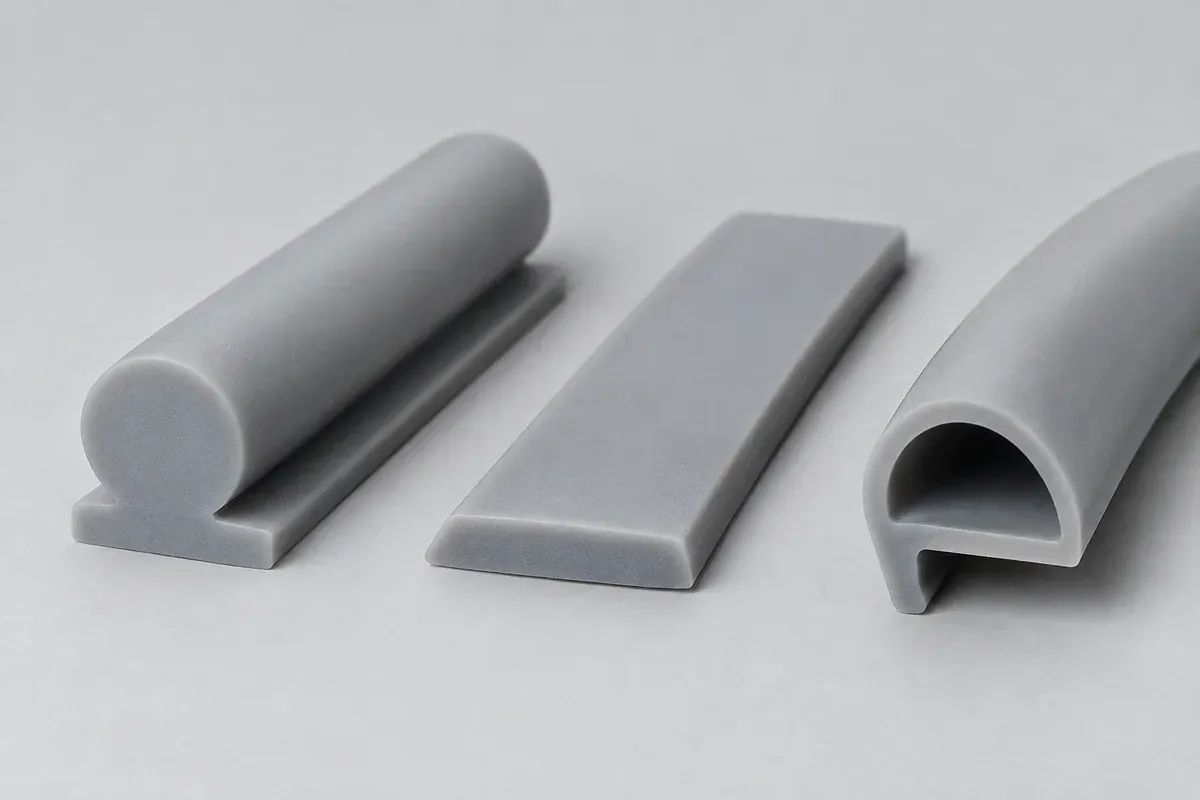
Product design illustrations. Final geometry, materials and acceptance criteria are project-specific.
A buyer asks for a softer silicone gasket because the lid is difficult to close. That may be worth evaluating, but it is not yet a diagnosis. The seal profile, groove, closure stops and housing stiffness can all contribute to the force felt during assembly.
A Shore A hardness value describes a specified indentation response under a test method. It is not a direct reading of the force needed to compress an arbitrary gasket in an enclosure. Treating the two as equivalent can produce a material change that fails to address the joint.
Compare geometry before comparing hardness numbers
Identify the cross-section and length being compressed, its initial contact shape and the space available for deformation. A raised bead, a thin lip and a broad flat strip do not have the same force-displacement behavior simply because the compound name or nominal hardness matches.
Mark how the joint constrains the material. A seal with room to deform behaves differently from one confined by surrounding walls. Do not interpret an open-plate material test as the exact behavior of a fully enclosed groove without reviewing the differences.
Stockwell's enclosure-gasket discussion identifies seal shape and housing closure as relevant design factors. For your project, that supports examining the joint geometry alongside material selection, not assuming a universal closing force.
Separate the force to assemble from the force retained
Assembly asks whether the available fastener, latch or press can bring the joint to its intended position without damage. Service asks whether the joint continues to meet its sealing and retention requirements over time. These questions are related but not identical.
Record whether the housing closes against a defined hard stop or whether the seal itself limits closure. If the stop height changes, the seal's compressed condition changes even when the material remains identical. A torque setting alone does not describe the local geometry of the closed joint.
The groove and tolerance guide follows this relationship. Before requesting a softer grade, establish whether the original design reaches the intended closure condition and whether the load is distributed as expected.
Use an appropriate specimen for each question
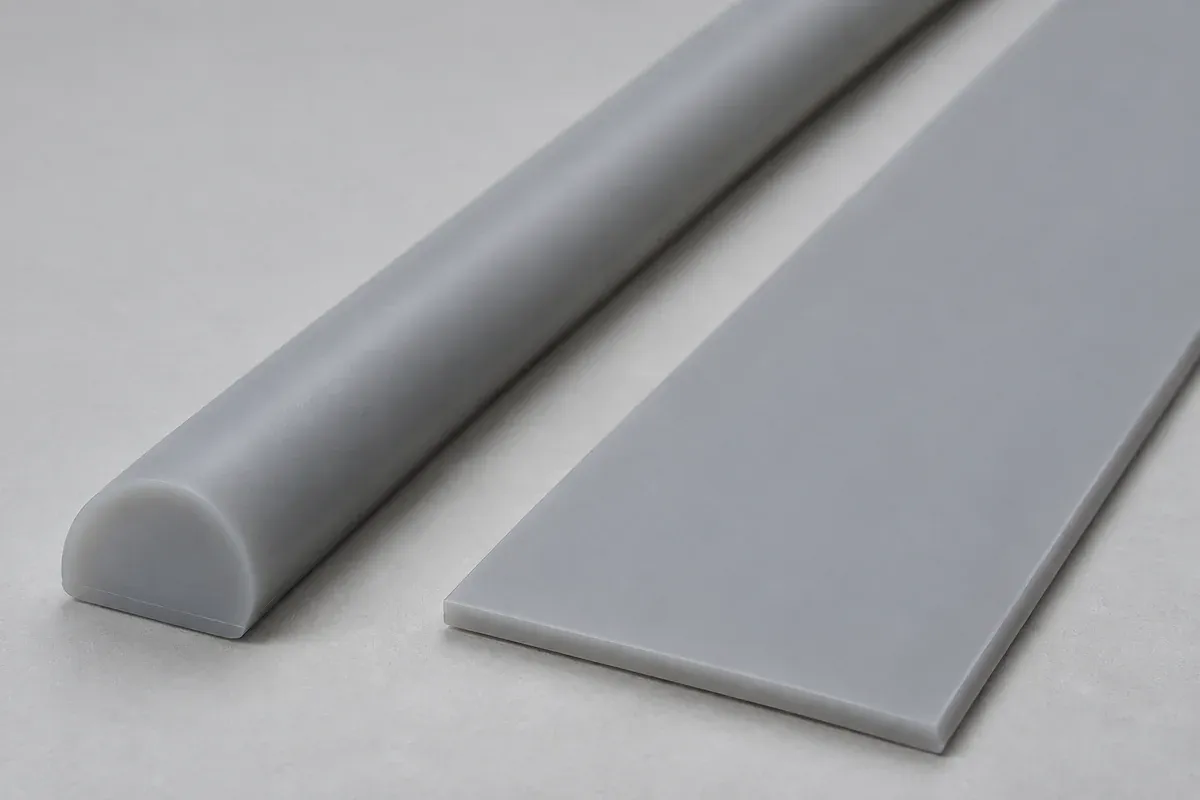
A material supplier's hardness value belongs to its stated specimen and method. Measuring a small curved sealing bead as if it were a suitable flat test specimen can create a misleading comparison. Agree the method and use supplier data or an appropriate test specimen where necessary.
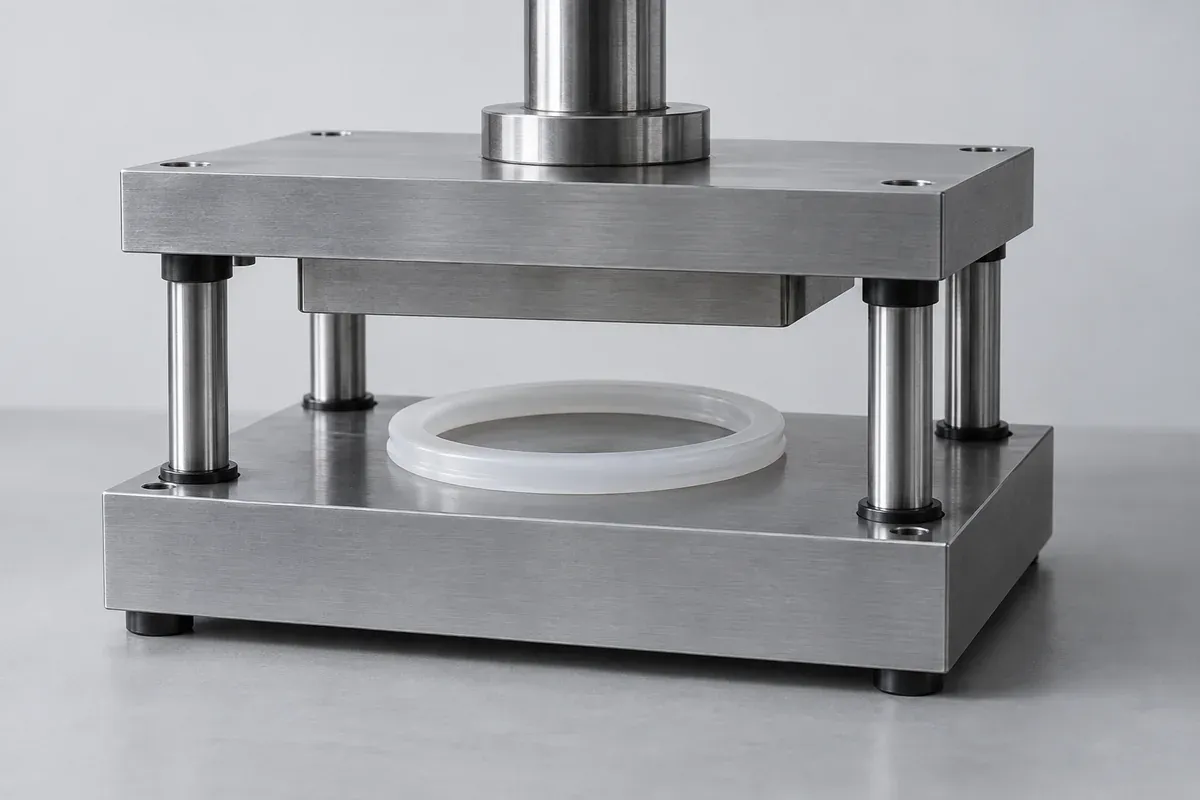
A component force-displacement test should define the actual seal, mating fixture, loading direction, rate, temperature and prior history. If the fixture deliberately differs from the production groove, state what the comparison is intended to reveal.
Do not invent an acceptance limit from a convenient early sample. The product engineer must decide what the assembly needs. A development test can characterize behavior, while an acceptance test checks agreed criteria; confusing them can lock in an unsuitable first result.
Investigate a difficult closure systematically
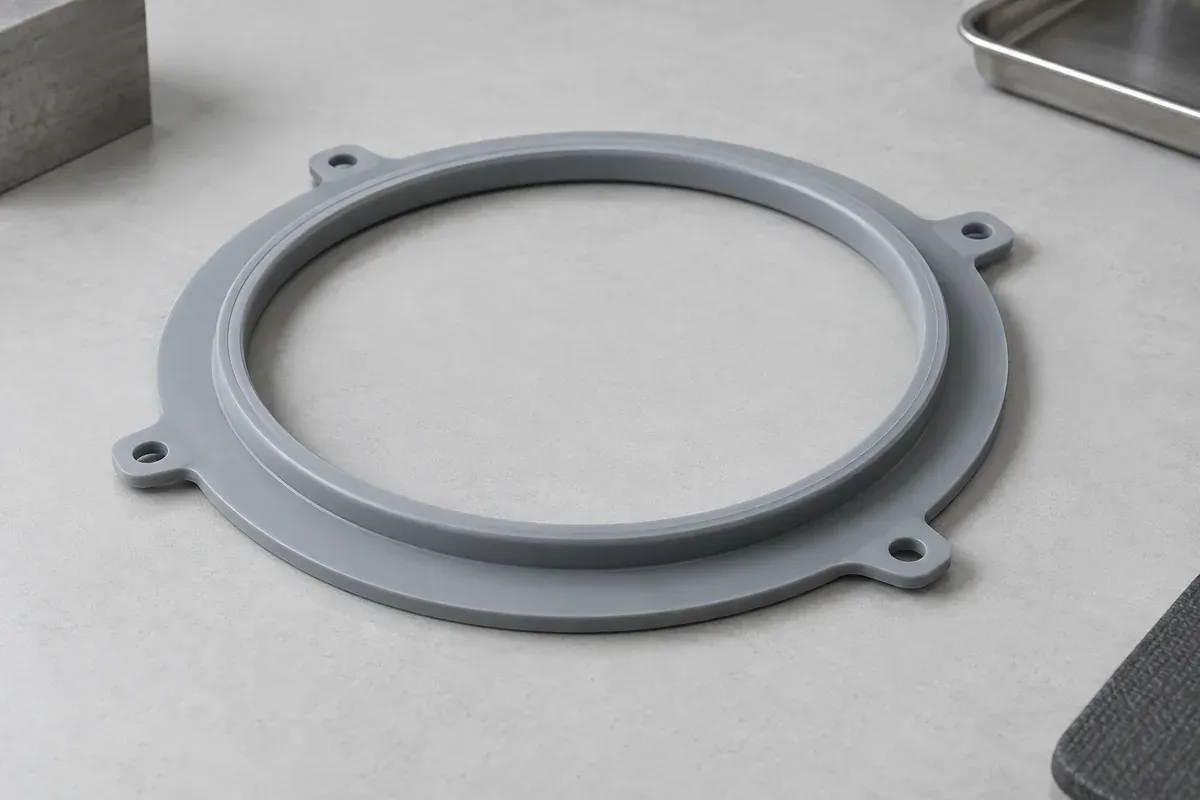
Check seal placement, trapped corners, foreign material and the actual profile before adjusting the compound. Inspect the groove and mating face, especially near fasteners and transitions. A locally doubled or twisted section can feel like a general hardness problem.
Compare identified samples under the same setup. If profile and material are both changed, describe the result as a configuration comparison rather than claiming that hardness alone caused the difference. Preserve the original observations and sample identities.
Include approved curing or post-curing state where relevant to the selected LSR grade. WACKER's material and processing guidance distinguishes formulations and processing requirements; the exact compound's instructions should govern the proposed process.
If a softer candidate is retained, review its complete application requirements, not just the initial closing feel. Handling, tear resistance, dimensional behavior and the specified exposure may require additional checks. The selected grade should remain linked to the approved profile and process.
A useful RFQ therefore includes the desired assembled behavior, mating geometry and evidence needed for approval. Hardness can be one controlled material requirement. It should not be asked to replace a joint design, a load measurement and a finished-assembly sealing evaluation.
Turn the review into a defined molding scope
Explore our custom LSR injection-molded gaskets and seals and the related illustrative engineering study. Send the drawing revision, counterpart details, intended use and the decisions still open. Development samples and production approval should have separate, agreed deliverables.