
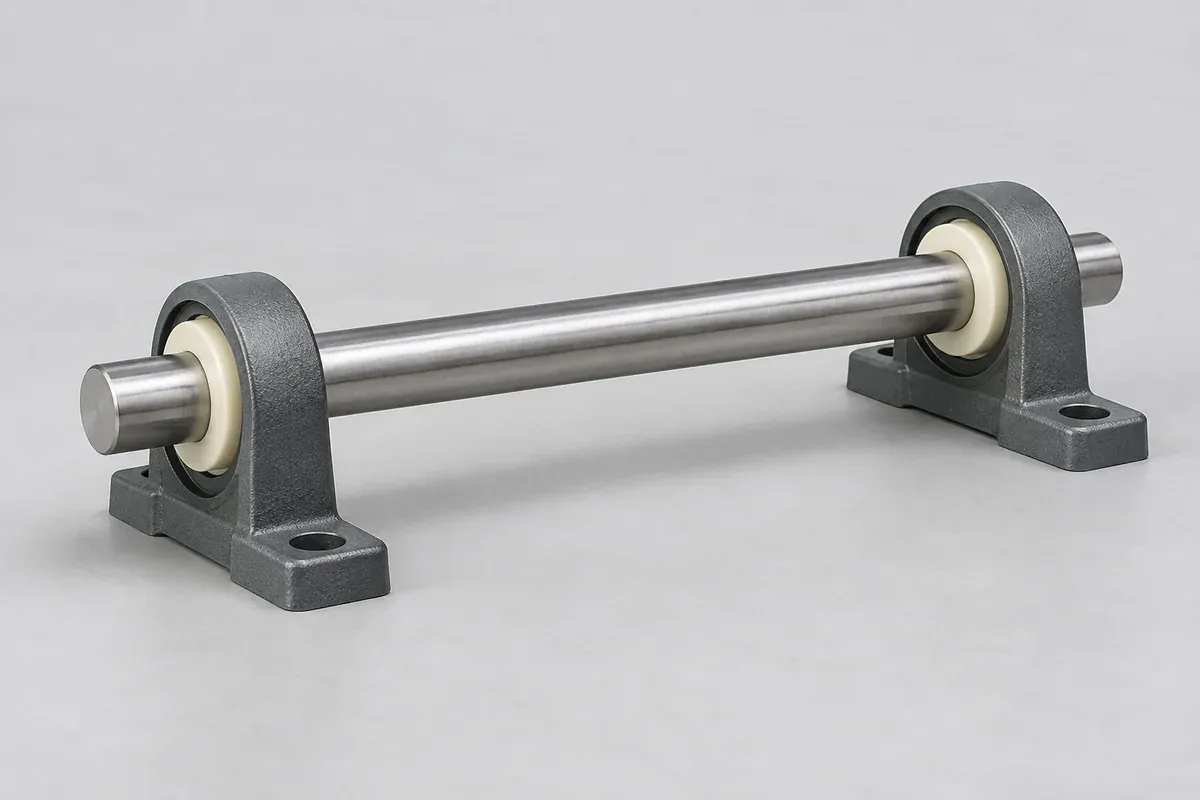
Product design illustrations. Final geometry, materials and acceptance criteria are project-specific.
A bushing works against another surface. Selecting a polymer while leaving the shaft finish and operating motion unspecified is therefore only half a selection exercise. Two assemblies using the same molded sleeve can behave differently because their shafts, loads, lubricants or contaminants differ.
Write an application brief that distinguishes rotation, oscillation and sliding. Include stationary loaded periods and start-stop behavior where relevant. Average speed alone can conceal the conditions that determine whether an initial candidate deserves a trial.
Describe the actual counterface
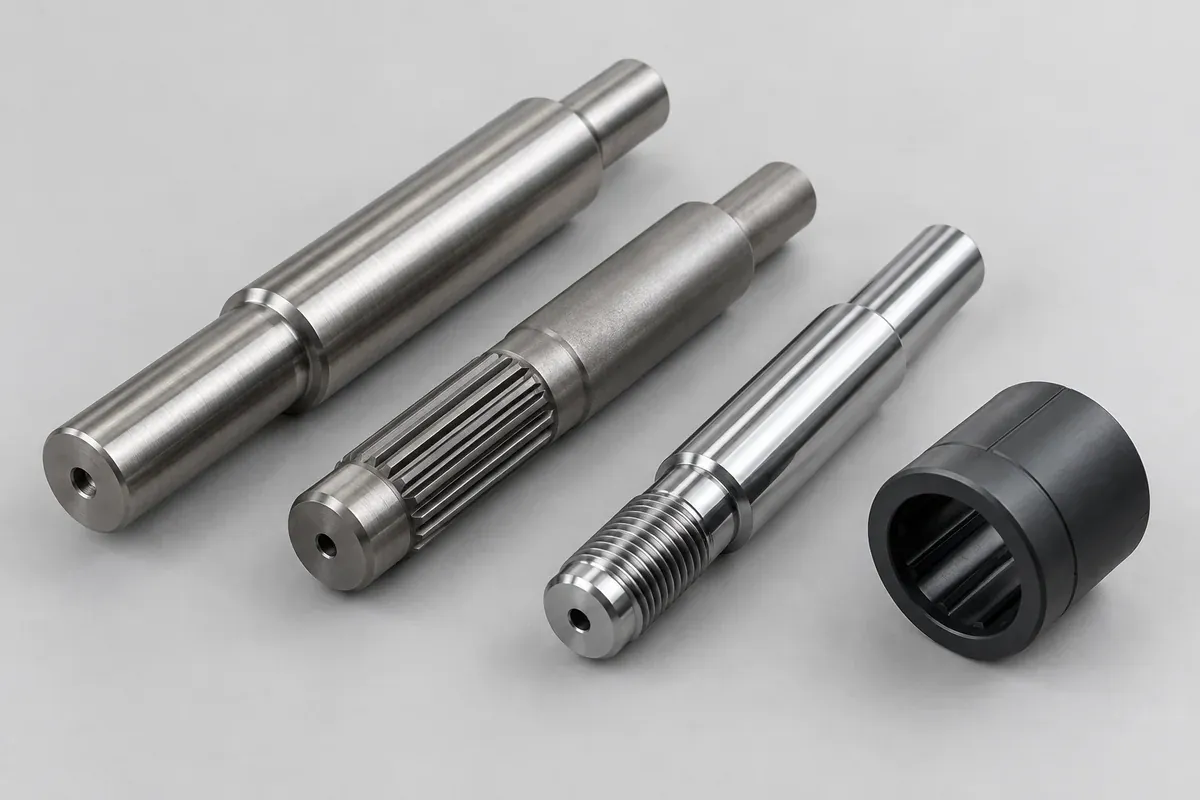
Identify shaft material, coating or treatment, relevant size and surface specification. “Smooth steel” is not a controlled counterface definition. If the shaft supplier changes a coating or grinding process, consider whether the existing bearing evidence still represents the new assembly.
igus's shaft considerations discuss the relationship between counterface properties and a polymer bearing application. The useful lesson is to evaluate the pair. A recommended finish for one proprietary bearing material should not be assigned to a different resin without supporting guidance.
Surface roughness is also not the entire description of a damaged shaft. Burrs, seams, local corrosion or a coating edge can matter to installation and movement. Include inspection of the surfaces the bushing actually contacts, not just a drawing value measured elsewhere.
Keep load direction and movement visible
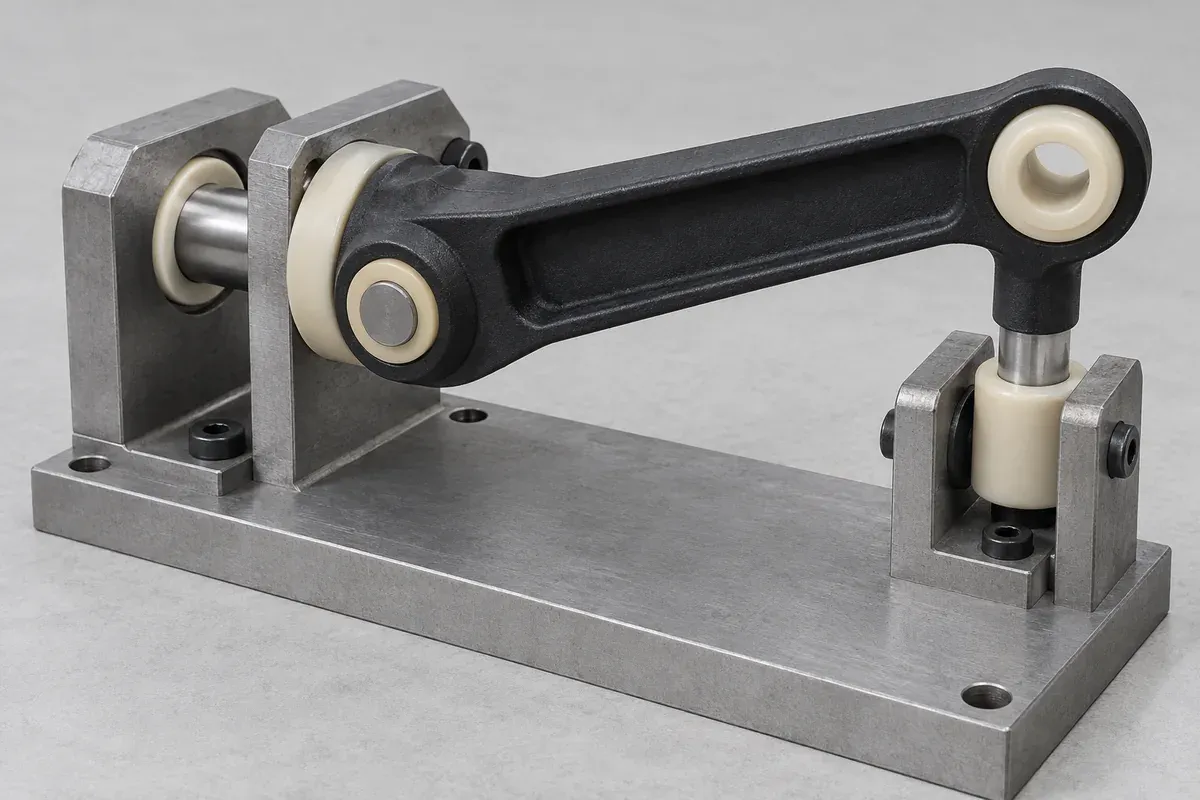
Distinguish radial loading from axial contact on a flange. Record where the load acts and whether it changes direction. A long bushing does not necessarily carry the load uniformly when the shaft is misaligned or the supporting structure bends.
Describe the travel or angle and the motion sequence. Repeated small-angle oscillation is not equivalent to continuous rotation just because the calculated average speed matches. If the assembly pauses under load, include that dwell in the review instead of testing only unloaded movement.
The geometry comparison helps separate radial guidance from axial location. Once the function is clear, the material supplier and design engineer can assess the relevant operating limits and decide what application testing is required.
Do not treat lubrication as an undocumented improvement
Include start-up and restart conditions where relevant. A mechanism that dwells under load before moving can present a different question from a continuously moving test specimen. The application brief should describe that sequence so any proposed evaluation represents the intended use.
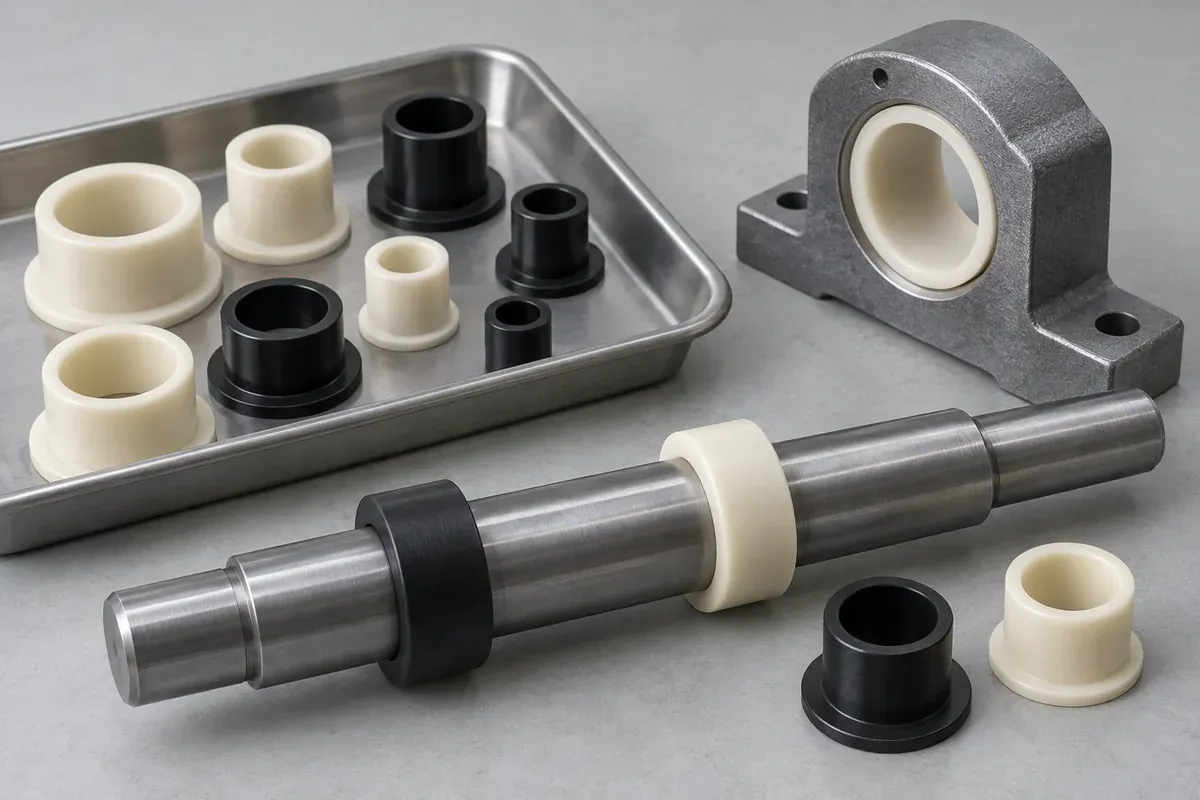
Decide whether the part is intended to operate dry, with initial lubrication or with replenishment. Identify the lubricant and its compatibility with the materials and environment. A grease used to make an early sample feel smoother can change the trial and should be recorded.
Some bearing compounds are designed for dry running; that does not make every black or filled polymer self-lubricating. Similarly, adding lubricant does not establish a service-life improvement without evidence for the actual pair and exposure. Avoid using either statement as a generic sales claim.
Include the environment around the contact
Dust, cleaning fluid, water and temperature can change the question being tested. Describe normal exposure and any exceptional condition the assembly must withstand. Do not collapse all of these into an undefined requirement for “industrial grade” material.
Review heat dissipation through the housing and shaft as part of a sustained-motion application. A catalogue condition may not represent a compact insulating bracket. If thermal behavior is uncertain, define an evaluation with appropriate measurements instead of assigning a universal maximum operating speed.
Keep the installed fit controlled during comparison. Our press-fit guide addresses bore changes caused by installation. Testing a loosely supported sample against a tightly retained production part mixes fit and tribology into one ambiguous result.
Agree what ends a test or rejects a sample: a defined dimensional change, loss of function, temperature behavior or another approved criterion. Select the method and sample coverage for the application rather than inventing a generic lifetime. Retain observations even when they do not fit the original material preference.
For custom molding, provide this operating brief with the CAD and counterpart drawings. It allows material, tooling and inspection proposals to address the same assembly. The result should be a documented candidate and validation plan, not a promise based on one friction number.
Turn the review into a defined molding scope
Explore our custom injection-molded plastic bushings and the related illustrative engineering study. Send the drawing revision, counterpart details, intended use and the decisions still open. Development samples and production approval should have separate, agreed deliverables.