
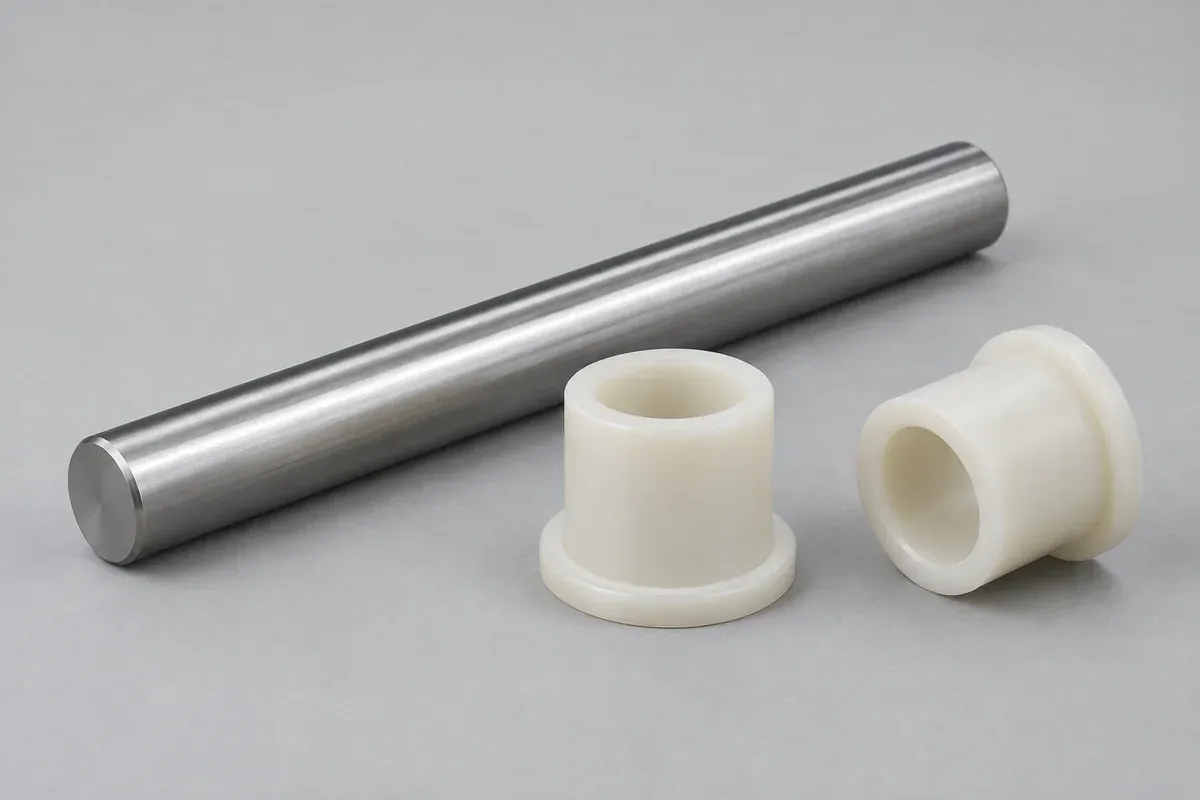
Product design illustrations. Final geometry, materials and acceptance criteria are project-specific.
A nylon bushing can be within its drawing limits on receipt and still need a separate fit review for its operating environment. The important question is the material and assembly condition represented by those limits. “Measure at room temperature” does not, by itself, define moisture history.
Before changing a bore dimension, identify the exact nylon grade, any reinforcement, specimen conditioning and intended service. The same nominal family can include different formulations. A blanket allowance copied from an unrelated part can create excessive clearance in one condition and inadequate clearance in another.
Give every measurement a specimen state
Distinguish an as-molded sample, a conditioned development sample, an installed assembly and a part removed after service exposure. Record when and how each was evaluated. A dimension without that context can be difficult to compare even when both measuring instruments are working correctly.
Use the material supplier's exact-grade guidance to define a meaningful conditioning plan. Grade-specific bearing information illustrates why properties and application conditions should stay connected; data for a proprietary bearing compound should not be substituted for the nylon grade on your drawing.
If a customer's drawing already specifies a condition or test method, preserve that requirement in the quotation. If it does not, flag the gap. Quietly choosing different conditions at the molding plant and the assembly plant invites a disagreement that cannot be solved by repeating the same incomplete measurement.
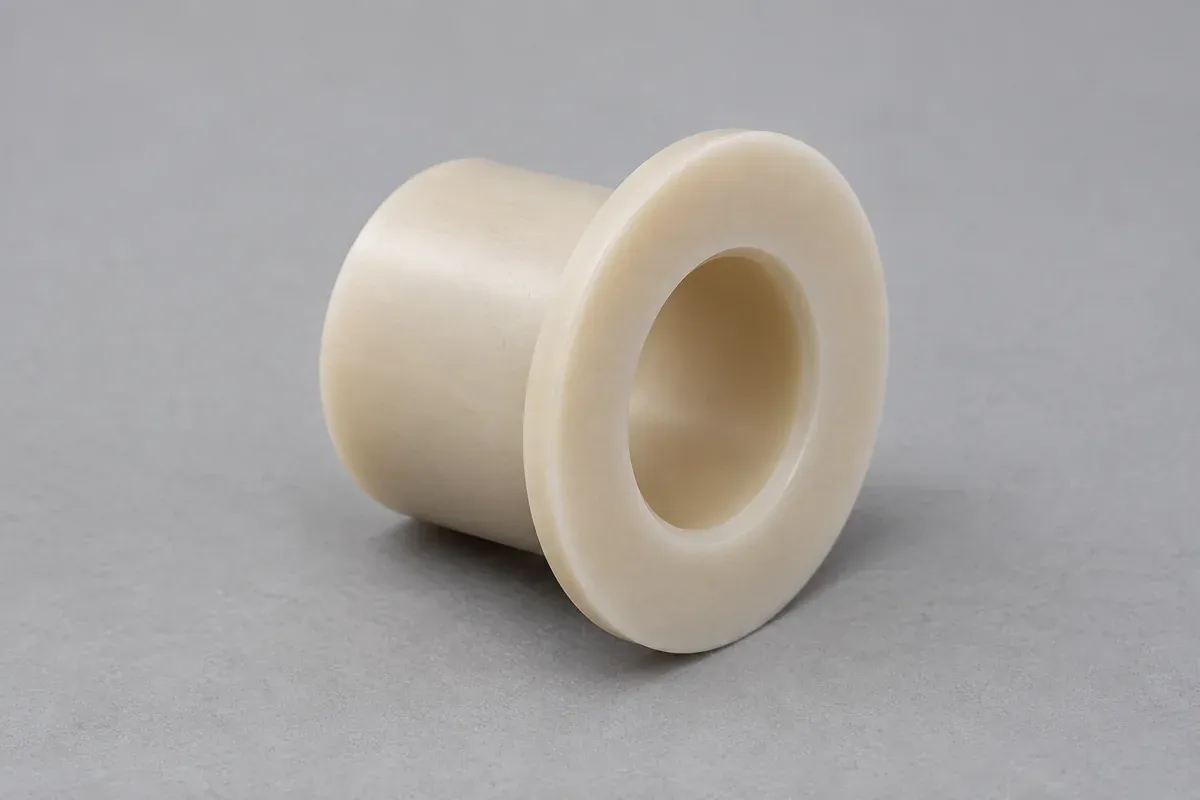
Review the housing as well as the polymer
A loose bushing is free to change geometry differently from one constrained in a housing. The assembled inner bore depends on the fit, wall shape, housing stiffness and material condition. Do not assume a percentage change in a free specimen maps directly to the same percentage change in installed clearance.
Include the actual shaft and housing definitions in the fit review. Check their permitted dimensions, relevant temperature range and any coatings. A change in shaft supplier or housing material may matter even when the bushing remains unchanged.
Our press-fit bore guide explains the installation part of this relationship. Moisture review adds another condition to evaluate; it is not a replacement for understanding how the component is retained.
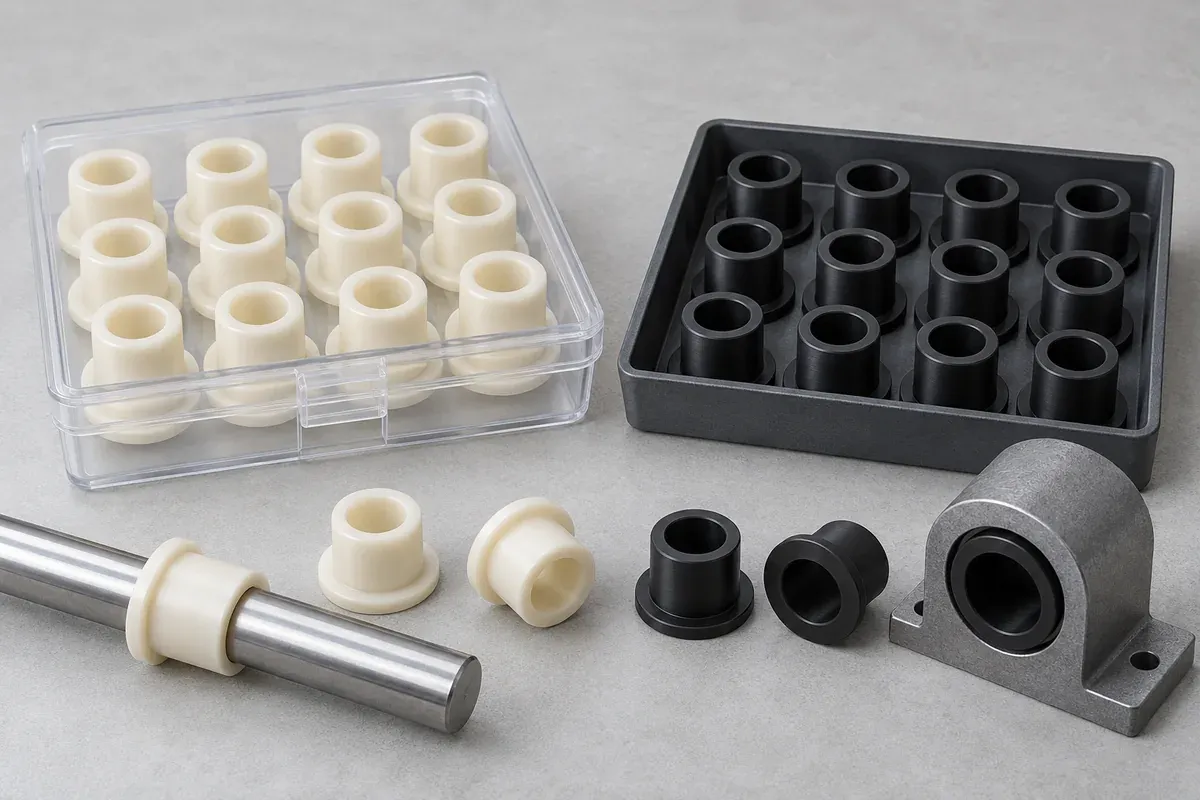
Define the function that clearance must support
A shaft that must turn freely has a different acceptance question from a locating pin that moves only during assembly. Identify allowed motion, operating load, lubricant and contamination. Specify which condition governs the clearance decision and whether more than one condition needs evaluation.
Do not use a single successful hand rotation as evidence of long-term bearing life. It can be a useful assembly check with a defined method, but it says little about loaded operation, heating or exposure over time. Keep dimensional inspection, initial function and endurance evaluation as separate records.
When environmental extremes matter, an engineer should define representative exposures and acceptance criteria. Avoid inventing a universal soaking duration or assuming immersion represents every humid environment. The chosen procedure must answer the actual service question.
Change one controlled configuration at a time
If samples become tight, retain their history before reaming, sanding or replacing them. A manually enlarged bore creates a modified specimen. It can help investigate a clearance hypothesis, but it no longer demonstrates the original drawing or molded configuration.
Compare the relevant free and installed dimensions with the counterpart records. Check whether the specimen state matches the intended method. A result caused by a small housing bore should not automatically be attributed to moisture, just as a conditioning difference should not be hidden by an oversized shaft assumption.
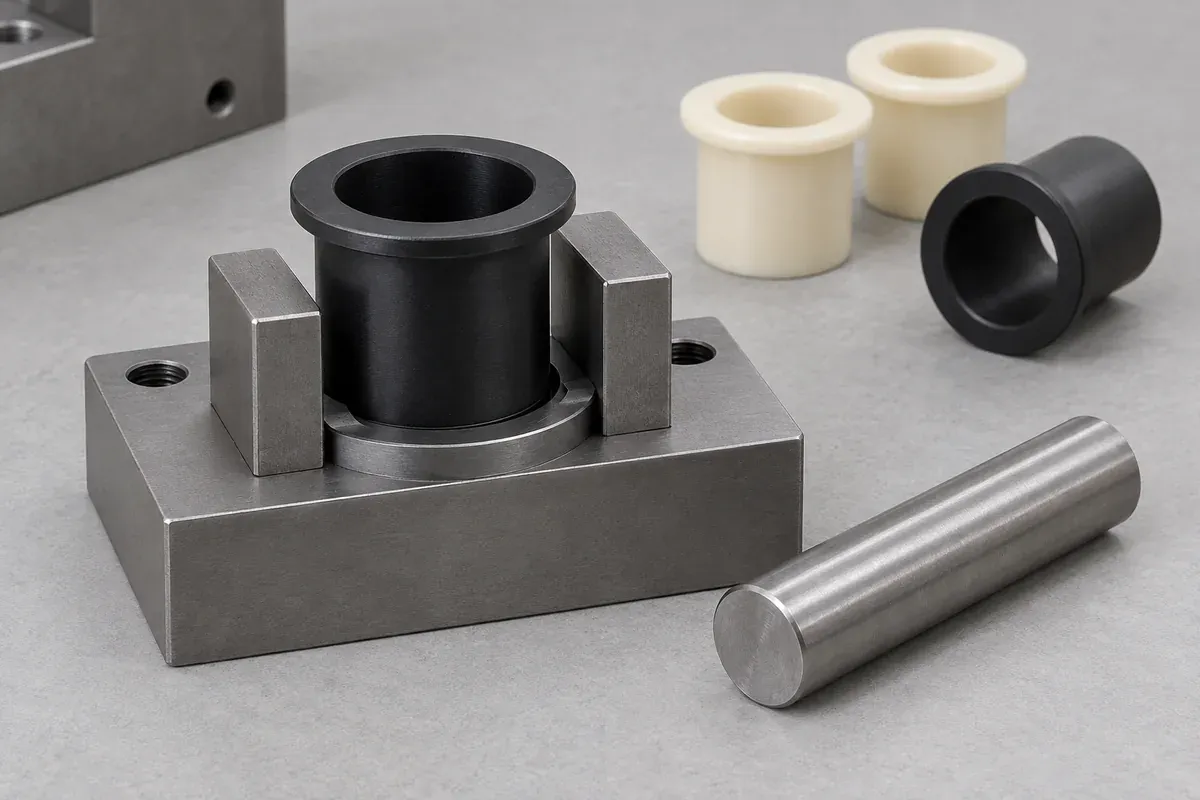
Close the review with a documented condition, fit requirement and evidence plan. If another resin is considered, compare its complete behavior rather than treating it as a drop-in cure. The bushing material guide provides the wider comparison while keeping moisture, wear and manufacturing decisions distinguishable.
Keep approved conditioning and packing instructions in the production scope where they are necessary. Repeated orders should not rely on the memory of the person who inspected the first samples. A controlled record makes subsequent material or process changes easier to evaluate honestly.
Turn the review into a defined molding scope
Explore our custom injection-molded plastic bushings and the related illustrative engineering study. Send the drawing revision, counterpart details, intended use and the decisions still open. Development samples and production approval should have separate, agreed deliverables.