
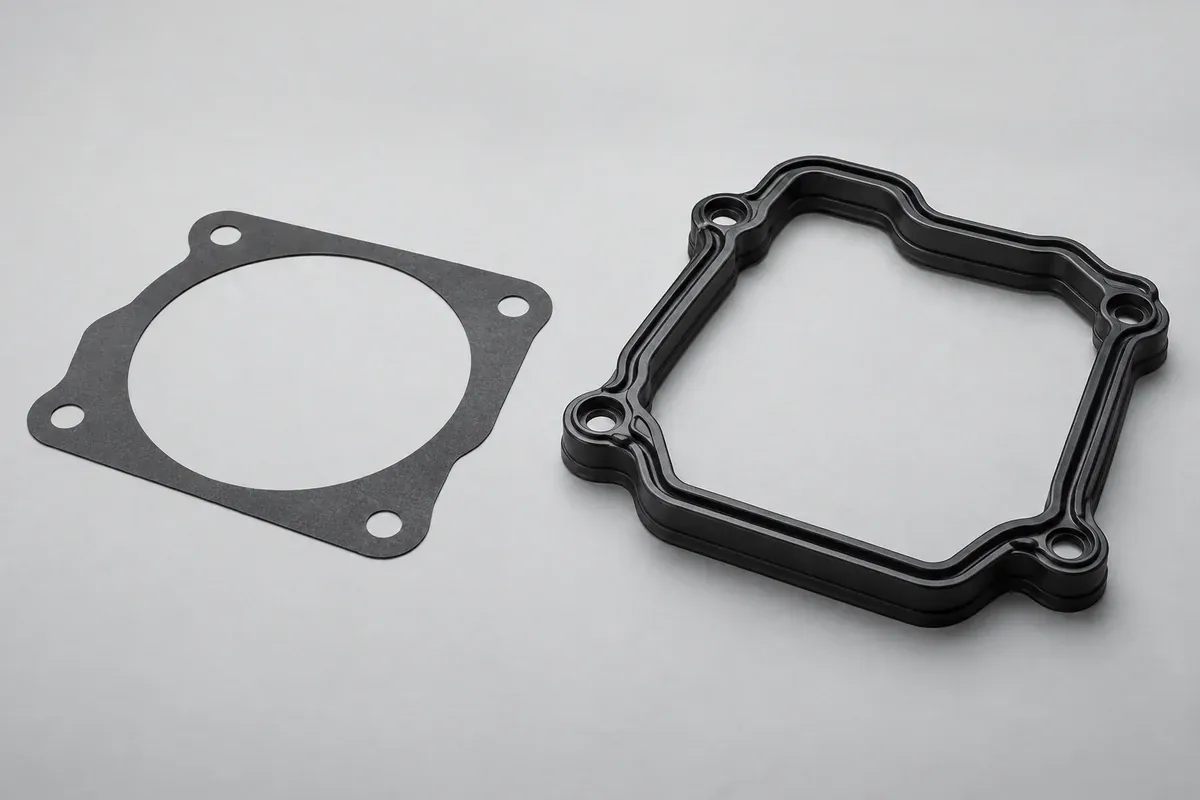
Product design illustrations. Final geometry, materials and acceptance criteria are project-specific.
A flat gasket and a molded silicone seal can both sit between two housing halves, yet they offer different design choices. Start with the joint and its function, not with the assumption that a more elaborate seal is always better. The application may need a simple flat outline, a raised bead, a shaped corner or integrated locating features.
This comparison helps decide when an LSR injection-molded component deserves development. It does not expand the manufacturing scope into every gasket-making process. FECISION's product page concerns custom molded seals; a cut-sheet alternative is included here so a buyer can make a sensible process decision.
Look at the sealing path in three dimensions
A flat gasket begins with a sheet-like cross-section around its outline. A molded design can deliberately vary the section or add features such as lips and locating tabs. The useful question is whether those features address the actual joint geometry and assembly sequence.
Trace the required contact path around corners, fasteners and openings. If the mating faces are planar and the function can be met with a consistent section, a more complex part may add tooling without solving a problem. If the joint changes elevation or needs a shaped bead, a molded approach may offer relevant design freedom.
Stockwell's silicone gasket overview distinguishes sheet-converted gaskets from molded seals with custom sections. It demonstrates available product forms, not a performance guarantee for the hypothetical enclosure being reviewed here.
Do not compare hardness without the section
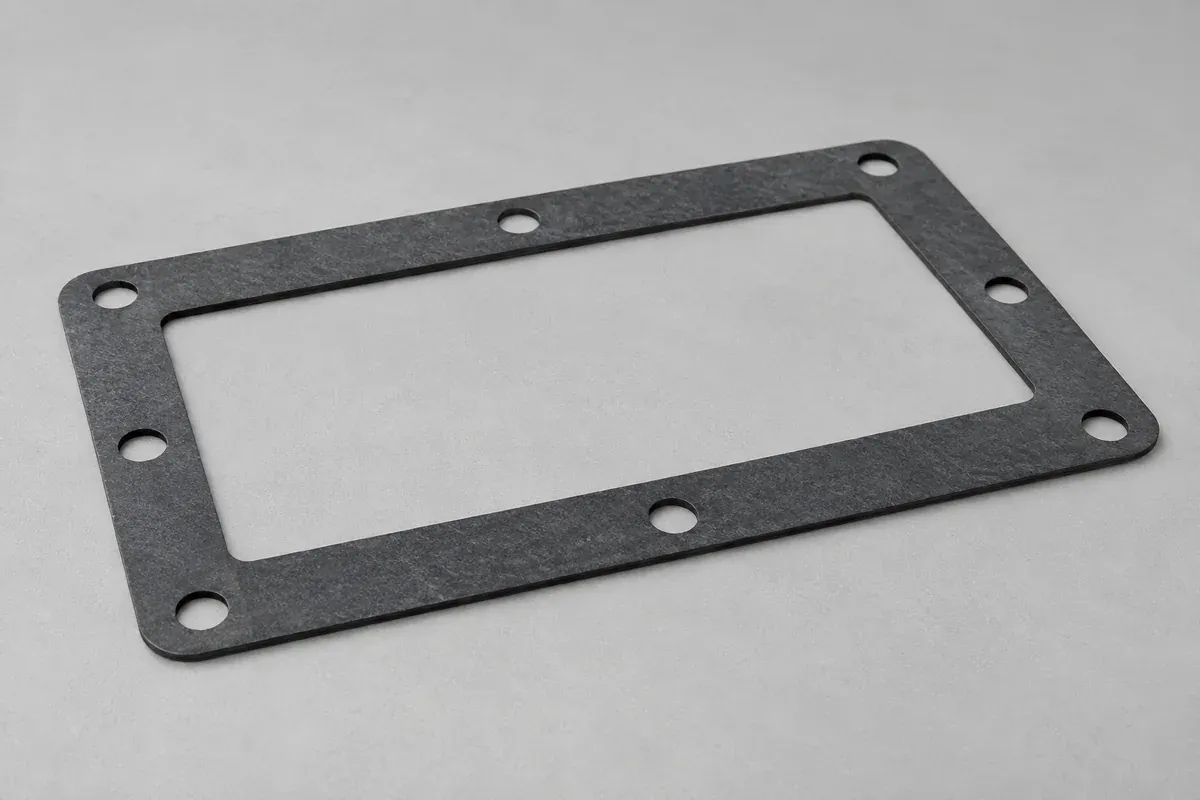
The force needed to close the joint depends on the material and the shape being compressed. A narrow bead and a broad flat section can behave differently even if their compounds have similar hardness readings. Keep geometry visible when comparing candidate sealing forms.
Identify the enclosure's available closure method and stiffness. A seal that requires more force than the joint can apply consistently is not rescued by an attractive material specification. Conversely, making the seal very soft does not establish durability or protection for an undefined joint.
The hardness and compression-force guide explains this distinction. Use it to frame the review rather than selecting a Shore A number and asking every supplier to assume the rest.
Include handling and assembly
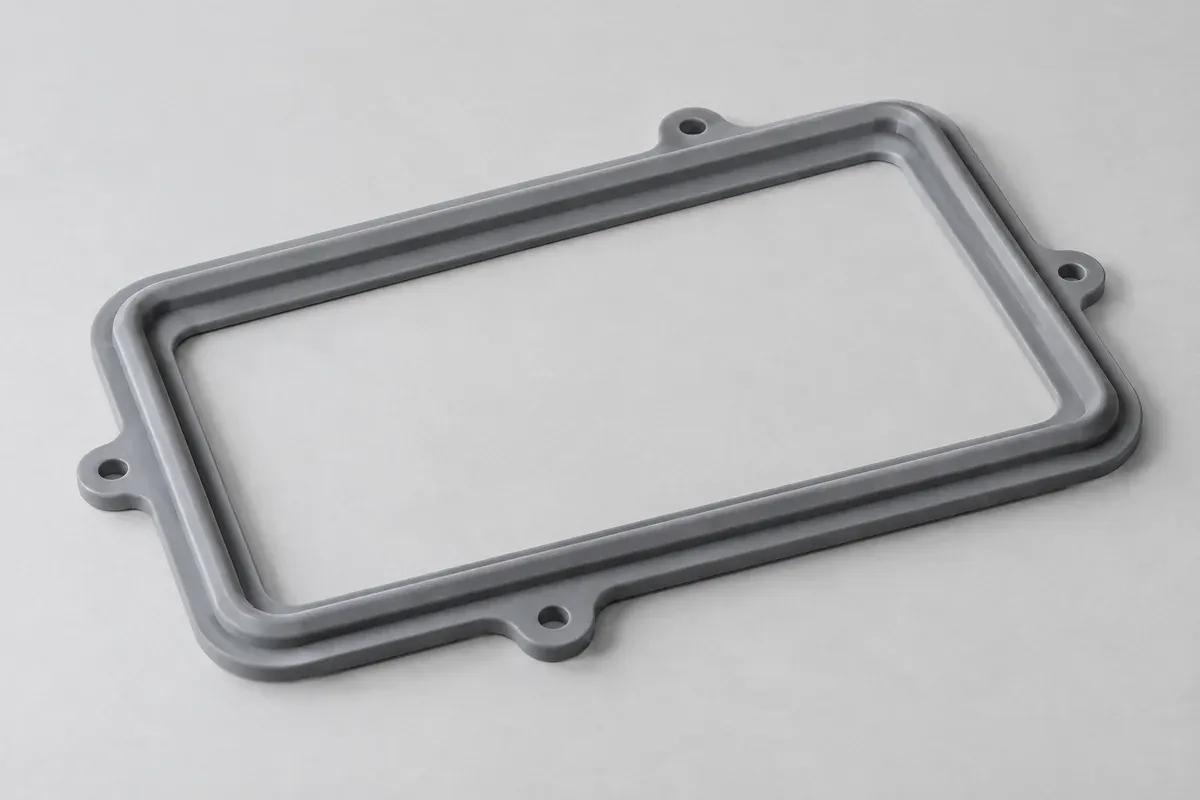
Decide how the operator or equipment positions the seal before the lid closes. A groove, tab or other locator can help, but it must not stretch or trap the sealing section. Check whether the part can twist, roll or escape its intended position during assembly.
If adhesive is proposed, identify its purpose and compatibility separately. An adhesive used to hold a gasket during assembly is not automatically a structural bond or a verified sealing layer. Keep any additional material and its application process visible in the delivered scope.
Think about repair or reopening. A part intended for one assembly event has a different review from a seal that must be removed and reinstalled. Specify whether a serviced joint receives a new seal and what evidence is required after repeated access.
Compare the delivered manufacturing scope
Ask each proposal to identify material, part geometry, tooling, sample approval, any secondary work, inspection and packing. Do not compare a bare cut component with an inspected molded assembly as though the difference were only piece price.
A molded option needs a stable enough design to define its cavity and acceptance. If the housing joint is still changing, an early development route may be useful before committing to production tooling. Record which prototype questions can be answered and which require representative molded material.
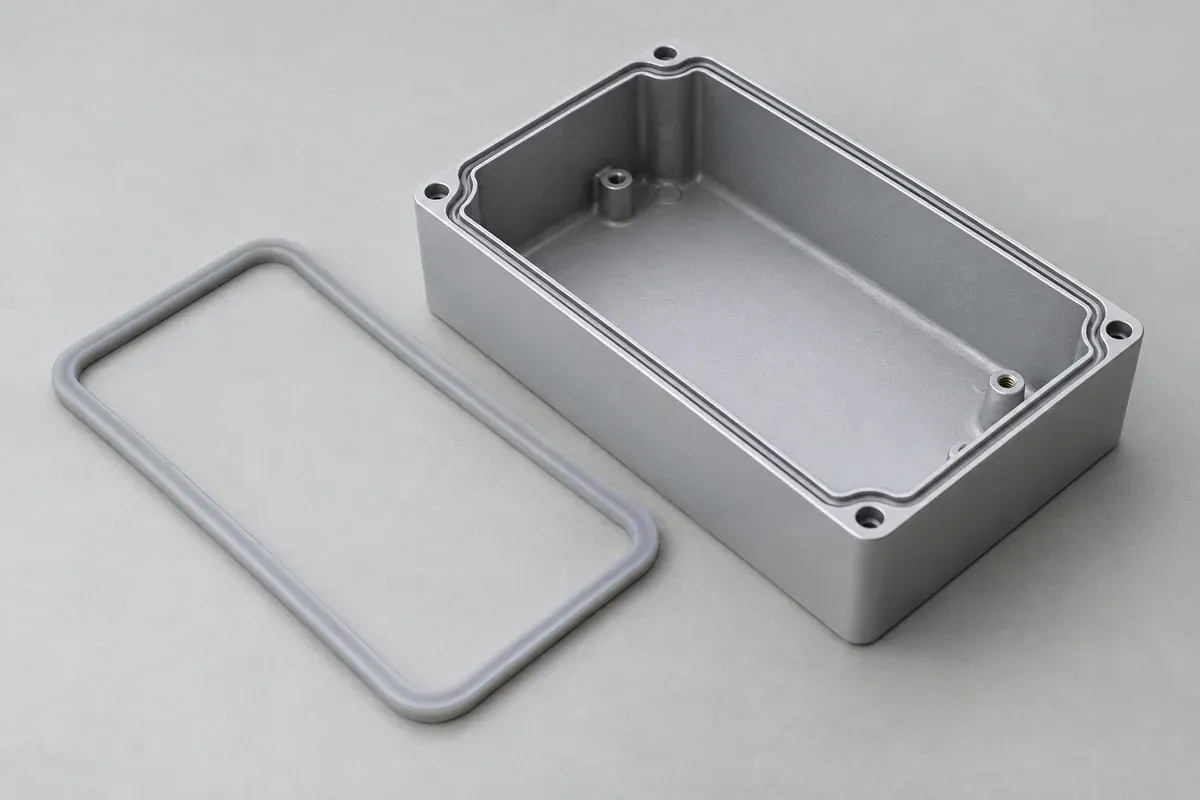
Finally, separate component inspection from enclosure qualification. Neither a flat gasket nor a molded bead proves an ingress-protection rating by appearance. The actual assembly, test method and responsibility must be defined if such a claim is required.
The best choice is the form that meets the stated interface and production needs with an understandable approval path. For a molded proposal, send the mating halves as well as the seal drawing. The LSR seal RFQ guide covers the information that makes that comparison actionable.
Turn the review into a defined molding scope
Explore our custom LSR injection-molded gaskets and seals and the related illustrative engineering study. Send the drawing revision, counterpart details, intended use and the decisions still open. Development samples and production approval should have separate, agreed deliverables.