
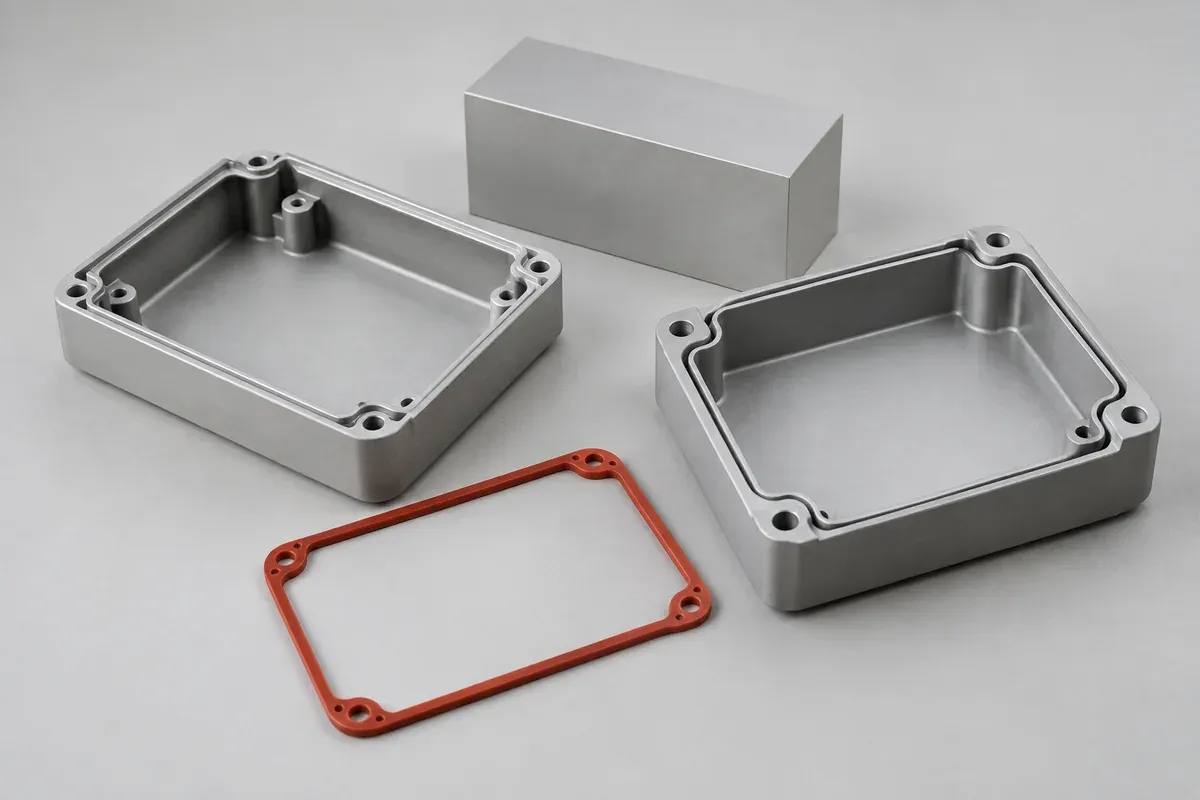
Product design illustrations. Final geometry, materials and acceptance criteria are project-specific.
A drawing of a rubber outline is rarely enough to quote a custom seal responsibly. The supplier needs to understand the joint, material requirement and evidence expected from samples. Otherwise two apparently comparable quotations may describe different parts, processes and approval responsibilities.
For an LSR injection-molded gasket, send the controlled seal design together with the relevant mating geometry. If the design is still open, mark which decisions need development. That allows an initial feasibility discussion without presenting assumptions as a production-ready specification.
Show the joint and the delivered component
Provide neutral 3D CAD and a drawing with units, revision and critical characteristics. Include the groove, lid or mating face, closure stops and relevant fasteners. Identify which dimensions cannot change and which can be reconsidered during DFM.
Clarify whether the order covers a loose seal, a seal installed on another component or a bonded multicomponent part. These are different manufacturing and inspection scopes. Do not assume overmolding or assembly is included because the illustration shows a gasket in a housing.
Explain the purpose of locating tabs, lips and unusual transitions. A supplier may otherwise simplify a feature that appears cosmetic but establishes orientation or keeps the seal seated during closure. Functional intent helps make proposed design changes reviewable.
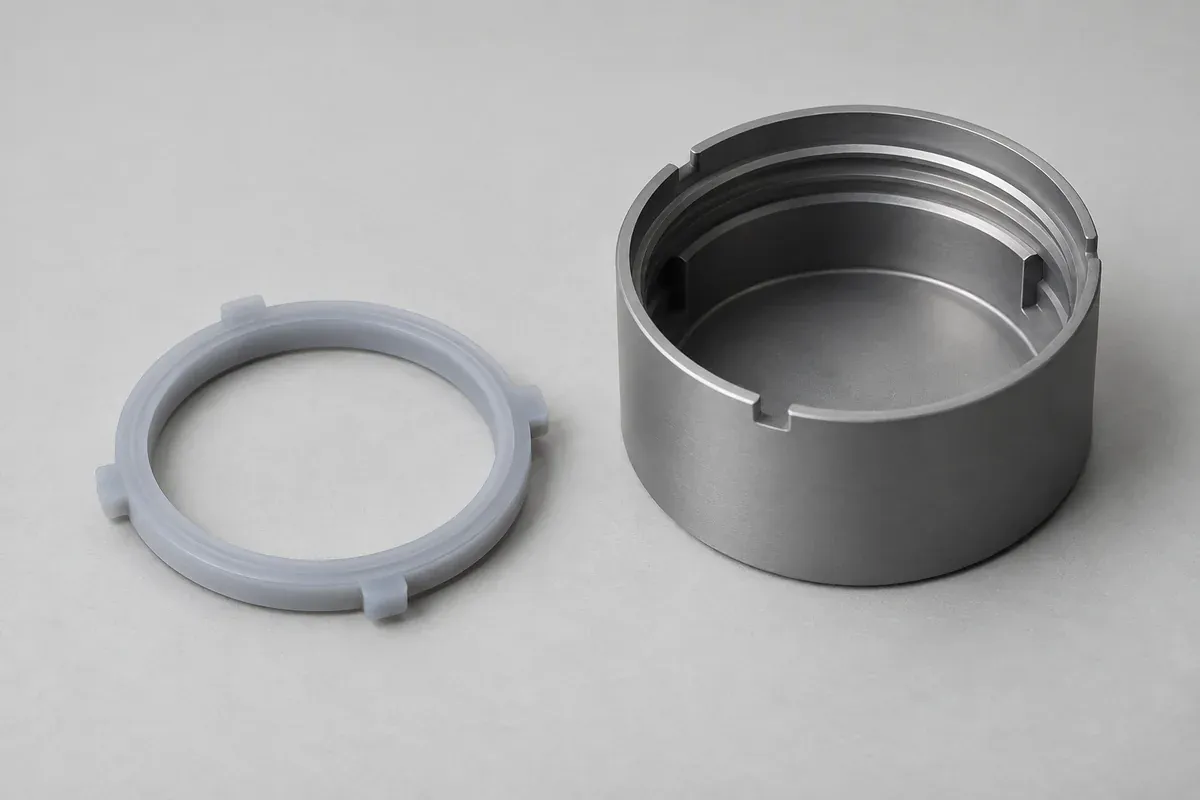
Specify the material requirement without overclaiming
If a grade has been selected, provide its exact identity and required documentation. If selection remains open, describe temperature, chemicals, cleaning, color, relevant mechanical behavior and the intended use. Hardness alone does not define a silicone compound or its performance.
State any curing or post-curing requirement that forms part of the approved material configuration. WACKER's processing reference distinguishes grade and process considerations; the exact supplier's current instructions should inform the proposed manufacturing route.
If a regulated or safety-related use is involved, identify the applicable requirement and who will evaluate compliance. A resin datasheet or a supplier's general certificate is not automatically approval of your finished assembly. Do not request a vague “certified silicone” and leave the intended claim undefined.
Describe the actual sealing conditions
Identify the media, pressure or environmental exposure, temperature history and expected opening or service sequence. Distinguish normal operation from exceptional events. If these conditions are not known, list them as open questions rather than asking the supplier to invent a rating.
Provide the expected closed-joint relationship and available closure method. Use the groove review to connect the seal to housing variation. If closure force is a concern, describe the assembled requirement rather than specifying only a softer hardness.
State whether a finished-enclosure leakage or ingress test is required, its method and its owner. Component inspection and assembly qualification should have separate line items where appropriate. A successful component measurement is not a substitute for a test that was never included.
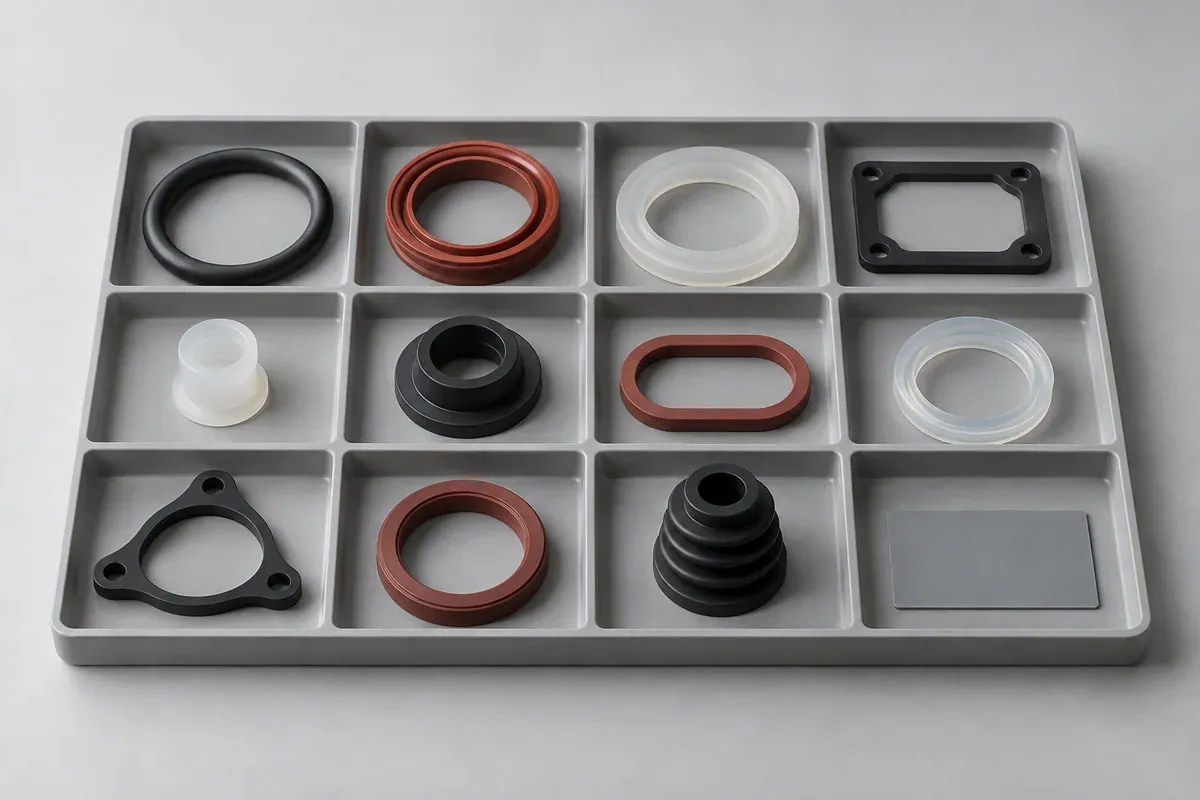
Define the commercial and evidence package together
Separate development samples, first production order and forecast repeat demand. Give the destination, packing constraints and desired timing. Ask the quotation to identify tooling, sample work, secondary operations, inspection and any customer-supplied items.
Agree tool ownership, maintenance and change control. If a new material, cavity correction or secondary process would require reapproval, make that explicit. A low unit price is difficult to assess when the proposal excludes the evidence the buyer expects.
For sample approval, identify critical dimensions, functional checks, reports and counterpart availability. Include permitted flash and gate-witness regions using the surface acceptance guide. Avoid asking for every dimension to be critical when only a defined subset governs the joint.
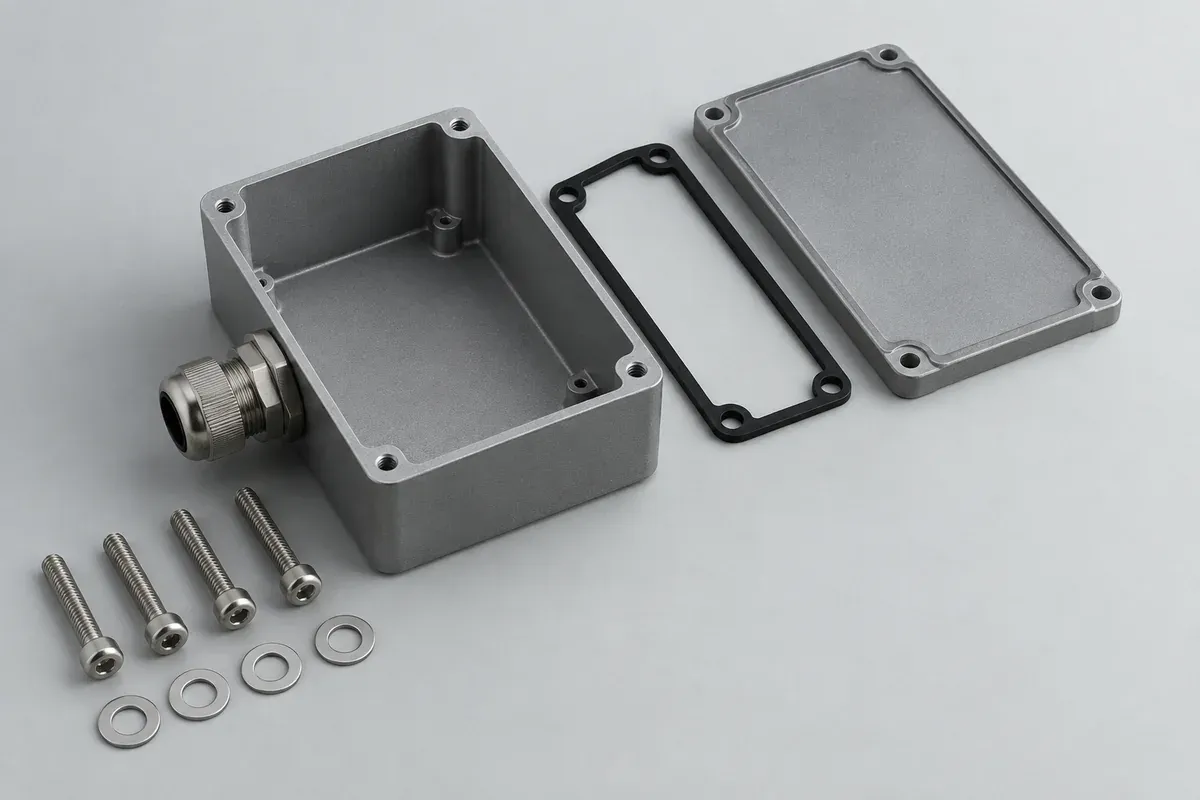
A useful first response may identify missing information or propose a development step. That is more actionable than an unqualified price based on hidden assumptions. Keep the questions and agreed answers attached to the drawing revision so they remain visible when the order moves to tooling.
The completed RFQ should explain what is being made, why the geometry matters and how acceptance will be decided. It gives both parties a shared basis for commercial comparison while leaving untested performance claims out of the offer.
Turn the review into a defined molding scope
Explore our custom LSR injection-molded gaskets and seals and the related illustrative engineering study. Send the drawing revision, counterpart details, intended use and the decisions still open. Development samples and production approval should have separate, agreed deliverables.