
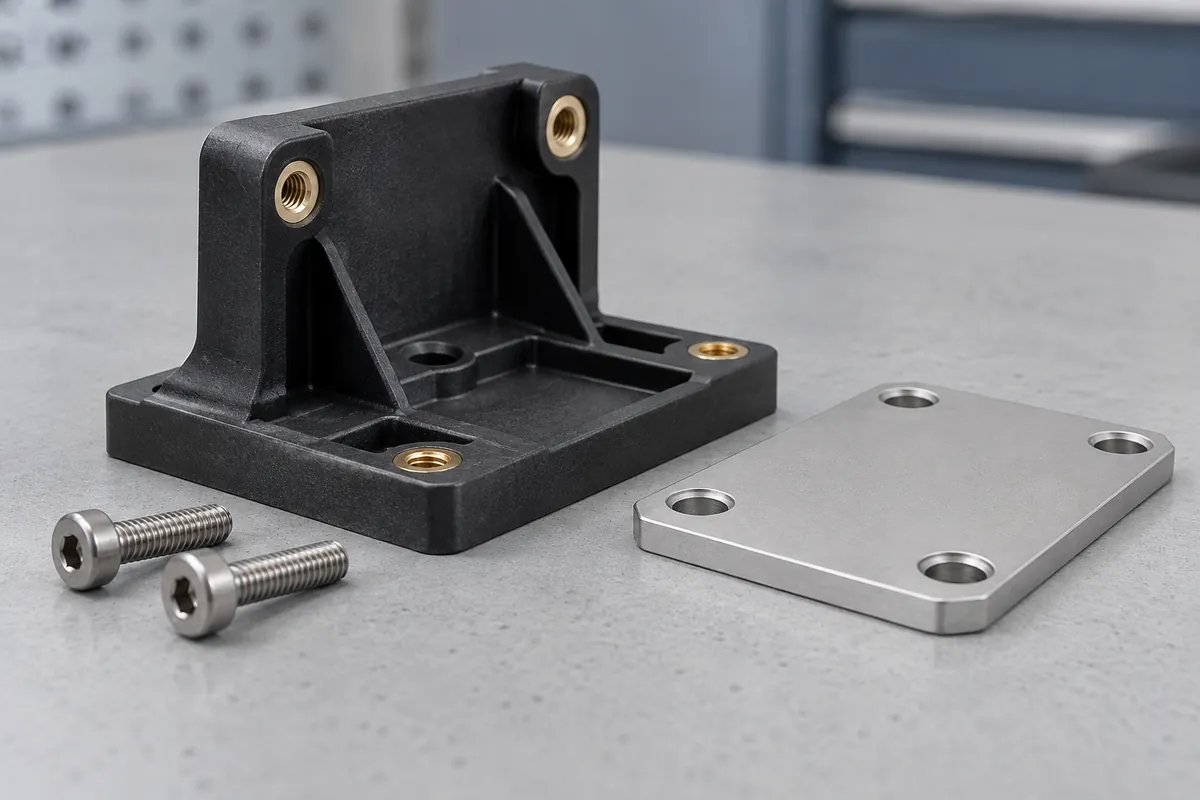
A mounting bracket may be assembled once in production and opened many times during servicing. Another may remain untouched but carry a sustained joint load. Both contain threaded inserts, yet the questions needed to approve them are different. “Reusable threads” does not by itself define either assembly's lifetime.
A repeated-fastening plan needs to reproduce the intended service action and state what will be checked afterward. Counted screw operations are useful only when the screw, joint stack, tightening procedure, environment and failure criteria are defined. This article explains how to build that plan without inventing a universal cycle count.
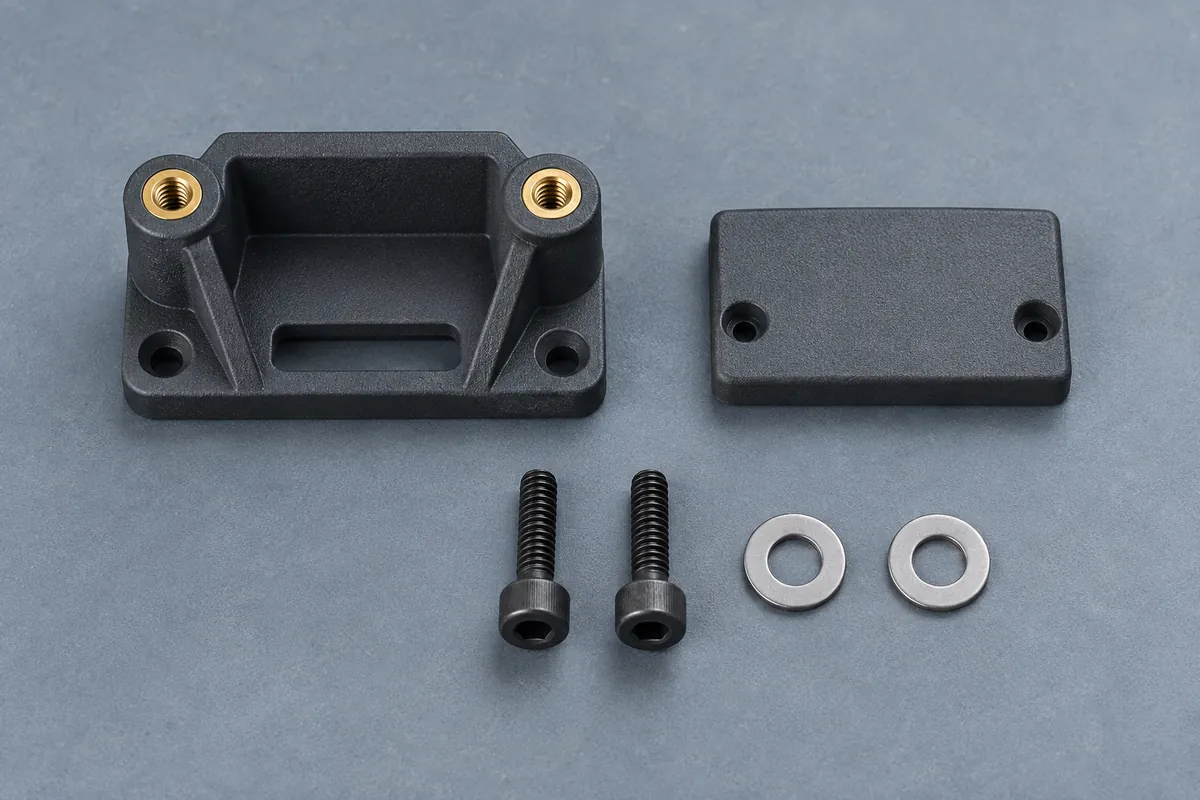
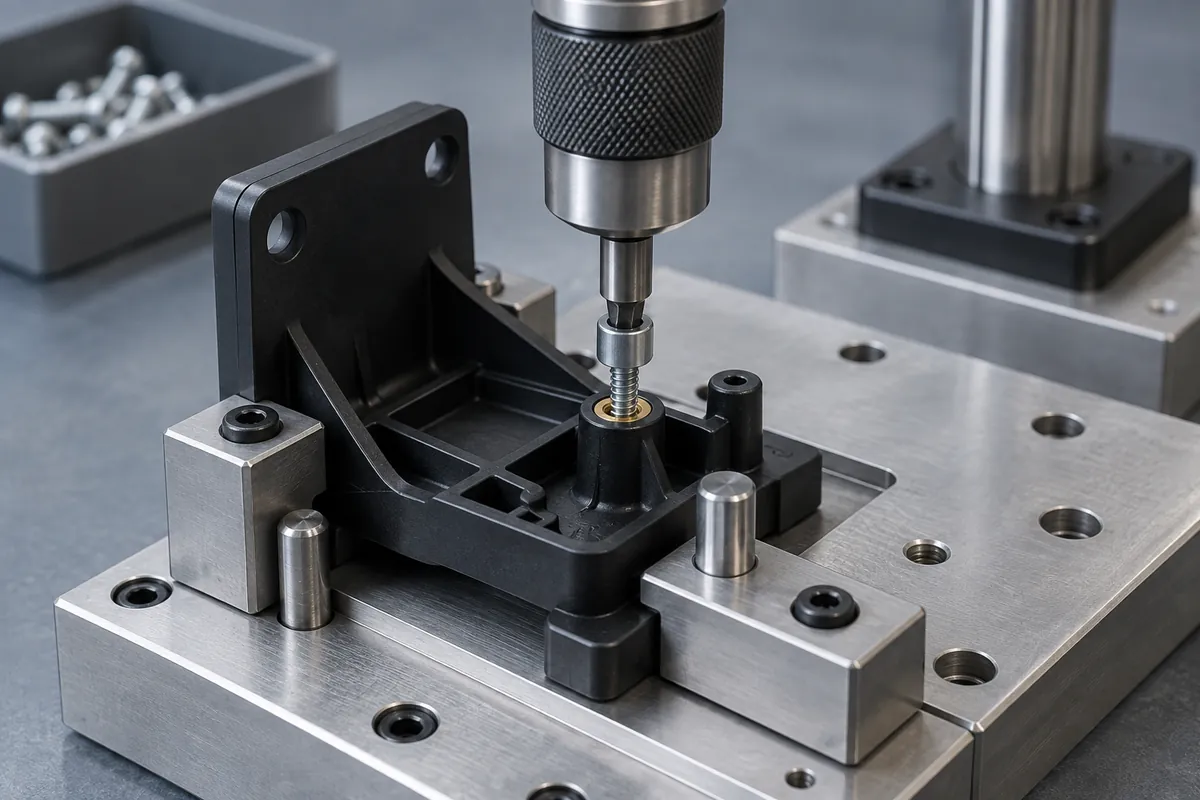
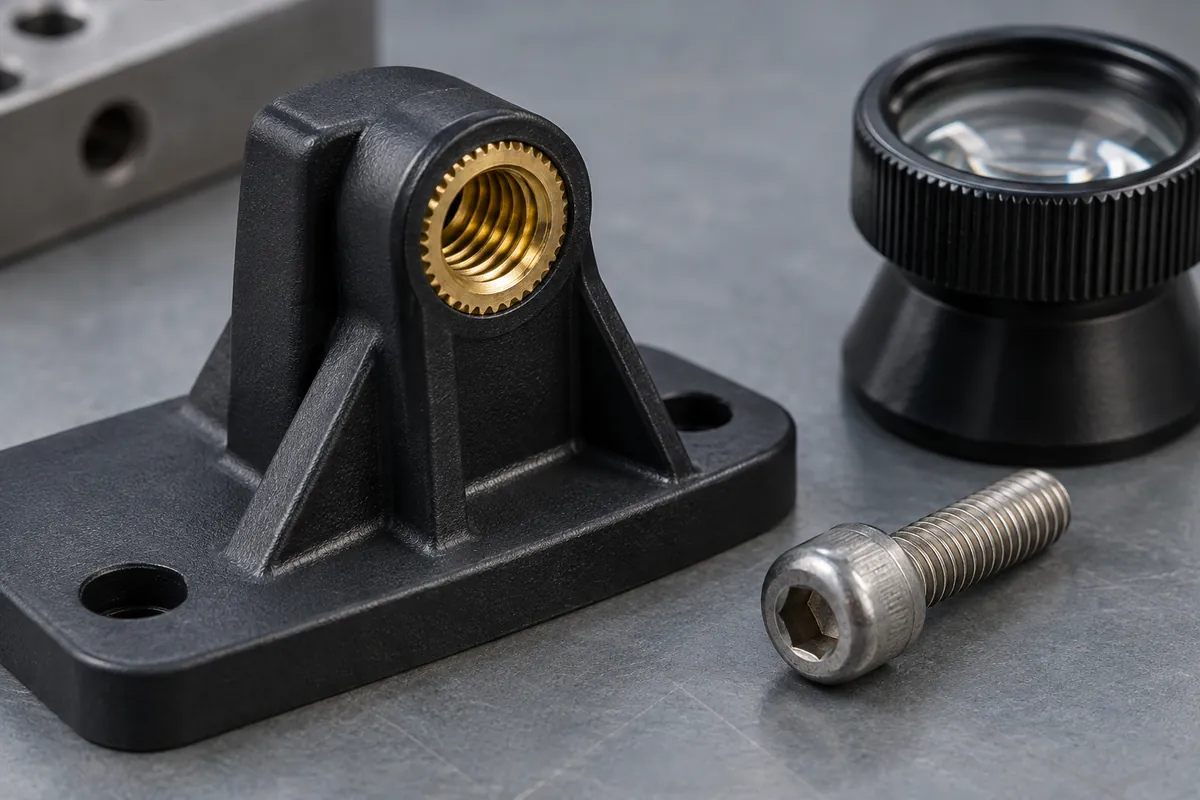
All images in this article are newly AI-generated illustrations of engineering concepts, not photographs of a customer project or evidence of completed testing.
Describe One Service Event Before Counting Events
For a conceptual equipment bracket, a service event might mean removing a cover, disconnecting a component, reinstalling the same screws and tightening the joint in a specified sequence. Write that sequence down. Merely backing a screw off slightly and retightening it may not represent complete disassembly, realignment and re-engagement during actual service.
Specify whether the screws, washers, mating plate or any locking element are replaced during the sequence. If the normal service instruction calls for a new fastener, a test that repeatedly reuses one fastener is investigating a different condition. Neither choice is automatically wrong; an unexplained difference is the problem.
Likewise, define cross-threading or incorrect assembly separately from intended-use cycling. A robustness study may intentionally include misuse, but that should have its own rationale and acceptance basis. Mixing uncontrolled assembly errors into an ordinary cycle test makes it difficult to identify what the observed result actually means.
Inspect the Joint, Not Only the Metal Thread
The internal thread is one element of the assembly. The surrounding plastic, insert location, mating surface and screw engagement also belong in the inspection. A screw that still turns freely can coexist with an insert that has moved or a boss that has developed damage. Conversely, a change in feel should be investigated rather than automatically classified as insert rotation.
Use feature-specific observations: thread entry condition, insert height or movement, cracks, mating-face seating and the function that the joint is intended to retain. If preload or another joint property is a requirement, define an appropriate method with the responsible engineer instead of claiming that a torque reading proves it.
SPIROL's insert performance guidance supports evaluating the intended application. For this proposed plan, that means keeping basic retention tests separate from repeated assembly. A destructive pull or rotational test on a fresh specimen does not establish the behavior of a serviced assembly.
Environment and Timing Need Explicit Boundaries
State the relevant temperature and moisture conditions, dwell periods and time between operations. The product team should decide whether the test is performed before exposure, during a specified environment or after conditioning. A convenient room-temperature bench check should not silently become evidence for all operating conditions.
Repeated assembly and sustained-load evaluation are also distinct. A joint can experience both, but a quick sequence of screw operations does not reproduce months of loading. If both questions matter, define separate investigations or a justified combined sequence, with controls that help interpret what each exposure contributes.
| Decision | Fill before testing | Evidence after testing |
|---|---|---|
| What counts as one cycle? | Removal, component replacement, alignment, screw sequence: ____ | Completed sequence, interruptions and operator exceptions. |
| Which conditions apply? | Torque procedure, environment, intervals, count and sample plan: ____ | As-tested configuration and condition history. |
| What constitutes failure? | Allowed damage/movement, function, limit source and approver: ____ | Individual observations at agreed inspection points. |
Look for Change at Planned Inspection Points
Agree when to stop for examination and which observations require the test to end. Waiting until a screw can no longer be tightened may miss the earlier point at which the assembly became unacceptable. On the other hand, opening the fixture for an unplanned inspection may change the sequence; record those interruptions rather than hiding them.
Keep specimen identity through the full sequence. Photograph the same identified regions using a consistent view where useful. Do not infer a pass from the absence of an obvious crack in one final image. The report should state the completed operations, findings and deviations against the previously agreed criteria.
Turn the Result into a Bounded Approval
An approval should identify the bracket revision, resin, insert, fasteners, mating parts and tested sequence. If one of those changes later, assess whether the existing evidence still applies. A statement such as “tested for the agreed service sequence” is more meaningful than “unlimited reassembly,” which the proposed study cannot establish.
Use thread inspection and retention testing as complementary parts of the approval package. For custom injection-molded brackets, send the expected maintenance sequence along with CAD and quantities. Discuss a bracket quote with a defined repeated-fastening scope.