
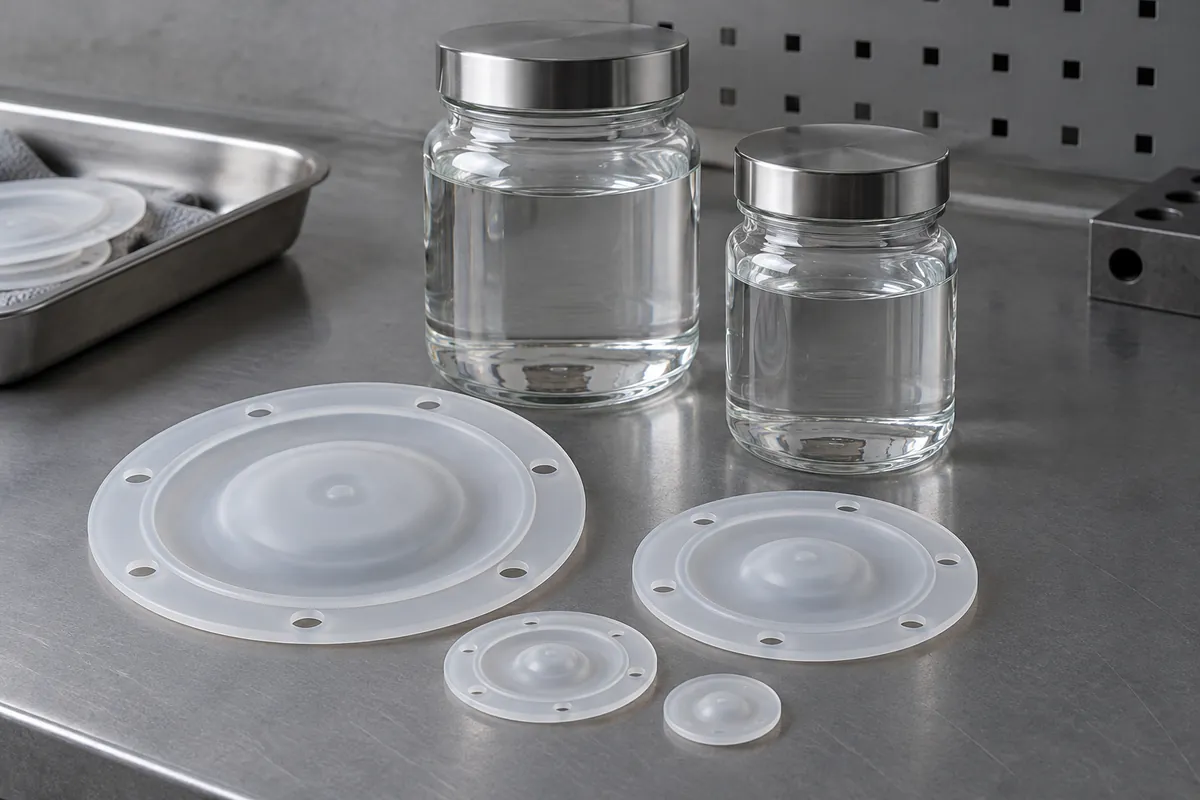
Product design illustrations. Final geometry, materials and acceptance criteria are project-specific.
Silicone is a material family, not a universal answer to fluid compatibility. A diaphragm encounters its operating medium while being clamped and deformed, sometimes after cleaning or other conditioning. A material that appears acceptable in a simple reference table may still require a more specific review for that combined duty.
Write the exposure sequence before selecting a grade. Include the fluid composition, concentration, temperature, contact duration and whether the part dries between uses. Identify cleaning agents and residues separately, because the diaphragm may spend only part of its life in the nominal process fluid.
Use an exact material identity
Record the manufacturer, grade, colorant and any additional processing that forms part of the supplied component. A familiar Shore hardness does not identify the formulation. Substituting another compound at the same hardness may change properties that matter to swelling, sealing or repeated movement.
For example, DuPont's Q7-7840 information identifies a particular LSR grade. Such information supports a material review; it does not establish that every finished diaphragm made from that grade is approved for every fluid or device.
Distinguish typical datasheet values from project acceptance results. A supplier's standardized specimen and the molded diaphragm may differ in geometry, processing and test condition. Do not present a typical material value as a measured result from the customer's assembled component.
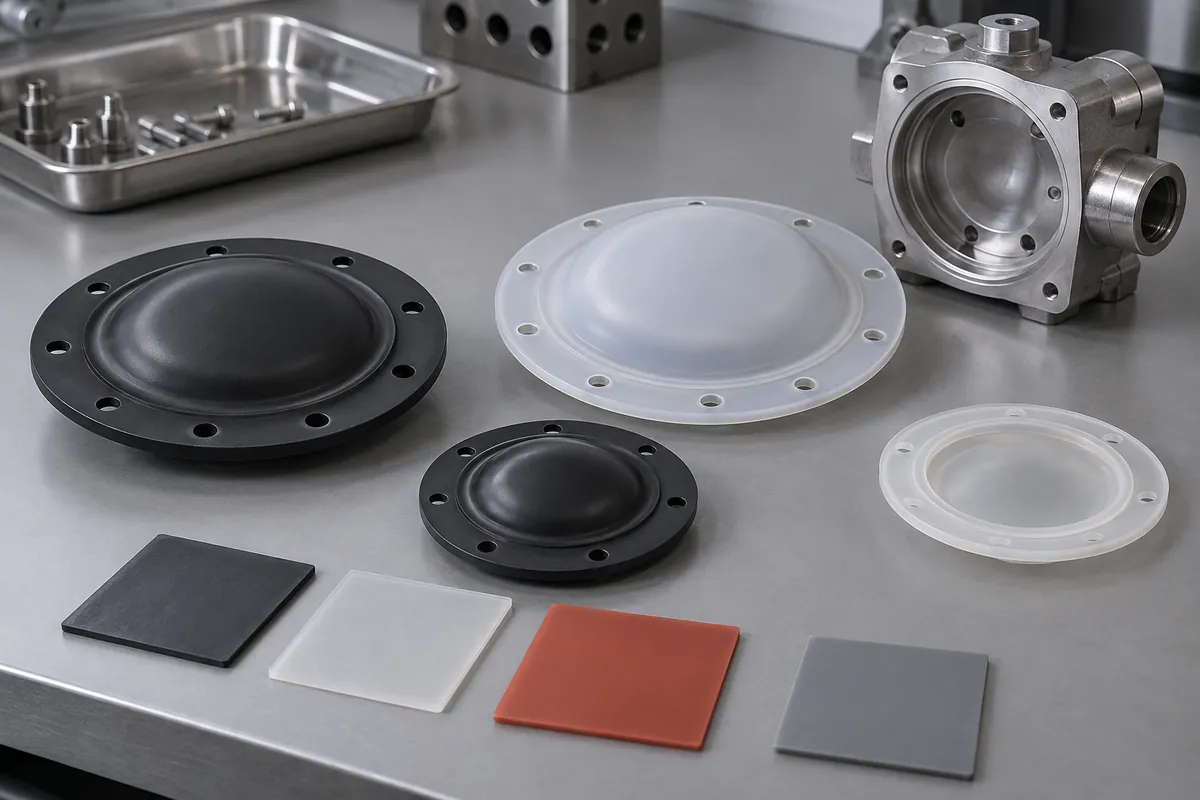
Look beyond visible damage
A part can appear intact while its dimensions, hardness or mechanical response have changed. Swelling may alter a clamping interface, while a change in response can affect actuation or sealing. Select observations that connect exposure to the diaphragm's function rather than relying only on a photograph.
Compare conditioned samples with a defined baseline. Record how specimens are cleaned, dried or stabilized before measurement. Measuring one specimen immediately after exposure and another after extended drying can create a misleading comparison even if both are labeled with the same fluid and temperature.
Include the required exposure duration and any relevant repetitions. A brief screening soak may help reject unsuitable candidates, but it does not establish long-term performance. Likewise, accelerated conditions need a justified relationship to the intended duty rather than an assumed conversion into years of service.
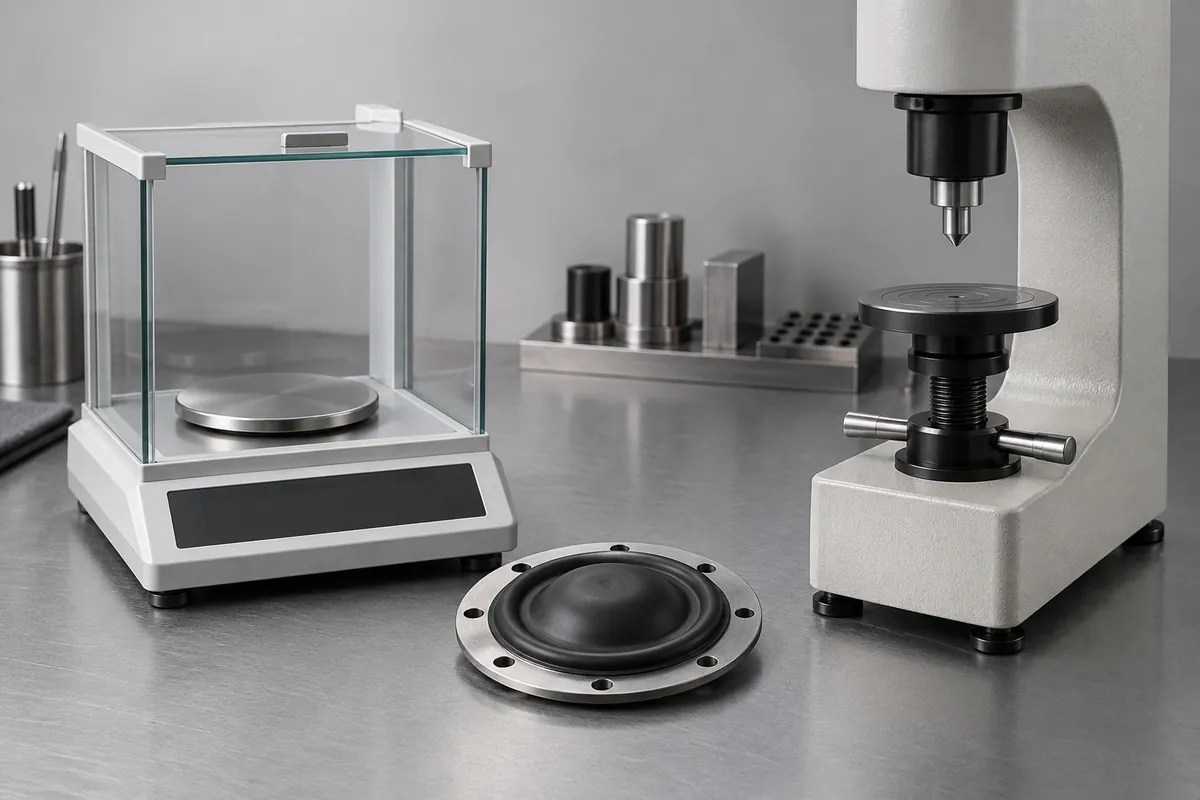
Test the assembled function
After material screening, evaluate the diaphragm in representative hardware. The clamp, center attachment and pressure direction influence whether a material change becomes a functional problem. A free coupon does not experience these constraints and therefore cannot replace the final assembly review.
Keep sealing, movement and endurance outcomes separate. Passing a short leak check after exposure does not prove unchanged fatigue behavior, and completing movement cycles does not necessarily establish a specified leakage limit. Design the test sequence around the failure modes identified for the application.
Review all contacting materials in the system. A lubricant, adhesive, coating or housing material can introduce another exposure or change the interface. If the diaphragm is cleaned or assembled using a substance not present in the original qualification, assess that change before calling the configuration equivalent.
A fluid change should trigger review even when the product name remains similar. Different concentrations, additives or cleaning residues can create a different exposure sequence. Request the revised composition and operating conditions from the system owner rather than assuming a familiar commercial name establishes equivalence to the previously evaluated medium.
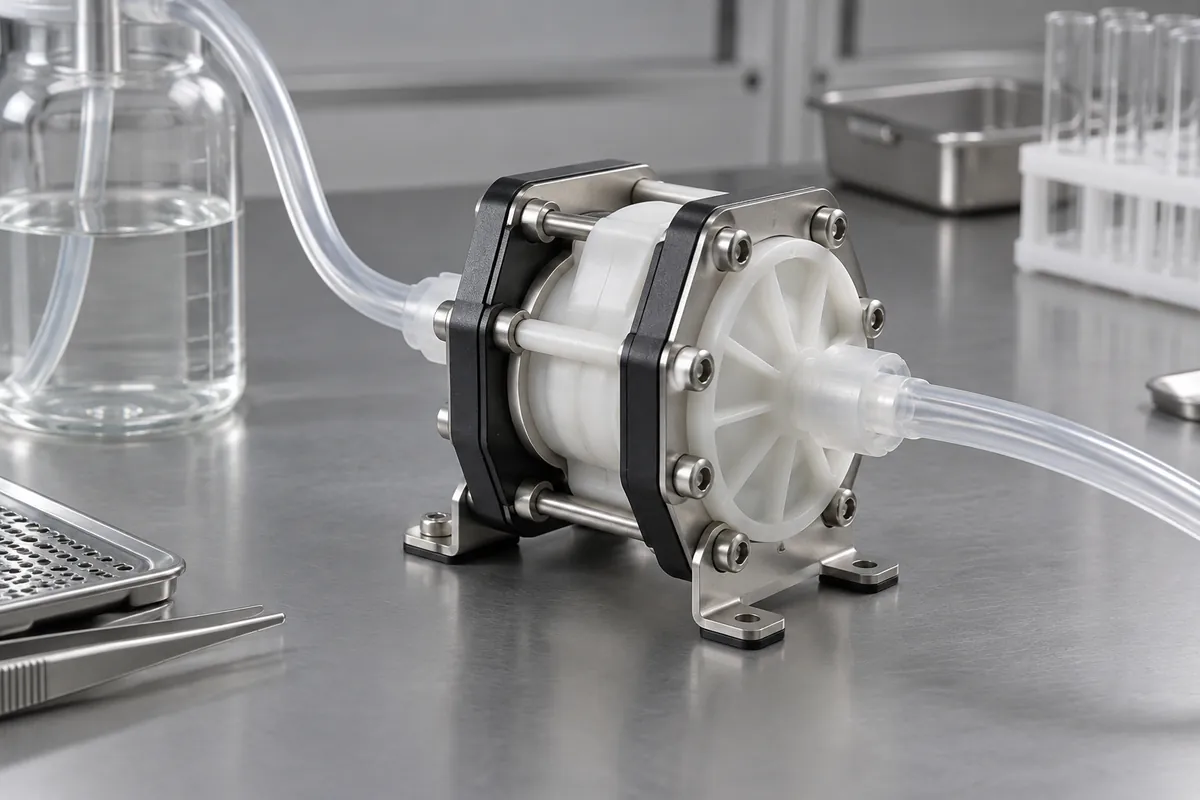
Keep compliance claims within their evidence
For regulated applications, identify the applicable contact conditions and documentation requirements with the responsible device or system team. Material-level biological evaluation or a supplier declaration is not the same as approval of the finished device. Manufacturing, colorants and processing remain part of that assessment.
Plan any cycle testing after relevant conditioning, and record the remaining open questions. If a compound is only a candidate, say so. That allows purchasing and engineering to progress without converting a preliminary choice into an unsupported performance promise.
Maintain the approved grade and exposure specification with the drawing. Reassess changes to the fluid, cleaning procedure, temperature or material source against that record. Compatibility is a relationship between a defined material and a defined application, not a permanent attribute inferred from the word silicone.
Discuss the component and its acceptance requirements
Explore our custom silicone diaphragms and the related project case study. Send the current drawing, mating-part details, operating conditions and required quantities. We can review tooling, molding and inspection as a defined supply scope, with development samples and production approval kept separate.