
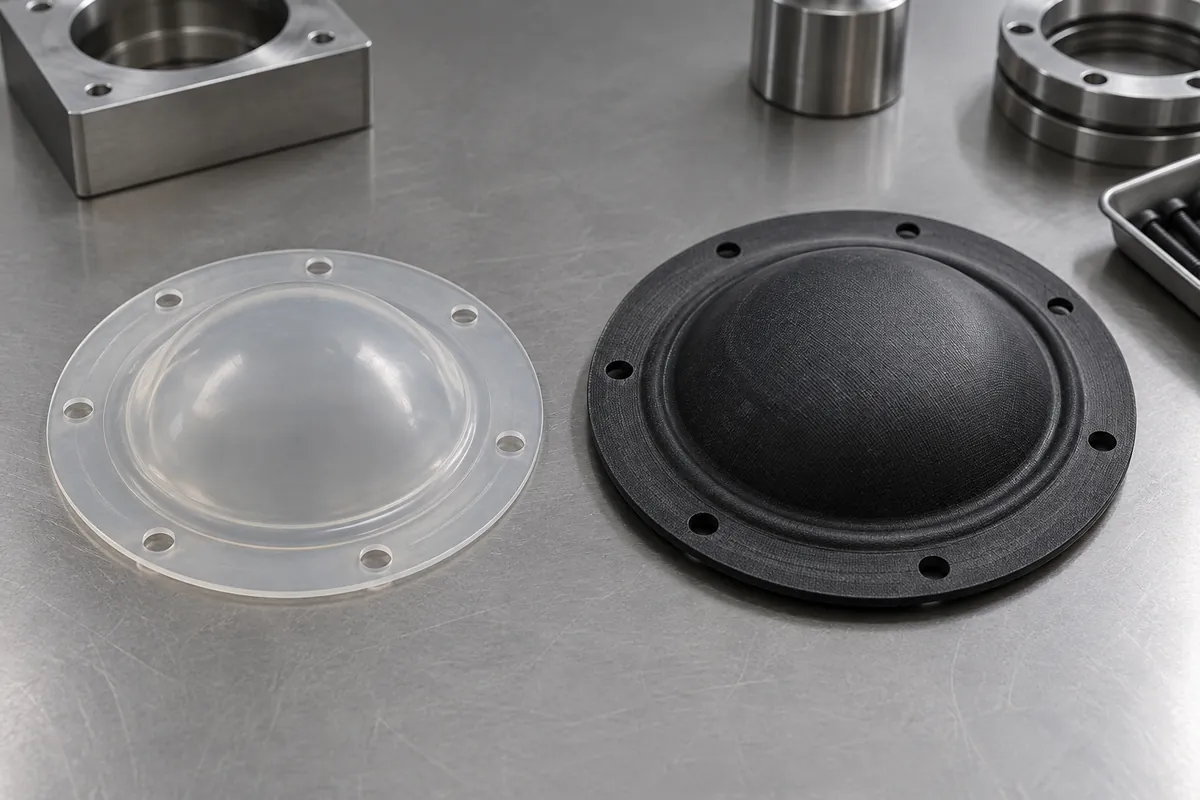
Product design illustrations. Final geometry, materials and acceptance criteria are project-specific.
Fabric reinforcement can change how a rubber diaphragm carries load, but it is not an automatic upgrade for every application. A reinforced construction adds another material, another interface and another set of manufacturing controls. Its value depends on the required pressure, motion and support geometry.
An unreinforced molded silicone membrane may be appropriate where the shape and assembly provide the required movement and support. A reinforced alternative should be considered when a defined requirement justifies it, not simply because the word reinforced sounds more durable in a purchasing specification.
Identify what the reinforcement is meant to do
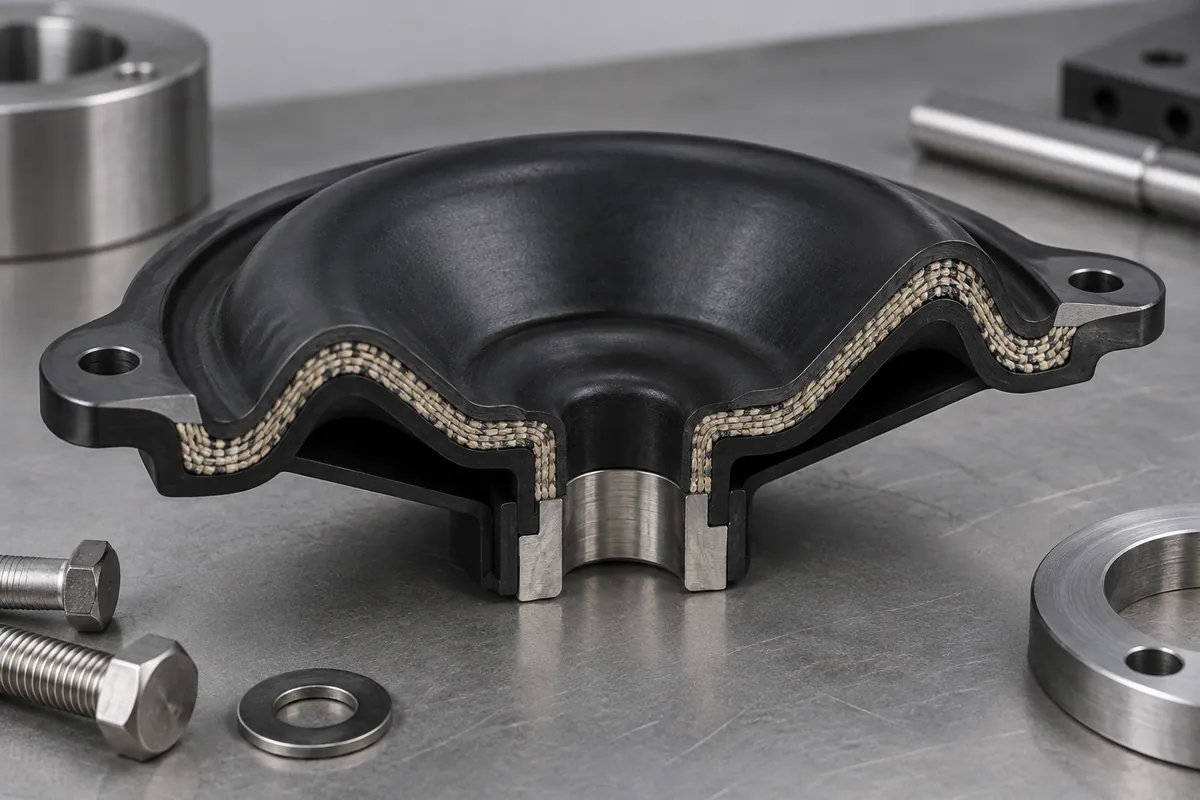
Start with the load path. Determine which region is unsupported and how pressure or movement loads that region. Reinforcement can help carry tensile loading, but it must be positioned and oriented appropriately. Adding fabric without reviewing the complete section can introduce stiffness or folds where flexibility is needed.
The DiaCom overview of fabric-reinforced diaphragms describes the structural role of a fabric layer. That principle does not identify the correct fabric, elastomer or manufacturing method for a different custom design.
Define the desired response before comparing candidates. A diaphragm may need to resist pressure while remaining sensitive to small movement, or it may need controlled displacement over a larger travel. These are assembly requirements; they cannot be reduced to the tensile strength of an isolated material sample.
Review the extra interfaces
Fabric position affects the working section. Wrinkles, local displacement or exposed edges can create a construction different from the approved design. Ask how the proposed process locates the reinforcement and how the finished part will be checked for the relevant defects without damaging it.
The reinforcement and elastomer must both suit the operating environment. Compatibility of the outer rubber alone does not establish compatibility of the whole construction, especially where an edge or interface can be exposed. Include cleaning agents, temperature changes and any intended sterilization process in the review.
Consider the attachment region as well as the moving wall. A clamped flange can compress a layered construction differently from a solid elastomer flange. The groove and tightening method should be designed for the selected construction rather than reused unchanged because the outside diameter is the same.
Do not assume one molding route covers both options
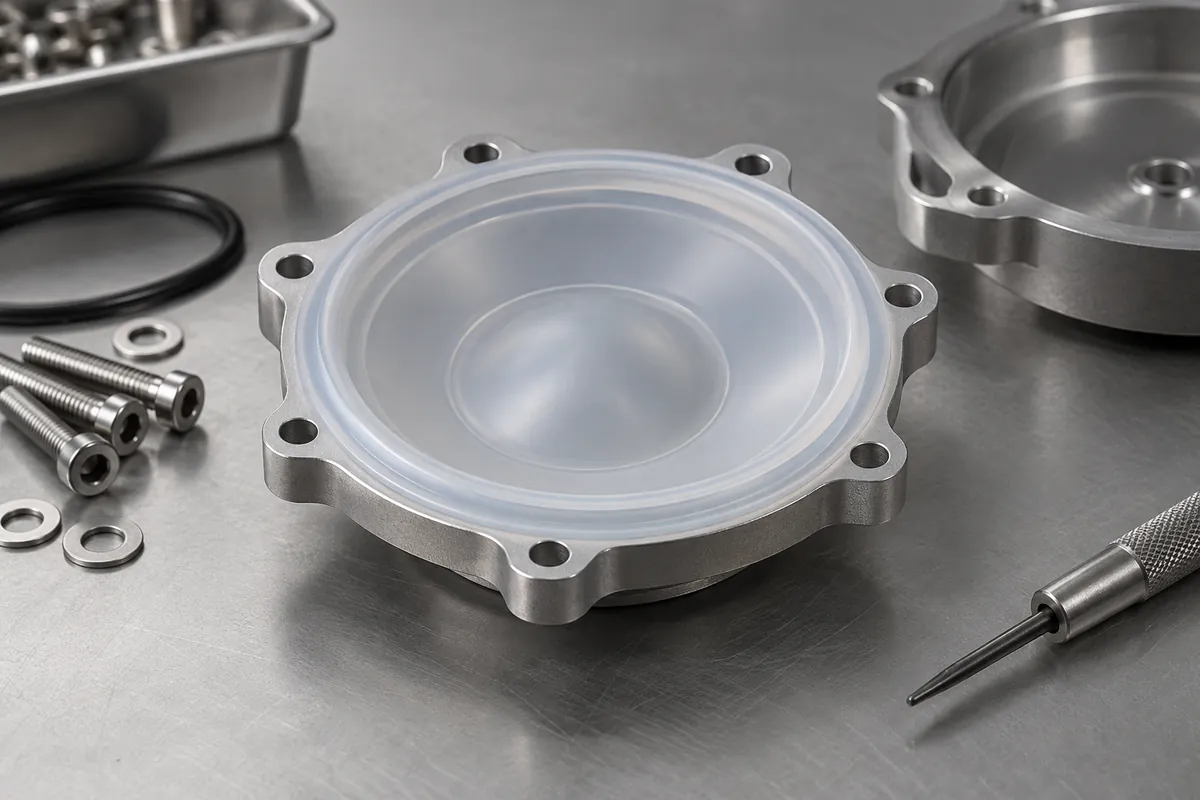
Ask the supplier to identify the intended manufacturing route, reinforcement preparation and bonding or encapsulation method. A capability to injection mold unreinforced LSR does not by itself demonstrate capability for a particular fabric-reinforced diaphragm. Confirm the proposed scope before comparing tooling prices.
Include handling and inspection requirements in the quotation. If a fabric insert must be prepared and positioned individually, that affects process control and production planning. If a different elastomer or process is proposed, compare the resulting construction against the same functional requirements rather than just the same outline.
Keep prototypes representative of the construction being evaluated. A solid silicone sample cannot demonstrate the fatigue behavior of a layered reinforced production part. It may still help assess packaging or installation, provided those limited purposes are clearly separated from pressure and endurance qualification.
Choose from evidence tied to the application
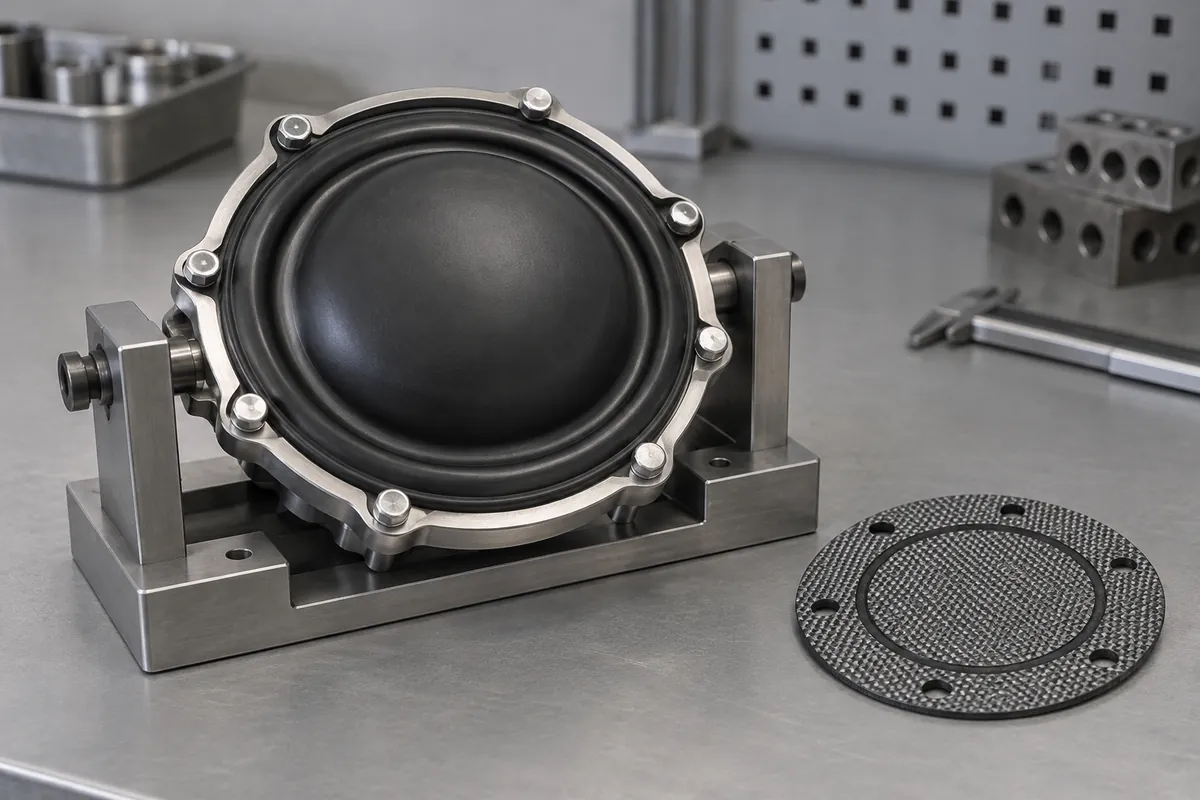
Evaluate force response, sealing and repeated motion in the intended housing. Record where failures occur and inspect the reinforcement interface where applicable. A pass or fail result becomes more useful when it explains whether the limitation came from clamping, deformation, material exposure or another identified mechanism.
Review bead and housing geometry before attributing every difference to the material construction. A better-supported specimen can outperform a poorly mounted one even when the latter has a nominally stronger reinforcement.
Release the approved material combination, layer arrangement, molding route and inspection criteria together. Later substitutions should preserve the validated construction or trigger a new review. A generic purchase order for reinforced silicone leaves too much uncertainty about what was actually qualified and what will be delivered.
Discuss the component and its acceptance requirements
Explore our custom silicone diaphragms and the related project case study. Send the current drawing, mating-part details, operating conditions and required quantities. We can review tooling, molding and inspection as a defined supply scope, with development samples and production approval kept separate.