
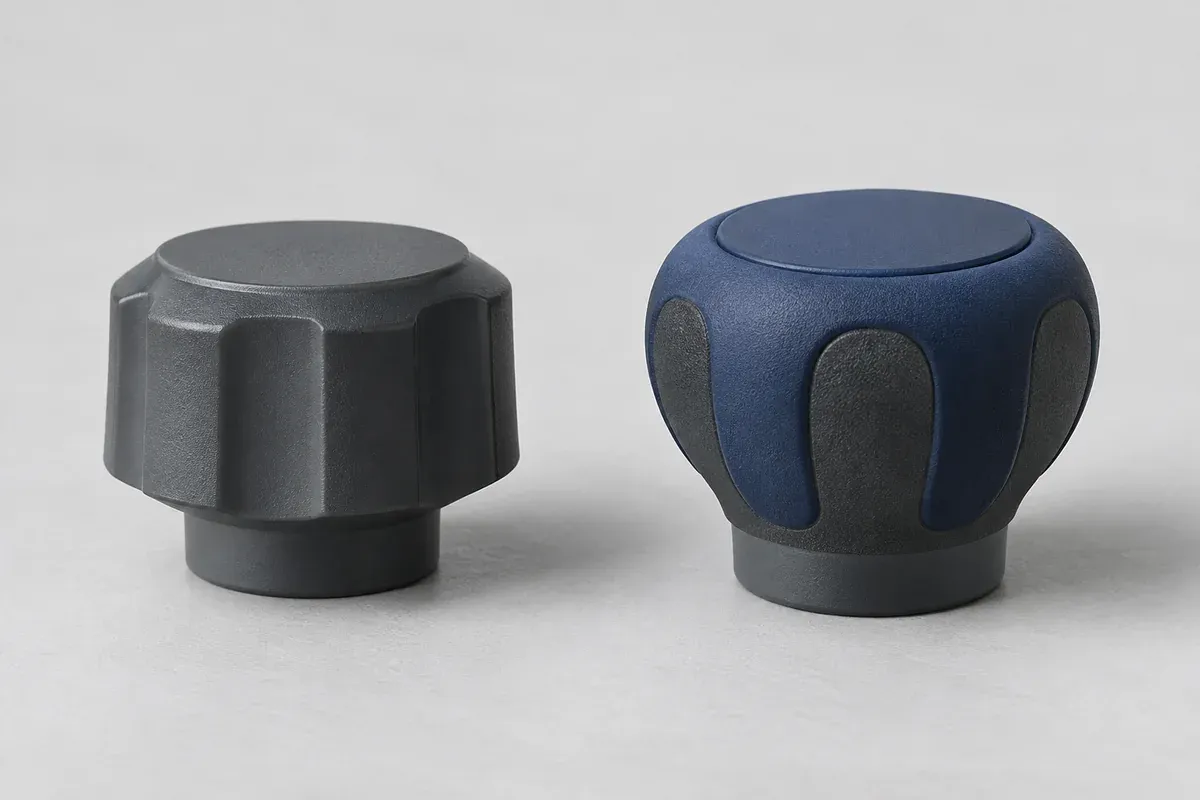
Product design illustrations. Final geometry, materials and acceptance criteria are project-specific.
A soft-grip region can change how a control knob feels, but it also adds a second material and another set of interfaces. The choice should begin with how the control is used: available grip area, operating effort, cleaning, environment and the user's access to the knob.
A well-designed single-material knob may meet the requirement through size and texture alone. An overmolded design may be appropriate when a defined compliant contact region serves a clear function. Compare those concepts before treating a two-color appearance as an engineering requirement.
Define the contact and operating conditions
Describe the intended use and any required evaluation with representative users or equipment. The operating torque comes from the controlled mechanism, not the grip material alone. A larger or softer grip should not be used to conceal a shaft interface that is incorrectly specified.
Include cleaning agents, expected contact substances and the relevant environment. If gloves, wet handling or other conditions matter, state them in the evaluation brief. A smooth studio sample cannot demonstrate grip performance under those conditions.
Decide which surfaces are functional grip zones and which are primarily cosmetic. That distinction guides texture, material boundaries and inspection. A small decorative elastomer patch may behave differently from a continuous contact band around the knob.
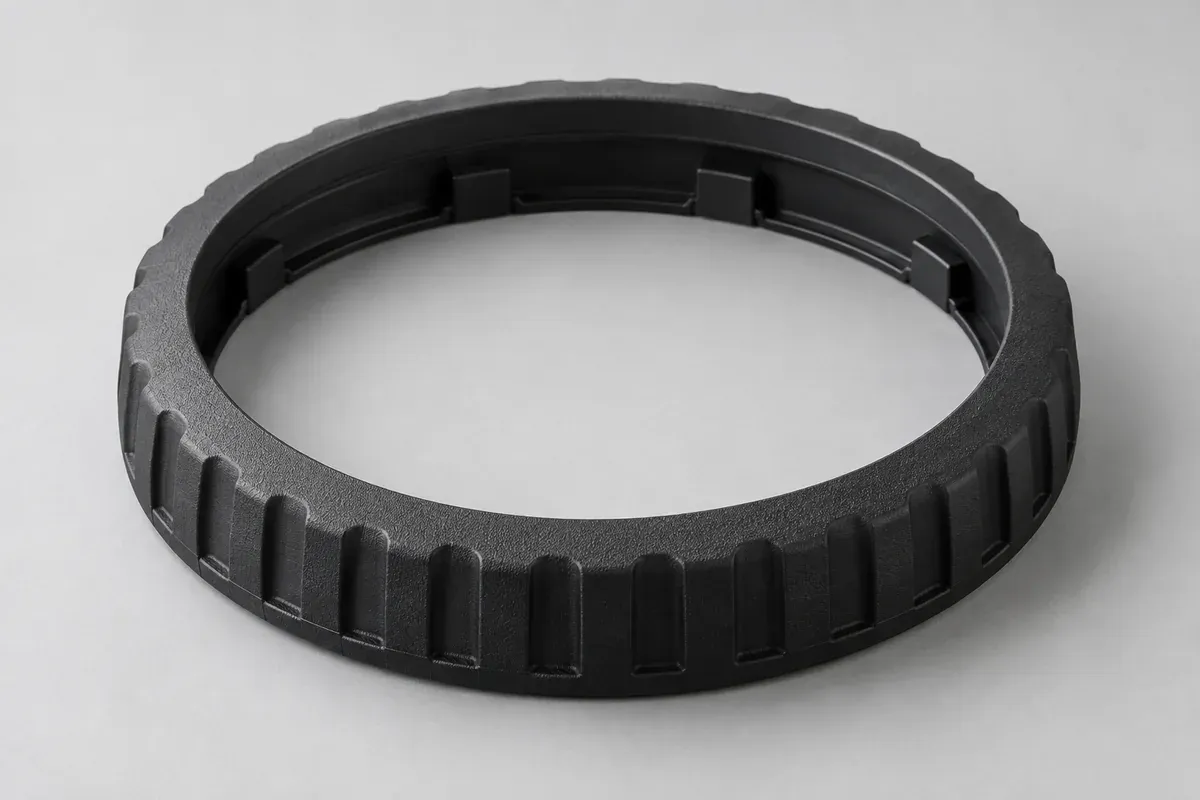
Compare geometry before changing the material system
Review diameter, height, finger clearance and surface form using the actual panel layout. A knob can be comfortable on a bench yet difficult to operate when installed beside another control. Keep the surrounding geometry in the design review.
For a single-material option, consider whether molded ribs or an appropriate texture provide the required contact. The texture must remain compatible with mold release and appearance requirements. Its usefulness should be evaluated on a representative sample rather than a rendering alone.
For an overmolded option, define the substrate shape beneath the grip and the allowed exterior envelope. The elastomer should not encroach on the panel clearance or obscure the intended index. Relate these boundaries to the final assembled position.
Select a compatible, identified material pair
The rigid substrate and elastomer need to be reviewed together. A material advertised for overmolding does not necessarily bond suitably to every plastic. Ask for guidance relevant to the exact proposed grades and the planned molding sequence.
KRAIBURG TPE's product database distinguishes compounds by application and substrate adhesion. Use that kind of manufacturer information to shortlist a pair, then evaluate the actual part and process. It does not establish bond quality for an untested knob.
If mechanical retention features are proposed, define their role alongside any expected material adhesion. The interface should have an explicit acceptance plan. Do not describe a visually seamless boundary as proof that the grip cannot peel, rotate or separate.
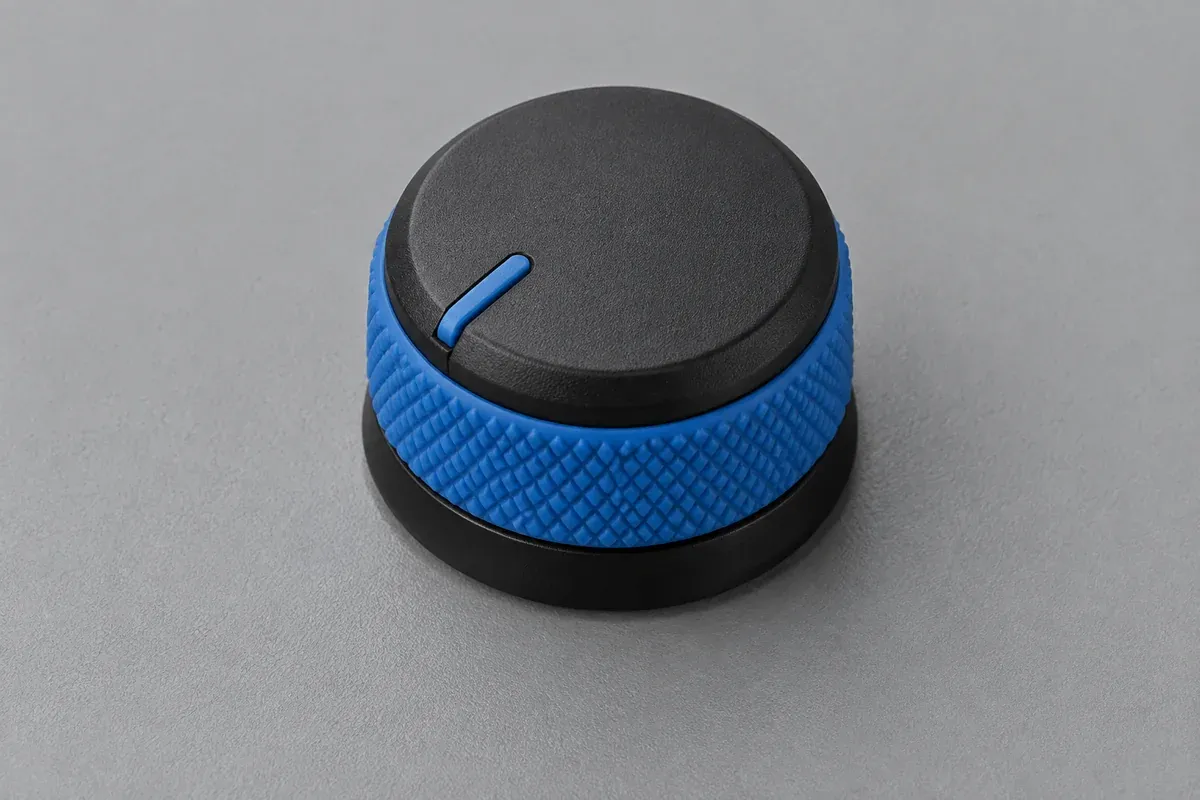
Agree appearance and bond-related checks
Specify color references, texture, permitted witness locations and the condition of the material boundary. A slight mismatch between a drawing and a sample may be cosmetic in one zone and functionally important in another. Make those zones clear before tooling approval.
Define the relevant interface checks and any required conditioning. The method should represent the intended service questions rather than an improvised attempt to pull the materials apart. Acceptance criteria and sample identity need to be agreed before the results are interpreted.
Also check the underlying shaft interface after overmolding. Additional processing should not be assumed irrelevant to the final fit. The shaft geometry guide helps keep that interface separate from the grip discussion.
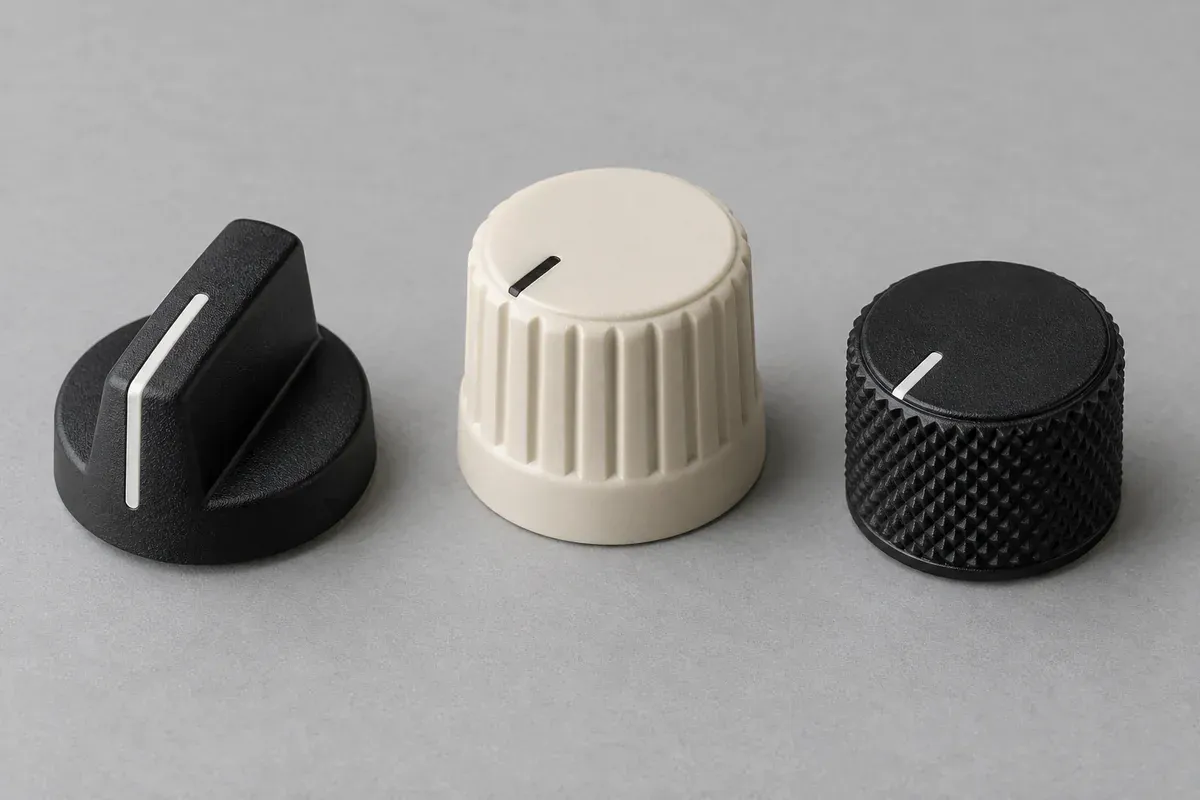
Make the commercial comparison complete
Compare tooling, material handling, molding sequence, inspection and approved alternatives as well as the finished part price. State whether the initial samples must represent the final material pair. A cosmetic prototype may answer an appearance question without closing the bond or use evaluation.
Our overmolding service overview provides the process context. A quotation should still be specific to the knob, its substrate, grip geometry and required records rather than assuming that every soft-touch design has the same production scope.
Choose the simpler configuration when it meets the documented requirements, and the multi-material configuration when its added function is justified. The goal is an approved control interface, not the maximum number of materials or an unsupported claim of better ergonomics.
Turn the review into a defined molding scope
Explore our custom injection-molded control knobs and the related illustrative engineering study. Send the drawing revision, counterpart details, intended use and the decisions still open. Development samples and production approval should have separate, agreed deliverables.