
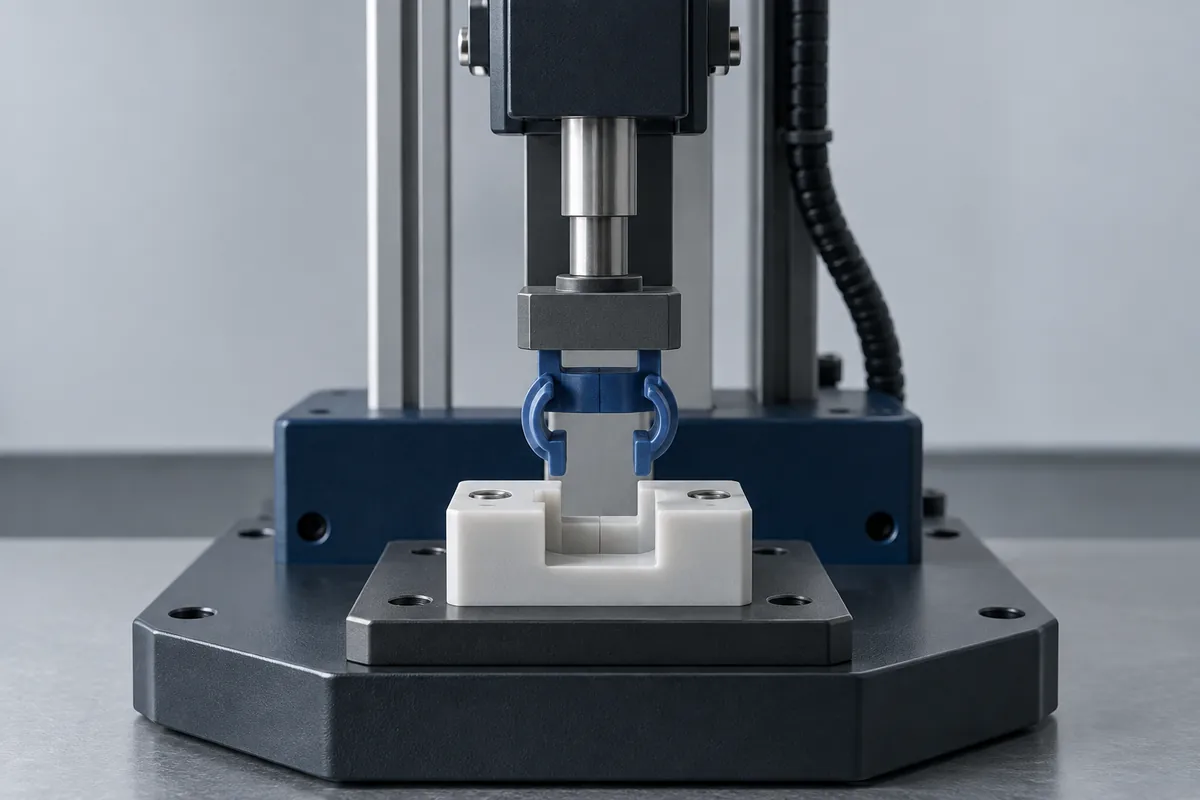
Two laboratories can report that a clip completed the same number of cycles while having performed very different tests. One may release the latch deliberately before withdrawal. Another may pull the parts apart without touching it. One may replace the receiving part regularly; the other may allow both components to wear together.
A cycle count is meaningful only when the cycle itself is defined. For a reusable snap-fit, specify the movement, release action, fixture support and observations before ordering samples. The purpose is to learn whether the actual mechanism keeps performing its required function, not simply whether a machine can repeat a motion.
All images in this article are newly AI-generated illustrations of engineering concepts, not photographs of a customer project or evidence of completed testing.
Start with the User Action You Need to Represent
Describe the initial position, insertion travel, engaged dwell, release action and return position. State whether an operator normally depresses a tab, uses a tool or pulls directly. If the product supports more than one removal method, decide whether each needs a separate test rather than mixing them in one result.
For a conceptual service cover, deliberate release and accidental withdrawal are different evaluations. The first might record the effort required to operate the release tab and remove the cover. The second might load an untouched latch in a specified direction. Calling both “extraction force” without explaining the sequence loses essential context.
Instron's device insertion and extraction testing overview describes measuring forces associated with engagement and removal. It is a useful measurement reference, not a universal clip test standard or a source of acceptance limits for your geometry.
Do Not Let the Fixture Supply the Missing Support
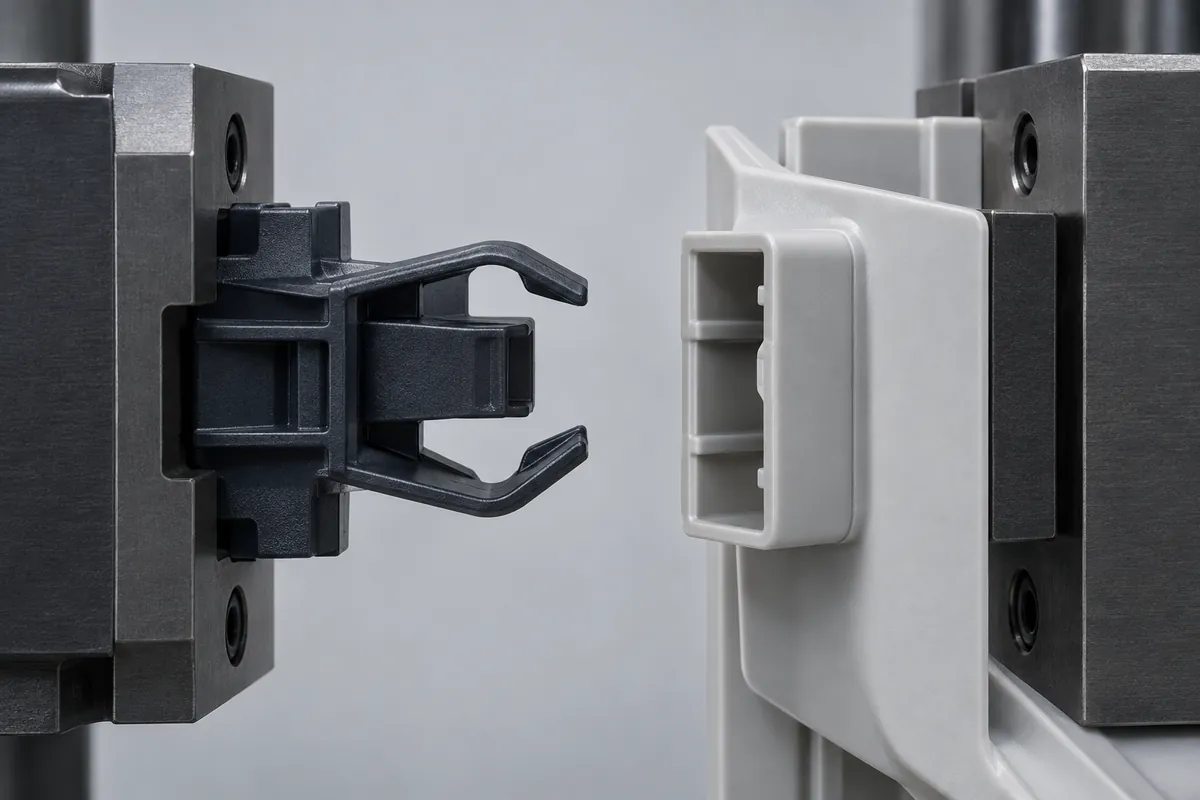
Show which surfaces the fixture contacts and which regions must remain free to flex. A clamp placed beside the beam root can stiffen a wall that moves in the product. A fixture that directly supports the hook can prevent a failure the assembled product would experience. Review this before interpreting a reassuring force trace.
Identify the mating part by drawing and revision. If a substitute block is used, explain what it represents and what it does not. State how alignment is set, how wear of the mating surface is checked and when a replacement is allowed. Otherwise the test can gradually change as the fixture and counterpart wear.
Machine speed, travel, dwell and release timing belong in the method. Avoid selecting them solely to finish the test sooner. If an accelerated operating rate is proposed, the responsible engineer should assess whether it introduces a different response or heating condition from the intended use.
Record More Than a Peak and a Final Count
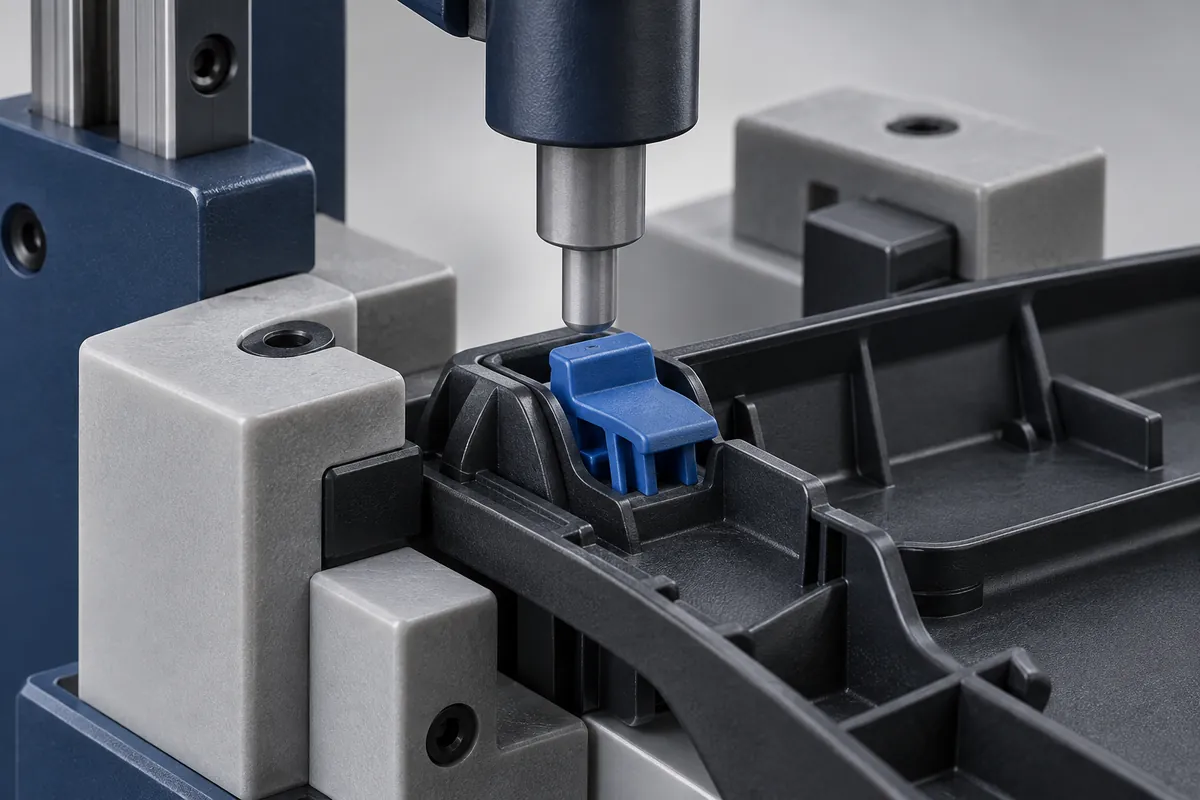
Define which force is reported at each stage and how the measurement is obtained. An insertion peak, seated holding response, tab actuation effort and withdrawal peak need not answer the same question. Retaining the relevant force-displacement record can help the method owner distinguish engagement from bottoming out or fixture contact.
Document specimen identity, resin grade, molding batch or cavity where available, conditioning and mating-part history. Assign observation intervals and preserve individual results. An average alone can conceal one specimen that stopped engaging or a group associated with a different molding condition.
Choose failure criteria before the run. Possible project criteria concern cracking, loss of engagement, unacceptable force change, permanent deformation or inability to complete the intended release. Those are examples of decisions to make, not automatic pass/fail rules for every clip.
| Record | Required detail | Why it matters |
|---|---|---|
| Configuration | Sample ID, drawings, grade, conditioning and counterpart. | Connects a result to an identifiable assembly. |
| Cycle and observation | Sequence, settings, completed count, force definition and inspection findings. | Makes repeated tests comparable. |
| Exception or failure | First observed event, location, images, disposition and excluded data. | Prevents a summary from hiding early stops or invalid runs. |
Explain the First Change, Not Only the Final Break
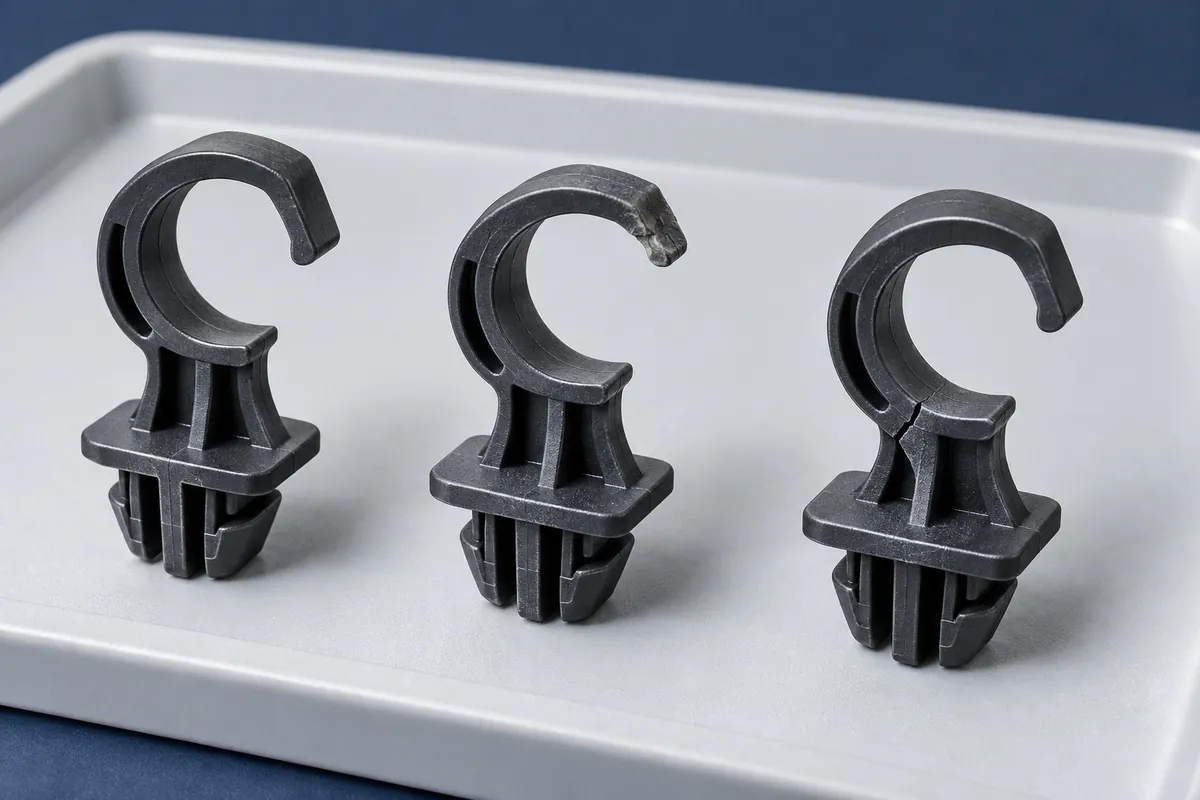
A worn hook tip, a damaged receiving edge and a root crack suggest different next investigations. Note when an observable change first appears and retain its location. Do not wait until complete separation to create a failure record if the product stopped meeting its requirement earlier.
Separate a fixture fault from a specimen failure, but do not silently discard either. Record the reason for stopping, whether the run is valid for its intended question and the approved retest action. Restarting with a fresh sample without preserving that history can produce an unjustifiably optimistic summary.
A cycle test also does not replace a sustained-retention exposure review. A clip opened repeatedly over a short period has a different history from one held engaged for a long dwell. Plan both where the application requires them, without converting one result into the other.
For custom molded clips and retainers, send the intended use sequence with the part drawings. Request a quote with a scoped cycle-validation plan. Agree who owns the method, fixtures, sample allocation and acceptance decision before interpreting any claimed number of successful cycles.