
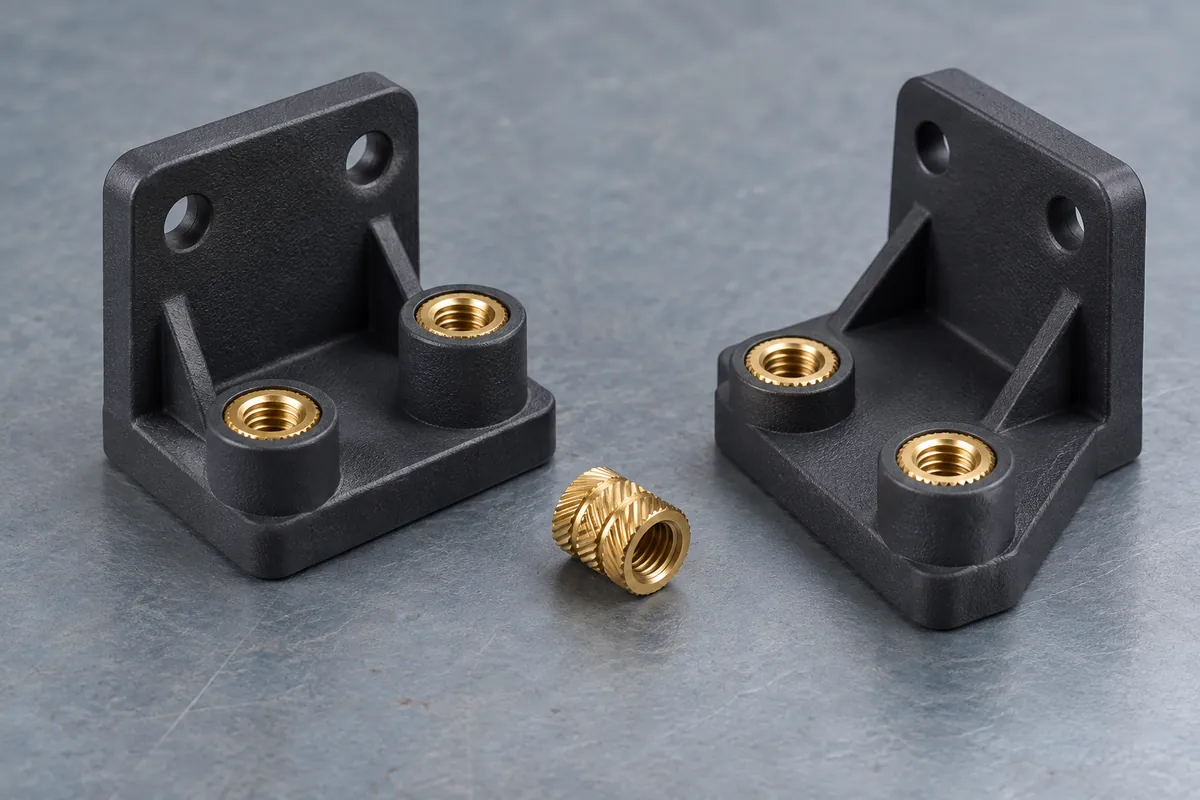
A bracket drawing arrives with two threaded mounting points and a note that says “brass insert.” One supplier quotes loading the inserts into the mold. Another proposes molding the plastic first and installing inserts afterward. The quotations are not necessarily competing ways to manufacture an unchanged design: each may assume a different insert, boss and assembly sequence.
Choose the installation route together with the insert and its surrounding geometry. The useful question is not which process wins in general, but which proposal can satisfy the bracket's interfaces, validation requirements and purchasing constraints. This guide focuses on that decision for custom injection-molded brackets with threaded inserts, not on loose insert hardware or metal replacement brackets.
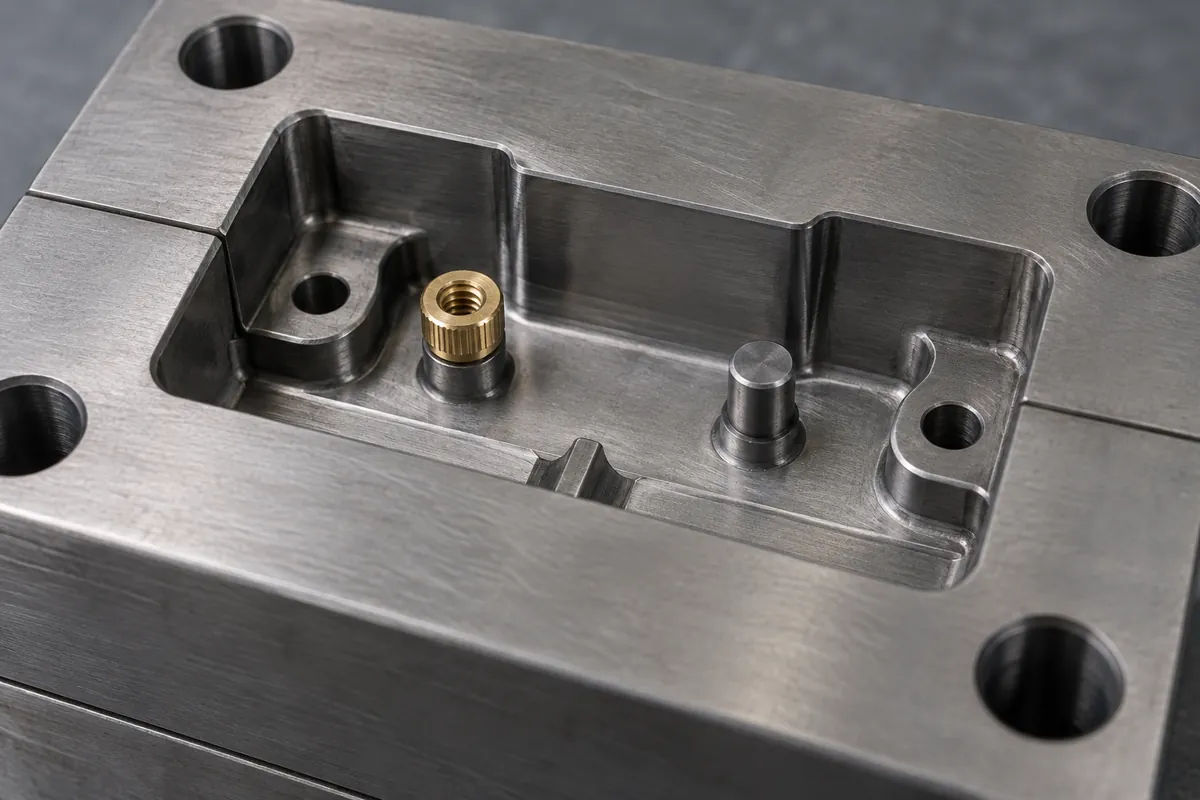
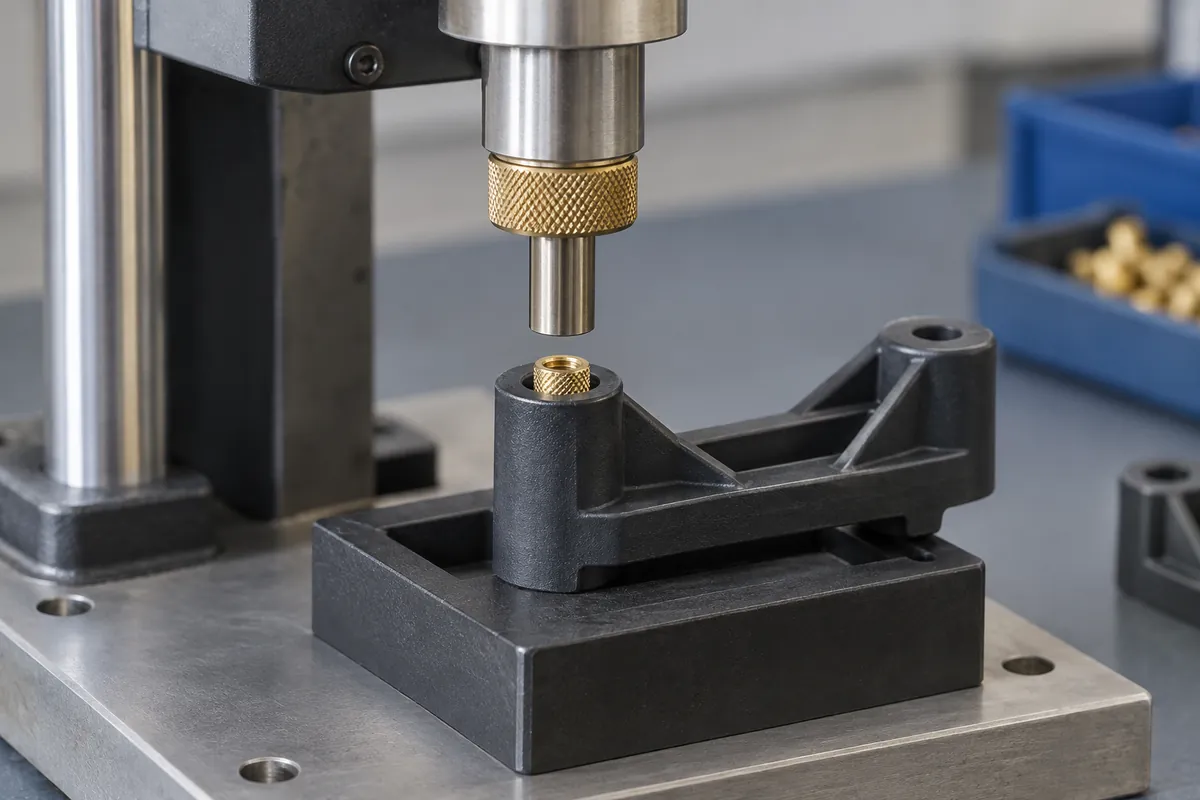
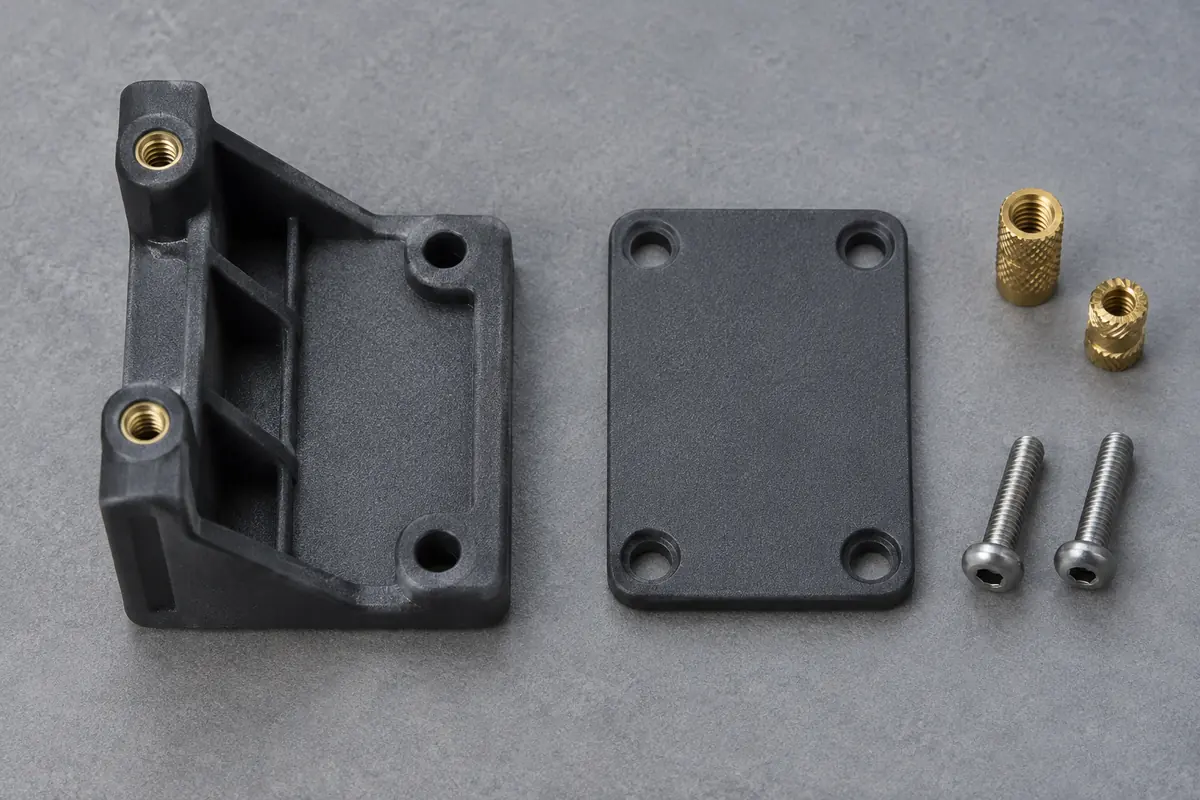
All images in this article are newly AI-generated illustrations of engineering concepts, not photographs of a customer project or evidence of completed testing.
The Difference Begins Before the First Screw Is Fitted
In the molded-in route, the insert is positioned and supported in the mold before resin surrounds its retention features. In the heat-installed route, a suitable insert is installed into a previously molded thermoplastic hole using a controlled heating process. SPIROL describes these as different insert families: molded-in inserts and heat/ultrasonic inserts. Those manufacturer references explain the distinction; they do not establish FECISION's equipment or your bracket's performance.
That sequence changes what the supplier needs to review. A molded-in proposal needs a loading and location concept inside the tool. A post-mold proposal needs access for the installation head and support for the already molded part. A rib, enclosed pocket or nearby wall can make one of those operations awkward even when the finished assembly appears simple.
Compare the Same Function, Not an Identical Boss by Default
Consider a small equipment bracket that must attach to a mating plate and leave room for a screwdriver. Keep the assembly datums, screw interface and required loads fixed in the comparison. Allow each proposed route to identify its necessary boss geometry and insert specification. Otherwise one supplier may be pricing a design that was optimized for the other process.
Ask for a marked-up drawing showing each deviation. A proposal that changes a boss diameter or insert length needs to show whether the mating envelope still works. A cheaper unit price does not resolve an unapproved geometry change. Equally, insisting on the original geometry without reviewing its origin can exclude a viable manufacturing proposal for the wrong reason.
Where a design is already released, treat the alternative as a controlled change rather than an interchangeable source. Identify which dimensions, part numbers, tests and assembly instructions would need a new revision. The existing qualification belongs to a defined configuration, not merely to the words “threaded insert.”
What a Comparable Quotation Needs to Explain
The following worksheet separates the common requirement from the supplier's proposed means of achieving it. Complete the first column from your drawing and application brief. Leave the route undecided until both proposals address the same functional requirement and identify their exceptions.
| Common requirement | Molded-in proposal | Heat-installed proposal |
|---|---|---|
| Thread and mating envelope: ____ | Insert specification, tool location and protected thread boundary: ____ | Insert specification, hole geometry and installation access: ____ |
| Resin grade and part revision: ____ | Proposed boss, loading method and drawing changes: ____ | Proposed boss, support nest and drawing changes: ____ |
| Approval evidence and order schedule: ____ | Tooling, trial parts, inspection and test exclusions: ____ | Molding, installation, fixtures, inspection and test exclusions: ____ |
Also request the treatment of scrap at each operation. If an installed insert fails inspection, can the component be reworked under an approved method, or is the whole bracket rejected? Do not assume a repair is permitted merely because removing an insert appears possible. Material ownership and disposition can affect the commercial comparison, particularly when the customer supplies the hardware.
Approval Must Follow the Proposed Configuration
A catalog strength value is not a substitute for an agreed check on the finished bracket. Use the same functional acceptance requirement for both candidates, but document how each test specimen was manufactured. Our torque and pull-out planning guide explains why fixture support and failure definition matter before comparing a result.
Thread usability and insert location remain separate acceptance questions. A specimen may resist removal but fail to align with the mating plate. Conversely, a screw that fits easily does not demonstrate retention under service loading. Review these checks together without treating one measurement as proof of every requirement.
Make the Decision Visible to Purchasing and Engineering
For a new design, the outcome may be a preferred route plus a short list of unresolved inputs. For a released design, it may be a decision to keep the existing configuration until the change cost is justified. Neither outcome requires declaring one process universally stronger, cheaper or more precise.
FECISION's insert-molding service is the starting point for a molded-in bracket review. A discussion of heat installation is a manufacturing comparison, not a claim that every secondary process is available for every project. Ask for explicit confirmation of the proposed scope. Send the bracket drawing and insert specification for a route review.