
Color options
Wide range, strong Pantone color matching, vibrant/opaque coverage
Screen printing pushes ink through a mesh screen directly onto a part's surface, producing vibrant, consistent graphics on flat or cylindrical parts. It's naturally suited to specific geometries — for curved, recessed, or complex surfaces, pad printing is usually the better fit instead.
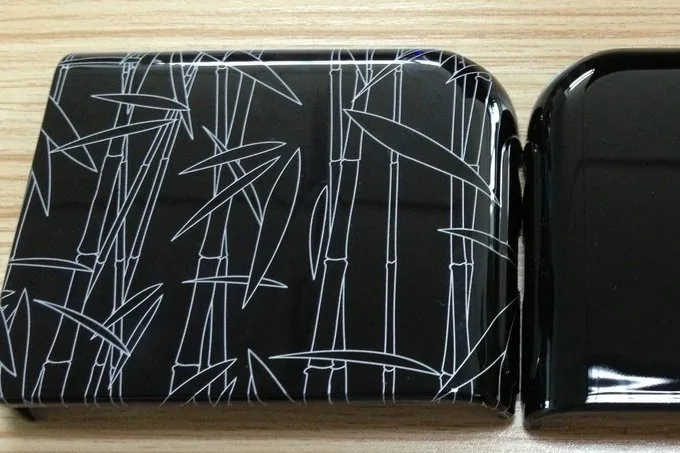
Screen printing works by stretching a mesh screen over the part, blocking out everything except the design, and pulling a squeegee across the screen to push ink through the open mesh and onto the surface below.
Because the screen needs to stay in close, even contact with the part throughout the stroke, it's a naturally strong fit for flat panels and cylindrical surfaces — think control panel overlays, cylindrical housings, or large logos and graphics on an otherwise flat face.
For a molded part, screen printing solves a specific need: getting a bold, saturated, accurately color-matched graphic onto a surface efficiently and consistently across a production run.
Wide range, strong Pantone color matching, vibrant/opaque coverage
ABS, PC, PP, POM, and similar plastics (surface energy and pretreatment vary by resin)
Flat panels and cylindrical surfaces; not well suited to curves, recesses, or compound angles
Good for bold graphics, logos, and text; finer than ~1mm detail is better suited to pad printing
Print area, mold surface finish, and material choice all affect ink adhesion and should be planned during design
Both processes put ink on a molded part, but they're suited to different geometries and different levels of detail — in practice, part shape is usually what decides which one to use.
If a part has any meaningful curvature or a recessed print area, that geometry constraint usually settles the decision before cost or detail level even come into play — a screen simply can't maintain even contact with a surface that isn't flat or cylindrical.
Print quality on a screen-printed part depends on decisions made well before the part reaches the printing stage.
Material surface energy varies by resin — ABS, PP, PC, and POM all accept ink differently, and some require a pretreatment step like flame or corona treatment for reliable adhesion.
Plan the print area during part design, not after the mold is built — parting lines, ejector pin marks, and gate locations can all interfere with a clean printable surface if they land in the wrong place.
Mold surface finish affects ink transfer: a highly polished surface and a matte, textured surface behave differently under ink, so the finish needs to be considered alongside the print plan, not decided independently.
Keep the print area genuinely flat or cylindrical — even a slight curve can cause the screen to bridge across the surface, leading to ghosting, smearing, or missed ink transfer in low spots.
Produces vibrant, opaque color with strong, accurate Pantone matching.
Efficient for high-volume runs of an identical design, once screens are made.
Works across a wide range of plastics with the right pretreatment.
Limited to flat or cylindrical geometry — curved, recessed, or compound-angle surfaces need pad printing instead.
Fine detail (small text, intricate logos) is harder to hold consistently than with pad printing.
Ink adhesion depends on getting material pretreatment and mold surface finish right — skipping this step is a common cause of print quality problems.
Not reliably. Screen printing needs the screen to stay in close, even contact with the part throughout the print stroke, which only works on flat or cylindrical surfaces. A curved or recessed print area is better suited to pad printing, which uses a flexible silicone pad that conforms to the surface.
Screen printing handles bold graphics, logos, and larger text well, but pad printing generally holds finer detail more consistently — small text or intricate logos are usually a better fit for pad printing.
No — different resins have different surface energies, and some (like PP) need a pretreatment step such as flame or corona treatment for the ink to adhere reliably. Material choice and ink compatibility should be confirmed before the part is finalized.
Yes — a highly polished surface and a matte, textured surface behave differently under ink. The print plan and the mold finish should be decided together rather than treated as separate decisions.