
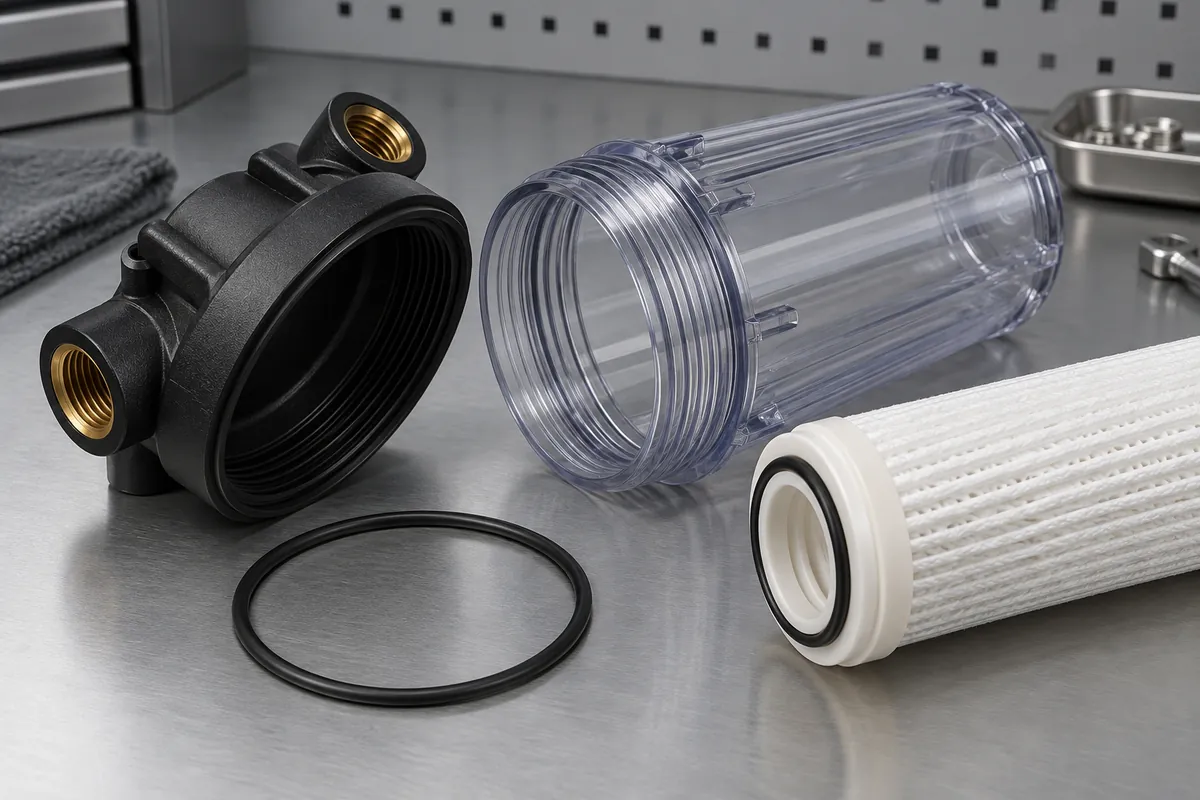
Product design illustrations. Final geometry, materials and acceptance criteria are project-specific.
A molded thread connects the housing to a closure or a fluid line, but its function is not defined by diameter alone. Thread form, pitch, engagement, mating material and the sealing arrangement all matter. Similar-looking port labels can describe different interfaces, so resolve the standard and its numerical requirements before designing the tool.
Separate large service closures from small connection ports. A closure repeatedly opened for cartridge replacement may need different handling and wear considerations from a port assembled once during installation. The manufacturing and inspection plan should follow those functions rather than treating every thread as the same feature.
Define retention and sealing independently
Some connections use the thread primarily for retention and a separate face or radial seal for containment. Others rely on a specified thread-based sealing arrangement. State which mechanism applies and identify the seal, seating surface or approved joining materials needed to complete it.
Do not assume that more tightening improves the result. Excessive assembly load can distort or damage a polymer interface. The responsible design team should define the assembly condition based on the actual materials and geometry, with validation rather than a generic torque value copied from metal hardware.
Check the wall and transition around the port. A well-formed thread in a poorly supported boss can still be an unsuitable connection. Local geometry should be reviewed with the pressure and installation loads so the port is not evaluated as an isolated threaded cylinder.
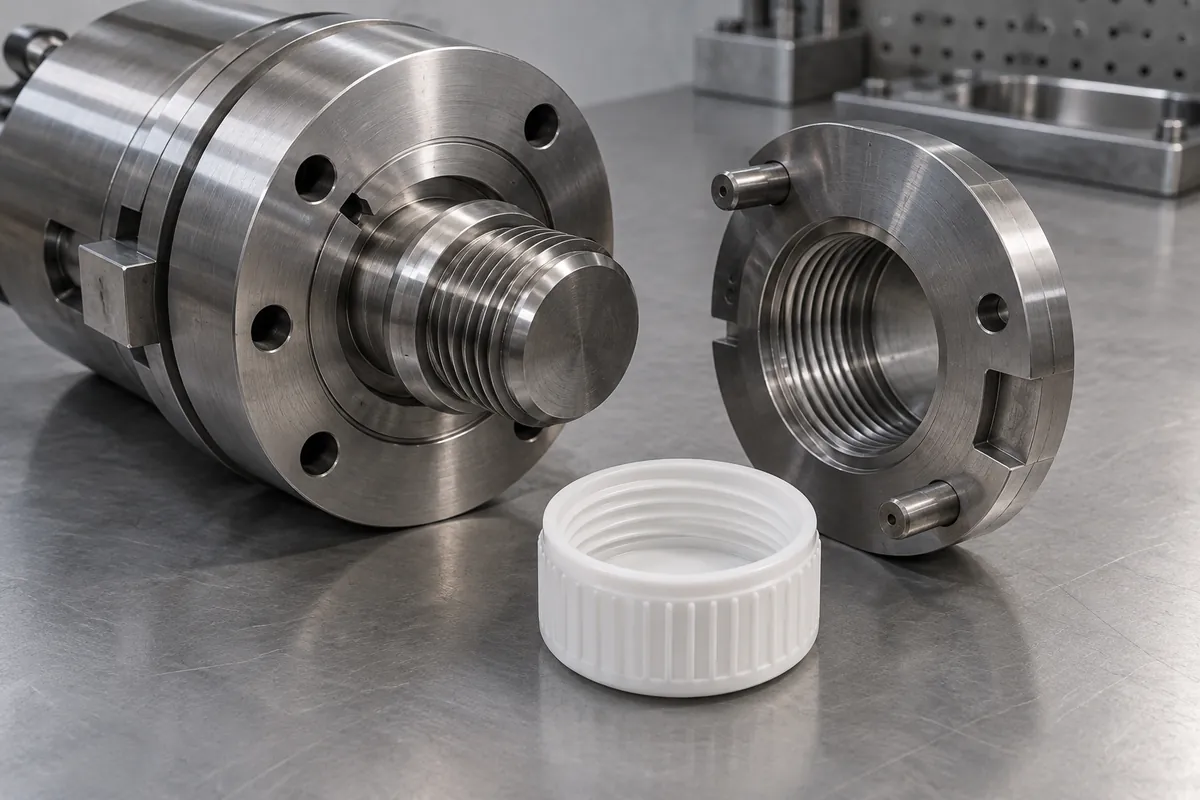
Choose a realistic tool-release route
Internal threads may require an unscrewing core, collapsible tooling or another suitable release approach. Feasibility depends on the thread geometry and material. Do not assume that a feature can be stripped from the tool simply because another flexible part was released that way.
External threads may interact with the mold parting line and side actions. Review mismatch, flash and where those features occur relative to engagement and sealing. A thread that assembles in one sample may still need better control to avoid inconsistent behavior across cavities and production lots.
General injection-molding design guidance can support an early tooling discussion. The actual thread-release method should be agreed from the proposed geometry and supplier capability rather than inferred from a generic process description.
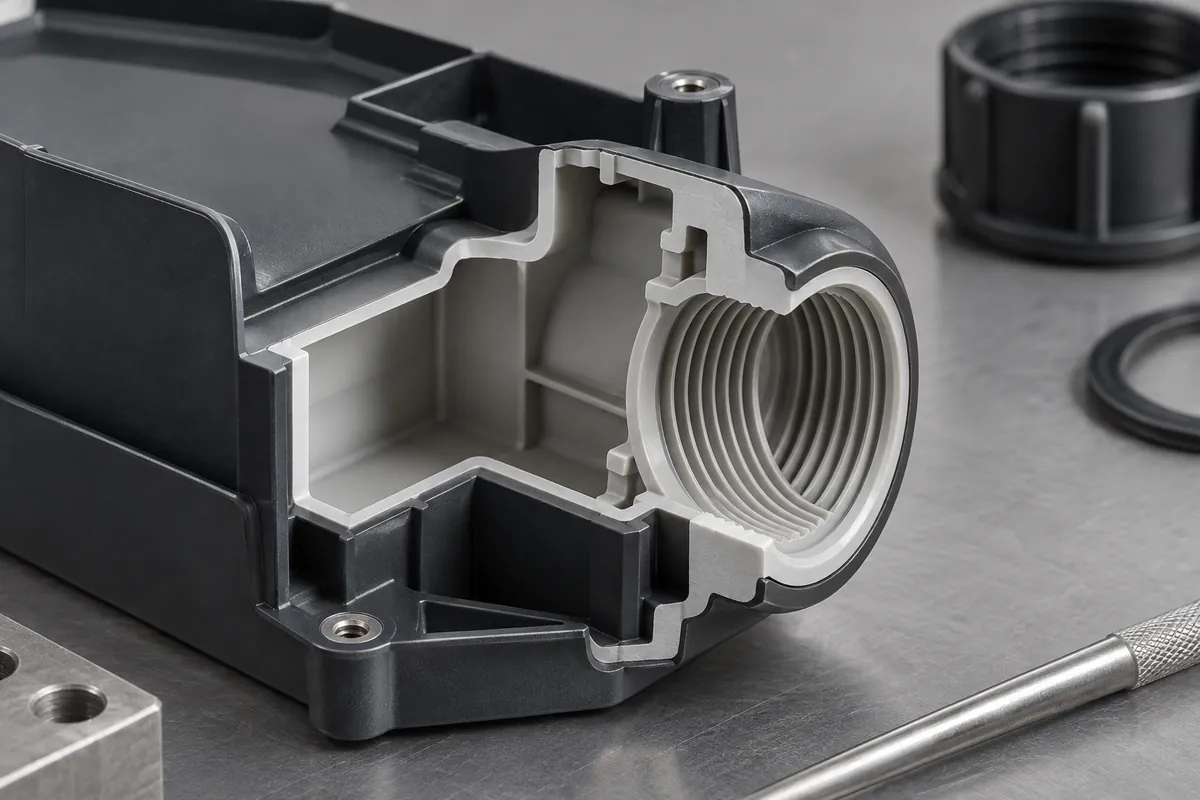
Make inspection match the feature
Specify the appropriate gauge and acceptance standard for the internal or external thread. An internal thread is not verified by simply listing an external ring gauge. The inspection plan should name the method, reference and any functional mating check required for the actual interface.
Include the condition in which molded parts are measured. Cooling, conditioning and subsequent assembly operations can affect the fit. If the housing is welded or otherwise processed after molding, decide whether final thread verification belongs after that operation.
A mating check is useful but should not conceal dimensional or gauge requirements. One unusually loose counterpart may accept a thread that does not meet the intended interface. Use controlled reference parts and retain the numerical acceptance criteria where interchangeability matters.
Consider which feature locates a threaded fitting once assembled. If orientation matters, the design needs a controlled way to establish it without exceeding the allowed engagement or distorting the housing. A fitting that seals in one rotational position may still be unsuitable for a system that requires a specific tube direction.
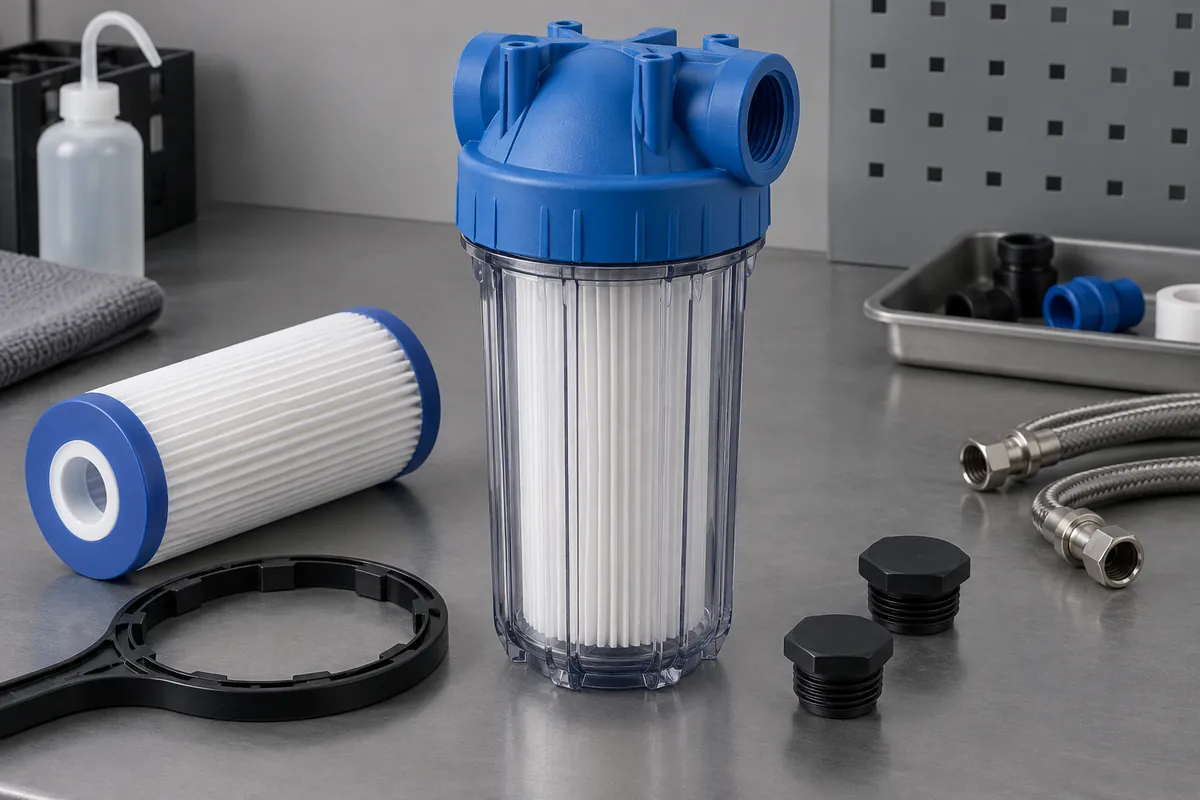
Validate service and production changes
For reusable closures, evaluate the intended opening and closing sequence with representative seals and contamination conditions. Look for cross-threading, damaged starts and progressive wear. A successful first assembly does not establish the repeated service performance expected from a replaceable-cartridge housing.
Coordinate the thread with the O-ring groove review. The closure must reach the intended seating condition without damaging the seal or relying on uncontrolled deformation to compensate for a dimensional mismatch.
Keep tool revisions, gauge references and assembly requirements traceable. A change in material, cavity or mating fitting can alter the connection even if the nominal thread designation stays the same. Review those changes against the approved interface instead of assuming the label guarantees compatibility.
Discuss the component and its acceptance requirements
Explore our custom plastic filter housings and the related project case study. Send the current drawing, mating-part details, operating conditions and required quantities. We can review tooling, molding and inspection as a defined supply scope, with development samples and production approval kept separate.