
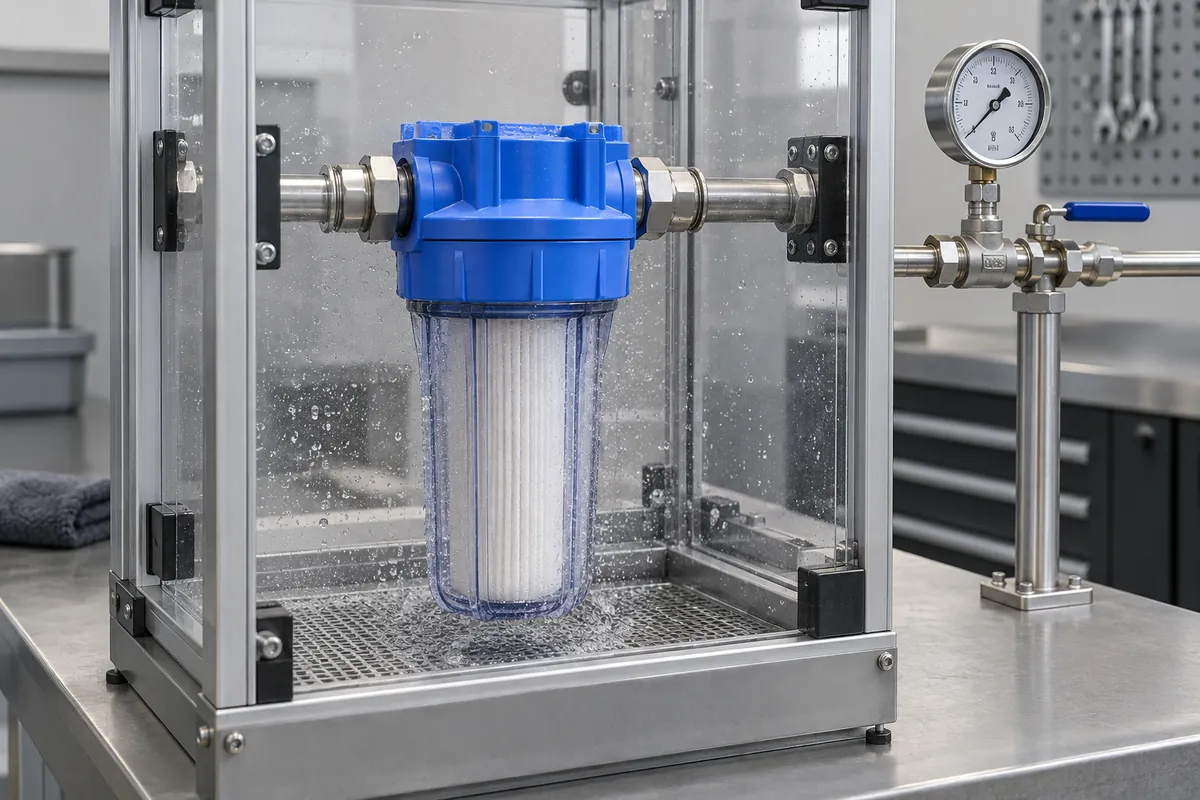
Product design illustrations. Final geometry, materials and acceptance criteria are project-specific.
A housing that does not leak during one pressure hold has demonstrated a specific result under specific conditions. It has not necessarily demonstrated a burst pressure, long-term pressure rating or completed certification. Leak, proof and burst evaluations answer different questions and should remain distinct in specifications and reports.
Begin with the applicable product requirements and a qualified test plan. Pressure testing can be hazardous, particularly when significant stored energy is involved. The responsible test facility should select suitable equipment, containment and procedures; a marketing article is not a substitute for that engineering and safety assessment.
Name the purpose of each test
A leak test evaluates escape of the test medium against a defined detection method or limit. Report the assembled condition, pressure, temperature and observation interval. The phrase no leakage is incomplete unless the method and sensitivity explain what could actually have been detected during the test.
A proof test checks whether the specified assembly withstands a defined pressure condition with the required acceptance criteria. Those criteria may include deformation or continued function as well as containment. Reaching a target pressure without a recorded hold or post-test assessment does not necessarily complete the intended proof requirement.
A burst evaluation is destructive and determines a defined failure outcome under an agreed procedure. A specimen that has not failed at the current pressure has not produced a measured burst value. Keep an ongoing pressure-development test separate from a completed destructive result.
Keep the original observations and instrument records available for review by the responsible engineering team. A short commercial summary may omit details for readability, but it should remain traceable to the completed test. If the source record is incomplete, qualify or omit the claim instead of filling the gap with a standard-sounding method.
Record the conditions that change interpretation
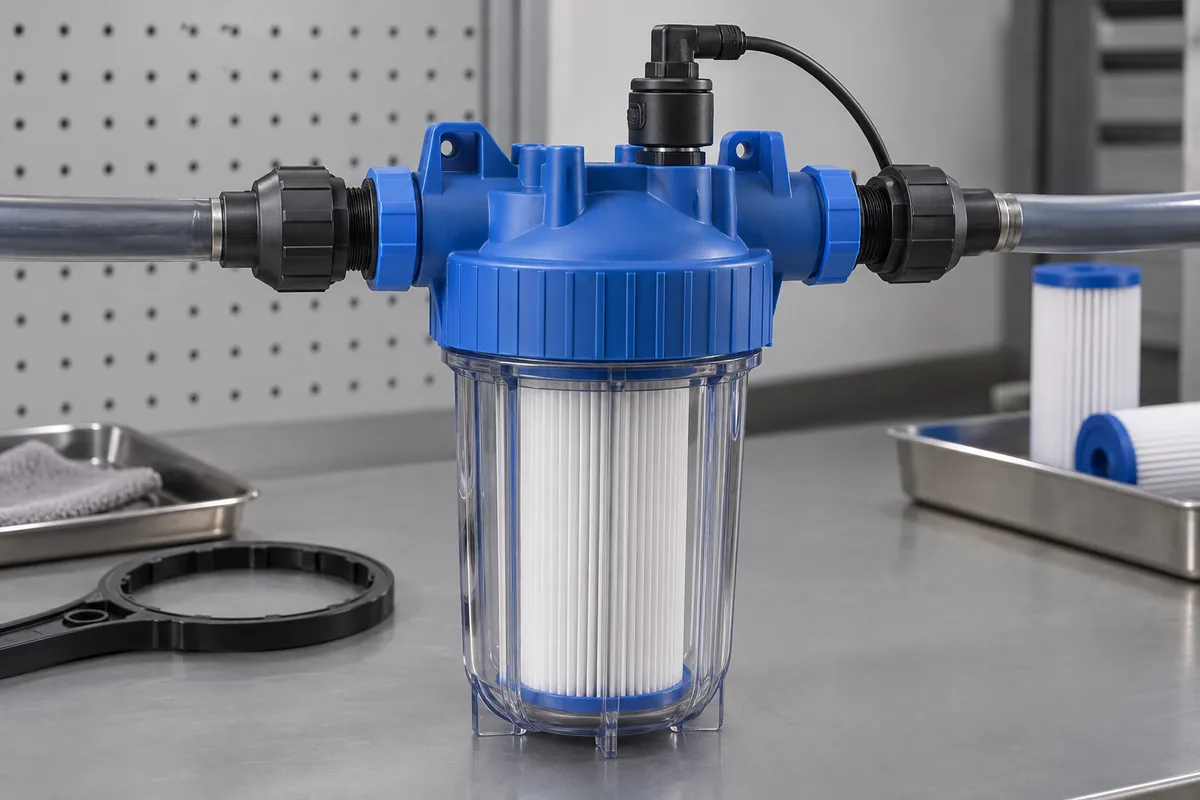
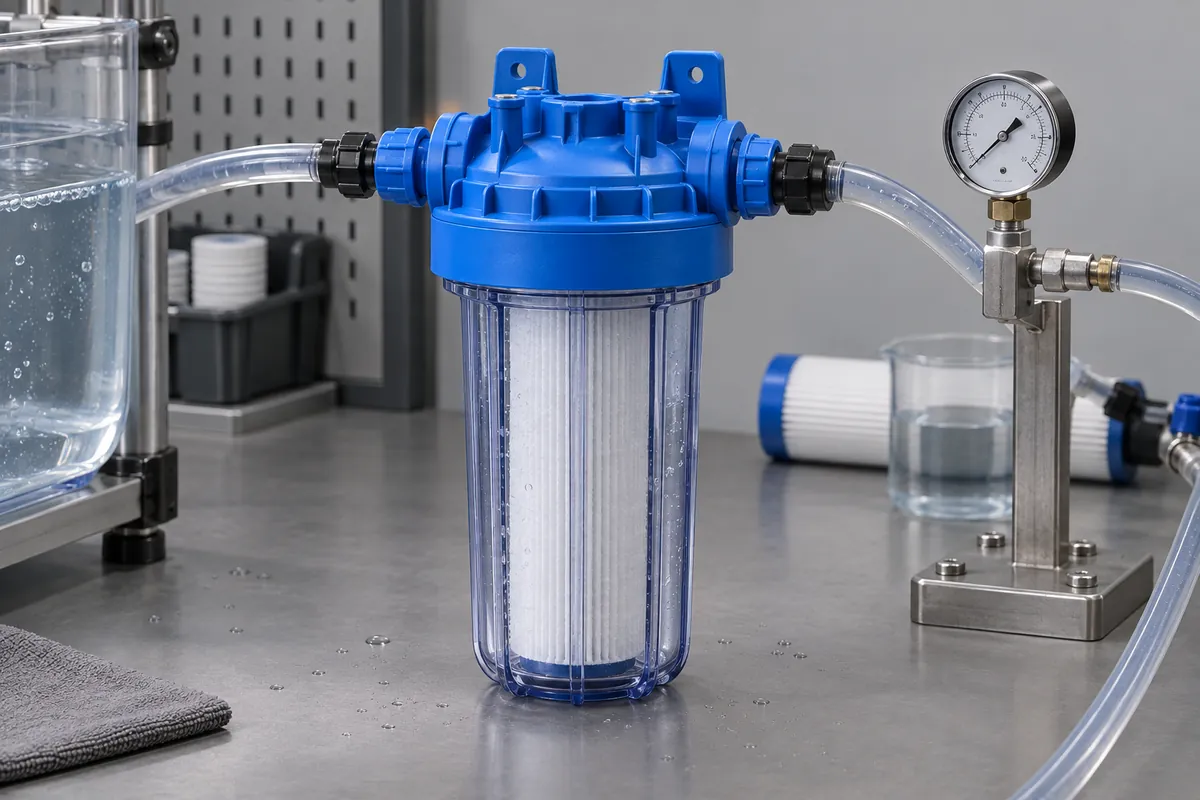
Identify the medium and how pressure is applied and measured. Water and compressed gas do not create identical test conditions or hazards. Do not rename one method as the other, or combine a pressure-hold statement with a detection description that has not been verified by the test team.
Temperature and conditioning belong in the report. A polymer housing evaluated briefly at room temperature may behave differently after fluid exposure or at an operating temperature. The intended service boundary cannot be inferred by applying an arbitrary multiplier to a single favorable bench result.
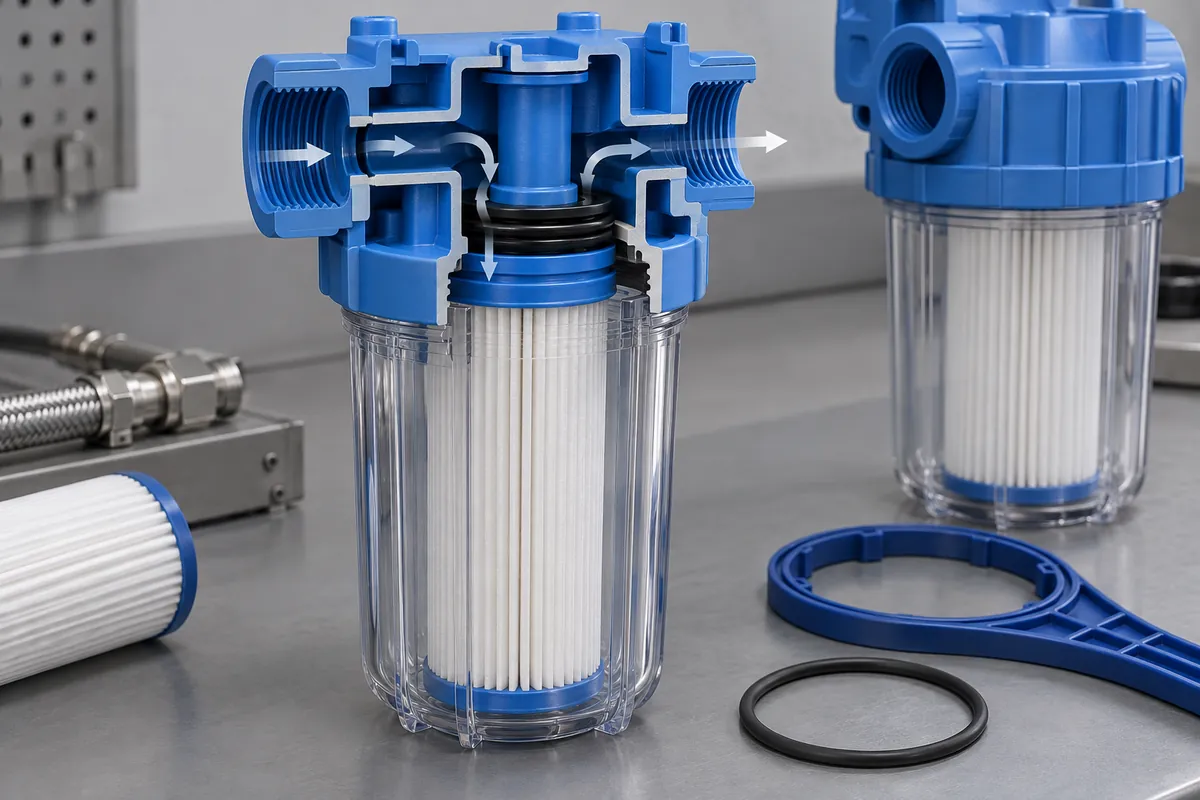
Record ports, plugs, seals, closure method and cartridge installation where relevant. A test cap that reinforces a vulnerable port can change the specimen response. The fixture should represent the intended boundary, or the limitation should be stated so the result is not applied to a different configuration.
Keep sampling and failure criteria explicit
State the number tested and the population from which the samples came. Development samples, a cavity-level production sample and complete inspection of a lot are different scopes. Do not describe a small sampled test as proof that every shipped housing was pressure tested.
Define failure before running the test. External leakage, permanent distortion, closure damage and loss of function may require separate observations. A housing that retains fluid while developing unacceptable deformation should not be reported as an uncomplicated pass if the requirement includes dimensional stability.
Where a seal is involved, use the seal manufacturer's design information as supporting context. The seal's material data does not replace the assembled housing test or establish its pressure rating.
Publish a bounded result
A useful statement identifies the tested batch, sample count, assembly and completed condition, then describes the observation. If a higher-pressure or endurance evaluation is still running, say that it remains open. Do not convert its target into a completed result or an advertised operating limit.
Keep internal bypass and filtration performance separate from external containment. A housing can pass an external leak test while the cartridge seal allows unfiltered fluid to reach the outlet.
Release the product only against the requirements that have actually been closed by the responsible team. The report should support a clear engineering decision, not a broad pressure claim assembled from unrelated tests, different specimens or incomplete observations.
Discuss the component and its acceptance requirements
Explore our custom plastic filter housings and the related project case study. Send the current drawing, mating-part details, operating conditions and required quantities. We can review tooling, molding and inspection as a defined supply scope, with development samples and production approval kept separate.