
Color options
Bright chrome/aluminum, brushed metal look, tinted metallics (gold, gunmetal, bronze) via top coat
Vacuum metallizing deposits a thin aluminum layer onto a plastic part inside a vacuum chamber, giving it a bright, chrome-like metallic finish. It's a lower-cost, lighter-weight alternative to electroplating, with a different durability profile worth understanding before specifying it.
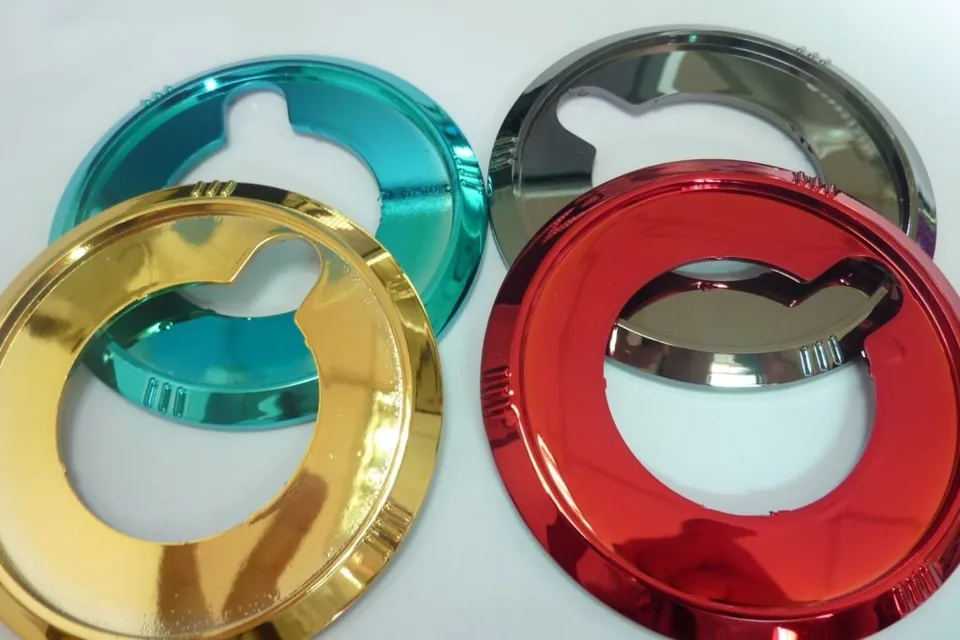
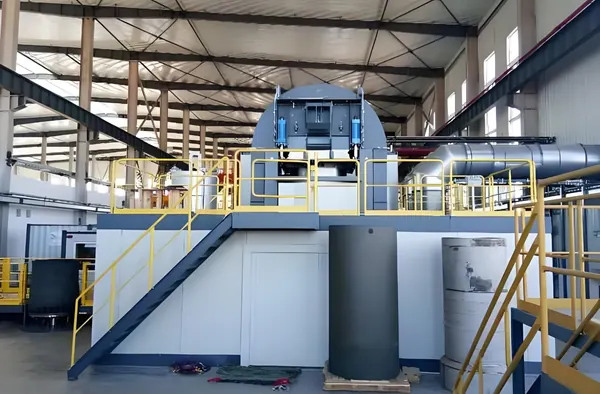
Vacuum metallizing works by heating a metal source — typically aluminum — inside a vacuum chamber until it vaporizes, then letting that vapor travel in a straight line and condense onto the part's surface as a thin, reflective metal layer. The part usually gets a smooth base coat first so the metal layer has something even to bond to, and a clear or tinted top coat afterward to protect the thin metal from oxidizing or wearing away. For a molded part, that combination delivers a premium, metallic appearance — chrome, brushed aluminum, or a tinted metallic color — without the weight or cost of machining actual metal or the more involved chemistry of electroplating.
Bright chrome/aluminum, brushed metal look, tinted metallics (gold, gunmetal, bronze) via top coat
ABS and similar smooth-surface, paintable plastics
0.1-2μm aluminum
Lower than electroplating; protected by a top coat, best suited to low-contact surfaces
Requires a base coat and protective top coat — the metal layer alone is too thin and fragile to leave exposed
Both processes put a metal appearance on a plastic part, but they work differently and land in different places on cost and durability.
Need help comparing decorative options? Review all molded-part finishes.
Costs roughly 60-80% less than electroplating for a comparable metallic appearance.
Adds far less weight than electroplating or solid metal, since the deposited layer is a fraction of a micron thick.
No mold cost impact and works across prototype and production volumes, since it's a post-molding process rather than something built into the tool.
Produces a highly reflective, uniform finish well suited to chrome, brushed metal, or tinted metallic looks.
Wear resistance is meaningfully lower than electroplating — the thin metal layer depends on its top coat for protection, and that top coat can scratch or wear through on a frequently handled surface.
Not a substitute for electroplating on parts that need durability as well as appearance, such as handles, buttons, or anything with regular hand contact.
Like electroplating, it amplifies rather than hides surface defects, so the as-molded part needs a clean, smooth, paint-ready surface.
Typically limited to ABS and similar smooth, paintable substrates — not every resin is a good candidate.
No — vacuum metallizing has meaningfully lower wear resistance. The thin aluminum layer is protected by a top coat rather than being inherently wear-resistant the way electroplated metal layers are, so it's better suited to low-contact cosmetic surfaces than handles or frequently touched parts.
Vacuum metallizing is typically 60-80% less expensive than electroplating for a comparable metallic appearance, since it's a simpler vacuum deposition process rather than a multi-step chemical bath sequence.
ABS and similar smooth, paintable plastics are the standard choice, similar to electroplating. The part needs a clean, defect-free surface, since the metallized finish reveals surface flaws rather than hiding them.
It's not the best choice for that application. A frequently touched surface — a handle, a button, a grip area — is more likely to scratch through the protective top coat over time. Electroplating holds up better under that kind of repeated contact.
No — the deposited metal layer is only 0.1-2μm thick, thin enough that it doesn't meaningfully change part dimensions, similar to electroplating's chromium layer.