
info@fecision.com

Surface FinishesTransfer Printing

Transfer Printing for Injection Molded Parts

Heat transfer printing and water transfer printing are two distinct processes for applying a full-color pattern to a molded part — heat transfer uses heat and pressure to apply a printed design, while water transfer (hydrographics) wraps a graphic around complex 3D geometry using a water-soluble film.

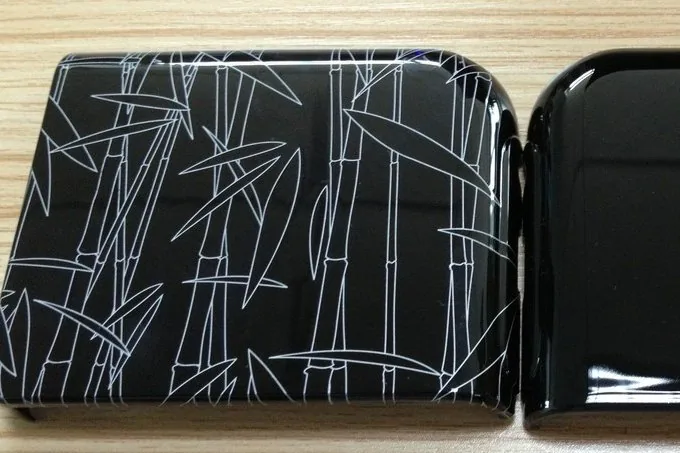
Full-color pattern transferred onto a molded surface
Full-colorPatterns and gradients

What Heat Transfer Printing Does

Heat transfer printing applies a design to a part using heat and pressure, transferring ink from a printed film or paper onto the substrate surface. It handles multi-color patterns and color gradients more easily than single-color methods like screen printing, while holding consistent results across a production run.

01

Color options

Full multi-color patterns and gradients

02

Suitable materials

Plastics, silicone, and similar substrates that tolerate heat press temperatures

03

Suitable geometry

Relatively flat or gently contoured surfaces — the transfer film needs even contact under pressure

04

Detail level

Good for detailed, multi-color graphics; more consistent batch-to-batch than single-color methods

05

Notes

Substrate must be clean, dry, and free of surface irregularities before pressing

Choosing Between Heat Transfer and Water Transfer Printing

The two processes overlap in what they can achieve visually, but they fit different situations. Heat transfer is the simpler process — closer to a single production step — and works well for flatter or gently contoured surfaces needing a detailed, multi-color graphic.

Water transfer is the better fit when a part's geometry is genuinely three-dimensional and the pattern needs to wrap around it completely without a visible seam, but it comes with a longer process (base coat, dip, topcoat) closer to a full paint job than a single decorating step.

Designing a Part for Transfer Printing

A few things affect how well either process turns out on a molded part:

01

Surface preparation matters as much as the transfer step itself — both processes need a clean, dry, defect-free surface, and water transfer specifically depends on a properly applied base coat to give the ink something to bond to.

02

Material choice affects options: ABS can sometimes skip the base coat step for water transfer, while most other substrates need it, and heat transfer requires a substrate that tolerates the press temperature without warping or damage.

03

Part geometry determines which process is realistic — heat transfer suits flatter or gently contoured areas, while genuinely complex 3D shapes are where water transfer's wrap-around capability earns its extra process steps.

04

A clear topcoat is standard on both processes to protect the printed pattern from wear, so that protective layer should be planned for rather than treated as optional.

Advantages and Considerations

Advantages

  1. 01

    Both processes apply full-color, detailed graphics that single-color methods like screen printing can't match.

  2. 02

    Water transfer wraps a pattern around virtually any 3D geometry without a visible seam or distortion.

  3. 03

    Heat transfer holds consistent, repeatable results across a production run with less process complexity than water transfer.

Considerations

  1. 01

    Water transfer is closer to a full paint process than a single finishing step — base coat, dip, and topcoat all add time and cost beyond the print itself.

  2. 02

    Heat transfer is limited to flatter or gently contoured surfaces; genuinely complex geometry is better suited to water transfer.

  3. 03

    Both processes depend on getting substrate prep and material compatibility right — skipping surface prep or choosing an incompatible base coat is a common source of peeling, fading, or poor adhesion.

Frequently Asked Questions

What's the difference between heat transfer and water transfer printing?

Heat transfer uses heat and pressure to press a printed design onto a relatively flat or gently contoured surface. Water transfer (hydrographics) submerges the part through a floating, water-soluble film, wrapping the pattern around complex 3D geometry that heat transfer can't reach as completely.

Can water transfer printing be used on any plastic part?

Most plastics can be water transfer printed, but nearly all of them need a base coat applied first, since the paint is what the ink actually adheres to. ABS is a common exception that can sometimes go directly to the dipping step.

How durable is a water transfer printed finish?

Done correctly — with proper prep, base coat, and a clear topcoat — a water transfer finish can hold up to roughly 163°C (325°F) and resist regular handling. Skipping steps in the process is the most common cause of early wear or peeling.

Which process is better for a part with complex curves or recesses?

Water transfer, generally. Because the pattern wraps around the part as it's submerged, it handles complex 3D geometry more completely than heat transfer, which needs relatively even, flat contact to transfer cleanly.

Does either process work directly on unpainted plastic?

Heat transfer can work directly on a suitable substrate. Water transfer usually needs a base coat first, with ABS being a common exception — for most other materials, the paint layer is what actually bonds the ink to the part.

Request A Quote

Tell Us About Your Project

Fields marked with are required.

By submitting this form, you agree that Fecision may use the supplied information to respond to your inquiry.