
Color/finish options
Virtually any color; matte to high-gloss; specialty foils (holographic, pearlescent, patterned)
Hot stamping transfers a thin foil layer — a logo, text, or metallic finish — onto a molded part using a heated die under pressure. It's best suited to flat or gently curved raised surfaces, where it delivers a durable, permanent mark without the added process steps of painting or plating.
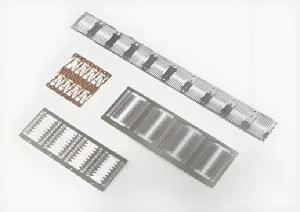
Heat. Pressure. Permanent detail.
A heated die presses a foil carrier film against the part's surface; under controlled heat and pressure, the foil's decorative layer releases from its carrier and bonds directly to the plastic.
Because the transferred layer is thermally fused rather than just sitting on top, the result holds up well over time — hot stamped markings are commonly used for logos, raised text, and instructional markings that need to stay legible for years, including with regular handling or outdoor exposure.
Virtually any color; matte to high-gloss; specialty foils (holographic, pearlescent, patterned)
ABS, PC, PS, and similar thermoplastics that soften gradually under heat
Flat or gently curved raised areas (“tipping”); not suited to deep recesses or heavily textured surfaces
Logos, raised text, instructional markings, decorative accents
Permanent, thermally fused finish; holds up to regular handling and extended outdoor exposure
Die and fixture are part-specific tooling, made in coordination with the part design
Foil and die choice both affect cost, detail level, and how the finished mark looks.
Foil comes in essentially any color, with finishes ranging from matte to high-gloss metallic, plus specialty options like holographic or pearlescent effects for a distinct look. The foil formulation has to be compatible with the specific plastic substrate — not every foil bonds reliably to every resin, so foil selection happens alongside material selection rather than after it.
The die itself gets machined from copper, brass, magnesium, steel, or silicone, with the choice driven by how detailed the artwork is and the expected production volume. Fine detail or high-volume runs typically justify a more durable, more precisely machined die material; simpler graphics on shorter runs can use a less expensive option.
Design before decoration
Hot stamping quality depends heavily on decisions made during part and mold design, not just the stamping step itself.
Design the stamping area as flat or gently curved where possible — sharp edges, deep textures, or uneven wall thickness in the stamping zone cause incomplete or uneven foil transfer.
Work with the molder on die artwork early: minimum feature size, spacing between fine details, and pattern complexity all affect how cleanly the die can transfer the design.
Plan for a fixture or nest to hold the part during stamping, with support directly under the contact point — without it, pressure from the die can distort the part or produce an uneven transfer.
Confirm material and surface prep together: some plastics carry a low surface energy or an electrostatic charge that attracts contamination, and may need a pretreatment step to get reliable foil adhesion.
Keep the mold and part surface clean and free of contamination — issues introduced during molding (residual burrs, mold buildup) carry through to the stamping step and show up as adhesion defects.
Produces a permanent, thermally fused mark that holds up to regular handling and extended outdoor exposure, unlike a printed or painted layer sitting on top of the surface.
Wide range of colors and finishes, including metallic and specialty effects that other decorating methods can't easily match.
A relatively fast process once tooling is made, well suited to adding a consistent logo or marking across a production run.
Limited to flat or gently curved raised areas — deep recesses or heavily textured surfaces are not good candidates.
Die and fixture are part-specific tooling, which adds upfront cost before production starts.
Material and foil compatibility has to be confirmed together; not every resin-foil combination bonds reliably.
Surface quality directly affects results — a part with sharp edges, deep texture, or contamination-prone surface energy needs those addressed before stamping will produce consistent results.
Hot stamping FAQs
Thermoplastics that soften gradually under heat — ABS, PC, PS, and similar blends — bond most reliably with hot stamp foil. Material and foil formulation need to be confirmed as compatible before production, since not every plastic-foil combination adheres reliably.
It works best on flat or gently curved raised areas. Sharp edges, deep textures, and heavily uneven wall thickness in the stamping zone tend to cause incomplete or uneven foil transfer, so those areas are better suited to a different decorating method.
Done correctly, it's a permanent, thermally fused mark rather than a coating sitting on top of the surface — it holds up to regular handling and can withstand years of outdoor exposure.
Die material and complexity. Dies are machined from copper, brass, magnesium, steel, or silicone, with the choice driven by artwork detail and expected production volume — finer detail or higher volume typically justifies a more durable, more precisely made die.
During design. Stamping area geometry, artwork detail, and fixture requirements all need to be worked out with the molder before tooling is built, since none of them are easy to change once the part and die are already made.