
Suitable materials
Rigid thermoplastics (ABS, PC, PA, POM) and silicone/LSR
Deburring removes flash and burrs left at a part's parting line, gate, or ejector marks after molding, before the part moves to assembly, secondary finishing, or shipment. Method and equipment depend on material — silicone and rigid plastic parts get handled differently at Fecision.
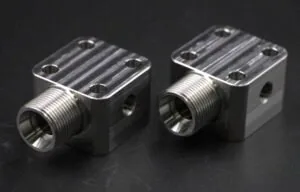
Flash forms where plastic or silicone squeezes into the small gap between mold halves at the parting line — caused by mold wear, cavity pressure, or a design with a lot of mating surfaces.
Left on the part, it can jam an assembly fit, catch on packaging or other components, spoil a cosmetic surface, or in the worst case break off during use and cause a functional failure.
Deburring gets that excess material off cleanly, without changing the part's dimensions or damaging the surrounding surface, so the part is ready for assembly, a secondary finish, or shipment.
Rigid thermoplastics (ABS, PC, PA, POM) and silicone/LSR
Manual trimming, tumbling, cryogenic deflashing, dry ice blasting
Minimal to none with cryogenic/dry ice methods; manual/tumbling can leave marks if not controlled
Negligible when done correctly — targets only the excess flash, not the part geometry
Method choice depends on material, part geometry, and flash location (external edge vs. internal feature)
hand tools remove flash on visible edges or simple geometries; lowest cost for small runs, but slower and less consistent than automated methods.
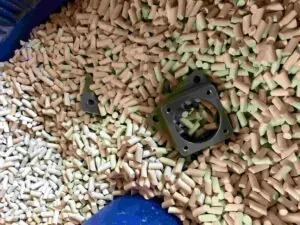
parts and an abrasive media tumble together in a batch process, wearing away flash; efficient for larger volumes but can leave media residue on complex geometries.
parts are chilled to around -40°C, making the thin flash brittle, then tumbled or blasted so it breaks away cleanly; especially effective on silicone, rubber, and similar flexible materials.
CO2 pellets are blasted at the flash location without persistent media residue, useful for internal channels, tight tolerances, and complex geometries that tumbling can't reach.
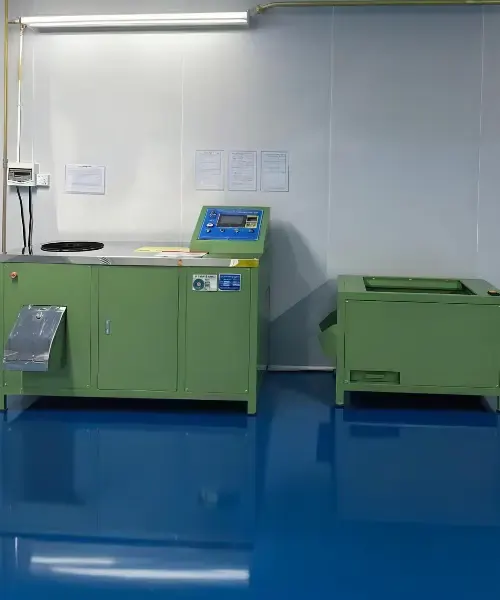
Fecision handles deburring for both silicone and rigid plastic parts as a standard part of post-molding processing — silicone and LSR parts run through dedicated trimming equipment suited to flash removal on cold-runner and flash-sensitive geometries, while rigid plastic parts get deburred using the method that fits the part's material and geometry.
Low-complexity, standard part of post-molding processing rather than a specialized add-on service.
Cryogenic and dry ice methods hold consistent quality at volume without meaningfully affecting part dimensions.
Prevents downstream problems — assembly jams, cosmetic rejects, and occasional field failures — that cost more to fix later than to address at this stage.
Skipping or rushing deburring causes problems downstream: flash that passes inspection can jam an automated assembly line, fail cosmetic inspection, or work loose in use.
Method choice trades speed and consistency against cost — manual trimming is cheap for small runs but doesn't scale, while automated methods cost more to set up but hold quality at volume.
A part's material and geometry limit method choice — a soft silicone seal and a rigid glass-filled nylon housing don't deburr the same way, and fine internal features may rule out tumbling in favor of a more targeted method like dry ice blasting.
Done correctly, no — the process targets only the excess flash material, not the part's actual geometry. Cryogenic and dry ice methods in particular are chosen specifically because they don't meaningfully affect surrounding surfaces or tolerances.
Silicone, LSR, and other flexible materials respond especially well to cryogenic deflashing, since chilling makes the normally flexible flash brittle enough to break away cleanly. Rigid plastics have more method flexibility, including manual trimming and tumbling.
Not entirely — even a well-maintained mold produces some flash at the parting line, gate, and ejector marks, since a small amount is a normal byproduct of the injection process rather than only a sign of mold wear. The amount and location determine how much deburring a given part needs.
Before. Any flash or burr needs to come off first — painting, plating, or printing over an unremoved burr just finishes the defect along with the rest of the part instead of fixing it.