
Suitable materials
Rigid thermoplastics: POM, PA (nylon), PC, ABS, PMMA, PEEK
Annealing is a post-molding heat treatment that relieves internal stress trapped in a plastic part during cooling, improving long-term dimensional stability and reducing the risk of warping or cracking. It applies to rigid thermoplastics — not to silicone or other thermoset materials, which don't respond to heat treatment the same way.
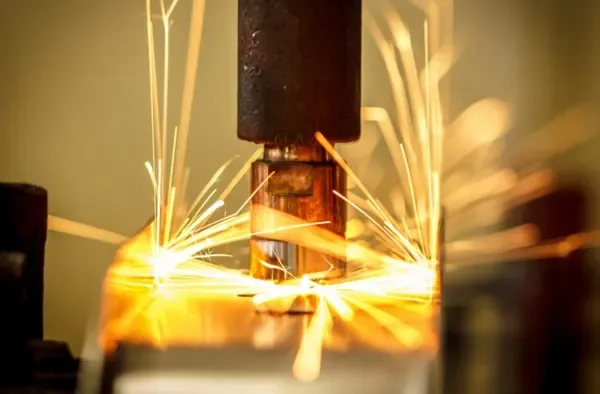
Uneven cooling during molding is normal — different wall thicknesses and distances from the gate cool at different rates, which traps internal stress in the polymer chains even when the part looks dimensionally fine right off the mold.
That trapped stress doesn't go away on its own; it can release later when the part is exposed to heat, a solvent, or simply time, showing up as warping, cracking, or a part that no longer fits the way it did when it shipped.
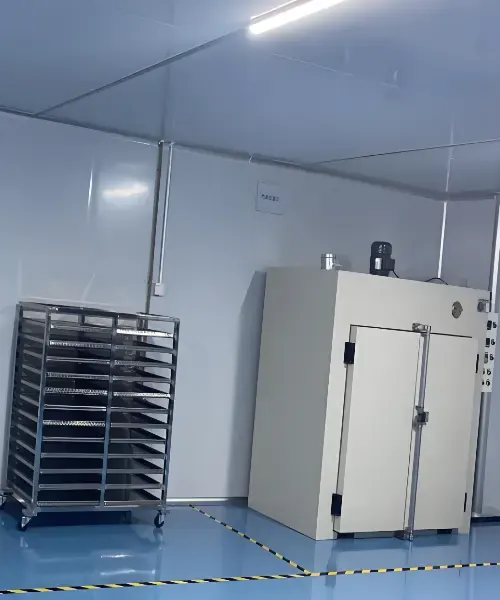
Annealing solves this by reheating the part to a controlled temperature below its melting point, holding it there long enough for the polymer chains to relax, then cooling it slowly so the stress releases without introducing new distortion.
Rigid thermoplastics: POM, PA (nylon), PC, ABS, PMMA, PEEK
Silicone, LSR, and other thermoset materials (already permanently cross-linked)
10-20°C below the material's heat deflection temperature (HDT)
30 minutes to several hours, roughly 0.5-1 hour per mm of wall thickness
Slow, generally ≤10°C/hour, to avoid introducing new stress
Exact parameters vary by material and part geometry; determined per project
Annealing affects amorphous and semi-crystalline plastics differently, which changes why a given part might need it.
PC, ABS, PMMA
Amorphous plastics — PC, ABS, PMMA — get straightforward stress relief: annealing lets the disordered polymer chains relax, improving dimensional stability and reducing the risk of stress cracking. For clear parts specifically, it can also reduce the haziness or optical distortion (birefringence) that trapped stress causes, which matters for lenses or optical housings.
POM, PA (nylon), PP, PE
Semi-crystalline plastics — POM, PA (nylon), PP, PE — respond differently: annealing promotes additional crystal formation, which increases density, stiffness, and strength on top of relieving stress. That's part of why POM and PA parts get annealed for engineering applications where long-term rigidity matters, not just dimensional stability.
Silicone and LSR
Thermoset materials, including silicone and LSR, don't anneal the way thermoplastics do. Their polymer chains are already permanently cross-linked during molding, so there's no equivalent stress-relaxation process available — a silicone part's dimensional stability gets addressed through mold design and cure process instead.
Catches a problem before it reaches the customer — a part that passes inspection off the mold can still warp or crack weeks later as trapped stress releases on its own schedule.
Closes the gap between as-molded and as-aged performance for precision components, optical parts, or anything with a tight long-term dimensional tolerance.
Improves optical clarity on amorphous parts and increases stiffness/strength on semi-crystalline parts, beyond stress relief alone.
Not every part needs it — annealing adds time and cost outside the molding cycle, and is generally reserved for precision, optical, or engineering applications.
Getting the parameters wrong — heating too fast, cooling too quickly, or picking the wrong temperature — can introduce new stress instead of relieving it, defeating the purpose.
Doesn't apply to silicone, LSR, or other thermoset materials, which have no equivalent stress-relaxation process.
No — it's typically reserved for parts with tight dimensional tolerances, optical clarity requirements, or engineering applications where long-term stability matters more than for a general-purpose part. Material and end-use requirements determine whether it's worth the added time and cost.
No — silicone and other thermoset materials are already permanently cross-linked during molding, so there's no equivalent stress-relaxation process. Dimensional stability for these materials gets addressed through mold design and cure process instead.
It depends on wall thickness and material — roughly 0.5 to 1 hour per millimeter of thickness, plus a slow, controlled cooling period afterward. This gets factored into the project timeline once the part's material and geometry are known.
Sometimes, if the warping is stress-related and the part hasn't been distorted beyond what reheating and slow cooling can correct. It's not a guaranteed fix for every distortion issue, and a part with warping from a design or tooling problem needs that addressed at the source instead.