
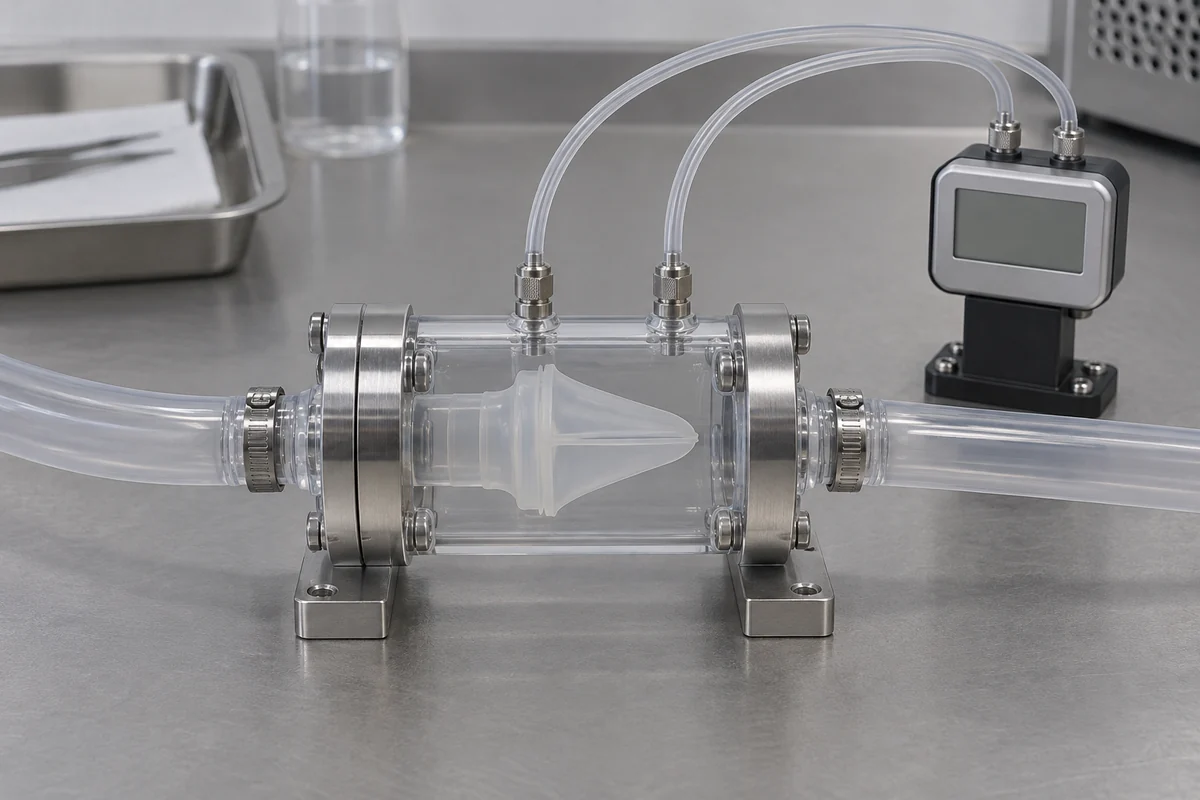
Product design illustrations. Final geometry, materials and acceptance criteria are project-specific.
Cracking pressure is useful only when everyone agrees what counts as opening. One laboratory may record the first visible motion of the lips, another the first detectable liquid transfer, and another a specified small flow. Those observations need not occur at exactly the same pressure. Before comparing drawings or supplier reports, define the event that the instrument is intended to capture.
A duckbill valve also needs enough flow after opening and an acceptable closure response when pressure changes direction. Treat these as related but separate observations. A low opening value does not, by itself, establish low resistance throughout the operating range or successful reverse sealing. The qualification plan should show which requirement each measurement addresses.
Specify pressure difference at the component
The relevant condition is normally the pressure difference across the installed valve, not just the pump setting. A pressure tap far upstream can include the losses of tubing and fittings. If different rigs use different tubing, their reported values may describe different parts of the fluid circuit. Show the tap positions and the valve fixture in the test method.
Minivalve's flow-curve explanation provides a useful distinction between opening behavior and the pressure needed as flow develops. Use that distinction when requesting data. Ask for the opening criterion and the operating points of interest instead of treating a single cracking-pressure number as the whole valve characteristic.
Keep the sensor range and method appropriate to a small differential pressure. The test team should identify zero checks, resolution and the uncertainty relevant to the acceptance window. Reporting more decimal places than the method can resolve makes a record look precise without making the decision more reliable. Define how borderline readings will be handled before testing starts.
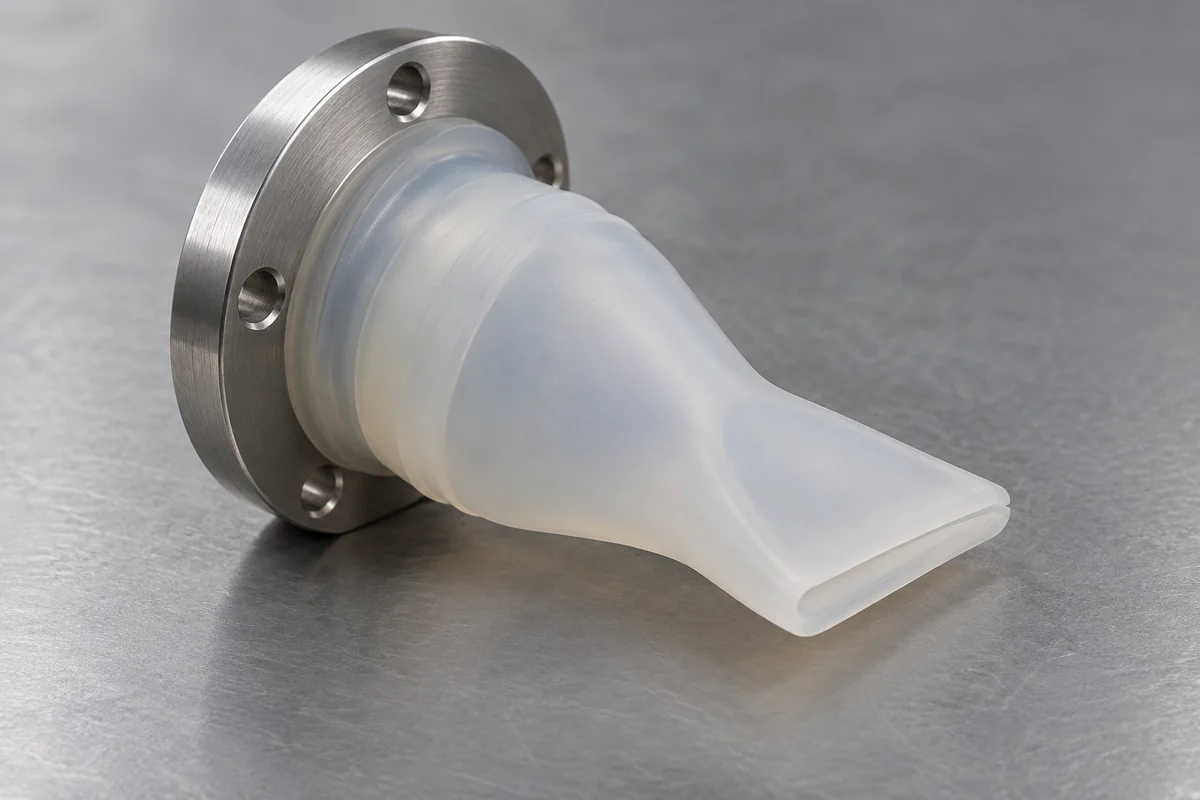
Control the fluid and the initial state
Record whether the sample is dry or pre-wetted and identify the test fluid and temperature. These are especially important when comparing the first operation with later cycles. An opening test performed immediately after assembly may not represent a component that has been stored, cleaned or exposed to fluid for an extended period. Select conditions based on the intended use.
Do not silently exchange a gas test for a liquid test. A gas-based method may be convenient, but its detection method and fluid behavior differ from those of a liquid circuit. If one method is to screen for the other, establish the relationship with appropriate evidence. Otherwise report each result under its own conditions rather than combining them into one range.
Check the fixture for trapped air, unstable supply pressure and unintended preload on the valve. A holder that squeezes the body or contacts the lips changes the test article. Document the clamp and mounting arrangement so that a repeat test evaluates the same assembled condition. Fixing a setup problem can be more important than adjusting the molding process.
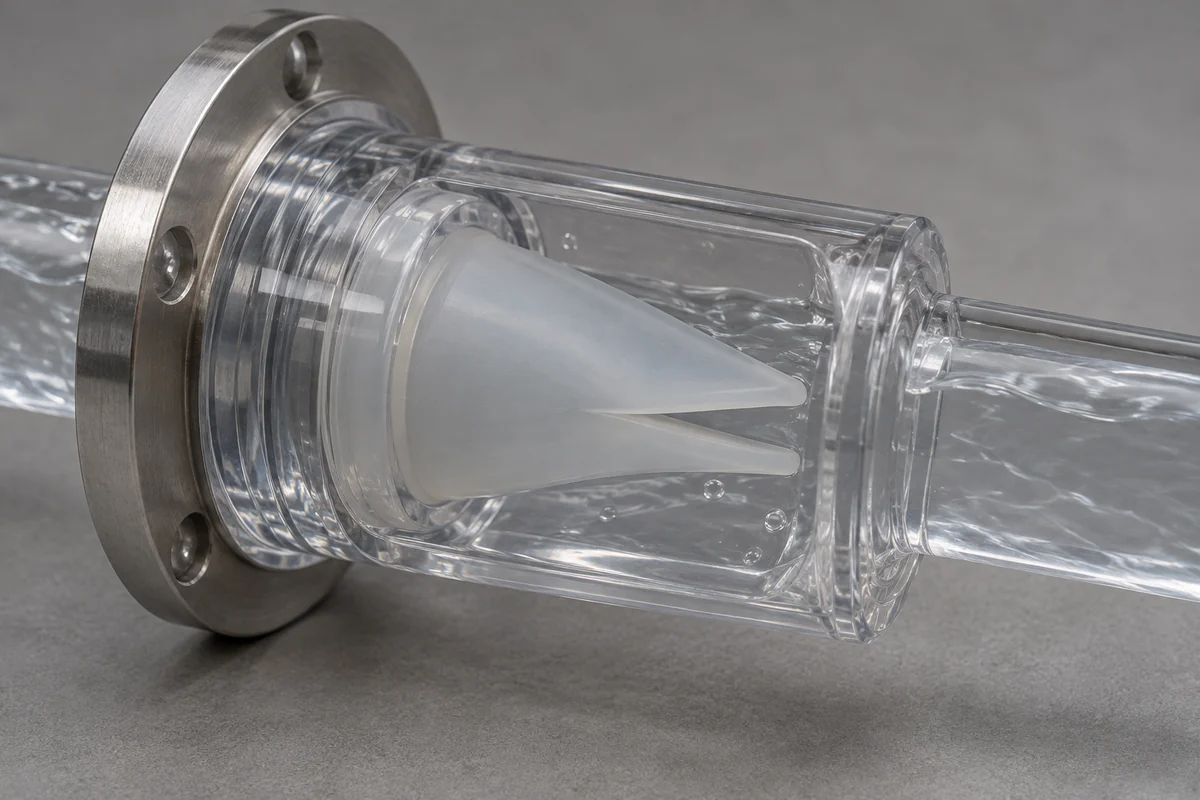
Distinguish first opening from repeated operation
Agree the pressure ramp or step sequence, stabilization period and number of operations. A quick ramp and a slowly stepped test can observe different transient behavior. The method should make it possible to determine whether a spread comes from the parts, the equipment or the sequence. Keep the first opening reading if first-use behavior is important.
Measure resealing separately when the application depends on it. The condition during decreasing forward pressure is not simply a second copy of the opening test. A component can satisfy an opening criterion while showing a closure issue after flow stops. Our reverse-leakage guide explains how to keep that evaluation distinct.
Identify sample count, cavity coverage and processing state. If only a selection from a batch was tested, report that selection rather than saying the whole batch passed. When a coating or a finishing operation is part of production, the relevant acceptance check belongs on that finished state. Development measurements made earlier in the sequence should remain separately labeled.
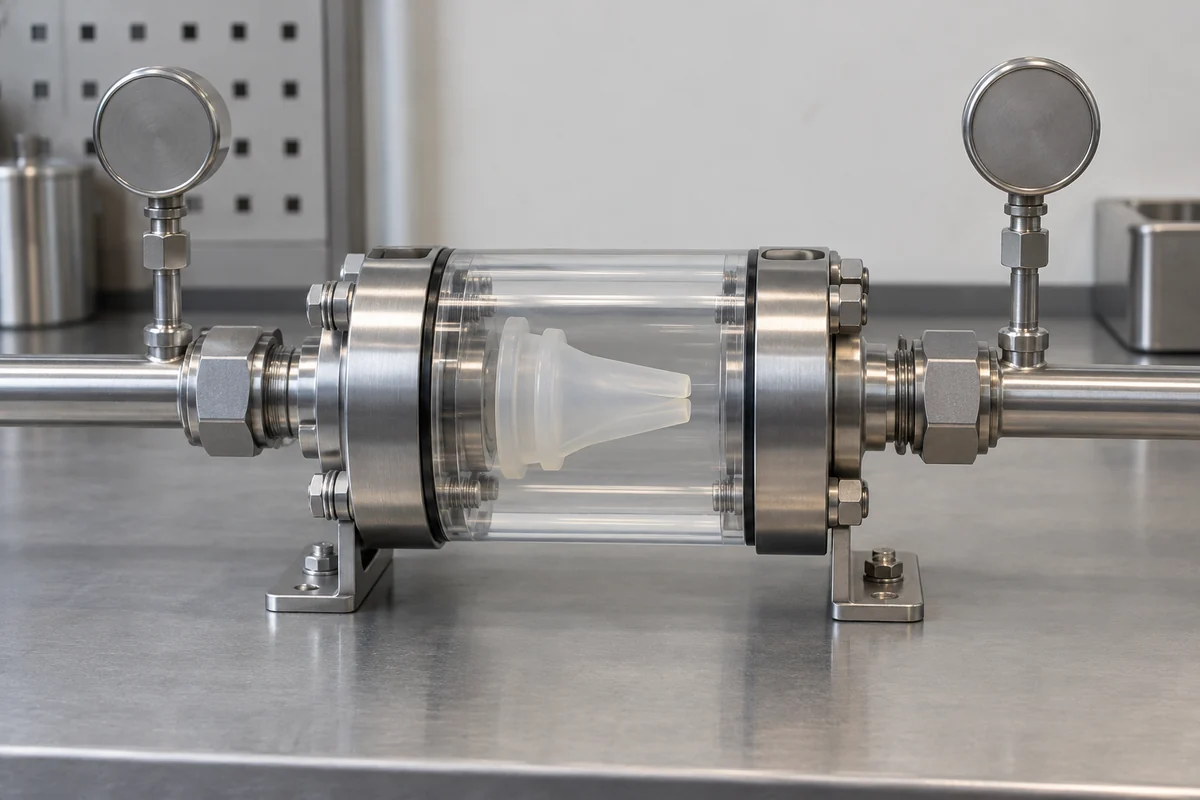
Use the result to make a specific design decision
If opening varies excessively, compare geometry, material lot, slit condition, assembly and test history before assigning a cause. Changing several inputs at once can produce a better sample without explaining why it improved. A useful trial changes controlled variables and keeps a record of the configuration associated with each measured sample.
Include the agreed method with the custom valve RFQ. That allows a manufacturer to quote a relevant trial and inspection scope. The result should answer whether the specified finished component meets a defined opening requirement, not imply a universal pressure rating for every valve of similar appearance.
Review your valve application
Explore our custom LSR silicone duckbill valves. Send the component and housing drawings, fluid conditions and acceptance methods to define the molding, finishing and inspection scope.