
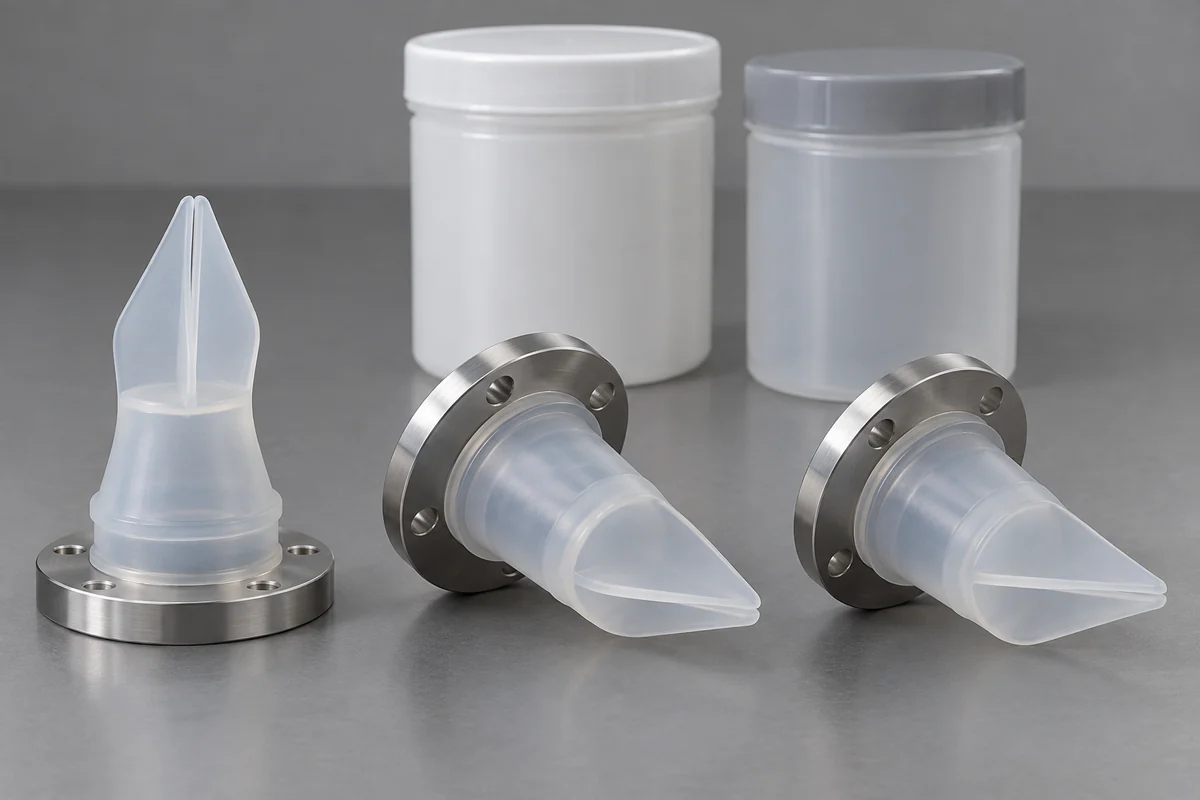
Product design illustrations. Final geometry, materials and acceptance criteria are project-specific.
Two silicone duckbill valves can have the same nominal hardness and still behave differently in service. Hardness is one material property, not a complete description of the compound or the finished component. Selecting material means identifying the actual grade, processing requirements and evidence relevant to the intended fluid circuit.
A material review also needs the full finishing route. A valve may be molded, post-cured, slit, cleaned and coated before it is supplied. If purchasing compares only the resin name, differences in those operations can remain hidden. Define the delivered state before comparing test data or agreeing which supplier documents are sufficient.
Use the grade and its applicable data
The WACKER silicone product selection guide lists different properties and applications across silicone grades. It is useful for screening candidates, not for treating all LSR materials as interchangeable. Obtain the applicable grade documentation and processing guidance, then review it against the specific valve design and intended exposure.
Do not turn a typical data-sheet value into a guaranteed finished-part tolerance. Test methods, specimen geometry and processing state matter. A hardness measurement on a standard plaque may not be directly reproducible on a thin curved lip. If hardness belongs in incoming or part acceptance, agree where and how it will be measured and what the supplier guarantees.
Record pigments, additives and any allowed material substitutions. Appearance is not reliable proof of composition. A nominally equivalent replacement can require another process review or qualification, especially when fluid contact is important. Keep a controlled material identity with the samples rather than referring to them only as the clear or white version.
Define post-curing without using a universal recipe
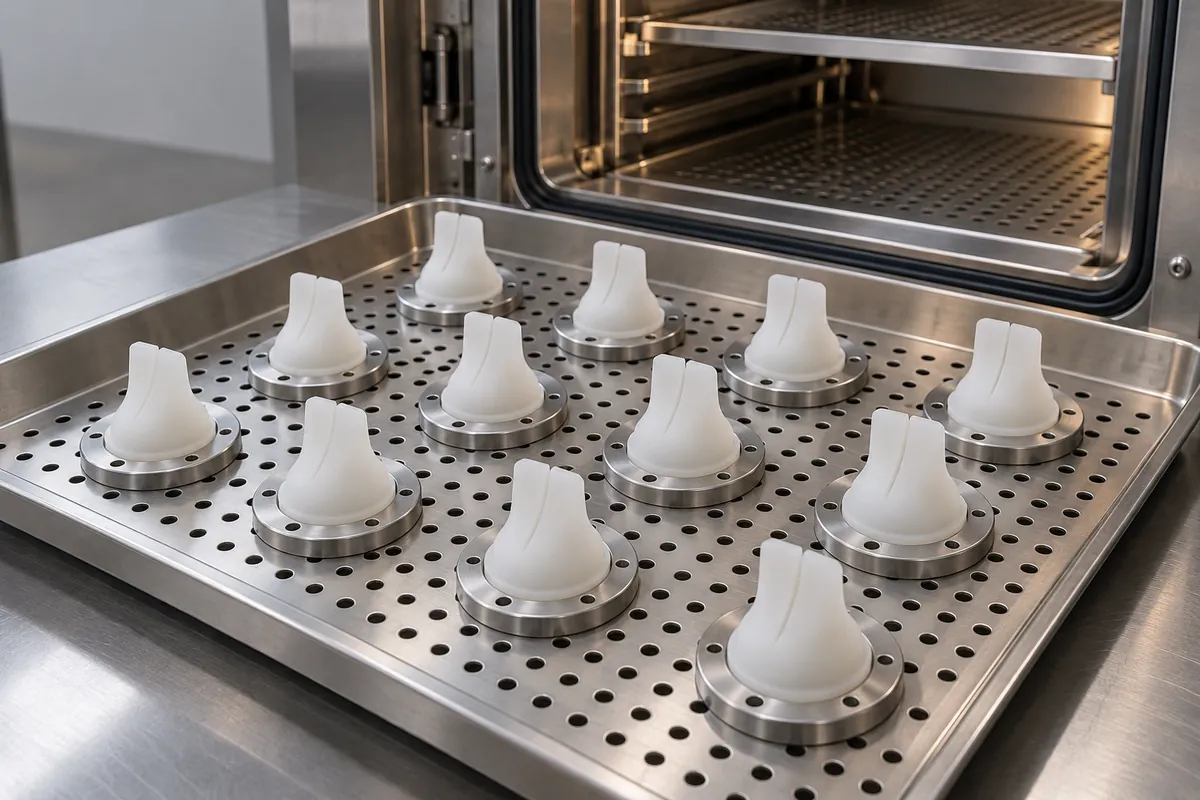
Whether a post-cure is needed, and its conditions, should follow the material guidance and application validation. A time and temperature copied from another project is not a qualification of the new valve. Consider the molded geometry, handling and the properties being controlled. The purpose and acceptance checks should be clear to both the processor and the buyer.
Specify the sequence relative to slitting, cleaning and coating. A thermal treatment performed before a surface operation does not establish that the finished coating can tolerate the same treatment afterward. Record tray loading and part support where they affect the process. Avoid storing flexible lips under unnecessary deformation while the process is being established.
Preserve the sample state in each report. As-molded, post-cured and coated samples should not be mixed into one unexplained measurement range. If a trial compares two finishing routes, keep the material and geometry controlled and identify the differences. Otherwise an observed change cannot confidently be assigned to post-curing alone.
Test exposure and finished function separately
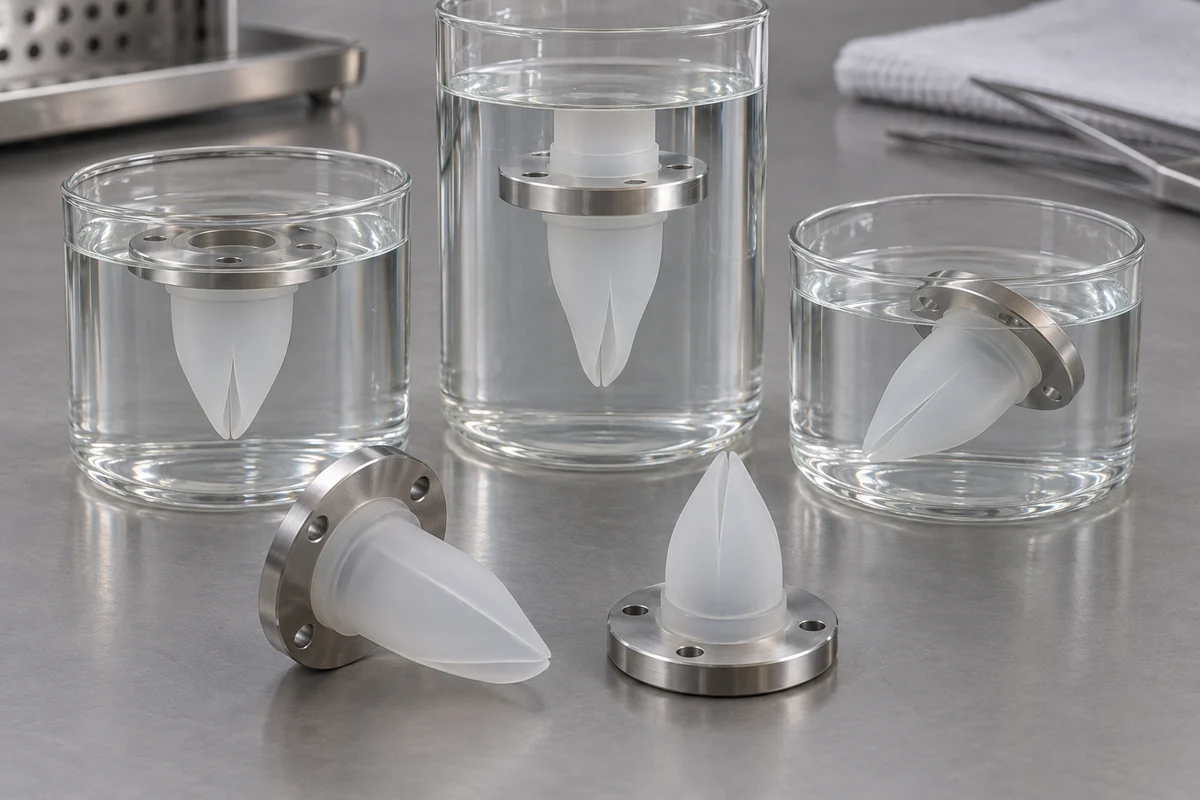
List actual fluids, cleaning agents, temperatures and exposure durations. A short saline test cannot support a broad claim about all drug solutions or solvents. Include the physical observations and functional measurements relevant to the application. An unchanged appearance may coexist with a change in opening response or seal behavior, so appearance alone is not the decision.
Review the opening-pressure method and reverse-sealing method before and after the chosen exposure when the qualification calls for it. Maintain comparable conditions and traceability. Separate an exposure study from routine lot inspection so that a sampling result is not presented as every-piece lifetime verification.
For medical-device use, FDA documentation guidance considers the finished configuration and changes in material or processing. A grade name, a food-contact statement or an isolated test reference does not by itself establish suitability of the completed device. The responsible device team must assess the evidence for the actual intended contact and processing.
Keep the approved supply configuration traceable
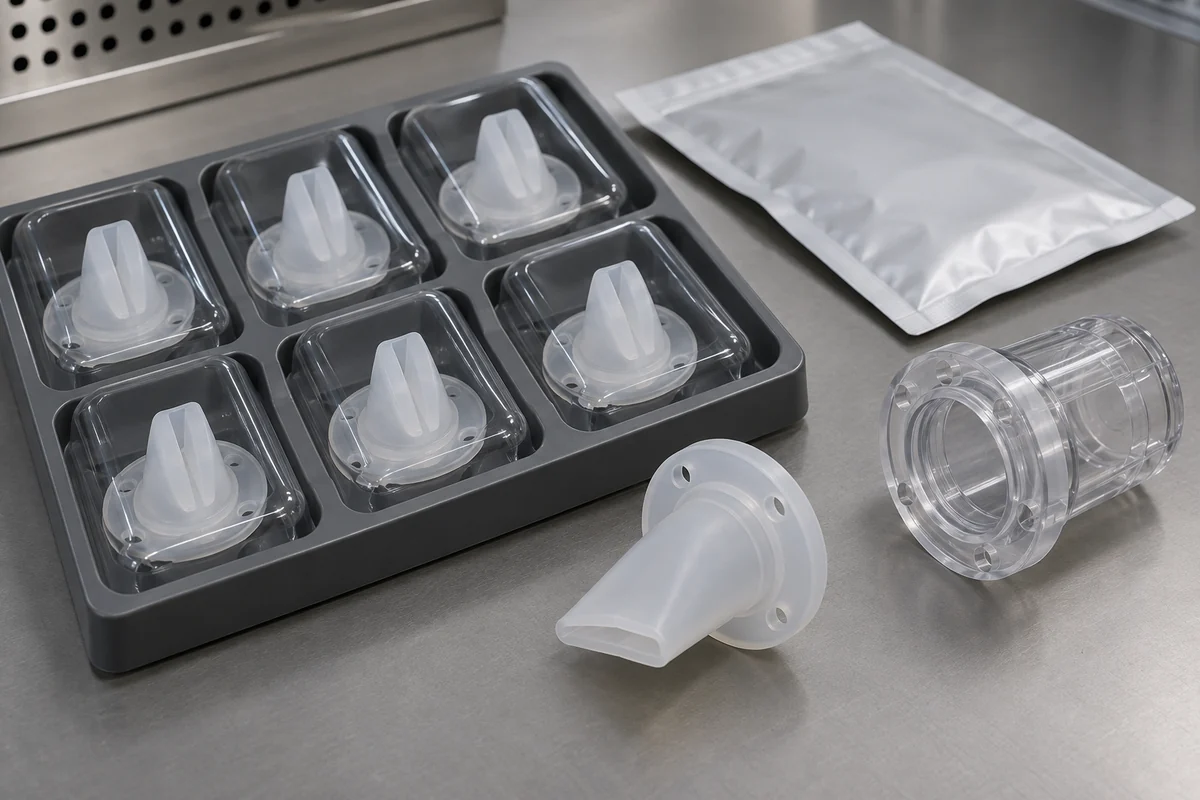
Record the grade, lot, relevant molding and finishing instructions, inspection method and packaging requirements. Define which changes need notification or renewed evaluation. This prevents an apparently minor change in cleaning, pigment or coating from silently replacing the configuration that generated the accepted test evidence. Traceability is useful only when it follows the actual delivered part.
For a quotation, separate requested evidence from evidence already available. List unresolved compatibility or certification requirements as work still to be agreed, not as completed achievements. Our duckbill RFQ guide connects these material questions with tooling, trials and a clearly defined component supply scope.
Review your valve application
Explore our custom LSR silicone duckbill valves. Send the component and housing drawings, fluid conditions and acceptance methods to define the molding, finishing and inspection scope.