
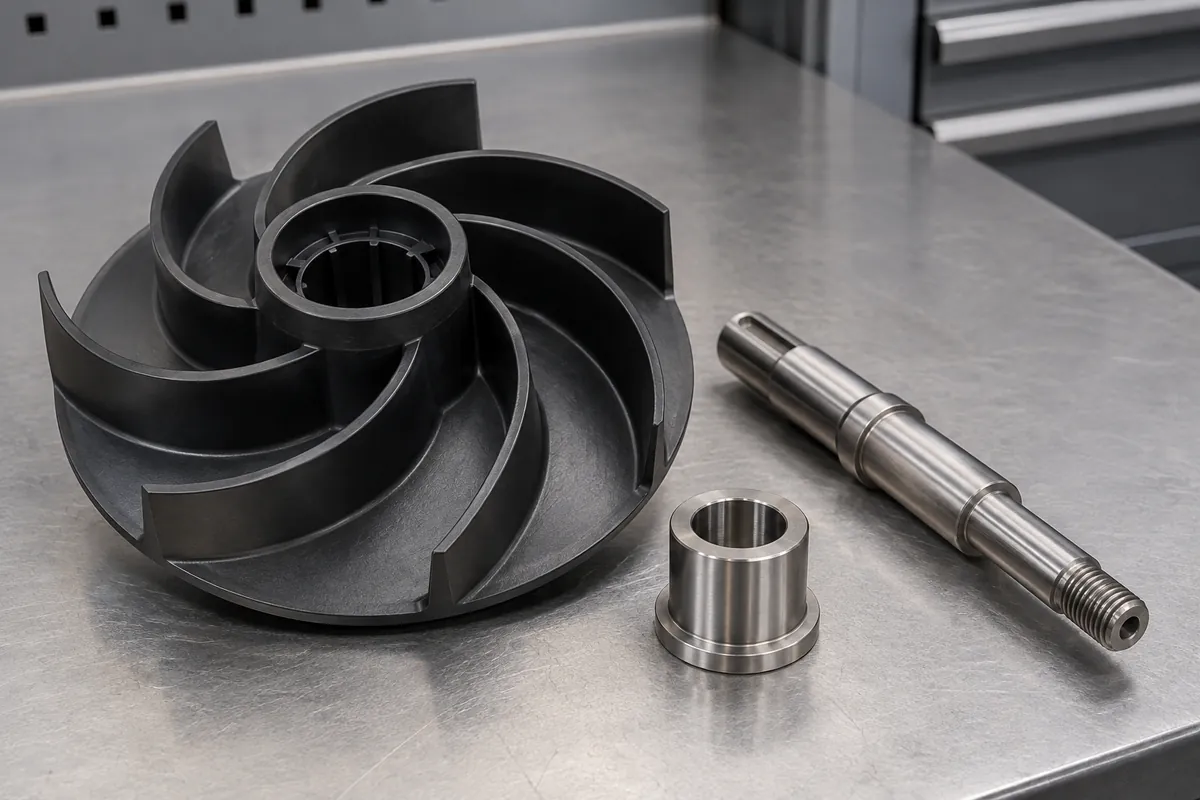
Product design illustrations. Final geometry, materials and acceptance criteria are project-specific.
The shaft connection is a concentrated load-transfer region in an otherwise distributed hydraulic component. A bore that fits at room temperature may still be unsuitable after assembly, fluid exposure or repeated operation. Define what the connection must transmit and retain before choosing a tolerance or insert arrangement.
Separate torque transmission from axial retention and radial location. One feature may perform more than one function, but the requirements are not interchangeable. A connection can resist pull-off while allowing unacceptable rotational slip, or transmit torque while locating the impeller poorly relative to the pump housing.
Choose a connection mechanism deliberately
An interference fit relies on the assembled relationship between shaft and hub. Its suitability depends on geometry, material condition and operating exposure, not only the nominal interference. Review assembly force and local stress alongside retention, especially where a thin hub or a molded weld region is involved.
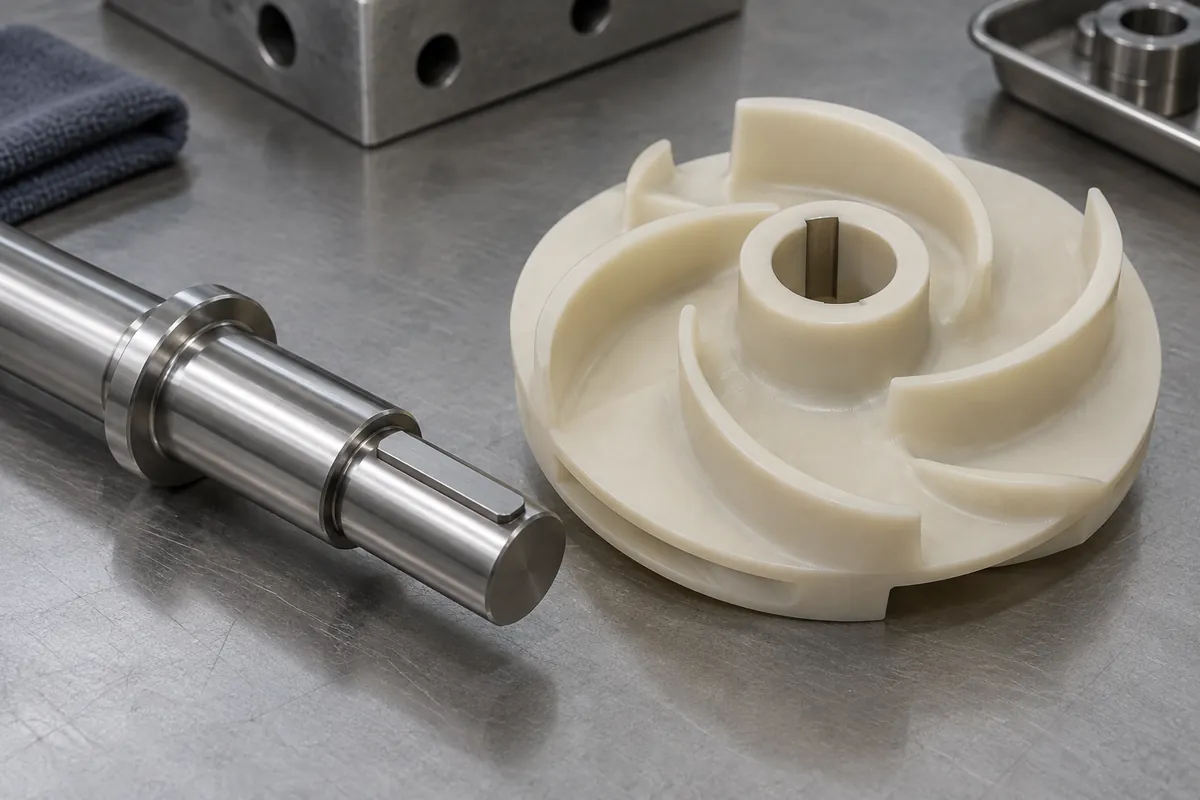
A keyed, splined or shaped interface can provide positive torque transfer, but it introduces local contact and geometric constraints. Corners and engagement length need review, and the mating shaft must be specified with the same care as the molded part. A generic keyway note is not a complete interface definition.
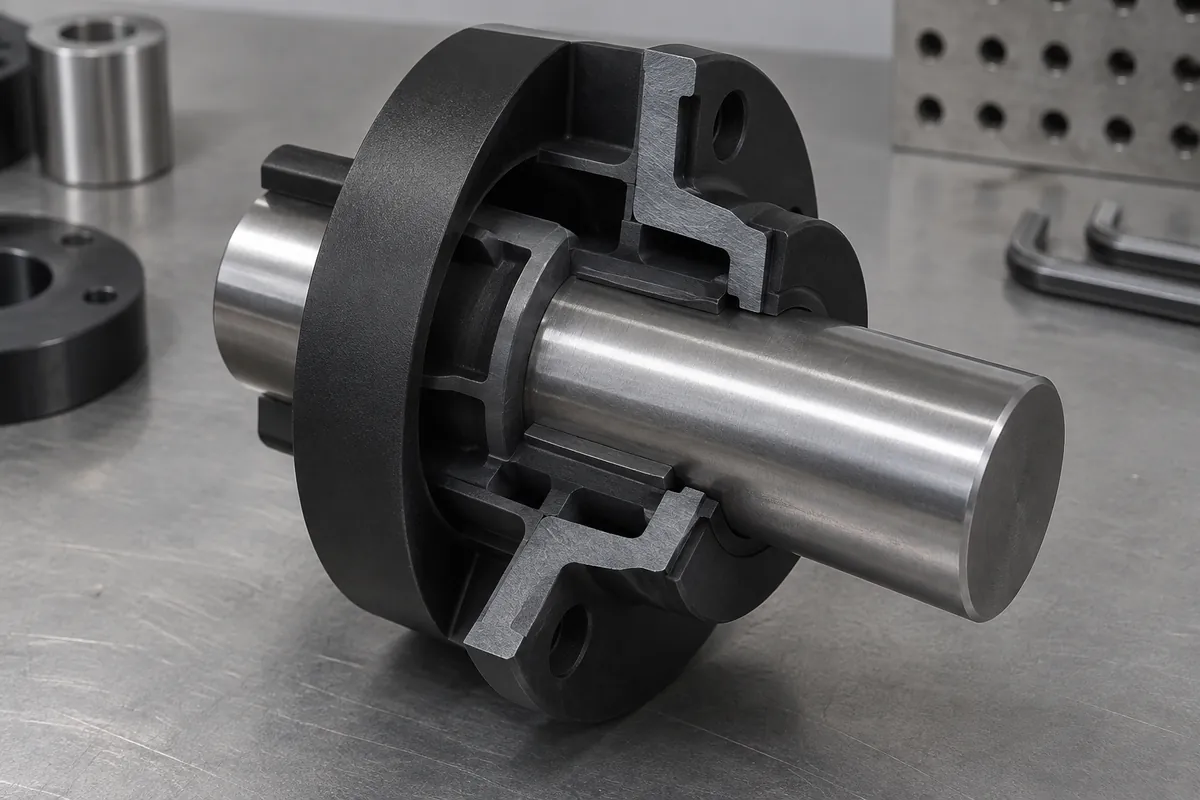
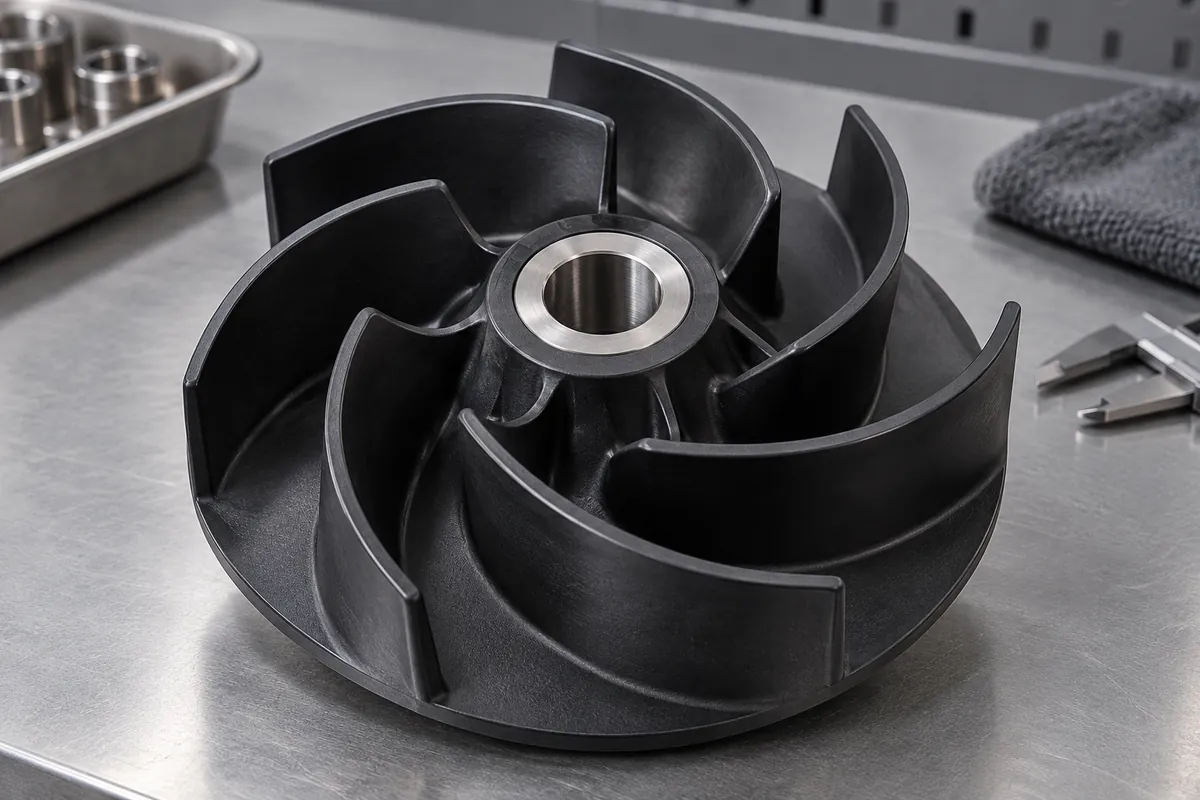
A metal insert changes the connection again. Define how the insert is retained, whether it is molded in or installed later, and which operation establishes the final bore. An insert can provide a useful interface without eliminating the need to evaluate the surrounding polymer and the assembly process.
Inspect the state that will be delivered
A molded bore, a reamed bore and an insert bore have different manufacturing and inspection histories. State which surface is functional and when its final measurement occurs. If joining or another operation can change the geometry, inspection before that operation may not describe the delivered component.
Use datums that relate the bore to the impeller's relevant rotating surfaces. An acceptable bore diameter alone does not establish concentricity or face runout. The inspection setup should reflect the shaft location used in the assembly without deforming the polymer to obtain a favorable reading.
Specify the fit standard and numerical limits consistently. If a drawing contains both a tolerance designation and conflicting explicit limits, resolve the conflict before tooling or inspection. Do not let the supplier choose whichever interpretation happens to accept the available samples.
Include material condition and operating exposure
Temperature and fluid conditioning can change the interface between polymer and metal. Assess the required operating range and any storage or cleaning condition before deciding that a room-temperature fit is sufficient. The relevant response belongs to the actual grade and geometry, not a family-wide rule.
For polyamide candidates, keep moisture condition visible in the inspection and assembly record. For reinforced materials, review directional dimensional behavior with the molding supplier. These considerations should guide the validation plan rather than produce an unsupported universal allowance added to every bore.
Review the exact candidate through its manufacturer information, such as Fortron PPS material resources where PPS is proposed. Material data supports the interface review but does not qualify the particular shaft connection.
Different assembly teams may press the same hub onto a shaft using different supports. One setup can load the hub directly while another transfers force through fragile blades. Include the support location and installation sequence in the interface review so a suitable connection is not damaged by an unapproved assembly method.
Validate failure modes separately
Agree a test for rotational slip or torque transmission and another for axial retention where both matter. Record the shaft finish, insertion procedure, dwell before testing and environmental condition. Without these details, a reported force or torque is difficult to compare with another supplier's result.
Observe damage as well as the peak reading. A hub that cracks during installation may still produce a misleading short-term retention result. Inspect the connection after assembly and after relevant conditioning so acceptance reflects the intended function rather than one favorable maximum value.
Coordinate the connection with runout and balance evaluation. The approved drawing should identify the complete shaft interface, secondary operations and release checks. Later changes to the shaft supplier or assembly equipment then have a clear reference for review.
Discuss the component and its acceptance requirements
Explore our custom plastic impellers and the related project case study. Send the current drawing, mating-part details, operating conditions and required quantities. We can review tooling, molding and inspection as a defined supply scope, with development samples and production approval kept separate.